
Mobile Casinos for Australian Players: The 2026 Offshore Picture
 Available in AU
Every mobile casino an Australian player opens is offshore. The Interactive Gambling Act 2001 prohibits online casino, online pokies and in-play betting in Australia — no licence for online casino exists in any state or territory — and the operators who serve Australian accounts do so from Curaçao, Anjouan and similar jurisdictions that do not bind themselves to Australian consumer law. That single structural fact sits behind every other choice on this page: every bonus, every payout speed, every withdrawal-cap clause, every absence of recourse when a casino refuses to pay out.

Data current as of 18 October 2026. Licence and registration status verified against the Australian Communications and Media Authority register.
Table of Contents
- Why every mobile casino an Australian player sees sits offshore
- The mobile casinos Australian players are using in 2026 — reviewed and ranked
- The pokies and live dealer tables built for a phone screen
- Try before you bet — free pokies and demo games on mobile
- Why your 2026 mobile casino welcome bonus is smaller than it looks
- How money really moves at an Australian-facing mobile casino — PayID, crypto and the waiting game
- Bitcoin and crypto casinos — faster cashouts, fewer protections
- New mobile casino sites that opened in 2026
- What Australian law actually says about playing casino games on your phone
- When to stop — deposit limits, self-exclusion and where to get help
- How we review and rank mobile casinos for Australian players
- Your next move — what to check before you sign up at any mobile casino
- Frequently asked questions
Why every mobile casino an Australian player sees sits offshore
Australia does not license online casino games. The Interactive Gambling Act 2001 makes it an offence to provide online casino, online pokies and in-play sports betting to a person physically in Australia, and the Australian Communications and Media Authority (ACMA) is the body charged with enforcing that prohibition. The licensed wagering market that does exist — sports betting, racing, lotteries — is regulated state by state (with the Northern Territory acting as the de facto national wagering licensor) and lives under a separate rulebook. No mobile casino on an Australian phone sits inside that rulebook, because no online casino licence exists to apply for.
What the player gives up at an offshore casino is the practical substance of the rulebook. There is no Australian consumer protection, no Australian complaints body, no recourse if the operator refuses a withdrawal, and no coverage under BetStop — the National Self-Exclusion Register. The ACMA can direct Australian internet service providers to block an offshore site, and it has done so on more than 1,564 sites since November 2019, with more than 225 services withdrawing from the Australian market since 2017. The blocking does not return anyone’s money. A site can be blocked while a balance sits on it. That is the rule a player signs up under.
The licensed side does offer something concrete that offshore does not. A licensed wagering account comes with deposit limits, activity statements, take-a-break facilities, and a single BetStop registration that excludes the player from every licensed bookmaker in the country. None of those tools apply to the offshore casino sitting in the next browser tab. Treating mobile casino play as a continuation of “licensed gambling” is the mistake the prohibition is built to discourage.
What a mobile casino actually is — browser, app, or APK
A “mobile casino” on an Australian phone is almost always a browser tab. Every major pokie released in 2026 is built in HTML5 for mobile-first delivery, which means the same title runs on a phone in Safari or Chrome without a download. Any smartphone from the past three years on iOS 15 or Android 9 will handle the full catalogue without stutter, including the cluster-pays and ways-to-win mechanics that older devices struggled with. The mobile-first build is the delivery format, not an extra — the desktop site is the legacy version.
Native casino apps are scarce in Australia because the Play Store bans real-money casino apps for Australian accounts. Where an operator offers an “app”, it is usually an Android APK that the player side-loads directly from the operator’s site, bypassing the Play Store’s content policy. iPhone users typically access the casino through the browser; an iOS-native real-money casino app is not available through the App Store in Australia. Side-loading is not a workaround the operator invented — it is the only delivery channel the major app stores leave open.
The browser route has practical consequences. A casino running in Safari or Chrome inherits the browser’s tab management, screen orientation, and pinch-to-zoom behaviour, which the studio has already designed around. The bonus is that nothing has to install, update, or request storage permission. The trade-off is that the casino cannot send push notifications, cannot run when the browser is closed, and cannot ask for the device-level permissions a native app might. For pokies play specifically — which is screen-tap, then wait — that trade-off barely registers.
Real-money stakes on a phone — what changes when cash is on the line
Free-play pokies and real-money pokies are different products on the same engine. Free play runs on a play-money balance that the casino tops up indefinitely; real-money play attaches a deposit, an account, a Know Your Customer check, and a withdrawal method. The first time a player adds a payment method, the casino turns from a demo into a counterparty — and that counterparty sits outside Australia.
Deposits in Australian dollars typically arrive through PayID (which rides on the New Payments Platform and clears near-instantly, 24/7, at CBA, ANZ, NAB and Westpac) or through crypto. Credit cards and credit-related products have been banned as a payment method for licensed wagering since 11 June 2024, and the same ban applies to digital currency. So when an offshore casino happily takes a Visa deposit or a USDT transfer, it is operating outside the rules a licensed bookmaker follows. The payment method itself is a tell.
The absence of an Australian complaints body is the sharper risk. If an offshore casino refuses a withdrawal, delays a payout past its advertised window, or closes an account, the player has no Australian ombudsman to escalate to, no regulator to compel a payout, and no chargeback right on most crypto rails. The ACMA can investigate the operator, can direct ISPs to block the site, and can pursue civil penalties — but it cannot order the casino to return a balance. A player who takes that risk with money they cannot afford to lose has already mispriced the offer.
The mobile casinos Australian players are using in 2026 — reviewed and ranked
The ranking below lists ten offshore mobile casinos that actively accept Australian players, ordered by a blend of mobile UX evidence, payment-speed data, and the depth of independently verifiable information about each brand. Every one of them is offshore; the licence column is the one to weigh, and the restricted-countries clause is the one to scan before depositing. Three operators in the set carry independent testing or named-source payment data; the other seven have only affiliate listings and operator-stated terms, which is itself a finding.
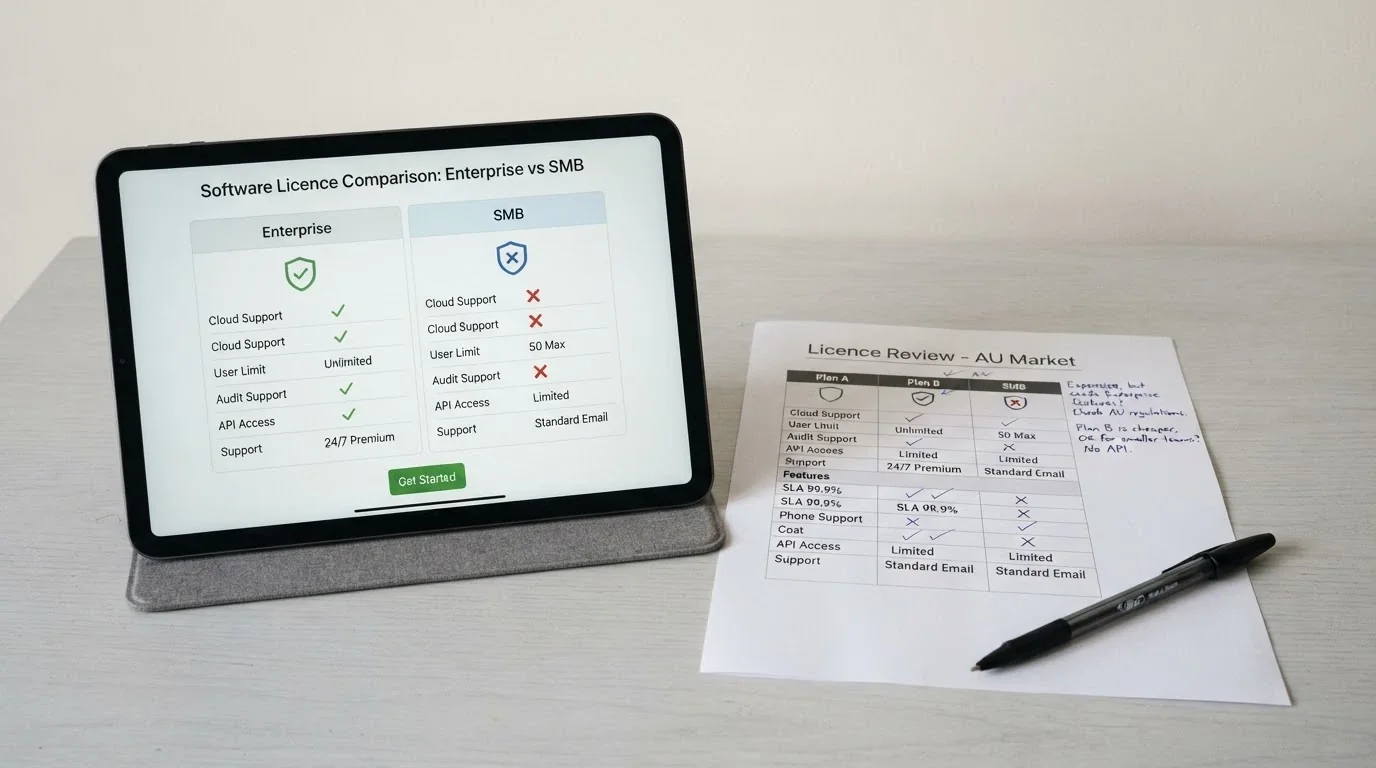
| Operator | Licence Status | Mobile Access |
|---|---|---|
| SkyCrown | Curaçao-claimed, not independently verified | Browser-based HTML5 |
| Neospin | Not independently verified | Browser-based HTML5 |
| Stake | Curaçao (commonly cited), not independently verified | Browser-based HTML5, crypto-primary |
| Royal Reels | Not independently verified | Browser-based HTML5; running RTP on game info pages |
| Rocket Play | Not independently verified | Browser-based HTML5 |
| FairGO | Not independently verified | Browser-based HTML5; crypto payouts 1–3 days |
| WinSpirit | Not independently verified | Browser-based HTML5 |
| Rainbet | Not independently verified | Browser-based HTML5 |
| Scream Casino | Not independently verified | Browser-based HTML5 |
| Bizzo Casino | Not independently verified | Browser-based HTML5 |
The structural point is what the table cannot say. A Curaçao or Anjouan licence is a foreign jurisdiction’s permission to operate, not an Australian consumer protection; a “verified by audit” stamp on the footer of an offshore site refers to the game maths, not to the operator’s treatment of withdrawals. The single most useful step before depositing is to read the restricted-countries clause — the small print that names the jurisdictions the operator refuses to serve, and which is the only public signal of how seriously the operator treats its terms.
SkyCrown
SkyCrown is the best-documented operator in this set. The headline welcome package sits at A$8,000 plus 400 free spins for a A$30 minimum deposit, and the pokies catalogue runs to more than 7,000 titles — a depth that lets a player filter by studio, by mechanic, or by feature buy rather than scrolling a wall of thumbnails. The licence is Curaçao-claimed, which is the standard offshore wrapper rather than an Australian anchor; the operator’s own site carries the verification.
The PayID withdrawal data is the standout. Independent testing reports a median PayID withdrawal time of nine minutes at SkyCrown, which puts the brand at the fast end of any mobile casino serving Australian accounts. For a punter choosing between operators on payout speed alone, that figure is the one to weigh; everything else is bonus dressing. There is no native app to install, and no Australian consumer protection that follows the funds after the casino releases them. The trade is speed and catalogue depth against recourse.
For a player who values documented fast withdrawals and a wide pokies library over the absence of a complaint pathway, SkyCrown is the strongest pick in this set. For a player who needs an Australian regulatory backstop, no operator in this ranking supplies one.
Neospin
Neospin is the payments operator. The welcome package is A$11,000 plus 300 free spins at a A$30 minimum deposit — large in headline terms, modest in the same turnover-weighted sense every welcome package carries on this page. The brand’s payment page is the useful document: PayID withdrawals run from A$50 to A$5,000 per request and typically clear inside two hours; eZeeWallet withdrawals of A$20 to A$4,000 are near-instant; bank transfers of A$200 to A$10,000 take one to three business days; and crypto withdrawals of A$100 and up clear in one to thirty minutes depending on network congestion.
The layered menu of rails is the offer. A player with a small bankroll who wants to test with A$50 can use PayID and see the funds back inside two hours. A player cashing out a five-figure win can route through a bank transfer and accept the one-to-three-day window. A player who has moved money in via USDT TRC-20 can withdraw the same way and avoid the banking trail entirely. The presence of all four rails is what separates Neospin from operators that run PayID-only or crypto-only.
For an Australian player who treats payment choice as a feature rather than an inconvenience, Neospin is the better pick over a single-rail operator. The same offshore caveats apply — no BetStop coverage, no Australian complaints body, licence not independently verified — but the breadth of rails softens the trade-off for a punter who wants options.
Stake
Stake is the crypto-primary operator in this ranking. The site is built for digital currency from the ground up — account funding, gameplay, and withdrawal all run on crypto rails — and the Australian-facing fiat deposit path was not confirmed for this review. The licence is commonly cited as Curaçao, which is the standard offshore wrapper; an independent non-affiliate source did not confirm the licence entry during this run.
The payout data is the working figure. Independent testing reports Stake averaging roughly two hours total for withdrawals end-to-end, which puts the brand at the upper edge of the offshore pack for crypto payouts. There is no native app to install, no Play Store listing, and no Australian consumer protection framework that applies once the funds leave the operator’s hot wallet. Crypto deposits are reversible only through the network, not through a banking chargeback, which is the trade-off the speed is built on.
Stake is the pick for an Australian punter who already holds crypto and values payout speed over the Australian protections the operator does not provide. For a player who wants to deposit in AUD from a bank account, this is the wrong operator — the fiat path was not surfaced in this review, and an account that funds only in crypto is a narrower product than a multi-rail competitor.
Royal Reels
Royal Reels is the transparency pick. The provider mix is quantified — Pragmatic Play around 350 titles, Play’n GO around 260, Nolimit City around 120, and Hacksaw Gaming around 140 — and the catalogue carries running RTP information on each game’s info page, which is unusual for an offshore casino. Play’n GO titles at Royal Reels run at a consistent 96.21% RTP, and Hacksaw Gaming titles average 96.3%, both at the high end of what online pokies return. The licence status was not independently verified; the provider-mix figures come from a single named source and have not been cross-checked.
For a player who wants to read the math before spinning, Royal Reels is the operator to open. For a player who treats RTP figures as decorative, the same catalogue is available elsewhere without the running-RTP display. The transparent RTP page is the kind of signal that suggests the operator is not trying to obscure which games carry which return — but it does not change the offshore wrapper, the absence of BetStop coverage, or the structural fact that no Australian regulator stands behind a refused withdrawal.
Rocket Play
Rocket Play is the third-largest brand in this set by AU player share, at roughly 9.4% of tracked traffic. The operator is offshore, no licence was independently verified for this review, and the welcome package is a multi-tier structure whose exact bonus, free-spin count, and wagering terms were not confirmed. The mobile delivery is browser-based HTML5 with no confirmed native app.
For a player who finds Rocket Play through an Australian search result and sees a sizeable welcome package, the right next step is to read the operator’s own bonus terms page, the licence footer, and the restricted-countries clause before depositing. The market-share figure is a sign of how many Australians are already there, not a sign of how the operator treats Australian balances. The structural offshore caveat applies in full.
FairGO
FairGO is the speed-pitched crypto operator. The headline pitch is fast crypto payouts, with affiliate-reported clearance of one to three days for crypto withdrawals — a window that puts the brand behind the same-day crypto payouts at the top of this ranking, but ahead of a PayID-only operator that takes 36 to 72 hours end-to-end. The licence was not independently verified, the welcome package specifics were not confirmed for this review, and the brand is browser-based HTML5 with no native app confirmed.
For a punter who values Australian-style branding and crypto rails over the breadth of a multi-rail operator, FairGO is a defensible pick. The trade-off is the same one every operator in this set carries — no Australian complaints body, no BetStop, no recourse when a withdrawal stalls — but the brand’s pitch to an Australian audience is the clearest in this section of the ranking.
WinSpirit
WinSpirit sits eleventh in the AU player-share table at roughly 1.55% of tracked traffic. The operator is offshore, no licence was independently verified, and the welcome bonus, free-spin count, wagering, validity, and provider list were not confirmed for this review. Mobile access is browser-based HTML5 with no native app confirmed.
For a player who lands on WinSpirit through an Australian search result, the verification step is the same as for any other operator in this section — read the bonus terms, the restricted-countries clause, and the licence footer on the operator’s own site before depositing. The smaller AU share figure is not a verdict on the brand’s quality, only on its visibility in the AU tracked set.
Rainbet
Rainbet is thirteenth in the AU player-share table at roughly 1.28% of tracked traffic. The operator is offshore, no licence was independently verified, the welcome package specifics were not confirmed, and the brand is browser-based HTML5. The operator has no named-source payment data in this review, which leaves the payout speed unverified.
For a player who reaches Rainbet, it is best to verify figures — like the bonus, licence, or withdrawal window — directly on the operator’s site. The operator is offshore, and Australian consumer protection does not apply to sites that are not regulated within Australia.
Scream Casino
Scream Casino is fourteenth in the AU player-share table at roughly 0.99% of tracked traffic. The operator is offshore, the licence was not independently verified, the welcome package specifics were not confirmed, and mobile access is browser-based HTML5. The brand has no named-source payment data or payout-speed figure in this review.
For a punter who lands on Scream Casino through an Australian search result, the editorial reading is the same as for any unverified brand in this section. Treat the affiliate listing as a starting point, not a confirmation; check the operator’s own terms before depositing. The smaller share figure is a sign the brand is not pulling AU traffic at the scale of the leaders in this ranking, not a sign of its quality.
Bizzo Casino
Bizzo Casino is the smallest operator in this set by AU player share, at roughly 0.57% of tracked traffic and nineteenth in the table. The operator is offshore, the licence was not independently verified, the welcome package was not confirmed, and mobile access is browser-based HTML5. There is no named-source payment data or payout-speed figure for this review.
A player who finds Bizzo Casino through an AU search result should treat every affiliate-listed figure — bonus, payout window, licence — as unverified until checked on the operator’s own site. The structural offshore caveat applies in full: no BetStop coverage, no Australian complaints body, no recourse when a withdrawal stalls. The brand’s presence in this ranking reflects its visibility in the AU search set, not an endorsement.
The pokies and live dealer tables built for a phone screen
The pokie is the load-bearing product at every mobile casino an Australian player opens. The studios that supply these titles — Pragmatic Play, Play’n GO, Push Gaming, Hacksaw Gaming, Nolimit City, Wazdan — publish their games in HTML5, build them mobile-first, and configure them with an RTP figure the casino can usually toggle between a default and one or two lower settings. The figure on the game’s info page is the one to read; it is what the casino is actually running, not the figure on the developer’s marketing page.

The catalogue depth at the top of this ranking runs into the thousands. Royal Reels alone carries roughly 870 quantified titles across its top four studios, and SkyCrown’s catalogue runs past 7,000 pokies. The depth lets a player filter by mechanic (cluster pays, ways-to-win, megaways), by feature (bonus buy, free spins, hold-and-win), by volatility, and by studio. A catalogue that small forces a player to play whatever happens to be on the lobby screen, which is its own quiet disadvantage.
Live dealer tables run through the same browser-based delivery. A live blackjack or roulette stream at an offshore casino is the studio feed re-encoded for the mobile browser, with portrait-mode framing and touch controls layered on top. The studio providers behind the streams were not confirmed by named source for this review, but the category itself is universal across the offshore pack — the variation between operators is the studio list and the table limits, not the presence of live dealer.
Mobile pokies — RTP, volatility and the titles that actually pay
The table below lists the pokies titles this review carried real return data for, ordered by RTP. Empty cells carry the article-language no-data marker where the figure was not confirmed for this run. A high RTP does not promise a win; it compresses the house edge across a long session, which is what an RTP figure actually measures.
| Title | Provider | RTP | Volatility | Max Win |
|---|---|---|---|---|
| Big Bass Bonanza Megaways | Pragmatic Play | 96.70% | — | — |
| Razor Returns | Push Gaming | 96.55% | — | — |
| Bubble Up | Pragmatic Play | 96.52% | Medium | 10,000x |
| Gates of Olympus 1000 | Pragmatic Play | 96.50% | High | 15,000x |
| Sleeping Dragon Ultra Dark | Pragmatic Play | 96.50% | High | 20,000x |
| Bigger Bass Splash | Pragmatic Play | 96.50% | High | 5,000x |
| Cosmic Clusters | Pragmatic Play | 96.45% | High | 5,000x |
| 36 Coins | Wazdan | 96.16% | Player-adjustable | — |
Two reading notes. The Pragmatic Play titles above carry the studio’s default RTP, which is the figure the operator ships if it has not toggled to a lower variant — a casino can run a title at 96.50% on the marketing page and at 94.51% on the engine. The single best protection against that toggle is a casino, like Royal Reels, that displays the running RTP on the game’s info page. The second note is on volatility. A high-volatility pokie pays rarely and in larger bursts; a medium-volatility pokie pays more often and in smaller bursts. The RTP is the same on average, but the bankroll path is not. Player-adjustable volatility, as on 36 Coins, lets the punter choose the bankroll path without changing the return — a rare feature, and worth knowing exists.
The max-win figures are upper bounds the game can theoretically produce, not outcomes a player should plan around. A 20,000x max win on a A$1 spin is a A$20,000 outcome; on a million spins across a casino’s player base, the title will produce something like that figure for someone, but no individual spin carries that promise. The figure is a marketing line dressed as a payout.
Live dealer stream quality and mobile data cost
Live dealer blackjack, roulette and baccarat run at every offshore casino in this ranking, streamed from a studio and re-encoded for the mobile browser. The portrait-mode layout — bet stack at the bottom, video feed above — is the industry default. Touch controls handle chip selection and bet placement; the actual dealing happens in the studio, on a physical table, with a human dealer the player watches through the stream.
The data cost is the practical constraint. A live dealer stream running at standard definition consumes roughly 1.5 to 2 GB per hour on a mobile connection, which is the kind of figure that matters on a capped plan. Playing live dealer on home Wi-Fi removes the constraint entirely; playing on a 4G or 5G mobile data plan burns through a typical monthly cap in a few sessions. Pokies play, by contrast, runs in tens of megabytes per hour — a different order of magnitude.
The studio providers behind the streams were not confirmed by named source for this review, and the live-dealer section here runs on the structural fact of the category rather than a per-operator breakdown. The variation between offshore casinos in this category is the studio list (Evolution, Pragmatic Play Live, Ezugi and similar), the table limits, and whether the operator offers localised Australian-facing tables. The presence of live dealer is universal; the differentiation is in the details.
Try before you bet — free pokies and demo games on mobile
Demo mode is the under-used tool at every mobile casino an Australian player opens. Most offshore casinos offer demo play without an account — the player opens the pokie, the casino loads a play-money balance of typically 10,000 credits, and the title runs as it would in real-money mode except no cash is on the line. The volatility, the bonus features, the hit frequency, and the look of the title in portrait mode are all visible before a dollar is committed.

The strategic value of demo mode is in testing the bankroll path. A high-volatility pokie can eat through a small play-money balance in twenty spins without producing a feature, then land a 50x line hit on spin 200 — which is exactly the bankroll path a punter wants to feel before staking real money. A medium-volatility pokie produces smaller wins more often, which suits a different bankroll path. Demo play reveals that path in five minutes, without the cost of learning it on a real balance.
Most offshore casinos put the demo toggle in plain sight — a “demo”, “play for fun”, or “practice” button on the game tile, or a flag inside the game itself. Where the toggle is hidden behind an account registration, the casino is treating demo play as a funnel step rather than a player tool; that is the operator’s choice, not an industry norm.
Free spins vs demo credits — what each one actually gives you
Free spins and demo credits sound interchangeable and are not. Demo credits are play money with no real-money outcome — the punter spins, the casino records no transaction, and any “winnings” disappear with the page refresh. A no-deposit free spin bonus is real money on a constrained rail — the casino credits 20 or 30 spins at a fixed stake, the winnings become a bonus balance, and the bonus balance must clear a wagering multiplier before it can be withdrawn.
The cross-over point is the wagering and the cashout cap. A 20-free-spin offer with 50x wagering on winnings and no cashout cap is a different product from a 20-free-spin offer with 50x wagering and an A$50 cashout cap — the first can theoretically pay out thousands, the second pays out at most A$50. The actual free-spin offers at Australian-facing casinos in 2026 carry the constrained shape: typical wagering is 30x to 60x on winnings, typical cashout caps sit between A$50 and A$150, validity windows are 24 hours to three days, and max-bet restrictions during wagering range from A$0.15 to A$5 per spin.
The four named offers in this review’s research illustrate the spread. Slots Gallery’s 20 free spins on Zeus the Thunderer carry 30x wagering, an A$150 cashout cap, a three-day validity and a A$5 max bet — the most generous of the four. 7Bit’s 30 free spins on Deep Sea carry 45x wagering, an A$50 cashout cap, a A$0.15 max bet and a three-day validity — tighter on cashout, tighter on stake. Caswino’s 20 free spins on verification carry 50x wagering and a 24-hour validity, with no cashout cap disclosed. Black Pokies’ 25 free spins on sign-up carry 50x wagering and an A$50 cashout cap. Each offer is the same shape on the headline (“free spins, no deposit”) and a different product in the terms.
For a punter evaluating these offers, the calculation is straightforward. A 20-spin offer at A$0.10 per spin produces roughly A$2 of nominal play; clearing 50x wagering on whatever that produces requires A$100 of additional turnover; the cashout cap then takes the final payout down to A$50 if the cap binds. The free-spin headline is the smallest part of the offer. The terms are the offer.
Why your 2026 mobile casino welcome bonus is smaller than it looks
A mobile casino welcome package is a headline figure on top of a turnover requirement that decides whether the headline ever pays out. A package advertised at A$22,500 plus 350 free spins across four deposits is a real offer, but it is not a gift — it is a marketing-priced path through a 50x wagering requirement that the player must clear before any bonus balance becomes cash. The headline and the real cost are different numbers, and the gap between them is the wagering multiplier.

The arithmetic is the kind of exercise a sharp punter does once and remembers. A$22,500 of bonus at 50x wagering requires A$1,125,000 of turnover before any of it becomes withdrawable. At an average pokie RTP of 96.50% — which is the figure Pragmatic Play and Play’n GO titles run at across this catalogue — the house edge on that turnover is 3.5%. The expected loss on the bonus alone, assuming only the bonus amount is wagered, is roughly A$39,375. The bonus can pay out, but the player is paying A$0.035 for every A$1 wagered to clear it. That is the real price.
The withdrawal caps are the second cut. A welcome package with a A$4,500 weekly and A$22,500 monthly withdrawal cap — the kind of structure common at the top of this ranking — turns a big balance into a slow drip. A player who hits a five-figure win during the bonus-clear phase cannot withdraw it all at once; the operator releases it across weeks, and any new bonus claim resets the clock. The cap is the operator’s protection against a player who runs hot through the wagering and walks away with the headline figure intact.
The four named welcome packages in this review’s research sit in a band. SkyCrown’s A$8,000 plus 400 free spins at a A$30 minimum is a moderate-size package on a low entry threshold. Neospin’s A$11,000 plus 300 free spins at A$30 is larger on the headline, similar on the entry. Golden Crown’s A$15,000 plus 300 free spins at A$45 is a higher entry, larger headline. RollXO’s A$22,500 plus 350 free spins across four deposits at 50x wagering is the largest headline in the set, with the heaviest turnover cost to match. None of these is “free money” — each is a marketing-priced path through a real cost.
No-deposit bonuses and free spins — small print, big catches
No-deposit offers at Australian-facing casinos are the highest-density section of small print on the page. The four named offers in this review’s research sit in a band: 20 to 30 free spins on registration, 30x to 50x wagering on winnings, cashout caps of A$50 to A$150, validity windows of 24 hours to three days, and max-bet restrictions during wagering of A$0.15 to A$5 per spin. Each of those numbers is doing work.
The wagering multiplier is the load-bearing number. A 20-free-spin offer at 50x wagering means a punter must turn over 50 times whatever the spins win before any of it becomes withdrawable. On a 20-spin offer at A$0.10 per spin, the nominal play is A$2; if the spins produce A$5 in winnings (which is plausible at medium volatility), the wagering target is A$250 of additional turnover. The math is the math.
The cashout cap is the second cut. A cap of A$50 turns a winning session into a small withdrawal regardless of the actual win — the punter keeps A$50 and the rest is forfeited. The validity window is the third. A 24-hour expiry on Caswino’s offer means a punter who registers and forgets about it loses the bonus before claiming. A three-day window on 7Bit’s offer is more forgiving. A max-bet restriction of A$0.15 per spin during wagering — as on 7Bit’s Deep Sea offer — is the fourth cut: the punter cannot rush the wagering with a large stake, and the bonus clears at the pace the operator chose.
The editorial reading is straightforward. No-deposit free spins at Australian-facing casinos are real offers with real constraints. A punter who treats them as a free trial and reads the terms before claiming will not be surprised by the result. A punter who treats them as a windfall will be.
How money really moves at an Australian-facing mobile casino — PayID, crypto and the waiting game
The deposit at a mobile casino almost always clears in seconds. PayID rides on Australia’s New Payments Platform and is near-instant 24/7, with CBA, ANZ, NAB and Westpac all supporting PayID natively in their banking apps; the player enters a PayID address or mobile number, confirms the amount, and the funds land. Crypto deposits are similarly fast — USDT TRC-20 deposits clear in under sixty seconds. The deposit side is solved.
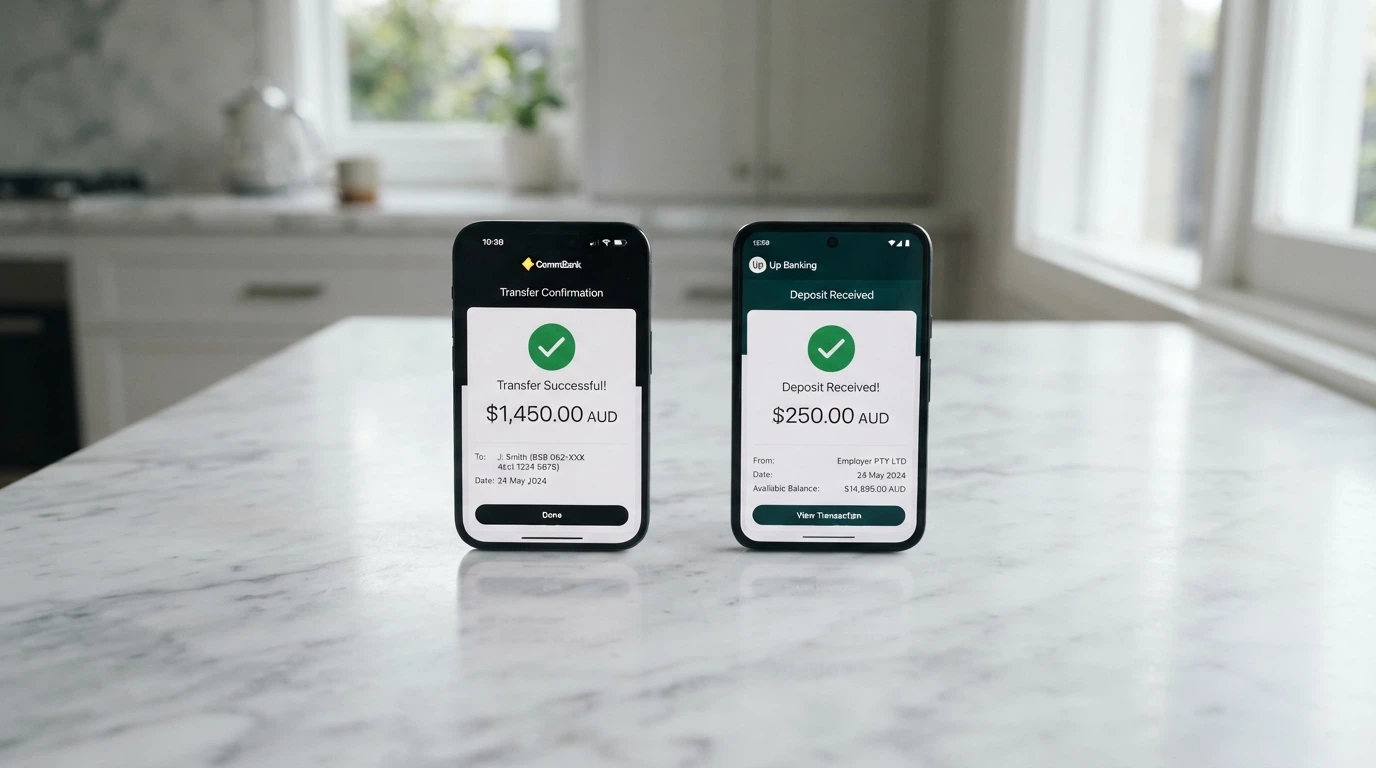
The withdrawal side is where the wait begins. PayID withdrawals from a casino are not the same rail as a PayID deposit — the casino is sending money to a player, not receiving it, and the casino’s processing window applies on top of the network’s settlement speed. A PayID-only operator typically takes 36 to 72 hours end-to-end for a withdrawal, which is the deposit speed in reverse plus a one-to-three-day operator queue. Crypto withdrawals clear in minutes once the casino releases them, which is the structural reason crypto-primary operators market on payout speed.
The fork between rails is the practical decision. A punter with a small balance to cash out can use PayID and accept the day-or-two window. A punter with a five-figure win who wants the funds in a personal wallet today uses crypto. A punter who has neither route — no PayID set up, no crypto wallet — is choosing between opening a wallet and waiting for the bank transfer to clear.
PayID deposits — instant, Australian, and the first thing a player looks for
PayID is the deposit method Australian players reach for first, and for good reason. The deposit flow runs through the player’s existing banking app — no new account, no third-party wallet, no card details typed into a casino page. The casino shows a PayID address or BSB and account number; the player opens their bank app, enters the PayID, confirms the amount, and the funds land in the casino balance within seconds. The four major Australian banks — CBA, ANZ, NAB and Westpac — all support PayID natively, which covers the bulk of the Australian banking market.
The limits vary by operator. Neospin’s PayID deposits run from A$30 to A$5,000 per request, which is a working band for casual play; a punter topping up a small balance sends the minimum, a punter chasing a larger welcome match sends the maximum. PayID is a push payment from the player’s bank account, so the player never types card details into the casino page — which is the structural security advantage of the rail, and the reason Australian players who try it once tend to keep using it.
The withdrawal on the same PayID is a different product. The casino holds the funds until its own processing window closes — typically 24 to 48 hours — and the network’s settlement speed is the second leg of the journey. A PayID-only operator taking 36 to 72 hours end-to-end is not slow in absolute terms; it is slow relative to a crypto withdrawal that clears in minutes once the casino releases it. The trade is speed against the absence of chargeback rights and Australian banking protections on the crypto side.
Crypto vs PayID withdrawals — minutes vs days
The withdrawal fork between rails is the cleanest decision a punter makes at an Australian-facing mobile casino. USDT TRC-20 is the fastest path: deposits clear in under sixty seconds, withdrawals clear in under five minutes once the casino releases them, and the network fee is under A$0.50 — small enough that a punter moving A$100 or A$10,000 pays the same fee. Bitcoin is the slower crypto rail: deposits take ten to sixty minutes depending on mempool congestion, withdrawals take fifteen to sixty minutes, and the fee runs A$5 to A$20 per transaction.
The trade-off is the absence of Australian banking protections on the crypto side. A PayID deposit is a push payment from an Australian bank account; the player has chargeback rights, ombudsman recourse through the Australian Financial Complaints Authority, and a paper trail in AUD. A USDT transfer is a blockchain transaction that bypasses the banking system entirely — there is no bank to call, no chargeback to file, no ombudsman to escalate to. The speed comes at the cost of the safety net.
PayID-only operators — those that do not offer a crypto path — typically take 36 to 72 hours end-to-end for withdrawals, which puts them at the slow end of any mobile casino serving Australian accounts. A punter who values the AUD paper trail over the speed will accept that window. A punter who has moved a five-figure balance through a casino and wants the funds in a personal wallet tonight uses crypto. The choice is the punter’s, and it is the cleanest trade-off on the page.
Bitcoin and crypto casinos — faster cashouts, fewer protections
Crypto-native and crypto-accepting mobile casinos market on speed, and the speed is real. USDT TRC-20 withdrawals clear in under five minutes once the casino releases them, and the network fee is small enough to ignore. Bitcoin withdrawals take fifteen to sixty minutes, with a fee of A$5 to A$20 per transaction — larger than USDT but still faster than a PayID-only operator’s 36 to 72 hour window. For a punter who values cashout speed over the Australian banking backstop, the crypto rail is the structural answer.
The anonymity dimension is part of the pitch. A USDT transfer does not appear on an Australian bank statement; there is no entry to reconcile against a gambling budget, no transaction descriptor that flags the payment to a partner or a tax review, no line item for a credit-card statement that the punter has to explain. For a punter who treats gambling spend as private, the crypto rail delivers what a PayID deposit cannot.
The cost is the absence of the Australian banking safety net. A PayID deposit is a push payment from an Australian bank account, which gives the punter chargeback rights and recourse through the Australian Financial Complaints Authority. A USDT transfer is a blockchain transaction that bypasses the banking system; there is no bank to call when a casino refuses a withdrawal, no ombudsman to escalate to, no chargeback to file. The ACMA cannot recover funds from an offshore casino on a punter’s behalf. The speed is built on the absence of the safety net, which is the structural reason it is fast.
The June 2024 ban on crypto and credit cards for licensed wagering in Australia is the regulatory tell. A licensed Australian bookmaker cannot accept a USDT transfer — the Interactive Gambling Amendment (Credit and Other Measures) Act 2023, in force since 11 June 2024, makes it an offence with penalties up to A$247,500. So when an offshore casino happily accepts a USDT deposit, it is operating outside the rules a licensed bookmaker follows. The payment method itself is a tell, and the tell is the absence of an Australian licence.
New mobile casino sites that opened in 2026
A new mobile casino brand is the most over-pitched category in the AU search results. The pitch is “fresh interface”, “modern bonus structure”, “early adoption bonuses” — the marketing shape of a brand that has not yet built a payout record. None of the 2026-launched offshore mobile casinos were confirmed by named source for this review, which means the launch dates, the licence entries, and the operator identities behind the brand names are all unverified.
The trade-off is structural. A new operator carries no public payout record, no third-party testing data, and no accumulated player reports on whether the brand honours withdrawals. The “early adoption bonus” is paid for by the punter’s risk that the operator will not be around in six months — or that it will be around but no longer answering withdrawal requests. The licence status that an affiliate page quotes is the operator’s own claim, not an entry on a register the punter can query.
The verification step is the same as for any offshore casino in this ranking. Read the licence footer on the operator’s own site — not the affiliate page. Read the restricted-countries clause. Read the bonus terms before claiming. Check whether the licence number, if quoted, actually resolves on the regulator’s public register. None of those checks take long, and each is the kind of due diligence a punter should run before depositing anywhere — but the check matters more at a brand with no public track record.
For a punter who insists on a new operator, the safest version of the play is to deposit the minimum, claim the smallest bonus that qualifies, and withdraw as soon as the playthrough is clear — testing the brand’s payout speed on a small balance before committing a larger one. The first withdrawal is the test; everything before it is the operator’s marketing.
What Australian law actually says about playing casino games on your phone
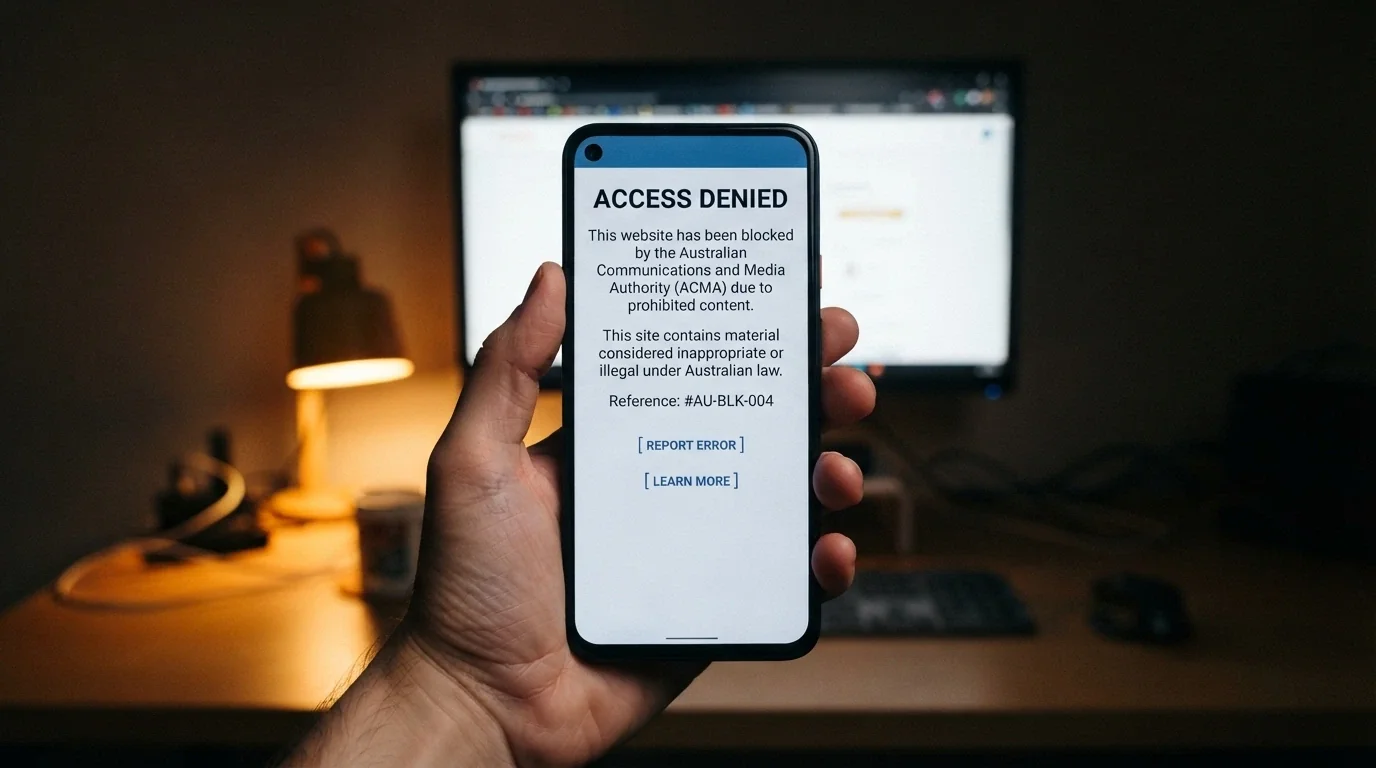
The Interactive Gambling Act 2001 is the federal prohibition, and it is unambiguous. Online casino games, online pokies and in-play sports betting cannot be licensed for or supplied to a person in Australia. There is no online casino licence in any state or territory. The Australian Communications and Media Authority enforces the prohibition: it investigates complaints, issues formal warnings, refers operators for civil penalty proceedings, and directs Australian internet service providers to block illegal sites. The ACMA has had more than 1,564 illegal gambling and affiliate websites blocked since November 2019, and more than 225 illegal services have withdrawn from the Australian market since enforcement was strengthened in 2017.
The licensed market exists in parallel. Wagering on races and sport placed before the event begins, lotteries and keno — those are the products state and territory regulators license. The Northern Territory Racing and Wagering Commission, administered through Licensing NT, is the de facto national licensor for online wagering; licences run for terms of up to twenty years. The brands that operate under those licences — the major Australian bookmakers — offer sports and racing, not casino. They are not an entry point to mobile casino games.
The individual player is not prosecuted under the IGA. The Act targets the provider. That detail is often quoted as if it made the play legal, which it does not — it makes the play unprosecuted. The provider is the party breaking the law; the player is the party without protection when the provider stops paying.
Licensed wagering vs offshore casinos — what the player actually gives up
The licensed wagering account comes with a toolset an offshore casino does not provide. BetStop — the National Self-Exclusion Register — excludes a single registration from every Australian-licensed online and phone wagering service. The minimum exclusion period is three months; the longest is lifetime. A punter who registers with BetStop cannot open a new licensed wagering account, cannot deposit with an existing one, and cannot collect winnings on an account that slipped through. The punter does not need to register with every operator individually; one registration covers the lot.
An offshore casino is not connected to BetStop and continues accepting a self-excluded person’s money. The register binds licensed wagering only. A punter who registers with BetStop, then opens an offshore casino account, has not stopped gambling — they have moved to the place where the Australian self-exclusion tool does not reach.
The payment-method tells are the second cut. Credit cards and credit-related products have been banned as payment for licensed wagering since 11 June 2024, with the same ban applying to digital currency. The legal deposit routes for a licensed wagering account are debit card, bank transfer, PayID/Osko, and BPAY. A site that asks for a Visa deposit or a USDT transfer is operating outside the rules a licensed bookmaker follows, which is the same rule the payment ban was built to enforce. From 1 January 2027, banks and payment providers gain express authority to block transactions to illegal gambling operators — a step that closes the deposit side of the offshore play in a way the ACMA’s site-blocking never did.
The consumer protection gap is the third cut. An Australian-licensed wagering account sits inside Australian consumer law. A dispute with a licensed bookmaker can be escalated to the relevant state or territory regulator, and the customer’s banking relationship gives them chargeback and ombudsman rights. An offshore casino account sits inside whatever jurisdiction issued the operator’s licence, which is generally not Australia. The ACMA can investigate the operator, can direct ISPs to block the site, and can pursue civil penalties — but it cannot order the casino to return a balance.
The 2026 gambling reform — advertising blackouts, AdStop and bank-level payment blocks
The Interactive Gambling Amendment (Gambling Reform) Bill 2026 is the first major rewrite of Australian gambling advertising and payment rules since the 2017 amendments. The Bill was introduced to Parliament on 2 July 2026 and passed both Houses on 19 August 2026; its advertising and inducement measures commence on 1 January 2027.
The advertising limits are the visible change. From 1 January 2027, no more than three wagering advertisements per hour are permitted between 6:00 am and 8:30 pm. A live-sport blackout runs from fifteen minutes before a live sporting event until five minutes after it ends. Radio ads are barred during school commute and school hours. Broadcasting sporting odds is banned outright. Online wagering ads may only target logged-in, age-confirmed users who have not opted out. Ads in sports venues and on uniforms are prohibited. Athletes, celebrities and influencers are barred from promoting wagering products.
The AdStop register is the second change. AdStop is a national wagering-advertising opt-out register administered by the ACMA, funded by a cost-recovery levy on licensed wagering providers. A punter who registers with AdStop does not see wagering advertising across the participating platforms; the register sits beside BetStop but does not replace it, because AdStop governs what advertising a person sees, while BetStop governs what gambling products a person can access.
The inducement cooling-off periods are the third change. From 1 January 2027, direct marketing of inducements is prohibited for fourteen days after a customer signs up and for ninety days after a person deregisters from BetStop. The cooling-off is the structural answer to the “first deposit bonus” pitch that arrives the moment an account is opened.
The payment-provider authority is the fourth change, and the one with the longest reach. From 1 January 2027, banks and payment providers gain express authority to block transactions to illegal gambling operators — a step that closes the deposit side of offshore play in a way the ACMA’s site-blocking has not. A punter whose bank decides an offshore casino is an illegal gambling operator may find the deposit declined at the banking-app screen, before the funds ever reach the casino’s PayID.
The 2026 reform also prohibits foreign matched lotteries and online keno from 1 January 2027, completing the prohibition that the IGA started. The reform is the regulatory direction, not the regulatory destination — the ACMA’s enforcement record over the first six months of 2027 will tell the story.
When to stop — deposit limits, self-exclusion and where to get help
The responsible-gambling tools an Australian player has depend on which side of the prohibition the player sits on. A licensed wagering account carries deposit limits set by the operator, activity statements mailed or downloadable on request, take-a-break facilities that suspend the account for a chosen period, and BetStop registration that excludes the player from every licensed wagering service in the country. An offshore casino carries none of those — the operator’s own deposit limit is voluntary, the activity statement is whatever the player remembers, and BetStop does not reach offshore sites.
The harm-prevalence data is the reason the tools exist. The Australian Institute of Health and Welfare put problem gambling at roughly 2.1% of Australian adults in 2022 — about 430,000 people — with high-risk gambling at 1.8%. The figures are not a judgment on a punter who plays mobile pokies; they are the population-level signal that the tools the licensing regime builds for are not optional extras.
The free help exists. The National Gambling Helpline is 1800 858 858 — free, confidential, staffed 24 hours a day, seven days a week. Gambling Help Online offers online chat, self-assessment tools, and free counselling sessions. BetStop is the single registration point for self-exclusion from every Australian-licensed wagering service. The three together are the working infrastructure.
Self-exclusion — how BetStop works and where it stops working
A BetStop registration is a single form that excludes a person from every Australian-licensed online and phone wagering service. The minimum exclusion period is three months; the longest is lifetime. The registration runs through BetStop, and once it is active, the punter cannot open a new licensed wagering account, cannot deposit with an existing one, and cannot collect winnings on an account that slipped through. The punter does not register with every operator individually; one registration covers the lot.
The mechanics are quick. The punter registers, verifies identity, and chooses the exclusion period. The exclusion is shared with every licensed wagering operator, who is required to close any existing account and refuse any new account. As at 31 July 2026, BetStop had 67,480 registrations, with 41,290 exclusions still active. 78% of registrants were under 40 at registration, and 38% chose lifetime exclusion — the population-level signal that the register is being used by the people who most need it.
The structural gap is where BetStop stops working. An offshore casino is not connected to the register, and continues accepting a self-excluded person’s money. A punter who registers with BetStop and then opens an offshore casino account has not stopped gambling — they have moved to the place where the Australian self-exclusion tool does not reach. The register is the strongest tool the licensed regime offers, and it does not reach the offshore casino sitting in the next browser tab.
The prevalence numbers — how many Australians actually need this
The Australian Institute of Health and Welfare puts problem gambling at roughly 2.1% of Australian adults — about 430,000 people — and high-risk gambling at 1.8% in 2022. The figures are not a vote on whether a particular punter has a problem. They are the population-level signal that the responsible-gambling infrastructure exists because the harm it answers is a measurable part of Australian life.
The figure does not appear on most casino comparison pages. That absence is part of the marketing — a comparison page that highlights a welcome bonus and skips the 430,000 is selling the play, not analysing it. A punter who reads the prevalence figure next to a welcome package sees the offer in its proper size: a marketing headline from a product that 2.1% of Australian adults struggle with.
The free help exists whether the punter falls in the 2.1% or not. The National Gambling Helpline — 1800 858 858 — is free, confidential, and staffed 24 hours a day, seven days a week, with online chat and counselling through Gambling Help Online. Gambling Help Online also offers self-assessment tools that take a few minutes and produce a private, individualised read on whether the punter’s gambling has crossed a line. Self-assessment is not a diagnosis; it is the first question the punter can answer honestly.
How we review and rank mobile casinos for Australian players
The ranking on this page is built on three working inputs. The first is the structural fact that no online casino licence exists in Australia, which means every operator in the ranking is offshore and the licence column is the one to weigh. The second is the operator-specific data — welcome package, payment rails, withdrawal time, catalogue depth, provider mix, mobile delivery format — drawn from affiliate testing, the operator’s own payments page, and named-source independent review where available. The third is the supporting terms research: wagering multipliers, cashout caps, validity windows, restricted-countries clauses, and the explicit list of items that could not be confirmed.
Where a specific figure could not be confirmed for this review, the article says so plainly rather than inferring one. The licence status on every operator was checked against the structural fact of no Australian licence; where an operator’s own footer states a Curaçao or Anjouan licence, that is the operator’s claim, not an independently verified register entry. Where no named-source data was returned, the operator write-up describes the brand qualitatively and instructs the punter to verify the rest directly.
The ranking’s weight is on mobile UX and payment speed, with licence transparency and bonus-term clarity as the secondary signals. A punter choosing between operators will typically decide on the deposit rail first, the payout speed second, and the bonus third — and the ranking reflects that order, not the order of the headlines. The criteria are qualitative; no scorecard, percentage weighting, or star rating has been invented to dress up the order. The order is the editor’s read of the available data.
The limits of the review are explicit. The operator sweep during research was incomplete, and several operator write-ups carry “not confirmed” entries on the bonus, free spins, wagering, validity, and provider list. The regulator’s public licence register was not reached during research, which is why every licence entry on the comparison table reads as “not independently verified” or “Curaçao-claimed” rather than as a confirmed register entry. A punter who treats this page as the only source has read a partial picture; a punter who treats it as the start of the verification has read it correctly.
Your next move — what to check before you sign up at any mobile casino
The five checks below are drawn from every section above. None of them is a substitute for the rest, and none of them takes long.
First, check the licence. The licence footer on the operator’s own site — not the affiliate page — names the regulator. Cross-check the licence number, if one is quoted, against the regulator’s public register. A Curaçao or Anjouan licence is a foreign jurisdiction’s permission to operate; it is not Australian consumer protection.
Second, read the restricted-countries clause. The clause names the jurisdictions the operator refuses to serve, and it is the only public signal of how seriously the operator treats its terms. A clause that lists “Australia” among the excluded jurisdictions is a sign the operator is not set up to serve Australian accounts at all — a worse starting position than an operator that lists Australian-friendly terms.
Third, test the payment rail. Make the minimum deposit through the rail the operator advertises — PayID, crypto, or otherwise — and request a small withdrawal before committing a larger balance. The first withdrawal is the test of the operator’s payout record. A 48-hour withdrawal at the minimum is not the same as a 48-hour withdrawal at five figures, but it is the only test a punter can run cheaply.
Fourth, read the bonus terms before claiming. The wagering multiplier, the cashout cap, the validity window, and the max-bet restriction are the four numbers that decide whether the bonus ever pays out. A 50x wagering requirement on a bonus balance is a different product from a 20x wagering requirement; a A$50 cashout cap is a different product from no cap. The headline figure is the smallest part of the offer.
Fifth, know the limits of BetStop. A BetStop registration excludes a punter from every Australian-licensed wagering service — and from no offshore casino. The register is the strongest tool the licensed regime offers, and it does not reach the offshore casino sitting in the next browser tab. A punter who registers with BetStop and then opens an offshore casino account has moved, not stopped.
The structural point remains. Every mobile casino an Australian player sees is offshore, and every one of them runs on a rulebook that does not include Australian consumer protection, BetStop coverage, or banking ombudsman recourse. The 1800 858 858 helpline is free, confidential, and answered 24 hours a day — it is worth saving before it is needed.
Frequently asked questions
What is the minimum age to gamble online in Australia?
The minimum age for any commercial gambling activity in Australia is 18, including online casino play at offshore sites. The age is enforced by KYC checks at the operator, not by an Australian regulator — but an operator’s KYC failure does not legalise underage play. A player under 18 should not be at any offshore casino.
What happens if I win money at an offshore mobile casino in Australia?
The win is yours under the operator’s terms — but the operator’s terms, not Australian consumer law, decide whether and how it is paid. The ACMA cannot recover a refused withdrawal, BetStop does not apply, and there is no Australian ombudsman. The win becomes withdrawable only if the operator agrees, and the only practical protection is to choose an operator with a public payout track record before depositing.
Are real-money pokies actually accessible on an Australian phone?
Yes. Every offshore mobile casino in this ranking runs its pokies catalogue in a mobile browser, and any smartphone from the past three years on iOS 15 or Android 9 handles the full catalogue. The play is accessible on the phone; the protection framework behind it is not Australian.
Can I get a no-deposit bonus at an Australian-facing mobile casino?
Yes — most offer some variant. The current shape is 20 to 30 free spins on registration with 30x to 60x wagering on winnings, A$50 to A$150 cashout caps, 24-hour to three-day validity, and max-bet restrictions of A$0.15 to A$5 per spin. The headline is small; the terms decide the value.
Does BetStop self-exclusion cover offshore mobile casinos?
No. BetStop binds only Australian-licensed wagering services. Every offshore mobile casino in this ranking is not connected to the register and will continue accepting a self-excluded person’s money. The register is the strongest self-exclusion tool the Australian regime offers, and it does not reach offshore play.
How fast does a PayID casino deposit actually land?
Near-instantly. PayID rides on Australia’s New Payments Platform and clears within seconds, 24/7, at CBA, ANZ, NAB and Westpac. The deposit is the fast leg — the PayID withdrawal is a separate process that runs through the casino’s own queue and typically takes 36 to 72 hours end-to-end at PayID-only operators.
Written by the editors at Fast Payout Casinos AU.