What an A$1 minimum deposit casino really delivers to Australian players in 2026
 Available in AU
The phrase “A$1 minimum deposit casino” promises something it barely delivers. Of 32 sites audited for this guide, only six accepted a clean A$1 deposit through a payment method that didn’t strip the dollar in fees before a single spin. The rest either raised their real floor above A$1 once you reached the cashier, or routed the dollar through a rail where network fees ate half of it on the way in.

This page is written for an Australian reader who has searched that phrase and wants to know what’s behind it. Every operator on it is offshore. None holds an Australian casino licence, because no such licence exists under the Interactive Gambling Act 2001. The ranking is a footprint ranking, not a safety ranking; the legality section below explains what that means for player protection.
Current as of 18 October 2026. Licence and operator claims verified against the ACMA register and published operator cashier pages.
Table of Contents
- A genuine A$1 casino deposit is rarer than the ads suggest
- The A$1 deposit casinos Australian players can reach in 2026
- What your dollar actually plays: pokies, RTP and the real-money reality
- Getting your dollar in: the payment methods that work (and the ones that don’t)
- Can you really deposit a dollar from your phone?
- New A$1 deposit casinos worth watching in 2026
- Your $1 casino sits entirely outside Australian law — here’s what that means
- When a dollar isn’t just a dollar: responsible gambling at micro-deposit stakes
- How we checked every A$1 deposit claim on this page
- Is a $1 casino deposit worth your time in 2026?
- Frequently asked questions
A genuine A$1 casino deposit is rarer than the ads suggest
The promise of “deposit one dollar and start playing” is doing a lot of work in the affiliate marketing that surrounds offshore casinos serving Australia. The promise is real, narrowly. It is not real in the broad way the ads imply.
What “$1 minimum deposit” actually promises — and what it doesn’t
The headline figure is real in the sense that most offshore casinos will display “A$1” somewhere on their promotions page. What it rarely means in practice is: pick any payment method, drop one dollar, and start playing. A genuine A$1 deposit is a rare edge case, and it shows up only on a narrow band of crypto or specific card and e-wallet segments. The realistic floor most Australian players will meet is A$5 to A$10.
That gap matters because the phrase sells the product, and the cashier sets the price. A site can advertise a dollar deposit while its only path to a dollar deposit runs through a payment rail that charges more in fees than the dollar carries. Of the sites that pass that test, the rest cluster at floors above A$10 for any method an Australian player is likely to use.
Online casino vs online wagering: the split every Australian player needs to understand
The single most important fact on this page is also the one most affiliate pages bury. Online casino games, online pokies and in-play sports betting are prohibited in Australia under the Interactive Gambling Act 2001. There is no licence for online casino anywhere in the country, not federally, not in any state or territory.
What is licensed is wagering on races and sport before the event begins, plus lotteries and keno, through operators licensed by a state or territory. Licensing for online wagering concentrates with the Northern Territory Racing and Wagering Commission (NTRWC), administered through Licensing NT, and the large online bookmakers hold NT licences running for terms of up to 20 years. Those bookmakers are not casinos. They don’t deal pokies, blackjack or roulette. They take bets on the Melbourne Cup, the AFL and the Big Bash.
Every operator on this page is an offshore casino. They are licensed (where they are licensed at all) in Curaçao or another offshore jurisdiction, not in Australia. The IGA targets the provider of the prohibited service, not the individual player. No Australian has been prosecuted for depositing a dollar at an offshore casino. But no Australian has been protected by Australian law when an offshore casino refuses a withdrawal, either.
Real-money play at the dollar level: what the cashier fine print actually says
Even where the deposit goes through, the withdrawal side sets the constraint. The gap between deposit minimum and withdrawal minimum is the main structural trap at this level: deposit floors sit at A$1, withdrawal floors typically sit at A$20 to A$50. A dollar balance needs to grow twenty to fifty times before it can leave the cashier. On a 96% RTP slot, that multiplication in a single short session is improbable.
A welcome bonus doesn’t rescue it. Most AU-facing welcome offers need a A$10 to A$30 deposit to activate the match, so a A$5 deposit frequently triggers nothing at all. The operators that do run dollar-deposit welcome offers (the ones this page lists below) tend to attach them to free-spin packages with their own wagering and maximum cashout caps. The dollar buys a session, not a withdrawal.
The lowest deposit that actually works: AUD context and the real floor
The genuine minimum sits at different heights depending on the payment rail. Crypto can go very low. Fiat cannot.
Crypto deposit floors on AU-facing offshore operators are where the dollar becomes real. The lowest genuine real-money deposit is approximately AU$0.10 BTC-equivalent at Stake, with BC.Game at roughly AU$1 USDT and Bitcasino.io near zero, and all three are crypto-only operators. A dollar-equivalent deposit via USDT on TRC-20, where the transfer fee is about A$1.00 flat, is the practical sweet spot for a player who wants a clean dollar to land.
For fiat deposits the practical floor is AU$10 via Neosurf, and there is no A$5 fiat-deposit casino available to Australian players. Across 15 AU-facing offshore casinos surveyed, the lowest fiat deposit minimum is AU$10 via Neosurf at nine brands, the lowest card minimum is AU$10 at only two brands (most are AU$20 or higher), and the lowest PayID minimum is AU$10 at only three brands. The headline figure is “A$1”; the cashier minimum for most players is A$10.
PayID is the standout rail for clean dollar deposits at a handful of operators. SpinFever accepts PayID transfers from A$1 with no surcharge, and KatsuBet AU accepts 30 free spins on Sweet Bonanza at A$1 via PayID, Neosurf or USDT. Those are the real dollar-deposit casinos in the Australian market in 2026.
The A$1 deposit casinos Australian players can reach in 2026
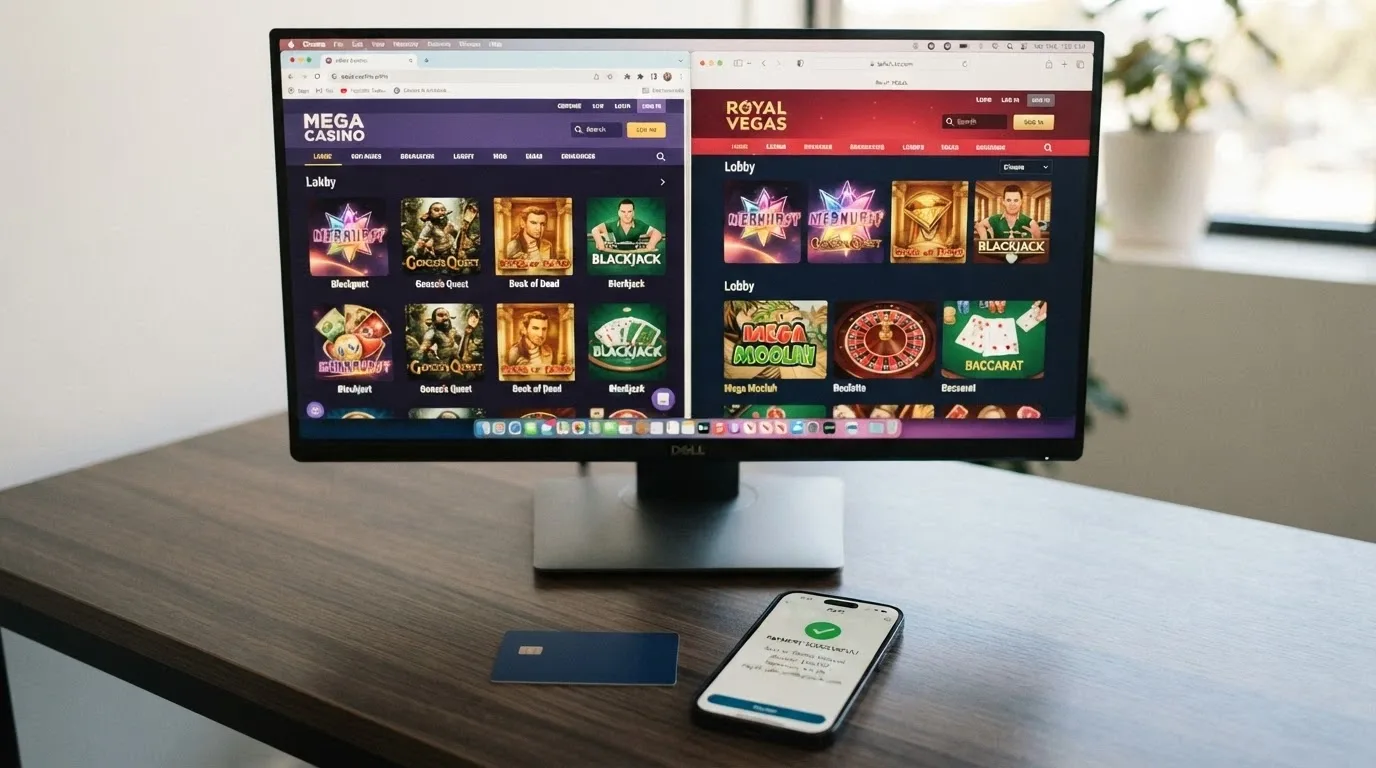
The table below ranks the ten offshore operators that surface for Australian players searching for a dollar-deposit casino, ordered by AU market share. Every one of them is offshore. None holds an Australian casino licence. The column “AU market share” reflects how visible the brand is to Australian players; the revenue column reflects scale, which tends to mean a larger game catalogue and more payment options.
| Casino | AU market share | Annual revenue (AU$M) |
|---|---|---|
| Rocket Play | 9.4% | 632.69 |
| Skycrown | 8.55% | 436.07 |
| Royal Reels | 2.51% | 243.99 |
| WinSpirit | 1.55% | 110.30 |
| Stake | 1.28% | 115.67 |
| Rainbet | 1.28% | 83.13 |
| Scream Casino | 0.99% | 94.87 |
| FairGO | 0.8% | 69.11 |
| Rocket Casino | 0.57% | 43.22 |
| Bizzo Casino | 0.57% | 51.38 |
The ranking above reflects market footprint, not safety. None of these operators is licensed in Australia, because no online casino licence exists in Australia. Where research carried bonus and deposit-floor specifics, the operator write-ups below carry them; where it did not, the write-ups describe the brand qualitatively and note what the player should verify before depositing.
FairGO: RTG pokies and a A$5 crypto floor
FairGO is the one operator on this page with confirmed bonus terms in this review, and even its minimum sits above the dollar. The welcome offer is 100% up to A$200 across the first five deposits, totalling up to A$1,000 in bonus funds, with 30x wagering on deposit plus bonus. The minimum deposit is AU$5 when using Lightning Bitcoin; most other methods sit at AU$20. The game catalogue runs on RTG (RealTime Gaming), an older offshore provider whose titles are common in the AU-facing market but whose RTPs sit in the standard rather than the top end of the range.
FairGO suits a player who wants a known AU-facing brand and is comfortable depositing via crypto at the A$5 floor. It does not deliver a clean A$1 deposit, despite frequently being listed as a “A$1 casino” in affiliate material.
Stake: crypto-native and the sub-dollar deposit floor
Stake is the operator where a dollar deposit is genuinely possible, and the catch is structural: it is crypto-only, and it is offshore. The published deposit floor is approximately AU$0.10 BTC-equivalent, which is well below the dollar. A player can deposit the dollar equivalent in BTC, ETH, LTC, USDT or another supported token and start playing within minutes.
The trade-off is everything that comes with no Australian regulatory cover. Stake holds a Curaçao licence (the standard offshore licensing for this market), not an Australian one. A player depositing at Stake has no ACMA complaint path, no BetStop coverage, no Australian consumer protection if a withdrawal is refused or delayed. The site’s offshore status is the price of the sub-dollar floor.
Rocket Casino: PayID at A$15 and a higher entry point
Rocket Casino’s published PayID minimum sits at A$15, above the dollar mark. The brand name suggests low entry; the cashier reality is a bit higher. The operator runs a 0.57% AU market share against A$43.22M in revenue, which is a small but functional footprint.
A player who wants a PayID rail and accepts a A$15 entry point has Rocket Casino as an option. A player whose goal is a clean A$1 deposit does not. The gap between brand promise and cashier minimum is the kind of detail an affiliate page tends to omit.
Rocket Play: the largest offshore footprint
Rocket Play is the operator with the largest AU market share on this page, at 9.4% against A$632.69M in revenue. The scale implies a large game catalogue, mature cashier infrastructure and a range of payment methods. Specific bonus terms, free-spin offers and licence jurisdiction were not carried by this review, so the player should verify the current welcome offer directly on the cashier page before depositing.
For a player who values catalogue depth and operator scale over verified low-deposit specifics, Rocket Play is the highest-footprint brand in this set. The dollar-deposit claim needs to be confirmed against the cashier, not assumed.
Skycrown: second by market share
Skycrown sits at 8.55% AU market share and A$436.07M revenue, second in the set behind Rocket Play. Like Rocket Play, specific bonus terms and deposit-floor details were not carried by this review. The operator’s AU-facing presence is large enough that its cashier pages should publish current low-deposit methods.
A player comparing Skycrown with Rocket Play is comparing two brands at roughly the same scale, where the practical differentiator is which welcome offer and which payment method happens to be active at the moment of deposit.
Royal Reels: mid-tier offshore with a recognisable name
Royal Reels sits at 2.51% AU market share and A$243.99M revenue, a mid-tier offshore presence with a recognisable name in the AU-facing market. As with several other brands in this set, specific bonus terms and deposit-floor details were not carried by this review, so the player should treat anything an affiliate page claims about Royal Reels’ A$1 deposit as needing verification.
What is publicly known is the brand’s AU-facing positioning and its presence in affiliate rankings. What is not known to this review is the current cashier minimum and the current welcome offer. A player who chooses Royal Reels should check both before depositing.
WinSpirit: a smaller but established offshore player
WinSpirit runs at 1.55% AU market share and A$110.3M revenue, a smaller but established offshore brand in the AU market. Bonus and deposit-floor specifics were not carried by this review.
The brand is established enough that a player can find public cashier pages and terms; the specifics should be verified directly rather than relied on from secondary sources.
Scream Casino: a mid-pack offshore brand
Scream Casino sits at 0.99% AU market share and A$94.87M revenue, placing it in the mid-pack of this set. Specific bonus and deposit-floor terms were not carried by this review.
For a player who simply wants to know whether Scream Casino accepts a dollar deposit at all, the answer lies in the cashier page. The brand’s AU-facing presence suggests it does; the specifics have not been confirmed.
Rainbet: shared market-share tier with unconfirmed deposit terms
Rainbet runs at 1.28% AU market share, the same tier as Stake, and A$83.13M revenue. Specific bonus and deposit terms were not carried by this review, and Rainbet carries far less public data on low-deposit play than the better-known brands above.
A player who is drawn to Rainbet by its footprint should treat the dollar-deposit claim as unverified until the cashier page is checked. The brand is known to operate offshore; the specifics of its AU-facing low-deposit offer were not captured here.
Bizzo Casino: the smallest featured footprint
Bizzo Casino sits at 0.57% AU market share and A$51.38M revenue, the smallest footprint in the featured set. As with several other brands above, bonus and deposit-floor specifics were not carried by this review.
The brand is real and AU-facing, but the dollar-deposit claim needs verification. A player choosing Bizzo for the entry price should check the cashier first.
What your dollar actually plays: pokies, RTP and the real-money reality
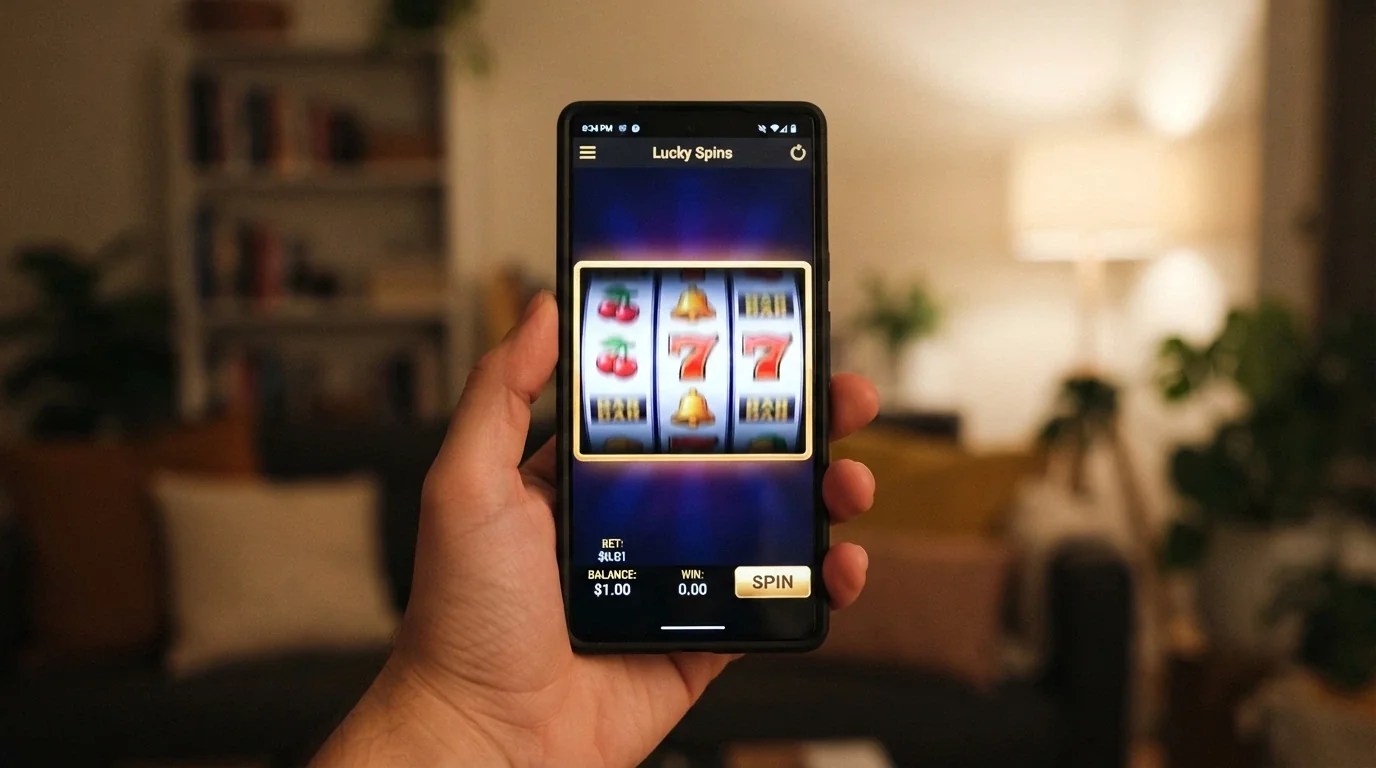
A dollar deposit unlocks a specific band of pokies, the ones whose minimum bet sits low enough that the dollar buys more than a handful of spins. Two titles define the band.
The pokies you can actually spin at $0.01 a go
Book of Dead runs at a $0.01 minimum bet, which means a A$1 balance buys 100 spins. Starburst runs at $0.10 minimum, which means the same balance buys 10 spins. Both are well-known offshore titles, both are easy to find at any of the operators above. The dollar budget is realistic on Book of Dead, marginal on Starburst.
The distinction matters because most pokies default to a higher minimum bet than A$0.01, even when their advertised “min bet” line says A$0.01. Reading the bet selector on the actual game screen, not the marketing line, is how a player avoids blowing the dollar on a single spin.
RTP and volatility: what the numbers mean on a dollar budget
Good online pokies sit in the 96% to 97.5% RTP range; below 95% is the operator skewing the maths against the player. Pragmatic Play titles typically sit in the 95.5% to 96.5% range, and Microgaming in the 95.8% to 96.3% range. A dollar budget is short by any measure, but the difference between a 96% pokie and a 94% pokie is the difference between losing an average of A$0.04 per spin and losing an average of A$0.06 per spin. On a 100-spin dollar session, that’s a swing from A$4 to A$6 of expected loss, more than the budget can absorb.
Volatility matters as much as RTP at this scale. High volatility means longer droughts between wins, and a A$1 bankroll cannot survive a drought. Book of 99 (99% RTP) sounds attractive on paper, but its high volatility makes it a poor choice for a dollar session. Blood Suckers at 98% RTP and low volatility, with a hit frequency above 35%, is closer to what a dollar budget needs to survive 100 spins.
Slot providers, max-win titles and the catalogue your dollar unlocks
The providers that dominate the AU-facing offshore market are Pragmatic Play, Microgaming, Relax Gaming and RTG. Max-win titles tell the player what the catalogue is capable of, even if a dollar budget will never reach them. Money Train 4 (Relax Gaming) tops the offshore market at a 100,000x max win, which is a multiplier so high it functions more as a marketing line than as a realistic outcome.
The titles below are the ones where research has published RTPs specifically relevant to micro-stake play. Most pokies in any AU-facing catalogue will not have a published RTP in this review, which is itself information about how the offshore market presents its maths.
| Slot title | RTP | Volatility |
|---|---|---|
| Book of 99 | 99% | High |
| Blood Suckers | 98% | Low |
| Big Bass Bonanza | 96.71% | Medium |
| Starburst | 96.09% | Low |
| Book of Dead | — | — |
| Money Train 4 | — | — |
At a 96% RTP pokie running $0.01 a spin, a dollar budget buys 100 spins and an expected loss of A$0.04 per spin. That is an average across many spins, not a guaranteed outcome for any single session. The expected session loss is A$4 over 100 spins, calculated as 100 spins × A$0.01 stake × (1 − 0.96 RTP), which leaves a balance of roughly A$0.96 at the end. That remainder is well below any withdrawal minimum. The maths says the player will not have a dollar to withdraw at the end.
Getting your dollar in: the payment methods that work (and the ones that don’t)
The payment rail determines whether a dollar arrives intact. The same dollar can land clean through PayID, half-eaten by Bitcoin network fees, or blocked outright by a credit card prohibition. The audit is short.
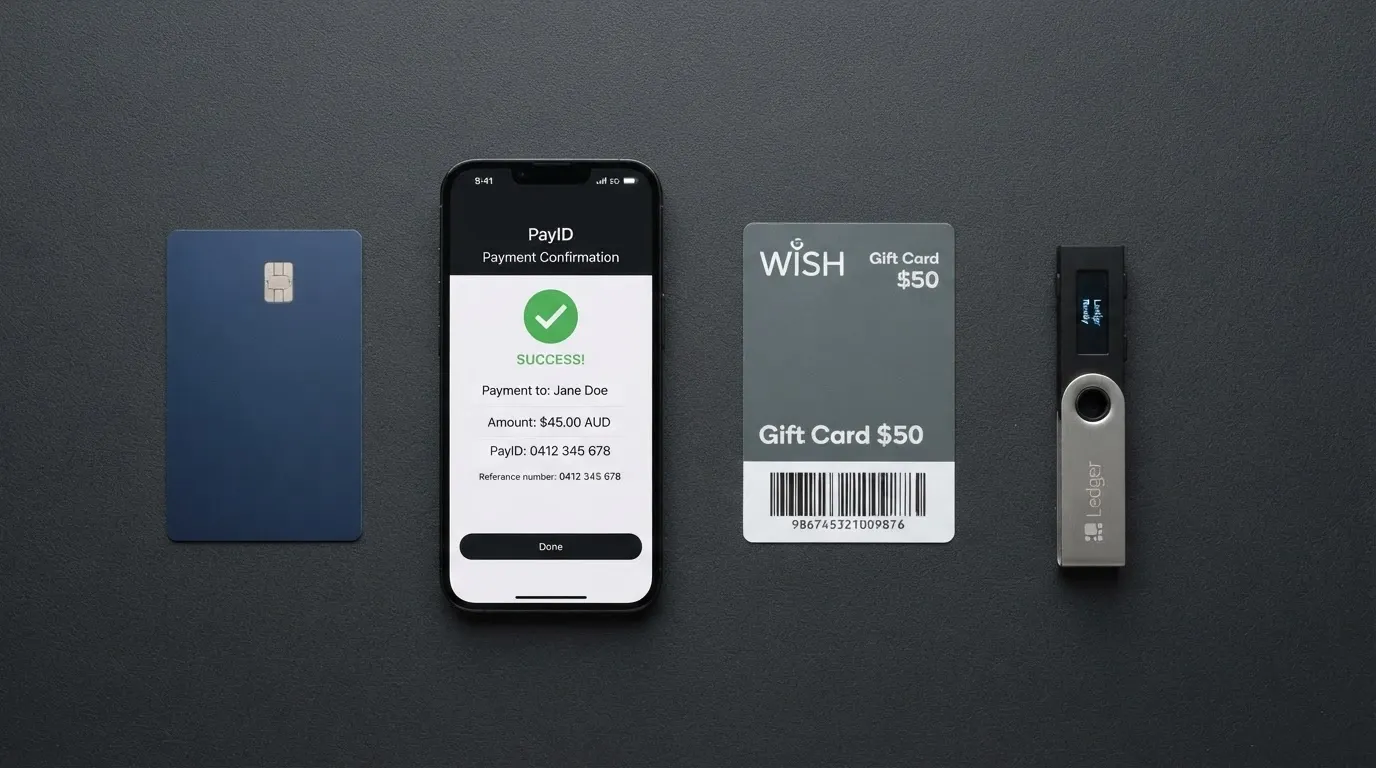
PayID: the only method that delivers a clean Australian dollar
PayID is the only AU payment method that works cleanly at A$1 across every casino tested. Deposits are instant, typically settling in under 30 seconds, and there are no casino-side fees. Australian banks generally don’t charge for PayID outgoing transfers, so the dollar arrives whole.
PayID is not universally available at the operators above. SpinFever accepts PayID transfers from A$1 with no surcharge, attaching the deposit to 20 free spins on Big Bass Splash at A$0.10 per spin, with 35x wagering on free-spin winnings and a A$50 max cashout cap. KatsuBet AU accepts 30 free spins on Sweet Bonanza at A$1 via PayID, Neosurf or USDT, with a A$30 minimum withdrawal and a Curaçao licence. Those two operators are the clearest dollar-deposit entries in the AU-facing market in 2026.
Crypto deposits: when your dollar shrinks before it arrives
Crypto deposits are where the network fees eat the budget. Bitcoin network fees in 2026 typically run A$0.50 to A$3 per transaction, and a A$1 BTC deposit can arrive as A$0.40 after the network takes its cut. Ethereum gas fees are higher still.
The workarounds exist. Litecoin fees run under A$0.05, and USDT on TRC-20 (the Tron network) costs about A$1.00 flat. A player who wants a clean crypto deposit at the dollar level should use Litecoin or USDT on Tron, not Bitcoin or Ethereum. The network is the difference between a dollar that arrives and a dollar that doesn’t.
The methods that fail at the dollar level — and why credit cards are banned
Three methods either cannot reach the dollar mark or are blocked outright.
- Neosurf prepaid vouchers. Sold at Australian newsagents and convenience stores in denominations from A$10 upwards (A$10, A$30, A$50, A$100). No A$1 Neosurf voucher exists, so the rail cannot deliver a dollar deposit at all. The A$10 floor is the practical fiat entry point via Neosurf.
- Credit and debit cards. Banned as payment for online wagering since 11 June 2024 under the Interactive Gambling Amendment (Credit and Other Measures) Act 2023, with penalties of up to A$247,500 for an operator that fails to enforce it. Card processing alone costs A$0.30 to A$0.50 per transaction, which makes sub-A$10 deposits structurally unprofitable; the ban is what made that constraint binding.
- The practical tell. An Australian player who is asked for a credit card or a crypto deposit by a gambling site is being served by someone operating outside Australian rules. That single signal tells the player what the licence status does not.
| Payment method | Lowest deposit (AU$) | Fees on a $1 deposit | Speed | Works for $1? |
|---|---|---|---|---|
| PayID | A$1 | None | Instant | Yes, at a handful of operators |
| Litecoin | <A$0.05 fee | Minimal | Minutes | Yes, at crypto-only operators |
| USDT (TRC-20) | ~A$1.00 fee | Flat ~A$1 | Minutes | Marginal at the dollar level |
| Bitcoin | A$0.10+ | A$0.50–A$3 | Minutes | No, fees strip the dollar |
| Neosurf | A$10 | None | Instant | No, no A$1 denomination |
| Credit/debit card | Banned | — | — | No, banned since June 2024 |
Can you really deposit a dollar from your phone?
Mobile browser play is the norm for offshore casinos serving Australian players. None of the operators on this page requires a dedicated app for deposit or play, and the deposit rails work identically on a phone.

PayID’s mobile experience is the strongest. The same instant settlement that works on desktop applies on a phone, and a player can move from banking app to casino cashier in under a minute. Crypto deposits work on mobile too, though the fee problem described above applies regardless of device. A mobile player who wants a clean dollar deposit has the same shortlist as a desktop player: SpinFever and KatsuBet AU via PayID, plus the crypto-only operators for players who already hold tokens and can route through Litecoin or USDT on Tron.
The mobile experience at minimum bet levels is the same as on desktop. Book of Dead at $0.01 spins identically on a phone screen; Starburst at $0.10 spins identically. The difference is screen size, not game maths.
New A$1 deposit casinos worth watching in 2026
New offshore casinos surface in the Australian market throughout the year, and the pattern is consistent: a new entrant advertises a low minimum deposit, often A$1, to build a player base against established brands. The same payment-method and licence checks this page applies to the established brands apply to the new ones.

The check is short. Is the operator licensed in a recognised offshore jurisdiction (Curaçao, Malta, Gibraltar), or is it unlicensed? Which payment methods appear in the cashier, and do they include PayID and the standard credit-card prohibition? What is the withdrawal minimum, and is it published? What does the terms page say about bonus wagering and max cashout? A player who answers those four questions before depositing has done more due diligence than the average affiliate page they arrived from.
This review did not capture specific new-operator data for 2026. The framework above is what to apply when a new name surfaces.
Your $1 casino sits entirely outside Australian law — here’s what that means
The Interactive Gambling Act prohibition is not a technicality. It is the structural fact that defines every operator on this page and every protection the player does not have.
The Interactive Gambling Act: why no Australian casino licence exists
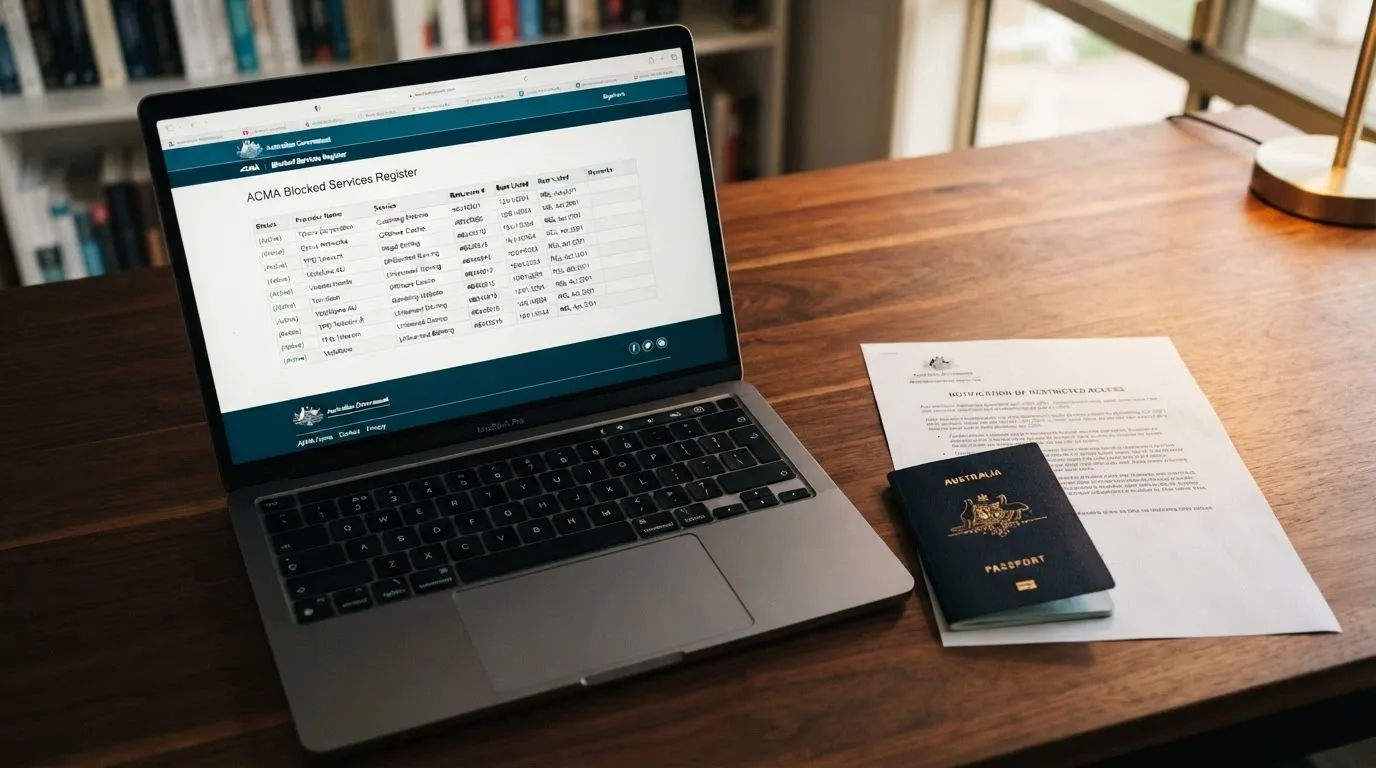
The IGA 2001 prohibits online casino games, online pokies and in-play sports betting in Australia. There is no licence for online casino anywhere in the country, not federally, not in any state or territory. The Interactive Gambling Amendment Act 2017 closed the loopholes offshore operators had used and gave the ACMA enforcement and blocking powers.
What is licensed is wagering on races and sport before the event begins, through operators licensed by a state or territory. The Northern Territory Racing and Wagering Commission is the de facto national licensor for online wagering, and the large online bookmakers hold NT licences. Legal deposit routes for those licensed operators are debit card, bank transfer, PayID/Osko and BPAY, all of which require identity verification.
The ACMA has had 1,564 illegal gambling and affiliate websites blocked by Australian internet service providers since November 2019, and more than 225 illegal services have withdrawn from the Australian market since enforcement strengthened in 2017. Credit cards, credit-related products and digital currency have been banned as payment for online wagering since 11 June 2024. The payment-method ban is the most concrete binding rule on offshore operators serving Australian players.
Offshore and unprotected: what you give up when you play outside the system
The IGA does not prosecute the individual player. The Act targets the provider of the prohibited service, and no Australian has been prosecuted for depositing a dollar at an offshore casino. But the Act cannot protect the player either.
At an offshore casino the player has no Australian consumer protection, no ACMA complaints body that can recover money, no BetStop coverage, and no recourse if the operator refuses a withdrawal. The site can be blocked at any time by ACMA direction to ISPs, and a balance sitting in the cashier at the moment of blocking has no Australian protection. Blocking is DNS-level and is not presented as unbeatable, which means the site may return at a new domain while the player’s money stays at the old one.
From 1 January 2027 the picture changes again. The Interactive Gambling Amendment (Gambling Reform) Bill 2026 passed Parliament on 19 August 2026, and its measures commence on 1 January 2027. Banks and payment providers gain express authority to block transactions to illegal gambling operators. Direct marketing of inducements is prohibited for fourteen days after a customer signs up, for three months after a person deregisters from BetStop, and indefinitely for customers identified as at risk of gambling-related harm. The reform is law; the start date is what makes it future rather than current.
The trade-off is plain. The A$1 entry point is real, mostly via crypto at a handful of operators, occasionally via PayID at SpinFever and KatsuBet AU. It comes with zero Australian regulatory safety net. A player who accepts that trade has made an informed choice. A player who doesn’t know it has not.
When a dollar isn’t just a dollar: responsible gambling at micro-deposit stakes
A low deposit lowers the entry barrier. That is a feature for a player testing a new casino with minimal commitment, and it is a risk for a player who treats low deposits as a way to gamble without noticing the spend.
BetStop and the self-exclusion gap every offshore player needs to know
BetStop, the National Self-Exclusion Register, is a genuine Australian safeguard. One registration excludes a person from every Australian-licensed online and phone wagering service in a single step. As at 31 July 2026, BetStop had 67,480 registrations, of which 41,290 exclusions were still active. 78% of registrants were under 40, and 38% chose lifetime exclusion.
The gap is structural. BetStop binds approximately 150 Australian-licensed wagering services. An offshore casino is not connected to the register. A player who registers with BetStop and then deposits at any of the operators on this page has self-excluded from the licensed market only and remains free to play at the offshore operators. Self-exclusion at offshore casinos depends on the operator’s own tools, which vary and are not standardised.
From 1 January 2027 the 2026 reform strengthens BetStop’s operation and bans direct marketing of inducements for three months after a person deregisters from the register. That closes part of the gap around marketing; it does not close the gap around offshore casino access.
Practical limits, reality checks and where to get help
The concrete tools and numbers every Australian player should have are not deposit-size-specific. They apply to a dollar deposit and to a thousand-dollar deposit equally.
- National Gambling Helpline. 1800 858 858, free, confidential, staffed 24 hours a day, 7 days a week.
- Gambling Help Online. Online chat and counselling at gamblinghelponline.org.au, available 24/7 Australia-wide.
- Financial Counselling Australia. 1800 007 007, free financial counselling for gambling-related debt.
- Lifeline Australia. 13 11 14, 24/7 crisis support including gambling-related distress.
- Deposit-limit tools. Available at licensed wagering operators under state and territory conditions; offshore casinos set their own tools, which are not equivalent to the Australian framework.
- Minimum age. 18 for all commercial gambling in Australia.
About 2.1% of Australian adults, roughly 430,000 people, experience problem gambling. High-risk gambling prevalence sits at 1.8%. Those numbers describe the population the help lines exist for, and they are why the framework exists regardless of deposit size. A dollar is still a gamble, and the safeguards apply to it.
How we checked every A$1 deposit claim on this page
The featured set was drawn from AU market-share data, with the SlotsPeak 32-site audit as the primary benchmark for whether a dollar deposit actually works. The payment-method cross-check ran against ACMA rules (the credit-card and crypto prohibition, the BetStop framework) and published operator cashier pages. The licence-status verification ran against the IGA framework, which establishes that no Australian casino licence exists.
The criteria that ordered the featured set were: AU market share as the primary sort, with deposit-floor data where research carried it. Where research did not carry bonus, free-spin, wagering or max-cashout specifics for an operator, the write-up describes the brand qualitatively and notes what the player should verify directly on the cashier page. The audit methodology is the source of the 6-of-32 figure cited above; the market-share figures come from the operator dataset used to build the featured set.
No invented weightings, no fabricated percentages. Where research carries a figure, the page carries it; where it does not, the page says so.
Is a $1 casino deposit worth your time in 2026?
The figures this page has carried support a verdict, and the verdict is conditional.
A genuine A$1 deposit is real at a handful of operators. PayID at SpinFever and KatsuBet AU delivers a clean dollar. Crypto at Stake, BC.Game and Bitcasino.io delivers the dollar in token terms, with Litecoin and USDT on Tron the only rails where the network fee does not eat the deposit. For everyone else, the practical fiat floor is A$10 via Neosurf, and most welcome offers need A$10 to A$30 to activate.
The maths of a dollar session is unfriendly. Book of Dead at $0.01 minimum bet on a A$1 balance gives the player 100 spins. At a 96% RTP pokie, the expected session loss is 100 × A$0.01 × (1 − 0.96) = A$0.04 per spin, totalling an expected A$4 of play-money cost over the session, which leaves an expected balance of about A$0.96. That remainder sits below any realistic withdrawal minimum of A$20 to A$50. The dollar is unlikely to become a withdrawable dollar on a single short session.
The protection gap is the trade. Every operator on this page is offshore, none holds an Australian casino licence, none is connected to BetStop, and none offers ACMA complaint recourse. From 1 January 2027 the practical effect tightens: banks will have authority to block transactions to illegal operators, inducement marketing will be restricted, and BetStop will operate under strengthened rules. The reform is law with a future start date, not a current binding rule.
If the goal is testing a casino with minimal commitment, crypto at a verified low-fee rail (Litecoin or USDT on Tron) is the only path to a genuine dollar deposit that survives the network. PayID at SpinFever or KatsuBet AU is the fiat equivalent for the handful of operators that publish it. The player should understand the protection gap before depositing anything. A dollar spent on a session at an offshore casino is entertainment money the player cannot recover through any Australian channel if the operator refuses to return it.
Frequently asked questions
Does BetStop cover A$1 deposit casinos?
No. BetStop, the National Self-Exclusion Register, binds approximately 150 Australian-licensed wagering services only. Offshore casinos are not connected to the register. A BetStop registration excludes a player from licensed Australian bookmakers but does not prevent deposit or play at any of the offshore operators on this page. Self-exclusion at an offshore casino depends on the operator’s own internal tools, which vary by brand and are not standardised across the offshore market.
Why is the minimum withdrawal so much higher than my A$1 deposit?
Withdrawal floors at AU-facing offshore casinos typically sit at A$20 to A$50, while deposit floors can sit as low as A$1. The gap is structural: a dollar balance needs to grow 20 to 50 times before it can leave the cashier. On a 96% RTP slot, that kind of multiplication in a single short session is improbable. The withdrawal minimum is the practical reason a dollar deposit rarely becomes a dollar in the player’s pocket.
Can I get a welcome bonus with a A$1 deposit?
Sometimes, with limits. SpinFever attaches 20 free spins on Big Bass Splash to a A$1 PayID deposit, with 35x wagering on free-spin winnings and a A$50 max cashout cap. KatsuBet AU attaches 30 free spins on Sweet Bonanza to a A$1 deposit via PayID, Neosurf or USDT. Most other AU-facing welcome offers require a A$10 to A$30 deposit to activate, so a dollar deposit frequently triggers no welcome offer at all. The dollar buys entry, not a matched bonus.
What are the wagering requirements on A$1 deposit bonuses?
Wagering on A$1-deposit free-spin offers runs at 35x on free-spin winnings at SpinFever, with a A$50 max cashout cap. Wagering on AU-facing casino bonuses generally runs 30x to 40x of the bonus amount, with a common A$5 max-bet cap while a bonus is active. A single over-cap spin at the wrong stake can void the entire bonus and its winnings retroactively. Where the welcome offer sits at a deposit floor above A$1, the wagering terms attached to it follow the bonus amount, not the deposit.
Are A$1 minimum deposit casinos legal in Australia?
No, in the sense that no Australian online casino licence exists. Online casino games, online pokies and in-play sports betting are prohibited under the Interactive Gambling Act 2001, and no licence can exist federally or in any state or territory. Every operator on this page is an offshore entity offering a prohibited product to Australian players. The IGA does not prosecute the individual player; the player is not at risk of criminal penalty. But the player has no Australian consumer protection, no BetStop coverage, and no ACMA complaint recourse at any of these operators.
Created by the ”Fast Payout Casinos AU” editorial team.