
The Crypto Casino Landscape for Australian Players in 2026
 Available in AU
No Australian-licensed online casino exists. None can — online casino games are prohibited under the Interactive Gambling Act 2001. Every crypto casino an Australian can actually play at is an offshore operator holding a Curaçao, Tobique or Anjouan licence, accepting deposits in Bitcoin, Ethereum or stablecoins to a wallet address rather than a bank account. This page ranks the ten offshore operators Australians use most, prices what their bonuses actually cost to clear, and maps the legal, banking and cash-out reality behind the wallet-only signup.
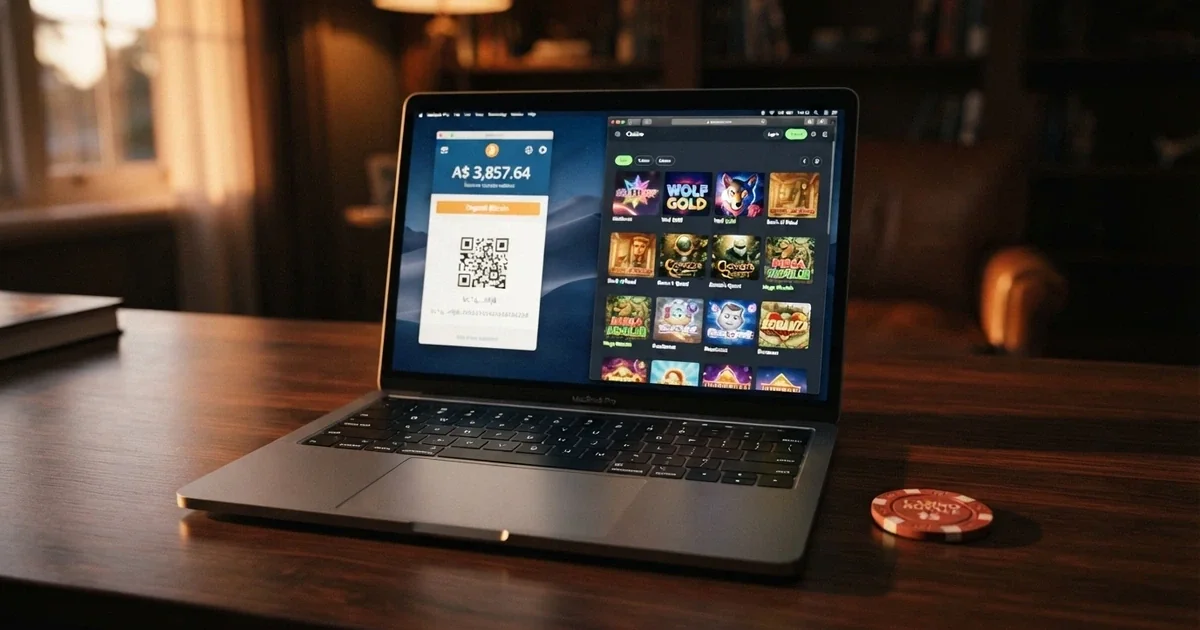
A crypto casino replaces the bank account with a wallet address and the bank transfer with a blockchain settlement. Deposits confirm in roughly three minutes. Withdrawals clear in minutes to a few hours, against one to three days at a PayID-only operator. The trade is speed and a thin layer of pseudonymity for every Australian consumer protection a player would otherwise have — no regulator, no dispute body, no BetStop coverage.
Data current as of 18 October 2026, verified against ACMA enforcement records, AUSTRAC Travel Rule guidance, and the bonus terms each operator publishes on its own site.
Table of Contents
- What a Crypto Casino Actually Means for Australian Players
- The 10 Offshore Crypto Casinos Australians Actually Use in 2026
- No-KYC Crypto Casinos: How Much Privacy Can You Actually Keep?
- Why Crypto Withdrawals Beat Bank Transfers by Days, Not Hours
- Crypto Casino Bonuses: Why the Headline Number Isn’t What You Keep
- Crypto Pokies and Slots: What Australians Are Actually Playing
- Crypto as a Casino Payment Method: What Australians Need to Know
- New Crypto Casinos: Are Fresh Platforms Worth the Risk in 2026?
- How We Selected and Ranked These Crypto Casinos
- What You Should Actually Do With This Information
- Frequently Asked Questions
What a Crypto Casino Actually Means for Australian Players
A crypto casino is an online casino that accepts deposits and pays withdrawals in cryptocurrency rather than, or alongside, fiat currency. The user opens an account, sends Bitcoin, Ethereum or a stablecoin to a wallet address the casino publishes, and plays the same games — pokies, table games, live dealer — that any licensed online casino would offer. The difference is the rail. The payment moves over a blockchain rather than through PayID, Osko, BPAY or a card network.
There is no locally licensed version of this product for Australian players. The Interactive Gambling Act 2001 makes it an offence to provide online casino games to a person in Australia. No Australian licence is available, federally or in any state or territory, and the Interactive Gambling Amendment (Credit and Other Measures) Act 2023, which commenced on 11 June 2024, additionally bans credit cards and digital currency — crypto — as a payment method for the licensed wagering services that do exist. An operator that fails to enforce the ban faces penalties of up to A$247,500. An Australian asked to deposit crypto at a gambling site is being served by someone outside the Australian rules. The crypto rail itself is the tell.
What follows across this page is the picture on the other side of that tell: which operators dominate Australian-facing search traffic, what their bonuses really cost to clear, how fast they actually pay out, where the privacy promises meet reality, and what an Australian loses by playing at an unlicensed offshore operator rather than not playing at all.
The crypto casino explained: wallets replace bank accounts
At a fiat online casino the deposit flow runs bank account → payment processor → casino. At a crypto casino it runs exchange account → personal crypto wallet → casino deposit address. The casino holds the player’s balance in a custodial wallet keyed to a username. On withdrawal, the casino signs a transaction from that wallet to the address the player provides.
Two clocks matter. The first is the casino’s internal pending period — the time between the withdrawal request and the casino broadcasting the transaction. BitStarz processes in 12 to 30 minutes on this side. Stake takes one to two hours. Wild Fortune takes three to four hours. The second clock is the blockchain’s confirmation time — the time between the transaction being broadcast and being final enough that an exchange will credit it. For USDT on the Tron network this is roughly 30 seconds. For Bitcoin it is one to three hours, depending on congestion and the fee paid.
End-to-end, a crypto-rail casino typically completes the full cash-out cycle in two to six hours. A PayID-only operator averages 36 to 72 hours for the same cash-out — and that figure is on top of any casino pending period, which is often longer at fiat casinos because their fraud and anti-money-laundering stacks include a fiat payment processor in the middle.
The privacy difference is real but narrower than marketing suggests. A fiat casino knows the bank account. A crypto casino knows a wallet address — pseudonymous, not anonymous. The blockchain ledger is public. Anyone with the address can see every transaction tied to it. What the casino does not know, until it asks, is who controls the address. Most do ask, eventually.
Bitcoin, altcoins and stablecoins — what you can actually play with
Bitcoin and Ethereum are the staples. Every featured operator accepts both. Bitcoin carries the strongest brand recognition but its price volatility is a problem: a 10 per cent Bitcoin move between cashout and AUD conversion can turn a winning session into a break-even one. Ethereum moves faster and cheaper, but its fee structure during network congestion is unpredictable.
The rail that changed the cash-out experience is USDT on the TRC-20 network — Tether issued on Tron. Tron blocks settle in three seconds. Six-confirmation finality is roughly 30 seconds. Confirmations on the receiving side land in one to three minutes. Network fees run under A$2. SkyCrown paid out a tested withdrawal in 12 minutes on this rail — the fastest figure in independent testing across the comparison set. USDC on the same network behaves similarly and is the second stablecoin choice.
LTC, XRP, DOGE and a long tail of altcoins appear on most casino deposit pages. BC.Game goes furthest with support for more than 100 cryptocurrencies. The breadth matters less than it sounds. Nearly every player who ends up holding a balance in anything other than BTC, ETH or USDT does so by accident rather than design.
The practical split is between volatile coins (BTC, ETH, most altcoins) where the player is also taking a position on the coin’s price, and stablecoins (USDT, USDC) where the AUD value of the cashout is fixed the moment the casino signs the transaction. For Australian players who intend to convert back to dollars, stablecoins remove a layer of risk that has nothing to do with the casino.
Australian law and your crypto casino account: what the rules actually say
The Interactive Gambling Act 2001 prohibits online casino games, online pokies and in-play sports betting in Australia. The prohibition targets the provider, not the individual player. No Australian has been prosecuted for using an offshore online casino. What the player loses, however, is every form of consumer protection that would normally attach.
The Australian Communications and Media Authority enforces the prohibition. It directs Australian ISPs to block illegal sites at the DNS level. As of August 2026, 1,788 illegal gambling and affiliate websites had been blocked since the first request in November 2019. More than 230 illegal gambling services have withdrawn from the Australian market since the ACMA started enforcing new rules in 2017. Both figures tell a story of attrition: the regulator cannot shut the industry down, but it can make Australia expensive to operate in.
BetStop — the National Self-Exclusion Register — binds Australian-licensed wagering services only. As at 31 July 2026, 67,480 people had registered, with 41,290 exclusions still active. The limitation for the reader of this page is the word “licensed”. An offshore crypto casino is not licensed in Australia, is not connected to BetStop, and will continue to accept a self-excluded person’s money. BetStop does nothing for the person who needs it most.
Real help exists. The National Gambling Helpline on 1800 858 858 is free, confidential and staffed 24 hours a day, seven days a week. Gambling Help Online offers chat and counselling at gamblinghelponline.org.au. Both are Australian services, available regardless of whether a person has played at a licensed or offshore operator. Approximately 2.1 per cent of Australian adults — roughly 430,000 people — experience problem gambling. The 2022 AIHW figure for high-risk gambling was 1.8 per cent.
The reform on the horizon is the Interactive Gambling Amendment (Gambling Reform) Bill 2026, which passed Parliament on 19 August 2026 and commences on 1 January 2027. From that date, broadcast gambling advertising is capped at three ads per hour between 6am and 8:30pm with a complete blackout during live sport, radio ads are barred during school drop-off and pick-up times, online ads may only be shown to logged-in users confirmed over 18 with an opt-out, and athletes, celebrities and influencers are barred from promoting wagering products. Banks and payment providers gain express authority to block transactions to illegal gambling operators. None of this changes the prohibition on online casino itself — that has been the position since 2001.
The 10 Offshore Crypto Casinos Australians Actually Use in 2026
The list below ranks the ten offshore operators that dominate Australian-facing crypto casino search traffic. Every one is unlicensed in Australia. The product they offer is prohibited under the Interactive Gambling Act 2001. The ranking reflects what each operator actually delivers — licence jurisdiction, welcome bonus shape, wagering requirement, free-spin count — not endorsement.

| Casino | Licence | Welcome Bonus | Wagering | Free Spins |
|---|---|---|---|---|
| Stake | Curaçao (Easygo Entertainment) | No traditional welcome; rakeback 5-10% + weekly raffles | N/A | — |
| BitStarz | Curaçao | Up to 5 BTC / A$10,000 across 4 deposits | 40x | 180-200 |
| Wild Fortune | Tobique Gaming Commission (#0000064) | 225% up to A$7,500 | 40x bonus / 0x FS | 250 |
| SkyCrown | Curaçao | A$8,000 + 400 free spins across 4 deposits | 40x bonus / 30x FS | 400 |
| BC.Game | Curaçao (BlockDance B.V., post-LOK) | Lucky Spin daily reward | 0x on Lucky Spin | — |
| Rocket Play | Curaçao | 300% up to A$6,000 + 300 free spins | — | 300 |
| 7Bit Casino | Curaçao | 325% up to 5.25 BTC + 250 free spins | 45x | 250 |
| Mirax Casino | Curaçao | Multi-tier BTC up to 5 BTC total + 150 free spins | 40x bonus / 45x FS | 150 |
| Ignition | Curaçao (sub-licence) | 150% up to US$3,000 (casino + poker, capped separately) | 25x (deposit + bonus) | — |
| mBit Casino | Curaçao | Up to 4 BTC + 325 free spins | — | 325 |
The spread of licence jurisdictions is narrow. Nine of ten are Curaçao-licensed, and the tenth is the Tobique Gaming Commission in Canada. None is an Australian licence, because none exists. Wagering requirements range from a 25x deposit-plus-bonus floor at Ignition to a 45x ceiling at 7Bit and Mirax’s free-spin tier. Free-spin counts run from zero (Stake, BC.Game, Ignition) to 400 at SkyCrown. The next ten subsections look at each operator individually, working through what the headline number actually buys.
Stake: the rakeback model with no traditional welcome bonus
Stake takes a different route to player acquisition. There is no deposit match. The replacement is a tiered rakeback ladder paying 5 to 10 per cent back on turnover, scaled by VIP level, plus weekly raffles. The argument is that rakeback rewards volume rather than the first deposit, and a high-volume player ends up ahead of anyone chasing a one-off match.
The library splits into two layers. The first is Stake Originals — Crash, Dice, Plinko, Mines — built in-house and verified using HMAC-SHA-512 cryptographic hashes. A player can verify that the outcome of any spin was determined before the bet was placed, which is the transparency promise that provably fair is supposed to deliver. The second layer is third-party slots and table games from providers Australians will recognise from licensed venues.
Stake launched in 2017 under Easygo Entertainment B.V. on a Curaçao licence. Estimated 2024 gross gaming revenue was around US$2.6 billion. Independent testing records a one to four hour payout window. Stake is the operator the rest of this list is measured against — for a player who values the rakeback structure and is happy to verify in-house games themselves.
BitStarz: the veteran with a 5 BTC welcome and 6,000+ games
BitStarz has been running since 2014, making it the longest-established name on this list. The welcome package runs up to 5 BTC (regionally displayed as up to A$10,000) plus 180 to 200 free spins across four deposits, with 40x wagering on the bonus and a 7-day welcome window. The standout clause is the 5x deposit cap on bonus wins: the maximum withdrawal from bonus play is five times the qualifying deposit. That cap is the difference between the headline figure and the realistic ceiling.
The game library carries more than 6,000 titles across slots, table games and live dealer, sourced from multiple providers including Pragmatic Play and BGaming. Crypto payouts tested at 0.2 to two hours, with casino-side processing in 12 to 30 minutes. BitStarz is the veteran play on this list — a large bonus on a long-running platform, with the 5x deposit cap as the price of the headline.
Wild Fortune: 0x wagering on free spins and a Tobique licence
Wild Fortune is the only operator on this list licensed outside Curaçao — Tobique Gaming Commission in New Brunswick, Canada, licence number 0000064. The Tobique framework is younger and lighter than Curaçao’s; the practical effect is similar.
The welcome package is 225 per cent up to A$7,500 plus 250 free spins. The wagering terms split: 40x on the bonus match, 0x on free spin winnings. Free-spin winnings land as cash, withdrawable. RNG is audited by iTech Labs, with eCOGRA-aligned attestations on third-party providers. The fastest tested cash-out is USDT on TRC-20 at an average of 5 hours 24 minutes across five real tests — slower than SkyCrown’s 12 minutes and BitStarz’s 0.2 to two hours, but a real figure. Wild Fortune is the interesting variant — a non-Curaçao licence and 0x free-spin wagering, traded against a slower payout.
SkyCrown: 400 free spins and the fastest tested withdrawal on the list
SkyCrown delivers the largest free-spin haul on the list — 400 — alongside an A$8,000 bonus match across four deposits. The wagering terms split: 40x on the bonus, 30x on free-spin winnings. Bonus validity runs 14 days per deposit tier, with a A$5 maximum bet during bonus play. The ceiling on free-spin wins is 10x the bonus value. The 10x cap is a hard ceiling: a player who wins well over the cap during free spins sees the excess removed.
The headline is the cash-out speed. SkyCrown paid out a tested USDT TRC-20 withdrawal in 12 minutes — the fastest figure in independent testing across the comparison set. The casino holds a Curaçao licence. The game library runs more than 6,000 titles. SkyCrown’s standout is the 400 free spins and the 12-minute USDT TRC-20 payout — the highest free-spin count and fastest tested withdrawal on the list.
BC.Game: the Lucky Spin model with zero wagering and 100+ coins
BC.Game does not run a traditional deposit match. The acquisition mechanism is a daily Lucky Spin wheel that scales with account level and deposit history. The reward varies by tier. There is no wagering requirement — Lucky Spin rewards pay directly into the withdrawable balance.
The licence is post-LOK Curaçao Gaming Control Board, issued through BlockDance B.V. The platform supports more than 100 cryptocurrencies — the broadest coverage in the comparison. The library includes BC.Game Originals (Crash, Plinko, Hash Dice) alongside more than 6,000 third-party titles. BC.Game is the platform with the most flexible entry point — for a player who wants to play in an obscure altcoin and has no interest in clearing a traditional bonus.
Rocket Play: 300% match and 300 free spins across four deposits
Rocket Play runs a 300 per cent match up to A$6,000 plus 300 free spins across four deposits — the first deposit alone is 100 per cent up to A$1,000 plus 100 free spins. The 300 per cent headline is the highest match percentage on the list. The licensed jurisdiction is Curaçao, established 2020.
The wagering multiple for this welcome is not stated in surfaced sources. That gap matters at this match percentage: a 300 per cent match with 40x wagering is a different proposition from the same match with 50x. A reader should verify the current multiple and any max-bet or max-cashout clauses directly at the casino before claiming. Rocket Play is the 300% match and 300 free spins play, with the wagering multiple and any max-bet or max-cashout clauses to verify directly at the casino before depositing.
7Bit Casino: 325% match, 10,000+ games and a 2014 launch
7Bit runs a 325 per cent match up to 5.25 BTC plus 250 free spins across four deposits, with 45x wagering on the bonus. The 325 per cent figure is the highest match percentage on the list. 7Bit was one of the first crypto casinos, operating since 2014, and the game library runs to more than 10,000 titles — the largest on the list by a margin. The Curaçao licence is the standard jurisdiction. 7Bit carries the largest library on the list and the highest match percentage — the trade is 45x wagering and a longer clear.
Mirax Casino: multi-tier BTC bonus with a low 0.001 BTC minimum deposit
Mirax structures its welcome as four distinct BTC-denominated tiers: first deposit 100 per cent up to 1.5 BTC plus 100 free spins, second 75 per cent up to 1.25 BTC plus 50 free spins, third 50 per cent up to 1.25 BTC, fourth 100 per cent up to 1 BTC. The minimum deposit is 0.001 BTC, the lowest entry point on the list.
Wagering runs 40x on the bonus and 45x on free spins. The library runs more than 9,000 pokies. The Curaçao licence is standard. Mirax is the structural option for a player who wants to drip-feed deposits and treat each tier as a separate bonus.
Ignition: the poker-and-casino hybrid with the lowest wagering on the list
Ignition pairs a casino welcome with a separate poker bonus at 25x wagering on the deposit-plus-bonus — one of the lowest multipliers of any featured operator with a wagering requirement. The headline is 150 per cent match up to a stated cap, with casino and poker portions capped separately (reported as up to US$3,000 combined).
The contribution rates matter here. Slots count 100 per cent toward wagering. Table games count 20 per cent or lower. Live dealer contributes 0 per cent. A player who only bets on live blackjack will not move the wagering counter at all. The Curaçao sub-licence is the regulatory flag. Ignition is the most economical clear on the list — 25x deposit-plus-bonus wagering for a smaller match, with table and live dealer contribution rates that will quietly stall a clear if the player does not check.
mBit Casino: a sticky-bonus structure with up to 4 BTC and 325 free spins
mBit’s welcome package runs up to 4 BTC plus 325 free spins. The bonus is structured as a sticky bonus — meaning the bonus funds themselves are not withdrawable; only the winnings earned from playing with them are. The licensed jurisdiction is Curaçao.
The wagering multiple for this welcome is not stated in surfaced sources. The sticky-bonus structure adds an extra layer: a player who clears the wagering requirement can withdraw winnings but cannot withdraw the bonus amount itself. The terms should be checked directly at the casino before depositing. mBit is the spin-heavy option for players comfortable with sticky-bonus terms; the absence of a confirmed wagering multiple in surfaced sources is itself a reason to read the fine print before claiming.
No-KYC Crypto Casinos: How Much Privacy Can You Actually Keep?
The marketing line is “no KYC, no documents, just a wallet address”. The reality is more layered. Most AU-facing crypto casinos do let a player sign up with just an email address and play with no documents for low-volume withdrawals. The privacy promise holds for small balances. It does not hold at the first withdrawal above a threshold.
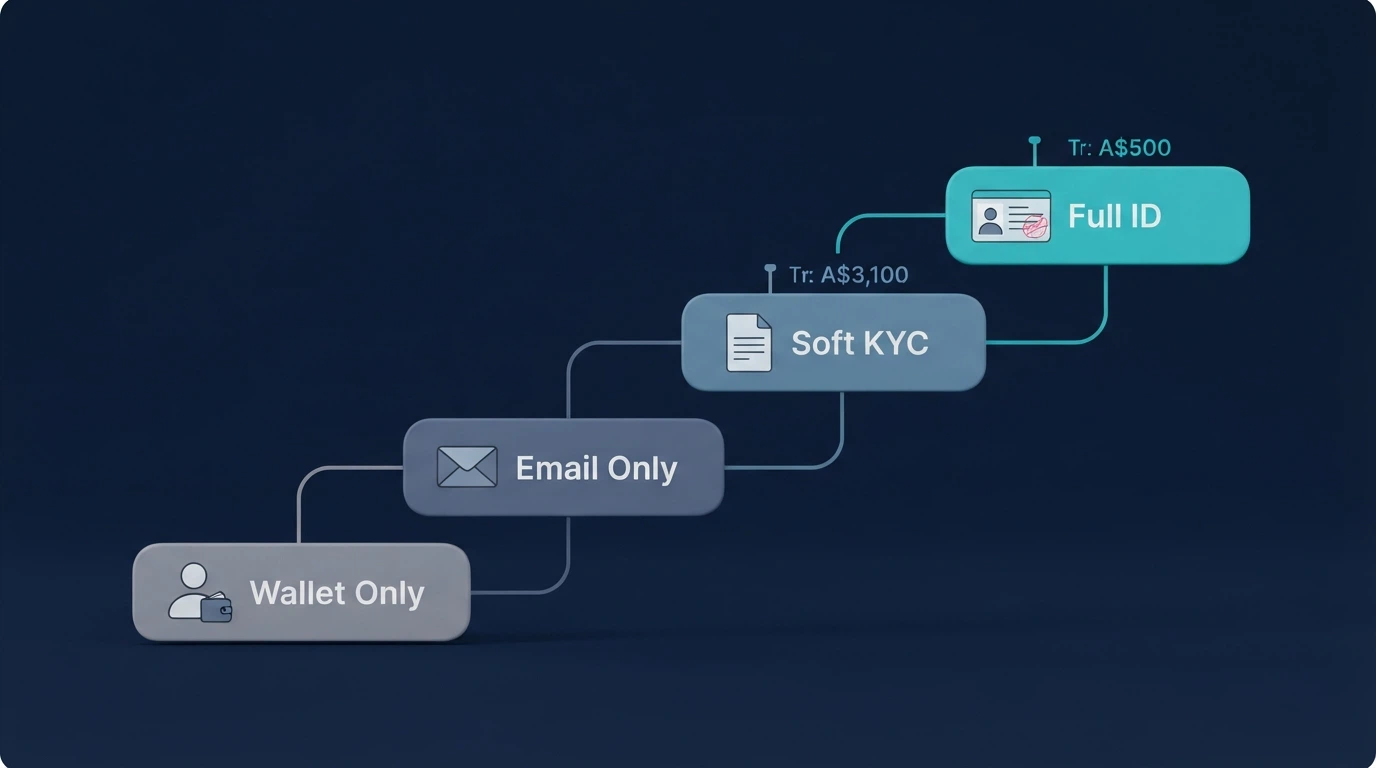
A useful framework is the four-tier anonymity ladder. Each tier describes a real pattern across the comparison set, not a single operator’s policy.
The four tiers of crypto casino anonymity — from zero docs to full verification
| Tier | What It Means | KYC Trigger | Player Protection |
|---|---|---|---|
| Fully Anonymous | Wallet-connect signup, no email required, no documents at any withdrawal level | Never | None — no dispute body, no regulator, no BetStop |
| Email-Only | Email signup, no documents for most withdrawals | ID requested only on fraud or AML flags | Same as above; no consumer protection in Australia |
| Soft KYC | Email signup, no documents until cumulative withdrawals exceed a threshold | ID required above A$2,000-5,000 per month | Same as above |
| Tiered KYC | Email signup, identity verification required above a lower threshold | ID required above A$500-2,000 in withdrawals or deposits | Same as above |
Every operator on this list sits in one of the four tiers. None of them offers Australian consumer protection regardless of tier. The privacy the player keeps is privacy from the casino’s marketing database; it is not protection against a casino refusing a withdrawal.
When KYC kicks in: the withdrawal triggers every Australian should know
The most common trigger across the comparison set is roughly A$3,100 — US$2,000 at the typical exchange rate. Above that threshold, most operators request at least a proof of identity document and a proof of address. A small number set the bar lower, around A$2,000 in cumulative monthly withdrawals, or higher, around A$5,000.
Anti-money-laundering policies at Curaçao- and Anjouan-licensed operators often layer an additional review trigger at EUR 2,000 to 10,000 in cumulative withdrawals or deposits, regardless of whether the player has submitted documents. These reviews can hold funds for days while the operator’s compliance team checks the source of funds.
The documents requested are predictable. A government-issued photo ID — passport or driver’s licence. A proof of address — utility bill or bank statement, usually within the last three months. A proof of payment method — sometimes a screenshot of the wallet holding the funds, or a partial screenshot of an exchange account showing the source of the crypto. Verification, once documents are submitted, typically takes 24 to 72 hours.
The pattern is consistent enough to plan around. A player who knows withdrawals will exceed A$3,100 should expect to submit documents at least once. A player who keeps cumulative withdrawals below that line and uses a single wallet and exchange can avoid the question entirely, until they do not.
Privacy versus protection: what you give up when the casino asks for nothing
The thing a casino never asks for is the thing that would have helped a player the most if the casino had asked: an Australian licence. Every crypto casino on this list operates outside Australian jurisdiction. The privacy advantage is real — no on-ramp identity check tied to the bank account — but it is purchased by giving up everything that flows from being inside the Australian regulatory framework.
There is no Australian regulator to complain to if the operator refuses a withdrawal. The ACMA can block a site, but it cannot recover funds. The 1,788 sites blocked as of August 2026 are the sites the regulator could identify; they are not the sites where player balances were returned. BetStop does not cover offshore operators — a self-excluded Australian can keep depositing at an offshore casino indefinitely. There is no Australian complaints body, no ombudsman, no dispute resolution pathway.
The privacy-versus-protection trade is the central decision of this market. A player who values privacy can have it, in the four-tier sense above, by accepting that no regulator is on their side when the casino declines a withdrawal. A player who values protection can have it by not playing at an offshore casino at all — because the Australian-licensed product does not include online casino, the protection is the absence of the product rather than a regulated version of it.
Why Crypto Withdrawals Beat Bank Transfers by Days, Not Hours
The cash-out speed difference is structural, not marketing. A PayID-only operator pushes the withdrawal through a fiat payment processor, a fraud screen, a bank account verification check, and the New Payments Platform — each step adding hours, sometimes days. A crypto-rail operator skips every step except the casino’s own pending period and the blockchain’s confirmation time.
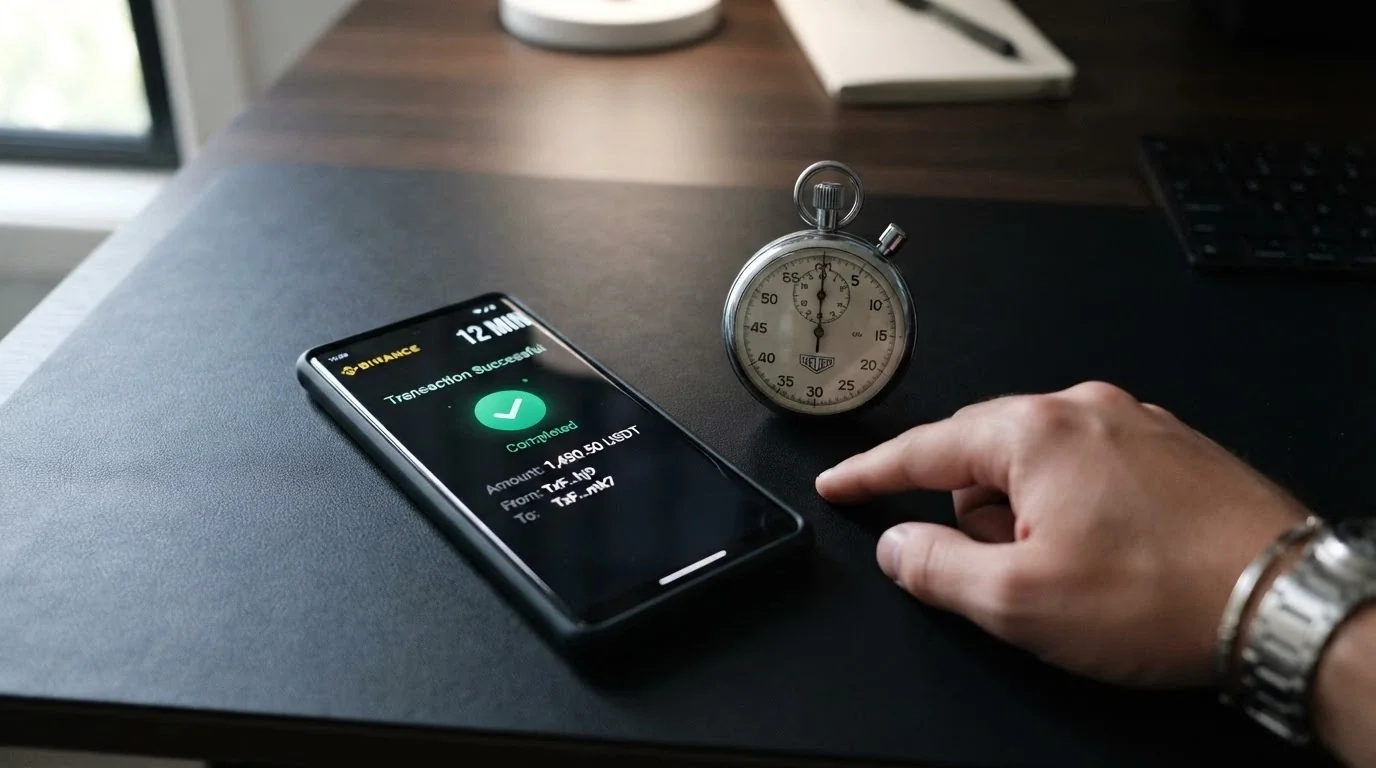
The realistic end-to-end time for a crypto casino withdrawal to AUD via an Australian exchange is two to six hours. The realistic end-to-end time at a PayID-only operator is 36 to 72 hours. The crypto path is five to twenty times faster. The fastest rail in independent testing was USDT on TRC-20.
The difference compounds across multiple withdrawals. A player who withdraws weekly saves roughly a day per cash-out, or about a month a year. The structural source of the speed gap is not the casino — it is the rail.
USDT on TRC-20: the fastest rail for Australian casino cashouts
USDT on the Tron network combines near-instant blockchain finality with sub-A$2 fees. Tron blocks settle every three seconds. Six-confirmation finality — the depth most exchanges require before crediting a deposit — is roughly 30 seconds. The receiving exchange typically credits within one to three minutes of broadcast.
Fees are the under-appreciated part. A Bitcoin transaction during high congestion can run A$10 to A$30 in miner fees; an Ethereum transaction can run more. USDT on TRC-20 is consistently under A$2 regardless of network activity. The fee advantage matters less for a single A$3,000 cashout than for a player making frequent small withdrawals.
SkyCrown’s 12-minute tested withdrawal on this rail is the benchmark. BitStarz’s 0.2 to two hours and Stake’s one to four hours sit above it. Every operator on this list accepts USDT TRC-20 except where noted.
The full cash-out cycle: from casino wallet to your Australian bank account
A crypto casino withdrawal does not arrive in an Australian bank account. It arrives in a personal crypto wallet. The full cycle is four steps: casino crypto withdrawal → personal crypto wallet → Australian exchange (CoinSpot, Swyftx, Independent Reserve) → PayID or bank transfer → Australian bank account.
Realistic total time across all four steps: 30 minutes to 24 hours. The slowest leg is usually the exchange — CoinSpot and Independent Reserve run PayID deposits that credit in minutes, but fiat withdrawals to bank accounts may queue during peak periods. The fastest realistic cycle is under an hour; the slowest is the next business day.
AUSTRAC’s Travel Rule applies at A$10,000 for crypto-to-fiat conversions. Above the threshold, exchanges are required to collect and verify counterparty information, which adds reporting rather than blocking — the conversion still goes through, but the exchange keeps a record. Below the threshold, the exchange’s standard KYC still applies, but the Travel Rule layer does not.
Bank compatibility is the friction the player often discovers last. CommBank and Westpac restrict large outbound transfers to known crypto exchanges — meaning an outbound transfer to CoinSpot may be declined or held. ANZ and NAB flag without fully blocking — meaning the transfer goes through but the customer receives a call. ING and Macquarie are the most permissive of the major banks. The choice of bank is not a choice the player makes for this purpose — it is the bank they already have. The exchange they choose can be changed; the bank cannot.
Crypto Casino Bonuses: Why the Headline Number Isn’t What You Keep
A welcome bonus headline is the gross figure, not the net figure. A A$10,000 welcome with 40x wagering requires A$400,000 in turnover before a cent becomes withdrawable. A 300 per cent match sounds generous until the reader notices that the wagering multiple attached to it makes the expected cost exceed the headline value.
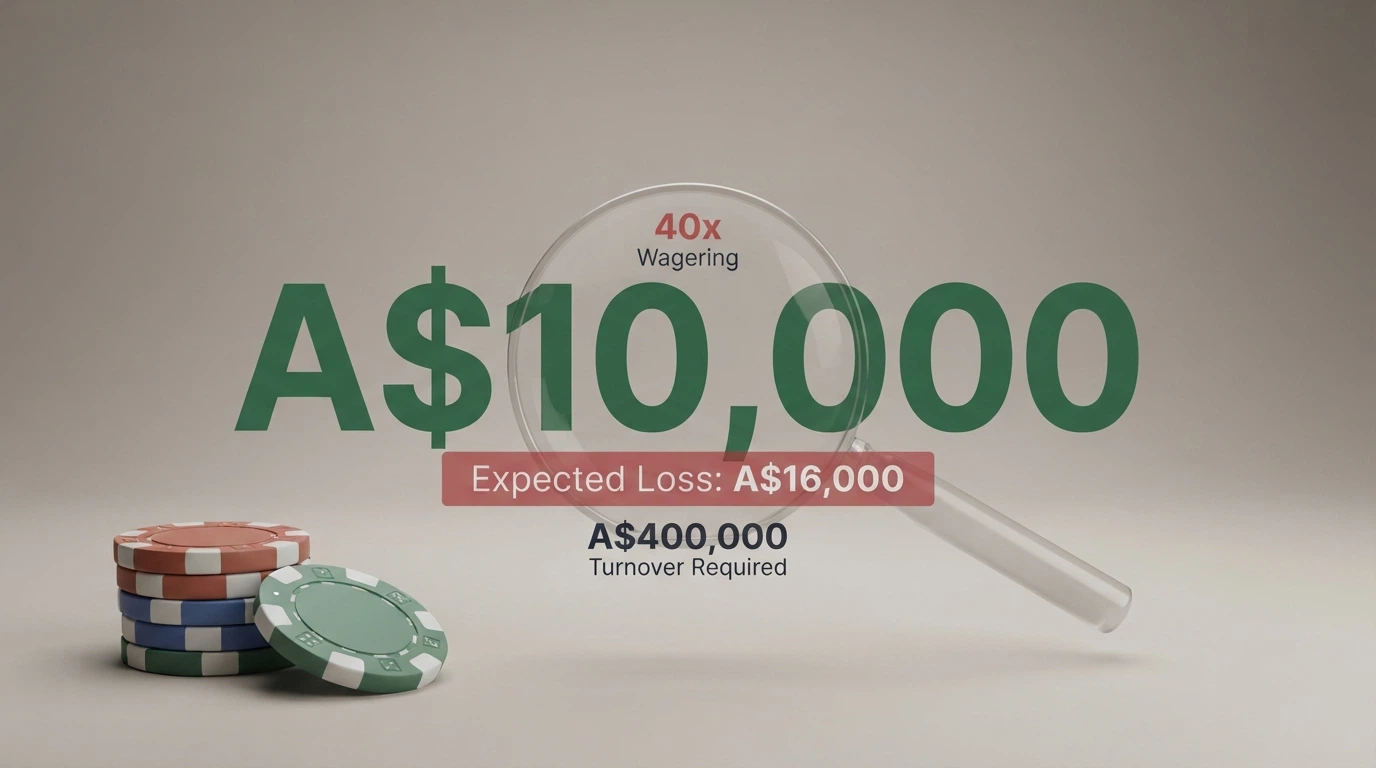
The math is unforgiving. On a 96 per cent return-to-player slot — a typical industry figure, with the exact percentage varying by title — a player loses roughly four per cent of turnover to the house edge. A$400,000 in turnover produces an expected loss of A$16,000, against a headline bonus of A$10,000. The bonus has negative expected value to the player before any free-spin value is counted. That is what a 40x wagering requirement means in practice.
The next three subsections break the bonus structure apart: the welcome packages compared, the no-deposit and free-spin offers, and the wagering arithmetic itself.
Welcome bonuses compared: what that A$10,000 match really costs to unlock
The comparison set divides into three groups. The first runs the traditional deposit-match template: BitStarz (5 BTC / A$10,000 across 4 deposits, 40x), SkyCrown (A$8,000 + 400 free spins, 40x bonus / 30x free spins), Wild Fortune (225% up to A$7,500, 40x bonus / 0x free spins), 7Bit (325% up to 5.25 BTC + 250 free spins, 45x), Mirax (multi-tier BTC up to 5 BTC + 150 free spins, 40x bonus / 45x free spins), Ignition (150% up to US$3,000 combined, 25x deposit + bonus), Rocket Play (300% up to A$6,000 + 300 free spins, wagering not stated in surfaced sources), and mBit (up to 4 BTC + 325 free spins, sticky structure, wagering not stated).
The second group rejects the template entirely. Stake runs no welcome match — its replacement is the rakeback ladder and weekly raffles. BC.Game runs no welcome match either — its replacement is the Lucky Spin wheel with zero wagering. For a player who would rather earn a smaller reward with no clearing requirement than chase a larger headline with one, this is the better structure.
The third group is the outlier: Ignition’s 25x deposit-plus-bonus wagering is roughly two-thirds of the 40x to 45x common at the rest of the list, against a smaller match (150%). The lower wagering compensates for the smaller headline. A A$1,000 deposit at Ignition with the 150% match produces a A$2,500 bonus-clear target at 25x — A$62,500 in turnover. The same A$1,000 deposit at BitStarz with a 100% match and 40x produces a A$2,000 bonus-clear target at 40x — A$80,000 in turnover. Ignition’s smaller match clears faster, both in absolute turnover and in time.
No-deposit bonuses and free spins: the small print that eats your winnings
No-deposit offers look like free money. They are not. The terms attached typically include a wagering multiple between 35x and 60x on the bonus amount, a withdrawal cap of 0.005 to 0.01 BTC (roughly A$500 to A$1,000 at current prices), and an expiry window between 24 hours and 7 days.
Typical no-deposit bonus values for Australian players run 0.0001 to 0.001 BTC, roughly A$5 to A$50. Most no-deposit offers cluster around 0.0003 BTC. Free-spin no-deposit offers run 10 to 50 spins, with a wagering multiple on winnings of 35x to 60x.
The expiry window is the trap most players miss. A 24-hour expiry on a 50x wagering requirement means a player has to clear hundreds of dollars in turnover within a day — which requires thousands of spins at any reasonable stake. The withdrawal cap is the second trap: a player who wins more than the cap sees the excess removed. A player who wins less than the cap may still see zero if the wagering requirement is not met in time.
The specific offers reported across the featured set: SkyCrown runs a 100 free spin no-deposit offer at 30x wagering; 7Bit runs a 20 free spin no-deposit offer at 45x; Mirax runs a free cash no-deposit offer activated by email verification at 35x; BitStarz runs a 50 to 100 free spin no-deposit offer at 45x. The pattern is consistent across all of them: a small headline reward, a high wagering multiple, a short window and a hard ceiling.
The realistic outcome for a player who claims a no-deposit offer without reading the terms: either the wagering is not cleared within the expiry window and the bonus plus winnings are forfeited, or the wagering is cleared and the withdrawal cap returns most of the value to the casino.
Wagering requirements explained: 40x does not mean what you think
A 40x wagering requirement on a A$1,000 bonus means A$40,000 in bets. Not A$40. The player is required to place A$40,000 in qualifying bets before the bonus and any winnings become withdrawable. The qualifier matters: most operators define wagering on the bonus amount only, but some — Ignition is the example here — define wagering on the deposit plus the bonus combined, which roughly doubles the requirement in absolute terms.
Wagering contribution rates determine which games count toward the requirement. Slots almost universally count 100%. Table games count 20% or less. Live dealer games count 0% at most operators. A player who bets exclusively on live blackjack at an operator with 0% contribution will not move the wagering counter at all.
The expected cost of clearing a bonus is the figure that the wagering multiple and the house edge produce together. Working the BitStarz welcome as a representative example: a player claims the maximum A$10,000 bonus (the regional display of the 5 BTC cap), with 40x wagering on the bonus. The required turnover is A$10,000 × 40 = A$400,000. Assuming a representative stake of A$1 per spin — a typical figure for mid-volatility slots at these libraries — the required spin count is A$400,000 ÷ A$1 = 400,000 spins. At the standard five-second interval between spins, the play time is 400,000 × 5 ÷ 3,600 = approximately 555 hours, or 23 continuous days of non-stop play.
The expected cost of clearing the bonus is what that turnover costs against the house edge. Assuming a representative 96% return-to-player — a figure that varies by title and is not pinned to a specific game in the research — the expected loss on A$400,000 in turnover is A$400,000 × (1 − 0.96) = A$16,000. The bonus is worth A$10,000. The expected cost of clearing it is A$16,000. The expected net is negative A$6,000, before the 5x deposit cap is applied to the withdrawal ceiling.
These figures are statistical averages, not predictions for any single session. A short session can produce a profit; a long session tends to converge on the expected loss. The calculation is the answer to the question “what does a A$10,000 bonus with 40x wagering actually cost?” — the cost is roughly A$16,000 in expected house-edge loss against A$10,000 in headline value, before the deposit cap on withdrawals is applied.
Crypto Pokies and Slots: What Australians Are Actually Playing
The games at crypto casinos are the same games Australians know from licensed venues. The studios that supply licensed operators — Pragmatic Play, BGaming, NetEnt, Evolution for live dealer, and a long tail of others — supply the offshore operators too. The crypto version of the lobby differs from the licensed lobby in three ways: the volume (more titles, since the operator is not bound by Australian provider restrictions), the payment rail (crypto deposits and withdrawals, but the games themselves are not crypto-native), and a layer of crypto-native in-house titles that no fiat casino can offer.
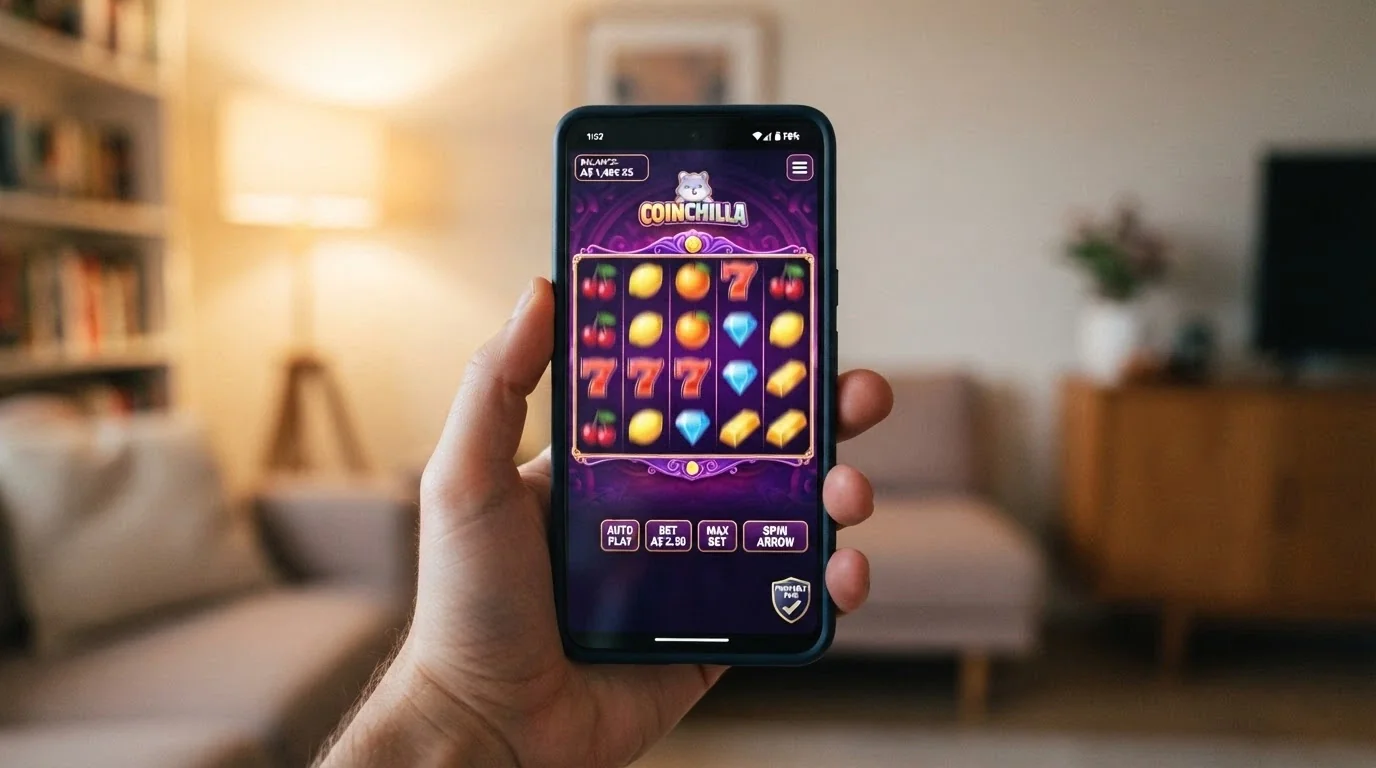
The term “pokies” is the Australian word for slot machines; “slots” is the international term. Most crypto casinos label their games “slots”, but the games themselves are the same reels, paylines and bonus mechanics that an Australian would recognise from a licensed venue. Pragmatic Play’s pokies carry the same branding. BGaming’s pokies carry the same branding.
Pokies vs slots: same reels, different name — what Australians call them
A crypto casino lobby typically runs four or five thousand slots, with the larger operators reaching six to ten thousand. The categories are familiar: video slots, classic three-reel slots, progressive jackpot slots, Megaways titles, and the cluster of branded slots tied to films, musicians and television. The bonus features are familiar: free spins, pick’em bonuses, expanding wilds, cascading reels, gamble features. The mathematics are familiar: return-to-player percentages in the 94 to 97 per cent range, volatility classifications (low, medium, high) that determine how often the game pays and how big the wins tend to be when they land.
What changes at a crypto casino is the provider mix. Australian-licensed operators carry only providers approved by the relevant state regulator; the offshore crypto operators carry the global catalogue. A player who has not been able to access a particular provider at a licensed venue may find it at an offshore casino. The studios themselves are the same; the regulatory reach is different.
The free-spin offers at these casinos almost always apply to specific named titles — a publisher’s most recent release, a high-volatility favourite, a branded slot. The research does not pin a specific slot title to a specific offer across the comparison set; the pattern is consistent, but the exact titles rotate.
Provably fair: the crypto-native mechanic no fiat casino can match
Provably fair is a transparency mechanism that is structurally impossible at a traditional online casino. The casino publishes a server seed, the player provides a client seed, and the outcome of each bet is computed from both. After the bet, the player can verify that the outcome was determined by the published seed pair rather than retroactively adjusted by the casino.
Stake implements this with HMAC-SHA-512 cryptographic verification on its in-house games — Crash, Dice, Plinko, Mines. BC.Game does the same across its BC.Game Originals range. The verification is mathematical, not reputational. A player who knows how to read the hashes can check every bet. The mechanic only applies to in-house games; third-party provider slots are governed by the provider’s own random number generator and the casino’s audit trail.
The value of provably fair at an unregulated casino is the answer it gives to the question every player asks: “is this game actually fair?” The answer at a licensed venue is the regulator’s audit. The answer at an offshore crypto casino is either the provider’s reputation or, for in-house games, the cryptographic proof. A player who values provably fair will end up playing Stake Originals and BC.Game Originals more than third-party slots. A player who values the third-party slot catalogue will give up that specific transparency layer.
Crypto as a Casino Payment Method: What Australians Need to Know
Using crypto at an online casino is a three-step process: exchange, wallet, casino. Each step carries choices that affect speed, cost, privacy and bank friction.
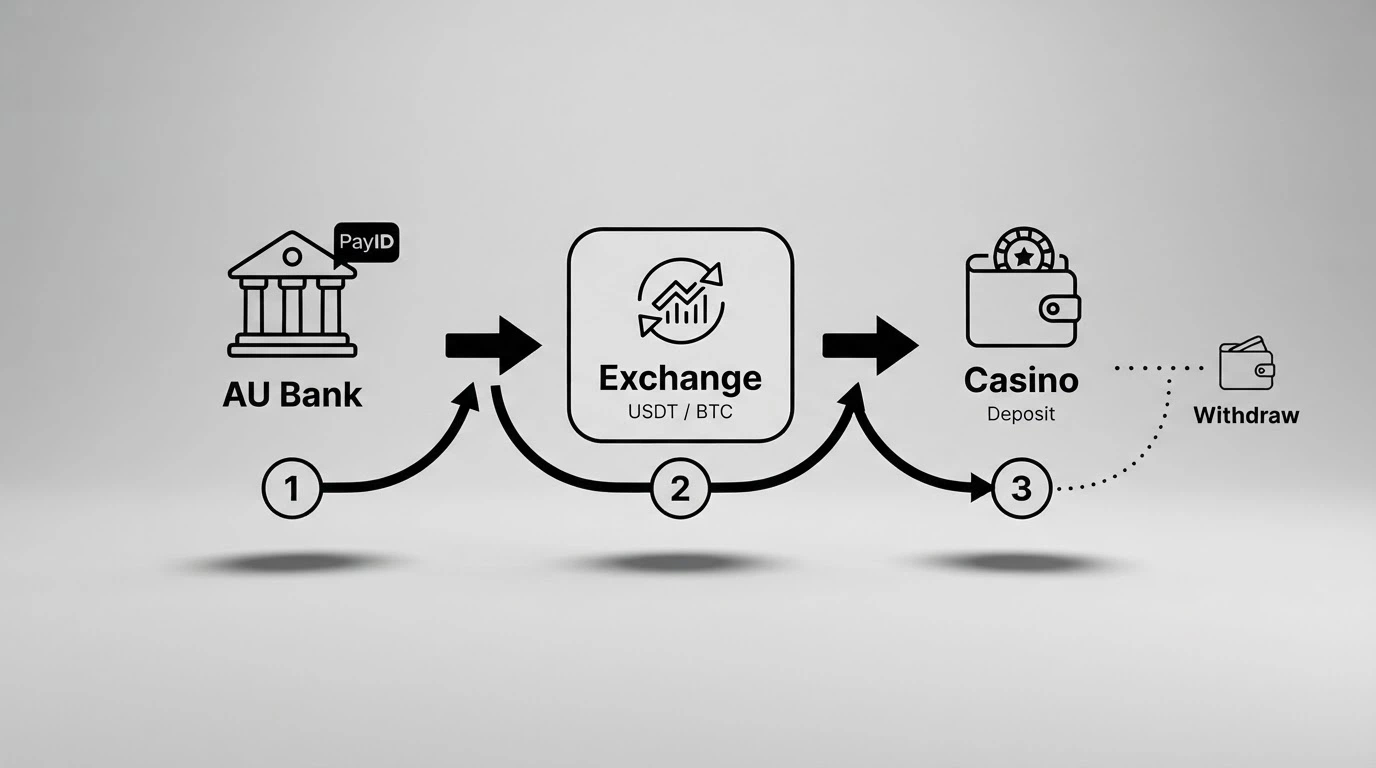
Step 1: Australian bank → AUSTRAC-registered crypto exchange. The realistic exchanges for an Australian player are CoinSpot, Swyftx and Independent Reserve. Each accepts PayID deposits from Australian bank accounts, each is registered with AUSTRAC, and each supports the major cryptocurrencies an offshore casino accepts. The deposit is a PayID transfer — fast, but the bank may flag it.
Step 2: Exchange → personal crypto wallet. Optional but recommended. A personal wallet (a hardware wallet, a mobile wallet, or a software wallet) is the place where the player controls the private keys. Holding funds on the exchange is convenient but means the exchange holds the keys.
Step 3: Personal wallet → casino deposit address. The casino publishes a deposit address — a long string of letters and numbers. The player sends crypto from their wallet to that address. Confirmation typically arrives within three minutes.
The reverse path on cash-out is the same three steps in reverse: casino withdrawal → personal wallet → Australian exchange → PayID or bank transfer → Australian bank account.
The crypto deposit process: exchange, wallet, casino in three steps
The deposit process is short in time and long in choice. Each step carries a decision that affects what the player pays in fees, how fast the funds arrive, and how much bank friction the player encounters.
- Step 1: Australian bank → AUSTRAC-registered exchange via PayID. The exchanges that handle this step most cleanly are CoinSpot, Swyftx and Independent Reserve. PayID deposits credit in minutes. The friction lives on the bank side: CommBank and Westpac restrict large outbound transfers to known crypto exchanges; ANZ and NAB flag without fully blocking; ING and Macquarie are the most permissive. A transfer of A$2,000 to CoinSpot from an ING account is a different experience from a A$2,000 transfer from a CommBank account.
- Step 2: Exchange → personal crypto wallet. Holding funds in a personal wallet rather than on the exchange adds a step but removes the exchange as a point of failure. A player who keeps their playing balance in a wallet and only moves funds to the casino when needed is not exposed to an exchange-side withdrawal freeze. The wallet also makes the on-chain privacy story cleaner — funds do not arrive at the casino directly from an exchange address.
- Step 3: Personal wallet → casino deposit address. The casino generates a unique deposit address per transaction. The player copies the address, opens their wallet, and sends the funds. Confirmation arrives within roughly three minutes for Bitcoin, faster for USDT TRC-20 and similar speed for Ethereum. The casino credits the balance as soon as it sees the confirmation.
New Crypto Casinos: Are Fresh Platforms Worth the Risk in 2026?
New crypto casinos launch frequently. Some bring genuinely better terms — a higher match, a lower wagering multiple, an unusual coin on the deposit page. Most do not. The pattern across new launches is the same terms dressed in a different colour scheme, and the difference between a brand that has been paying out for five years and a brand that has been paying out for five months is the difference between a track record and a hope.
The trade-off is real. A new platform can offer better introductory terms to build a player base; an established platform can offer a payout history that new platforms cannot. The reader’s job is to weigh the two: a better bonus at an operator with no payment track record, or a smaller bonus at an operator with five years of weekly withdrawals.
The verification state matters here. Licence dates for the established operators on this list were not confirmed from regulator registers during the research round; a new operator, by definition, has even less verifiable history. A reader considering a new launch should expect to verify the licence, the company behind the licence, and the payment track record independently before depositing.
How We Selected and Ranked These Crypto Casinos
The ten operators on this list were sourced from Australian-facing crypto casino search results, with priority given to operators that appeared across multiple independent review and test publications. Each was evaluated against the same criteria: licence jurisdiction, welcome bonus terms and wagering multiples, tested withdrawal speed, cryptocurrency breadth, and game library size.

The data sources include operator-published bonus terms, Payoutverdict.com, Cryptowatchdog.net, betsquare.org, and several other published test and review sites. Tested withdrawal figures (BitStarz 0.2 to two hours, Stake one to four hours, Wild Fortune 5 hours 24 minutes USDT TRC-20, SkyCrown 12 minutes USDT TRC-20) are from real-money tests by independent publishers, not from operator marketing.
Two limitations the reader should know. First, licence dates were not confirmed from regulator registers during this research round — the ACMA register lists Australian-licensed wagering providers, not offshore casino licences, and the Curaçao register was not consulted this run. The Curaçao, Tobique and Anjouan jurisdictions named here are taken from operator pages and reviewed sources, not from regulator lookups. Second, bonus terms change frequently. The wagering multiples, max-bet clauses, max-cashout caps and free-spin counts on this page are accurate as of the publication date and should be verified at the casino before claiming.
Every operator on this page is offshore. No Australian-licensed online casino exists. The product itself is prohibited under the Interactive Gambling Act 2001. The ranking is a ranking of the offshore operators Australians actually use, not a ranking of legal alternatives.
What You Should Actually Do With This Information
The legal position is unambiguous. Every crypto casino on this page is offshore, unlicensed in Australia, and offering a product that is prohibited under the Interactive Gambling Act 2001. The provider — not the player — is what the Act targets. No Australian has been prosecuted for playing at an offshore casino. The player has also given up every Australian consumer protection that would normally apply: no regulator, no complaints body, no BetStop coverage, no recourse if the operator refuses a withdrawal, and the site can be blocked at any time with a balance on it.
The bonus numbers are smaller after wagering than the headlines suggest. A A$10,000 bonus with 40x wagering costs A$400,000 in turnover. On a typical 96 per cent return-to-player slot the expected loss is A$16,000 — more than the bonus itself. The 5x deposit cap on bonus wins at the larger operators means the realistic withdrawal ceiling is below the headline figure.
The withdrawal speed is real, but the bank friction is real too. Crypto-rail casinos complete the cash-out cycle in two to six hours against 36 to 72 hours for PayID-only operators. The bank-friction leg — CommBank and Westpac restricting transfers to crypto exchanges, ANZ and NAB flagging — sits at the start of the cycle and the end. A player who picks ING or Macquarie for the bank side and USDT TRC-20 for the rail side sees the fastest realistic cycle. A player who picks CommBank and Bitcoin sees the slowest.
No operator on this page is regulated in Australia. The 1 January 2027 reform gives banks and payment providers express authority to block transactions to illegal gambling operators; the prohibition itself does not change. What an Australian does with the picture on this page is a personal judgement, not a recommendation. The numbers are the numbers. The decision is the player’s.
Help is available regardless of the decision. The National Gambling Helpline is 1800 858 858 — free, confidential, 24 hours a day, seven days a week. Gambling Help Online at gamblinghelponline.org.au offers chat and counselling. Both are Australian services.
Frequently Asked Questions
How do I deposit crypto at an Australian-facing online casino?
The realistic path is three steps: Australian bank account → AUSTRAC-registered exchange (CoinSpot, Swyftx or Independent Reserve) via PayID → personal crypto wallet → casino deposit address. The deposit itself confirms within roughly three minutes once sent. Bank friction varies: ING and Macquarie are the most permissive, ANZ and NAB flag without blocking, CommBank and Westpac restrict larger transfers to known crypto exchanges.
Are crypto casino winnings taxable in Australia?
Gambling winnings are not assessable income under section 6-5 of the ITAA 1997, and losses are not deductible under section 8-1, unless the person is carrying on a business of betting or gambling. The ATO’s criteria for a betting business look at whether the activity is systematic, organised and pursued principally for profit. No Australian case has held the winnings of an ordinary punter assessable.
Can I use BetStop to self-exclude from crypto casinos?
No. BetStop binds Australian-licensed wagering services only. An offshore crypto casino is not licensed in Australia and is not connected to the register. A self-excluded person can keep depositing at an offshore casino indefinitely. BetStop had 67,480 registrations as at 31 July 2026, with 41,290 active exclusions. Real help is available on the National Gambling Helpline at 1800 858 858 or Gambling Help Online.
What happens if an offshore crypto casino refuses my withdrawal?
There is no Australian regulator to complain to. The ACMA can block a site but cannot recover funds, and no Australian ombudsman covers offshore gambling. The realistic options are the casino’s own complaints process or a complaint to the offshore licence regulator, which has limited reach. Prevention is the better strategy: pick an established operator with a published payout history and verify terms before depositing.
Which Australian banks allow transfers to crypto exchanges for casino deposits?
ING and Macquarie are the most permissive — transfers to AUSTRAC-registered exchanges typically go through unflagged. ANZ and NAB flag without fully blocking. CommBank and Westpac restrict larger transfers to known crypto exchanges — the transfer may be declined or held. The bank is the bank the player already has; the choice of exchange (CoinSpot, Swyftx, Independent Reserve) can be changed.
Are crypto casinos provably fair and how does that work?
Provably fair lets a player verify each bet’s outcome was set before the bet was placed: the casino publishes a server seed, the player provides a client seed, and the outcome is computed from both. After the bet, the math is checkable. Stake uses HMAC-SHA-512 verification on its in-house games (Crash, Dice, Plinko, Mines); BC.Game does the same on its Originals. The mechanic covers in-house titles only.
Published by the Fast Payout Casinos AU team.