
Anonymous Crypto Casino Australia: What “No KYC” Costs You in 2026
 Available in AU
An anonymous crypto casino, marketed to an Australian punter in 2026, is almost certainly an offshore operator offering a product the Interactive Gambling Act 2001 specifically prohibits. That is the first fact this page insists on, because almost every ranking page on the topic dresses up the same gap in a different way. There is no licensed Australian online casino. There is no Australian jurisdiction that issues one. The anonymous label is the operator’s selling point, not a regulator’s endorsement.

The second fact is the one that decides whether “anonymous” means anything at all: no KYC at a Bitcoin casino does not mean you will never be asked for identity verification. It means verification is deferred rather than required upfront. Every operator covered here reserves the right to demand photo ID, proof of address, or a source-of-funds check once a player’s cumulative withdrawals climb into a band the operator’s own T&Cs set. The “anonymous” promise has a ceiling, and the ceiling is lower than the marketing suggests.
What follows is the page that owes the reader that honesty. The ten operators ranked below are offshore brands accepting Australian players; the licence column is checked against the regulator’s own register rather than the casino’s footer; the bonus column is checked against the bonus terms rather than the headline; the withdrawal column is the timed real-money test where research confirms one. The verdict on each operator is mine, not the casino’s, and the trade-offs are spelled out rather than flattened into a star rating.
Current as of 18 October 2026 — licence claims verified against ACMA enforcement data and the Tobique Gaming Commission register.
Table of Contents
- The Real Meaning of “Anonymous” at an Online Casino
- Why Crypto Keeps Your Casino Play Private — and Where It Doesn’t
- The Bonus Trap: Why Your 2026 Welcome Offer Is Smaller Than It Looks
- Every Anonymous Casino an Australian Plays At Is Offshore
- Playing Without a Safety Net: What You Lose When a Casino Asks for Nothing
- 10 Anonymous Crypto Casinos Compared: What Each One Actually Offers Australian Players in 2026
- How We Selected and Ranked These Anonymous Casinos
- What to Actually Do Before You Deposit a Single Dollar
- Frequently Asked Questions
The Real Meaning of “Anonymous” at an Online Casino
The word “anonymous” does the marketing heavy lifting in this corner of the market, and it covers a much smaller territory than the ad implies. An anonymous crypto casino is one that lets a player register with an email and password, deposit in cryptocurrency, and start playing real-money pokies and live-dealer tables without uploading a passport, a driver’s licence, or a utility bill. What it is not is a casino that promises to never ask. The promise expires the moment a withdrawal crosses an internal threshold, the operator’s anti-fraud system flags a pattern, or a regulator somewhere down the line requests a player audit.
That gap between promise and practice is the entire subject of the first cluster of this page. The reader who arrives looking for “no ID required” needs to leave knowing what that actually delivers, when it stops delivering, and what kind of player is served by the model.
“No KYC” Means Deferred, Not Waived
Every operator in the “no KYC” crypto-casino segment runs on the same architecture. Sign-up is an email address and a password. The wallet is funded in crypto — Bitcoin, Ethereum, USDT, or one of a handful of privacy coins at the better-stocked brands. Play begins immediately. The casino does not see a name, an address, a date of birth, or a photograph.

Then comes the part the headline does not say out loud. Anti-money-laundering policy at Curacao- and Anjouan-licensed casinos typically sets a review trigger somewhere between EUR 2,000 and EUR 10,000 in cumulative withdrawals or deposits. The exact figure is buried in T&Cs under a “Verification” heading the player has to scroll past a bonus banner to find. Jackbit is the clearest about this: it reserves verification for genuine fraud and AML flags, which puts KYC in the category of an anti-fraud tool rather than a routine gate. Most operators do not phrase it that way. Most operators do not phrase it at all.
The trigger is the trap. A player who treats “no KYC” as permanent immunity and builds up an unverified balance above the trigger will be asked for documents on the way out, not on the way in. By that point the marketing promise has done its job — the deposit has been made, the play has happened, and the player has a balance they cannot withdraw without handing over exactly what the registration email said they would not have to.
Soft KYC Triggers: The Withdrawal Threshold That Ends Anonymity
The cumulative-dollar tripwire sits in every offshore operator’s terms, and it catches players who thought they were invisible. The range is consistent enough across the segment to function as a rule of thumb: somewhere between roughly A$3,200 and A$16,000, a withdrawal request that would have sailed through at A$500 now triggers a verification request. The casino’s customer-service language softens this — “for your security,” “regulatory compliance,” “verification of source of funds.” The substance is harder.
What happens at the trigger is mechanical. The casino’s payments team flags the request, the player gets an email asking for a government-issued photo ID, a recent utility bill or bank statement as proof of address, and sometimes a screenshot of the originating crypto wallet. The withdrawal is held until the documents are reviewed. Review takes between 24 hours and a week at most operators; at the slower end it can stretch longer. A player who plans around anonymity needs to know this number before the first deposit — not after the balance is already at the trigger.
Which operators disclose the threshold and which bury it is itself useful information. The brands that publish a clear AML-trigger figure in plain language are doing something most of their competitors are not. The brands that hide it in a clause numbered 14(b) are betting that the player will not read it. The bet is usually right.
What You Can Actually Play: Pokies, Live Games and Real Money
The catalogue on the other side of the email-only sign-up is enormous. Spinza96 stocks more than 3,000 pokies from Pragmatic Play, Hacksaw Gaming and BGaming. Bizzo’s library runs to 8,000 titles from 70-plus studios. Rainbet offers 6,500 games with demo modes. FairGO takes the opposite approach and runs 280 RealTime Gaming titles exclusively, the same RTG Real Series pokies with 243 ways and 1,000-times-plus max wins during peak bonus rounds that Australian pub-and-club players already know from land-based terminals. The breadth varies; the depth, at the right brand, is real.
Live-dealer tables, real-money play, jackpot networks, in-house “originals” like Stake’s dice and crash games, even sports markets on the multi-product brands — the playable surface of an anonymous crypto casino is the same surface a fully-licensed casino offers, minus the verification step at the front door. The deposit, the gameplay, the bet placement, the win, the loss, all proceed without an ID check. The KYC gate sits at the end of the road, not the start, which is the architectural difference this entire page rests on.
Why Crypto Keeps Your Casino Play Private — and Where It Doesn’t
Cryptocurrency is the engine of anonymous play, but the engine has two very different cylinders: the privacy of the deposit flow on the casino’s side, and the public ledger of the blockchain underneath. Each cylinder pulls in a different direction. The page now turns to how much of a player’s casino activity actually stays private, and how much of it is permanently recorded in a place anyone can read.
The Currencies That Keep You Most Anonymous
Not every cryptocurrency is private. Monero was built for it: ring signatures, stealth addresses, confidential transactions — privacy by default, no opt-in toggle. Bitcoin was built for transparency: every transaction ever broadcast is recorded on a public ledger and visible to anyone who knows the wallet address. USDT and Ethereum sit between the two — pseudonymous rather than anonymous, traceable through chain-analysis tools the moment a real-world identity attaches to a wallet.
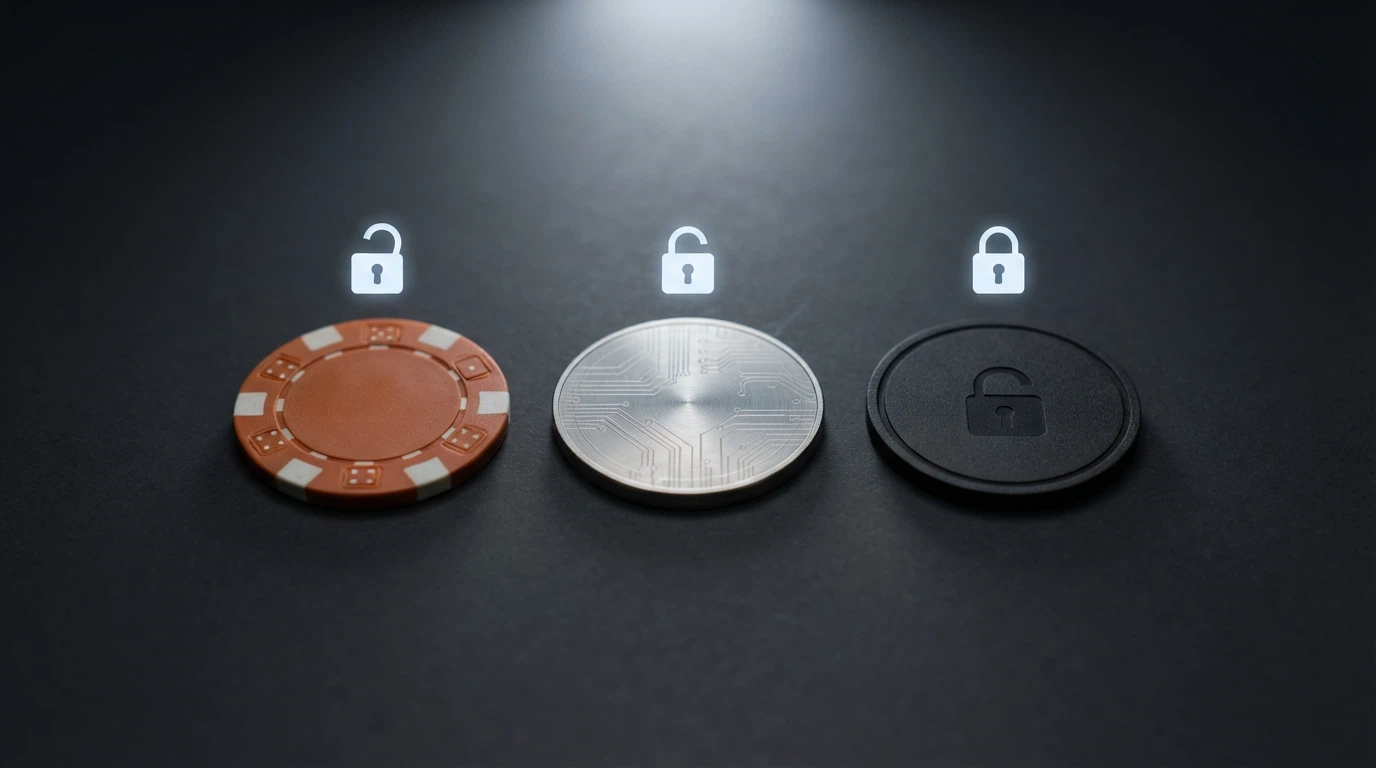
CoinCasino supports 21 cryptocurrencies including Monero for privacy-minded players, alongside an email-only sign-up and Telegram integration for deposits, play and withdrawals. Jackbit goes further on Monero specifically: it supports native XMR end-to-end, with a built-in wallet that lets a player deposit, play and withdraw in Monero without ever touching an exchange that demanded ID. Stake supports 22 cryptocurrencies, with withdrawals often under 10 minutes. Wild Fortune takes a tighter six: BTC, ETH, LTC, USDT (on both TRC20 and ERC20), DOGE and BCH — useful, but no Monero.
The Australian-exchange link is the part that breaks the privacy model for most players. Buying crypto through CoinSpot, Swyftx or any other Australian-registered exchange creates a documented identity trail from a player’s real-world name to the wallet address the casino receives the deposit from. Once that link exists, the blockchain is no longer anonymous in any meaningful sense — it is a public ledger on which an Australian identity is attached to a casino-funded wallet, and a regulator, a chain-analysis firm, or a litigant with the right tools can read the entire history. Monero protects against this. Bitcoin, bought the ordinary Australian way, does not.
How a Crypto Deposit Works Without Your Name — and Why There’s No Chargeback
A crypto deposit is a completed blockchain transaction. The player sends Bitcoin, USDT or another token from a wallet to the casino’s deposit address; the network confirms the transaction; the casino’s balance updates once the confirmations clear. There is no payment processor in the middle — no Visa, no PayID, no bank — and that is both the privacy win and the consumer-protection loss.
The privacy win is real. Without a card processor, the casino never sees a card number, and the bank never sees a casino as the merchant. The deposit is, in practical terms, a wallet-to-wallet transfer that the bank only learns about if the player tells it. The loss is equally real and rarely discussed in the same breath. When you deposit in crypto to an anonymous casino, that deposit is a completed transaction on the blockchain. If the casino closes or refuses to pay, you have no payment processor to call. Dispute resolution depends entirely on the casino’s own process, and the casino is the arbiter of its own process.
That asymmetry is the cost of the no-KYC model. The player trades the chargeback right, the regulator’s complaints body, and the bank’s dispute team for the privacy of an email-only sign-up. The trade is the page’s subject. Whether it is a fair trade depends on the player’s read of the operator’s track record, the licence behind it, and the size of the balance at risk.
Withdrawal Speed: Why Crypto Beats PayID by a Day or More
The speed gap between a crypto cashout and a fiat one is large enough to show up in ordinary play. CoinCasino’s own published figure is 5 to 10 minutes; a June 2026 test cashout landed on-chain in 7 minutes. Wild Fortune averaged 4 hours 53 minutes over five real-money tests in May 2026. Stake’s crypto withdrawals often arrive under 10 minutes. Across the segment, crypto withdrawals take 2 to 6 hours reliably at the better-run operators.
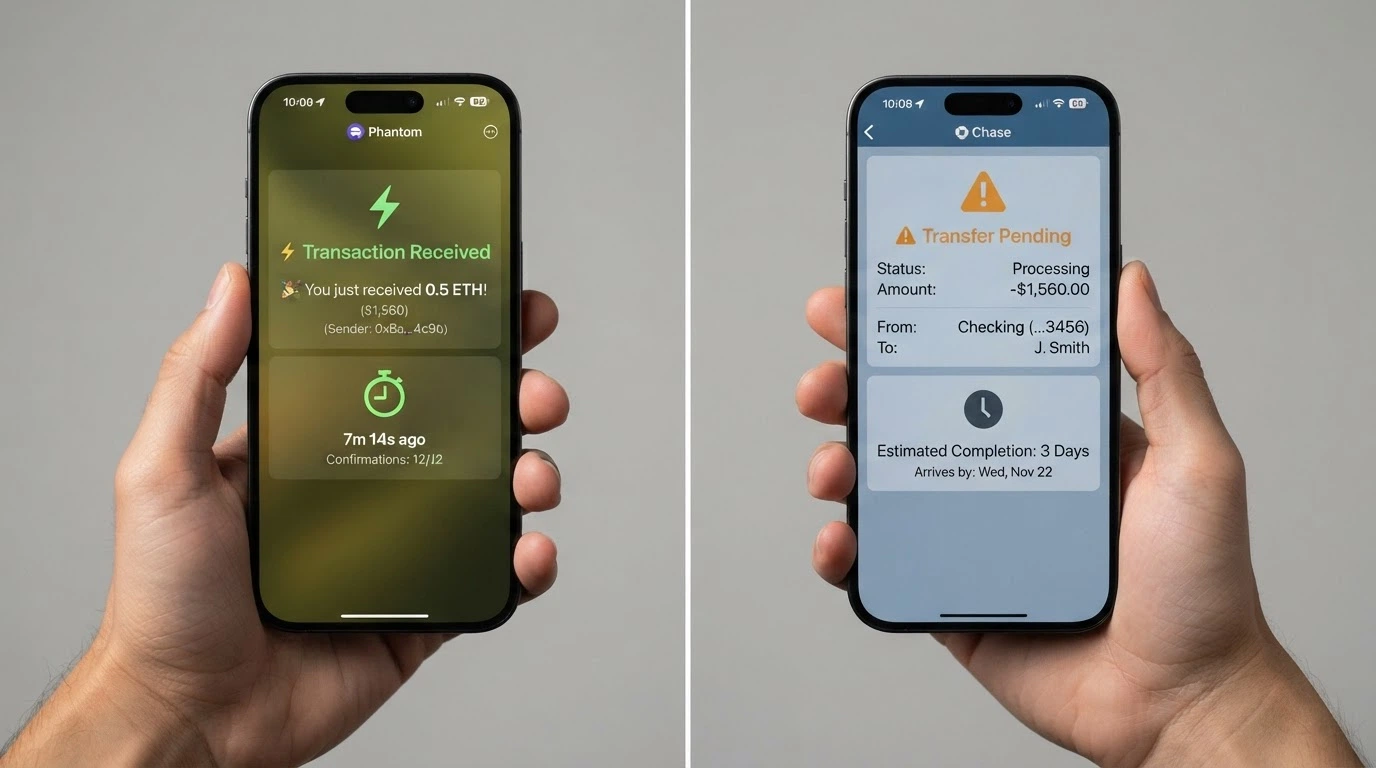
PayID-only operators sit on the other side of that line. The same comparison set showed PayID withdrawals averaging 36 to 72 hours, with weekend holds and manual review pushing some well past three business days. For a player whose plan is to move a balance in and out within a session — or, more practically, whose bankroll needs to stay liquid between sittings — the difference is not marginal. It is the difference between a balance that arrives when the player needs it and a balance that arrives when the casino’s finance team is next at their desk.
“Instant” is still a marketing word. A network-congestion spike, an AML hold triggered by the withdrawal size, or a weekend review queue can stretch a 10-minute claim into 5 hours and a 5-hour claim into tomorrow. The tested numbers above are averages across small samples, not guarantees. But the direction of the gap — crypto fast, PayID slow — is reliable enough to plan around.
The Blockchain Traceability Problem No Casino Volunteers
The casino’s “no KYC” promise ends where the public ledger begins. Every deposit leaves a permanent on-chain record at a casino-controlled address. Every withdrawal leaves one too. The wallet addresses do not carry names, but they carry histories, and the histories are visible to anyone who can attach a real-world identity to one of the wallets in the chain.
The distinction that matters here is between pseudonymity and anonymity. A Bitcoin wallet is pseudonymous — the address is a string of letters, not a name, but every transaction in and out is on a public ledger that chain-analysis firms, regulators and law-enforcement agencies read for a living. An Australian who buys Bitcoin through a KYC-verified exchange and deposits it at an offshore casino has not achieved anonymity; they have achieved a chain of pseudonymity that an investigator can unwind. The marketing language does not always carry that nuance.
True anonymity on a blockchain requires Monero — privacy by default — or Bitcoin acquired without an identity link, through an avenue that does not exist at any Australian-registered exchange. The path the page can name is narrow. An Australian who is asked for a credit card or a crypto deposit by a gambling site is being served by someone outside the Australian rules. The payment method is itself a tell.
The Bonus Trap: Why Your 2026 Welcome Offer Is Smaller Than It Looks
The headline number on a welcome bonus — A$30,000, 4 BTC, A$8,000 — is an aspirational figure gated behind wagering multiples that make the real cost far higher than the number looks. The arithmetic that follows shows exactly how far apart the marketing and the math sit, and which rare bonus structures actually let a player keep what they win.
No-Deposit Bonuses: What’s Actually Free — and What the Caps Don’t Tell You
A no-deposit free-spin offer looks like free money. Forty spins on Lady Wolf Moon MEGAWAYS at Vave, twenty-five spins at Rainbet, ten spins at Bizzo for installing the PWA app — the count is the headline and the count is genuinely free in the sense that no deposit is required to claim it. What the count hides is the ceiling.

Vave’s 40 no-deposit free spins carry a 50 USDT max cashout — roughly A$75 — plus 40× wagering on the winnings, plus an explicit condition that at least one successful deposit is required before the player can withdraw. Rainbet’s 25 no-deposit free spins are the cleaner of the two: genuinely deposit-free, no deposit required to withdraw. SkyCrown’s no-deposit bonus caps free-spin winnings at A$150 with 40× wagering. Bizzo’s PWA-install ten free spins carry a A$75 win cap and 40× wagering. The free-spin count is the headline; the cashout cap is the fine print.
The wagering hurdle is where most of these offers convert from a small gift into a small liability. A 40× multiplier on free-spin winnings means a player turning A$30 in spin winnings into withdrawable cash must turn over A$1,200 first — and the house edge means a meaningful slice of that turnover evaporates before the wagering target is hit. The no-deposit offer is real, but it is small, capped, and structured to make the next step a deposit. That last clause is the one a reader most needs to read twice.
Wager-Free vs 40×: The Two Bonus Worlds and What They Cost You
A 40× wagering requirement on a A$2,000 bonus means the player must turn over A$80,000 before any of the bonus balance converts to withdrawable cash. The house edge on a typical pokie is 3.5% — the published RTP band is roughly 96.5%. The expected loss on A$80,000 of required turnover, at a 96.5% RTP, is A$2,800. That figure is larger than the bonus itself. The bonus is not free money. It is a target.
Rainbet offers the cleanest counter-example in the segment: a choice between a classic 40× locked bonus and a no-wager, gradually-unlocked alternative that releases real money as the player bets. Both are real options at the same brand, which is unusual. Wild Fortune’s 250 free spins carry 0× wagering — one of only five operators in a 47-brand AU/CA non-VIP comparison offering this — and the headline is honest: whatever the spins win is the player’s. Stake’s wager-free model runs through daily, weekly and monthly races with prize pools of A$100,000, A$75,000 and A$500,000 rather than a locked welcome bonus at all. There are two bonus worlds. One of them costs the player the bonus and then some. The other costs the player nothing beyond the spin they played.
The excluded-games clause is the second-order trap. Rainbet excludes titles with 97.4% RTP and above from bonus play — the highest-return games in the lobby, the ones a sharp player would otherwise gravitate toward. The exclusion is standard across the segment and pushes bonus turnover onto games with a wider house edge. A reader who reads the wagering number and not the eligible-games list will grind the bonus on the wrong titles.
The expected cost of the Rainbet 150%-up-to-A$2,000 locked bonus — taking the headline figure of A$2,000, the 40× wagering requirement, and a 96.5% average slot RTP — is roughly A$2,800 in expected loss against A$80,000 of required turnover. That figure is an estimate, an average over many spins, not a promise of an outcome. It is also larger than the bonus itself. The bonus is, on the arithmetic, a loss the player pays for the privilege of taking.
Every Anonymous Casino an Australian Plays At Is Offshore
There is no online casino licence in Australia. Every anonymous crypto casino accepting Australian players is an offshore operator offering a prohibited product. The legal reality is starker than most ranking pages admit, and the next three sections lay it out without softening the prohibition into a grey area.
The Interactive Gambling Act 2001: What It Actually Prohibits
The Interactive Gambling Act 2001 makes it an offence to provide online casino games, online pokies, or in-play sports betting to a person in Australia. No online casino licence exists — not federally, not in any state or territory. The Northern Territory Racing and Wagering Commission issues wagering licences for pre-event sports and racing betting, not for casino games. What an Australian sees at any anonymous crypto casino is the prohibited product, served from outside the country.
The 2017 amendment closed the offshore loopholes that earlier IGA drafts had left open, and gave the Australian Communications and Media Authority (ACMA) the power to investigate, issue warnings, run civil-penalty proceedings, and direct ISPs to block illegal sites. The June 2024 amendment went further: credit cards, credit-related products and digital currency — crypto, in plain English — are banned as payment for online wagering in Australia. Penalties for non-compliant operators run to A$247,500. An Australian who is asked for a credit card or a crypto deposit by a gambling site is being served by someone outside the Australian rules.
The Act targets the provider. The individual player is not prosecuted under the IGA, and no Australian case has held the winnings of an ordinary punter to be assessable income. That is the part the offshore brands often quote. What they leave out is the second half: no Australian consumer protection, no Australian complaints body, no BetStop coverage, no recourse if the operator voids a win or refuses a withdrawal.
ACMA Enforcement: 1,788 Sites Blocked and 230+ Services Withdrawn
The ACMA is not a paper tiger. Since the first blocking request in November 2019, 1,788 illegal gambling and affiliate websites have been blocked by Australian ISPs. Over 230 illegal gambling services have withdrawn from the Australian market since the ACMA started enforcing new rules in 2017. In the fourth quarter of 2025 alone — October through December — the ACMA received 483 enquiries and complaints, completed 23 investigations into 45 gambling sites, found 69 breaches of the Interactive Gambling Act, issued 10 formal warnings, and referred 133 websites for ISP blocking.
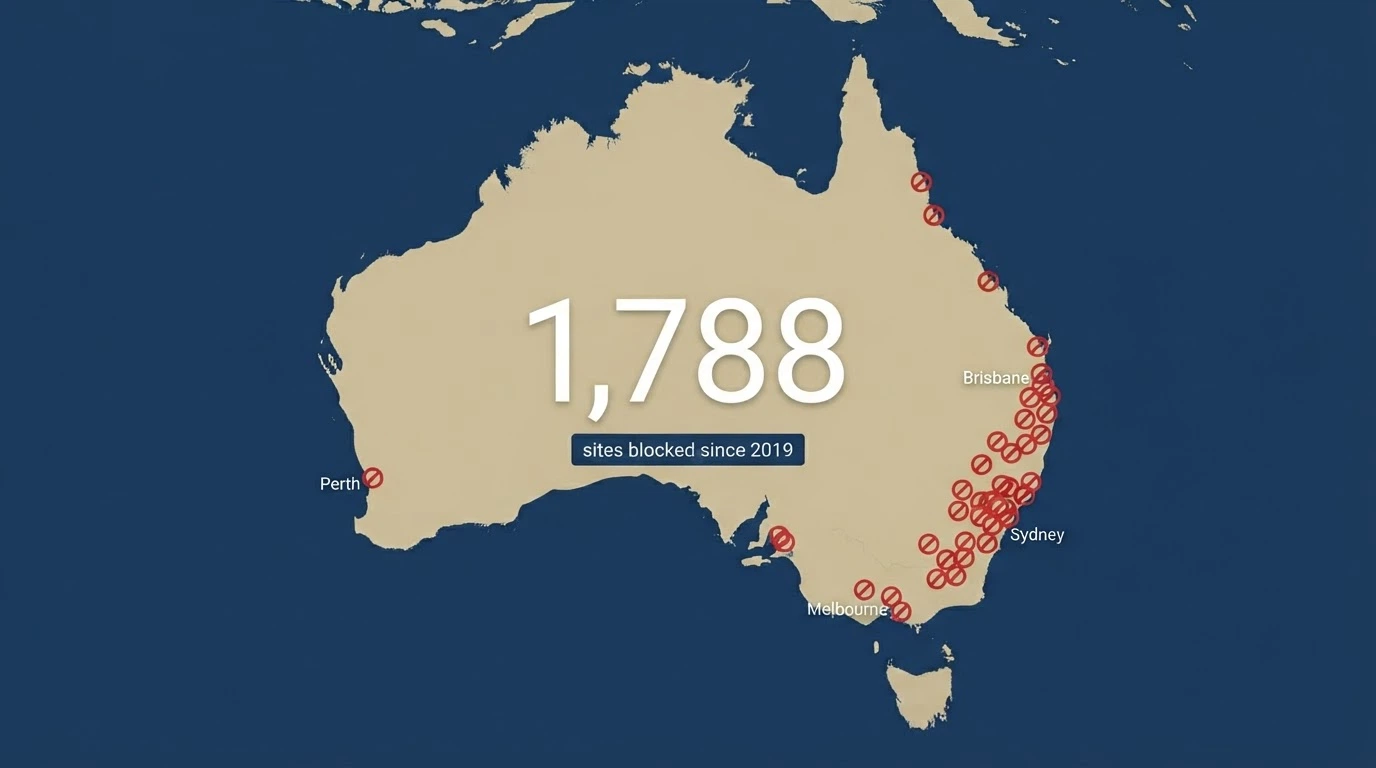
That is one quarter. The scale is cumulative and accelerating, not symbolic. Blocking is DNS-level and circumventable in technical terms, but the friction it adds — the broken links, the support complaints, the social-media chatter when a favourite site goes dark — drives players toward licensed alternatives and, at the offshore end, toward operators that withdraw voluntarily rather than face a formal enforcement action.
The practical consequence for the player is that the offshore casino on this page can be blocked at any time, with a balance on it. There is no Australian body to call about that balance. The operator’s customer-service team is the only recourse, and the operator is the party that controls whether a withdrawal goes through.
The 2027 Reforms: What Changes on 1 January and What Stays the Same
The Interactive Gambling Amendment (Gambling Reform) Bill 2026 passed Parliament on 19 August 2026, and its measures commence on 1 January 2027. The headline provisions are practical. Banks and payment providers gain express authority to block transactions to illegal gambling operators — a tool the ACMA has asked for and that the current regime does not provide. Broadcast wagering ads are capped at three per hour between 6 am and 8:30 pm, with a blackout window from fifteen minutes before to five minutes after live sporting events. Direct marketing of inducements is prohibited for fourteen days after a customer signs up with a licensed operator, for three months after a person deregisters from BetStop, and indefinitely for customers identified as at-risk.
What the reforms do not do is equally important. The offshore casinos remain accessible. Crypto deposits, routed through wallets rather than the banking system, are not reached by the new transaction-blocking powers. The individual player is still not prosecuted under the IGA. The 2027 package tightens the screws on licensed operators and on the payment channels around them; it does not, and was not designed to, eliminate the offshore market the page covers.
Playing Without a Safety Net: What You Lose When a Casino Asks for Nothing
An offshore casino that does not ask for ID also does not offer BetStop, does not answer to the ACMA, and leaves the player with no Australian complaints body to call. The anonymity that protects a player’s identity also strips every consumer protection. The next two sections are the part of the page that the marketing never writes, and the part a player who is reading this honestly most needs.
BetStop Won’t Protect You at an Offshore Casino
BetStop, the National Self-Exclusion Register, launched on 21 August 2023. By 31 March 2026, 59,830 people had registered, with 37,247 active exclusions. By 31 July 2026, the figures were 67,480 registrations and 41,290 active exclusions — more than 60% of all registrants, 78% under 40, 38% choosing lifetime exclusion. It is the strongest player-protection tool Australia has built, and it binds every Australian-licensed wagering service the moment a registration goes in.
What it does not bind is any of the offshore casinos on this page. BetStop’s reach stops at the Australian licensing perimeter. An offshore casino is not licensed in Australia, is not connected to the register, and will continue accepting a self-excluded person’s money. A player who has registered with BetStop and then opens an account at Stake, Rainbet or any of the others here has not extended their self-exclusion. They have moved to a venue that does not check.
That is the structural gap. The offshore operator can offer its own self-exclusion — usually tied to an email address, revocable on request, and dependent on the player honouring it themselves — but the tools do not match what BetStop provides at a licensed bookmaker. The reader who needs BetStop’s protection should know the protection does not travel.
Where to Get Help: 1800 858 858 and Australian Support Services
Problem gambling does not care whether the casino is licensed. The help infrastructure that responds to it is free, confidential, available 24/7, and built for exactly the player who has lost control at an offshore site.

The National Gambling Helpline is 1800 858 858. Online chat and counselling are available through Gambling Help Online at gamblinghelponline.org.au. Both services are Australian-government-funded and operate whether the casino the player used was licensed or not, whether the deposit was in dollars or in Bitcoin, whether the balance was lost or won. About 2.1% of Australian adults — roughly 430,000 people — experience problem gambling; the Australian Institute of Health and Welfare put high-risk gambling at 1.8% in 2022. Australians lose approximately A$25 billion on legal forms of gambling each year; in 2022, the ACMA found 11% of Australians had gambled online in the previous six months, up from 8% in 2020.
The numbers sit in this section deliberately. The offshore market this page covers is a small slice of that footprint, and the help available is not. A reader who has read this far and recognises something of their own situation in it has one number to remember, and that is it.
10 Anonymous Crypto Casinos Compared: What Each One Actually Offers Australian Players in 2026
The table below is the ranking. It is the operators research confirmed — not the marketing claims each casino runs on its own landing page — and the columns are the columns research could back with figures. Where a figure is not confirmed this run, the cell carries the no-data marker rather than a fabricated number.
| Operator | Welcome Bonus | Wagering | No-Deposit Offer |
|---|---|---|---|
| Stake | 200% up to $2,000 (crypto equivalent) + wager-free races | Wager-free on promotions | — |
| Rainbet | 150% up to A$2,000 + 100 FS (1st deposit), across 3 deposits total up to A$8,000 + 200 FS | 40× or no-wager gradual unlock | 25 free spins (genuinely deposit-free) |
| Rocket Play | 100% first-deposit match + free spins (multi-tier) | 40× on bonus amount | — |
| SkyCrown | Up to A$4,000 + 350 free spins across 5 deposits | 40× | No-deposit bonus exists (A$150 win cap, 40×) |
| Wild Fortune | Multi-deposit package + 250 free spins | 0× on free spins | — |
| FairGO | 100% up to A$200 × 5 deposits (A$1,000 total) | 30–40× | $10–$30 free chip available (60× on bonus value) |
| Bizzo Casino | Up to A$7,250 + 175 free spins across 4 deposits | 40× | 10 free spins for PWA install (A$75 cap, 40×) |
| WinSpirit | 200% + 25 free spins | 40× | — |
| Royal Reels | — | — | — |
| Vave | 150% up to 1.5 BTC + 100 FS (1st deposit), up to 4 BTC across 4 deposits | Varies by bonus | 40 free spins on Lady Wolf Moon MEGAWAYS (50 USDT cap, 40×, deposit required to withdraw) |
Three splits the table cannot show but the ranking reflects. The wager-free cluster — Stake, Wild Fortune’s 250 free spins, Rainbet’s gradual-unlock option — costs the player the bonus and nothing more. The 40× standard cluster — SkyCrown, Bizzo, WinSpirit, Rocket Play, Vave — costs the player the bonus and then some, in the shape of expected loss against the required turnover. The deposit-gated no-deposit cluster — Vave in particular — looks free and is not: a player must deposit before they can withdraw the no-deposit winnings. Royal Reels sits in the table because the market-share data puts it there, but the absence of confirmed bonus, licence and withdrawal data is itself the point.
Stake — Wager-Free Races Instead of a Welcome Bonus Lock-In
Stake is the biggest name in crypto casinos and the clearest counter-example to the deposit-match model. There is no no-deposit bonus. The welcome bonus is a 200% deposit match up to $2,000 (or crypto equivalent), and that is a real offer with a real deposit gate. The wagering model is what makes Stake unusual: it runs a A$100,000 daily race, a A$75,000 weekly raffle, and a A$500,000 monthly race — all wager-free, all rewarding existing players, not the headline deposit-match mechanic. Twenty-two cryptocurrencies are supported, withdrawals often arrive under 10 minutes, and the minimum deposit on some coins starts as low as $5. The game library runs to 4,500-plus titles including in-house originals like dice and crash. The licence is Curacao. There is no Australian licence, and the offshore status means no BetStop coverage and no ACMA recourse — same as every operator on this page. The verdict: for a player whose plan is a wager-free model and who is comfortable with a Curacao-regulated brand, Stake is the strongest wagering structure in the segment. For a player who wants a locked welcome bonus with a clear ceiling, the deposit-match offer reads as ordinary.
Rainbet — 25 No-Deposit Free Spins and a Choice Between Locked and Unlocked Bonuses
Rainbet is the only featured operator offering both a genuinely deposit-free bonus and a structural choice the rest of the segment does not give. Twenty-five no-deposit free spins are available to new Australian players with no deposit required — a cleaner offer than Vave’s deposit-gated equivalent. The welcome package is three deposits: 150% up to A$2,000 plus 100 free spins on the first, 75% up to A$3,000 plus 50 free spins on the second, 125% up to A$3,000 plus 50 free spins plus 20% rakeback for seven days on the third, totalling up to A$8,000 plus 200 free spins. The choice the segment does not match is on the wagering: a classic 40× locked bonus, or a no-wager gradual-unlock alternative that releases real money as the player bets. Minimum deposit is $20. Games with 97.4% RTP and above are excluded from bonus play. The game library runs to 6,500-plus titles with demo modes. Crypto withdrawals are immediate and unrestricted. The operator holds an offshore licence with details pending verification. Overall: a strong balance of bonus generosity and mechanics, though the regulator remains unverified.
Wild Fortune — 250 Free Spins With Zero Wagering (One of Only 5 Operators Offering This)
Wild Fortune is one of only five operators in a 47-brand AU/CA non-VIP comparison offering 0× wagering on free spins. The 250 free spins are the headline and the headline is honest — whatever the spins win is the player’s, with no playthrough hurdle in the way. The licence is verifiable: Tobique Gaming Commission licence number 0000064, held by Metlait SRL with a Costa Rica registration number 3-102-911867. The withdrawal data is real-money tested rather than marketing-claimed: crypto cashouts averaged 4 hours 53 minutes over five tests in May 2026. The fine print is the cap structure: US$4,000 daily, US$10,000 weekly, US$40,000 monthly. The supported cryptos are BTC, ETH, LTC, USDT on both TRC20 and ERC20, DOGE and BCH — six coins, no Monero. Minimum crypto deposit is AU$30. The game providers are BGaming, Pragmatic Play, Play’n GO and Yggdrasil; the library-average RTP sits around 96.5%. The welcome package is a multi-deposit structure beyond the 250 free spins, though the published terms beyond the FS are thin. Rating: this is the rare operator whose bonus terms genuinely favour the player, despite the offshore status and restrictive withdrawal caps.
Vave — 40 No-Deposit Spins and a 4 BTC Welcome Stretch
Vave offers 40 no-deposit free spins on Lady Wolf Moon MEGAWAYS — a real no-deposit offer, but with three clauses attached that a reader needs to read together. The winnings from those spins are capped at 50 USDT (roughly A$75), the wagering requirement is 40×, and at least one successful deposit is required before the player can request a withdrawal. The structural catch converts the offer from a free gift into a deposit gate: the no-deposit spins can produce a small win, but the small win cannot leave the casino until the player has deposited. The welcome package beyond the no-deposit spins is four deposits: 150% up to 1.5 BTC plus 100 free spins on the first, 100% up to 1 BTC on the second, 50% up to 1 BTC on the third, 25% up to 0.5 BTC on the fourth — up to 4 BTC total. The 100 free spins on the first deposit are credited as 25 per day over four days. Minimum deposit is 20 USDT. There is no maximum bet when wagering bonus funds, with free spins excluded. This brand uses an offshore licence without publicly verifiable details. Summary: the competitive 4 BTC welcome structure is attractive, but the deposit-before-withdrawal condition on no-deposit winnings effectively invalidates the ‘free’ marketing claim.
SkyCrown — A$4,000 Across Five Deposits With Crypto Cashback
SkyCrown builds the welcome package across five deposits, totalling up to A$4,000 plus 350 free spins. The wagering requirement is 40×. The ongoing value proposition sits beyond the welcome: 10% crypto cashback and 1% rakeback, which gives a returning player a reason to stay beyond the first deposit. The no-deposit bonus is available, but the headline is the cap — A$150 max win on free-spin winnings with 40× wagering. This offshore brand operates without confirmed regulatory details. Outcome: the multi-deposit build and cashback suit long-term players, although the no-deposit bonus is merely a small enticement rather than a meaningful incentive.
Bizzo — 8,000+ Games and a PWA That Pays You to Install It
Bizzo’s library runs to 8,000-plus games from 70-plus studios — the broadest catalogue in the featured set. The welcome package is up to A$7,250 plus 175 free spins across four deposits at 40× wagering, with an A$8 max bet during wagering. The first-deposit tier is 125% and requires a A$250+ deposit to trigger, which is a higher entry threshold than most of the segment. The no-deposit offer is genuinely free and unusual in its hook: 10 free spins for installing the PWA app, with 40× wagering and a A$75 win cap. This site operates with an offshore licence held by TechSolutions Group N.V., and launched in 2021. Consideration: while the catalogue breadth is excellent for variety-seekers, the high first-deposit requirement for the welcome bonus may be a barrier for casual players.
FairGO — 280 RTG Pokies Built for the Australian Player
FairGO runs a narrower and deeper library than any other featured operator: 280 RealTime Gaming titles exclusively. The RTG Real Series pokies — 243 ways, 1,000-times-plus max wins during peak bonus rounds — are the same games Australian pub-and-club players know from land-based terminals. The welcome package is 100% up to A$200 on each of the first five deposits, up to A$1,000 total. A $10–$30 free chip is available from aggregator data, with 60× wagering on the bonus value. This offshore site holds a licence without clearly available jurisdictional details. Final thoughts: ideal for players familiar with RTG pokies, but less competitive for those seeking wager-free bonuses or Monero support. The welcome-bonus wagering terms are in the 30× to 40× range typical for RTG operators.
Rocket Play — The 40× Standard With Multi-Tier Staying Power
Rocket Play sits in the 40× standard cluster — a conventional multi-deposit match bonus on the industry-standard terms, without a standout feature but with a structure that suits a player who plans to deposit across multiple tiers. The welcome bonus is a 100% first-deposit match plus free spins, with 40× wagering on the bonus amount (bonus-only, not deposit-plus-bonus). Bonus validity runs 7 to 30 days depending on the promotion. The max bet during wagering is C$7.50 or its equivalent; the free-spins winnings cap is C$50 (the AUD figure is not confirmed this run). The licence is suspected Curacao but not confirmed this run. The verdict: ordinary in the segment and reliable because of it; the multi-tier package and the 40× standard terms suit a player who knows the model and is not chasing a wager-free edge.
WinSpirit — 200% Match and a Loyalty Program Built for Repeat Play
WinSpirit’s welcome bonus is a 200% match plus 25 free spins, with 40× wagering on promotions. The headline is the match percentage, which is competitive. The real draw is the ongoing structure: regular tournaments, reloads, cashback, and a loyalty program — the kind of returning-player tooling that builds a session-to-session bankroll rather than a one-off welcome grab. This brand operates under an offshore licence with unverified details. For players who prefer loyalty structures and multi-session play over single-hit welcome offers, this is a strong alternative, though it lacks the wager-free appeal of some competitors.
Royal Reels — Australia’s Revenue Giant With the Thinnest Public Profile
Royal Reels ranks #9 in this comparison by Australian market-share data — a 2.51% share, an estimated A$243.99 million in revenue — and that is most of what research confirmed this run. No detailed bonus structure, no licence number, no game-provider list, no withdrawal-speed test, no cashout cap surfaced in search. The opacity is the takeaway. A major operator with no public terms is an operator on which the player is betting blind, and the rest of this page’s standard advice — read the T&Cs, verify the licence on the regulator’s register, check the withdrawal cap — does not run because there is nothing to read. The verdict: a market-share data point that does not yet come with the public-facing detail a player needs to evaluate it; treat the ranking as provisional and the operator as unverified.
How We Selected and Ranked These Anonymous Casinos
The ranking is qualitative, not scored. No invented weighting system sits behind the order. What sits behind it is the criteria research could check: licence status against the regulator’s own register rather than the casino’s footer; bonus terms against the specific T&Cs the operator publishes rather than the headline; withdrawal speed from real-money timed tests where the data exists; and the no-deposit offer’s actual structure, including the deposit-before-withdrawal clauses that turn a free gift into a deposit gate.
The sources drawn on were the ACMA’s published enforcement data, NoKYC Vault’s tested cashout reporting, Payoutverdict.com’s timed withdrawal benchmarks, Truebluecasinos.org’s KYC-threshold reporting, CasinoBonusCenter’s per-operator bonus terms, and the operators’ own T&Cs pages. Operator names that appeared in competitor rankings but did not surface in research with enough confirmed detail to rank — a few mid-tier brands — were dropped. Operator names that surfaced in market-share data but not in any public-facing detail — Royal Reels most clearly — were kept in the ranking with the gap explicitly named.
The ranking order is not a recommendation. The verdict on each operator is mine, but the order reflects the strength of the evidence behind each entry: Stake first because the wager-free model is unique and the crypto infrastructure is real; Rainbet second because the bonus structure is the segment’s best balance; Wild Fortune third because the 0× wagering is honest and the licence is verifiable; the rest falling into line by the same logic. Where the evidence was thin, the entry sits lower and the gap is named rather than hidden.
What to Actually Do Before You Deposit a Single Dollar
The page has laid out the operators, the bonuses, the legal reality and the risks. The decision that remains is the reader’s, and the checklist below is what turns that decision into an informed one.

- Read the T&Cs of the specific bonus before depositing. The wagering multiple, the eligible-games list, and the max-cashout cap are where the real cost hides — not the headline match percentage.
- Check the withdrawal cap on daily, weekly and monthly limits before the first big win. Wild Fortune’s US$4,000 daily cap is the clearest example: a balance above it is a slow trickle, not a payout.
- Verify the licence on the regulator’s own register, not the casino’s footer. The Tobique register at thetgc.ca is a real register; a Curacao claim at the bottom of a homepage is a footer claim until checked.
- Plan around the KYC threshold. If anonymity is the point, know the cumulative withdrawal figure at which the operator will demand photo ID — typically somewhere between A$3,200 and A$16,000 — and stay below it.
- Set a deposit limit before the first transfer. No Australian body will set one for an offshore account, and the casino’s email-based deposit-limit tools are revocable, not enforced.
- Know that 1800 858 858 is free, confidential and staffed 24/7. The helpline does not care whether the casino was licensed. It is the one number the page insists on regardless of which operator the reader chooses.
The rest of the page is the reasoning. The list above is the action.
Frequently Asked Questions
What does “no KYC” actually mean at an online casino, and when will I be asked for ID?
No KYC means verification is deferred rather than required upfront. Registration is an email and password, and play proceeds without photo ID until the operator’s anti-money-laundering trigger fires — typically somewhere between roughly A$3,200 and A$16,000 in cumulative withdrawals or deposits. At that point a photo ID, a proof of address, and sometimes a source-of-funds check will be requested before the withdrawal completes.
How fast are crypto withdrawals at anonymous casinos accessible from Australia?
Crypto withdrawals at the better-run operators take between 7 minutes and 5 hours — CoinCasino tested at 7 minutes in June 2026, Wild Fortune averaged 4 hours 53 minutes over five real-money tests in May 2026, and Stake’s withdrawals often arrive under 10 minutes. Across the segment the reliable band is 2 to 6 hours. PayID-only operators average 36 to 72 hours for comparison, which is the gap crypto closes.
Can I use a VPN to access anonymous crypto casinos from Australia?
A VPN does not change the legal status of the product — online casino remains prohibited under the Interactive Gambling Act 2001 regardless of how a player reaches an offshore site — and it does not change the operator’s KYC obligations. Some operators block known VPN exit nodes; others do not. Using a VPN to circumvent an ACMA blocking order is not in itself an offence against an Australian player, but it does not give the player any consumer protection the offshore brand would otherwise lack.
Which cryptocurrencies are accepted at anonymous casinos available to Australians?
The featured operators accept between six and 22 cryptocurrencies. Bitcoin, Ethereum, USDT (on TRC20 and ERC20), Litecoin and Dogecoin are near-universal. CoinCasino supports 21 cryptos including Monero for privacy-minded players. Jackbit supports native Monero end-to-end through a built-in wallet. The Australian-exchange caveat applies to all of them: buying crypto through a KYC-verified exchange such as CoinSpot or Swyftx creates a documented identity trail from the player’s name to the casino’s deposit address.
What is provably fair gaming, and does it apply to every game at a crypto casino?
Provably fair gaming is a cryptographic verification method that lets a player confirm a game’s outcome was not manipulated after the bet was placed, by comparing a server seed, a client seed and a nonce against the game’s hash. It applies to in-house “originals” like dice, crash and plinko — the games the operator builds itself. It does not apply to third-party pokies, live-dealer tables, or any game supplied by an external studio such as Pragmatic Play or Evolution, which run on their own RNGs and their own audit certificates rather than the casino’s provably-fair system.
Are my crypto transactions truly anonymous when I deposit at an online casino?
Not unless the crypto itself is private by default. Bitcoin, Ethereum, USDT and Litecoin are recorded on public ledgers where wallet addresses and transaction histories are visible to anyone — the addresses are pseudonymous rather than anonymous, and the moment an Australian exchange’s KYC links a real-world identity to a wallet, the history becomes readable. Monero is the cryptocurrency that was built for privacy, with ring signatures, stealth addresses and confidential transactions. True anonymity at an online casino requires Monero acquired without an identity-linked exchange — a narrow path that an ordinary Australian-registered exchange does not provide.
Prepared by the Fast Payout Casinos AU editorial staff.