
How Casino VIP Programs Work for Australian Players in 2026
A casino VIP program is a tiered loyalty scheme that rewards players for the volume they wager rather than the games they win. Each rung unlocks higher cashback, faster withdrawals, a personal account manager and, at the top, an invitation-only level reserved for the small fraction of customers who deposit heavily enough to be worth retaining. Every casino on this page is one Australians reach in 2026, and every one of them is offshore. The bonus terms are real; the protections an Australian would expect are not.

16 October 2026 — checked against the Australian Communications and Media Authority (ACMA) register and the Interactive Gambling Act 2001.
Table of Contents
- How Online Casino VIP Status Works (and Who Gets It)
- Why Loyalty Tier Progression Beats Any Welcome Bonus
- VIP Bonuses: What the Welcome Offer Actually Costs You
- Why a VIP Room Changes How You Play Online
- VIP Slots & Pokies: The Games That Fund Your Status
- The Offshore VIP Casinos Australians Actually Use in 2026
- The Legal Reality: Offshore VIP Casinos & Australian Law
- What the 2026 Reform Means for VIP Casino Programs
- VIP Deposits, Withdrawals & Status Transfers
- Crypto VIP Programs: Why Bitcoin Tiers Work Differently for Australians
- Mobile Access, Login & VIP Player Support
- What Australian Players Really Say About VIP Casino Programs
- Live Dealer Tables: The Real VIP Perk
- How We Evaluated These VIP Casino Programs
- What Australian VIP Casino Players Should Actually Do in 2026
- Frequently Asked Questions
How Online Casino VIP Status Works (and Who Gets It)
A casino VIP program looks like a loyalty card from the inside but works like a customer-retention contract from the outside. The casino tracks every wager, converts it into points or Status Credits, and uses those points to slot each player into a tier. The marketing describes the result — gold badges, faster cashouts, “exclusive” status. The mechanic behind it is volume: a player who wagers enough gets pulled up a tier; a player who stops wagering gets parked.
What separates a VIP program from a points card is the threshold. A standard loyalty scheme rewards anyone who plays; a VIP scheme rewards the few who play a lot. Entry at the bottom is automatic — most programs put a new sign-up on the first rung the moment they deposit. The top two or three rungs are invitation-only, because the casino wants to decide who counts as a VIP rather than let the points decide for them.
The mechanics differ across the ten programs on this page. Jackpot Jill runs six named tiers from Bronze to Royal, with public wagering thresholds on four of them and a Diamond tier reserved for invite. WinSpirit runs fourteen public levels, the most granular ladder in the set, with a no-deposit bonus at every step from VIP Bronze to VIP Diamond. Stake runs five tiers but stretches the top two across sub-levels, so a player climbs from Bronze to Platinum I on roughly $250,000 in wagers and then on through Platinum VI, Diamond I and Diamond V — the last rung alone requires around $25 million in cumulative wagers.
The tier ladder is what these programs sell. The next sections look at who the ladder is built for and what each rung is actually worth in cash rather than in marketing.
What a Casino VIP Program Actually Is
A VIP program is a retention scheme dressed as a reward scheme. Casinos use it to keep high-volume players from churning to a competitor — once a player has earned Diamond status, the points they would forfeit by switching brands act as a switching cost the casino does not have to pay for in cash.
The structure is consistent enough to summarise. Every program pairs a wagering threshold (the amount a player must stake before they qualify for the next tier) with a benefit ladder (what each threshold unlocks). Wagering is almost always cumulative across months, not per session. The benefits scale: cashback rates climb, withdrawal times shorten, dedicated hosts appear, and at the top, bonuses become bespoke rather than off the menu.
The difference between a points card and a VIP tier is the gap between rewarding volume and rewarding loyalty. A standard points card pays everyone; a VIP tier pays the player who would otherwise walk.
The VIP Player Profile: Who These Programs Are Built For
A VIP player is defined by spend rather than by skill. The Australian Institute of Health and Welfare put high-risk gambling at 1.8% of adults in 2022, and the Roy Morgan PGSI series showed problem-gambling incidence rising from 1.9% in 2022-23 to 2.9% in 2024-25 — an estimated 622,000 Australians, up 22% from the year before. Risky gambling across the whole spectrum nearly doubled from 13.7% in 2024 to 19.4% in 2025, with more than half of Australians who gamble now doing most of it online. The annual health loss associated with this harm runs to over 400,000 Years Lived with Disability.
The shape that fits those numbers is the VIP segment. The Guardian reported one Australian case where a single company sent a player $43,700 in bonus bets in just over two years, leading to more than 15,000 bets worth nearly $1 million. That is the business model VIP programs are built around: identify the small slice of customers whose gambling volume pays for the program, and pay them in cashback, hosts and bespoke bonuses to keep the volume coming.
The marketing pitch inverts the reality. VIP rooms are sold as exclusive, elite, a status the player has earned. The arithmetic is the same as a frequent-flier scheme: the airline makes money on every seat, the casino makes money on every wager, and the tier system just decides which customers get a rebate on the house edge rather than the full hit.
Why Loyalty Tier Progression Beats Any Welcome Bonus
A welcome bonus is a one-shot discount on the first deposit; tier progression is a discount that compounds across every deposit after it. Welcome bonuses at the programs on this page run from A$1,000 (WinSpirit) to A$8,000 (Skycrown), but the wagering on each is heavy enough that most players clear only a fraction of the headline figure before the bonus expires. The tier rewards, by contrast, return value every week a player stays — cashback on net losses, multiplied rakeback on volume, faster withdrawals on every cashout rather than on the first deposit alone.

Jackpot Jill makes the contrast explicit. Its welcome package is A$7,500 spread across five deposits plus 100 wager-free free spins on Dragon Pearls — and its VIP ladder scales cashback from 1× at Bronze to 2.5× at Diamond, the multiplier rising with every A$1,000, A$5,000 and A$25,000 a player wagers. WinSpirit’s ladder goes further. Cashback starts at 2% from the Lava level, reaches 6% at VIP Bronze and tops out at 10% at VIP Diamond, with a x5 wagering multiplier on the cashback itself. The wagering on cashback is a real cost; the rate is what makes the program worth climbing.
Stake sets its tiers in cumulative wagers rather than lifetime deposit value: Bronze at about $10,000, Silver at $50,000, Gold at $100,000, Platinum I–VI from $250,000 to $25 million, and Diamond I–V from $25 million onward. The benefit is rakeback multiplied by tier — every dollar the casino takes as the house edge returns a larger share as the player climbs. The land-based programs make the same point with simpler numbers. The Star Club requires 100 Tier Points for Silver, 1,500 for Gold, 5,000 for Platinum and reserves Diamond for invitation. Crown Rewards requires 10 Status Credits for Silver, 80 for Gold and 300 for Platinum, with 5 Status Credits earned per $1 on casino play. The points-to-status ratio is tighter online, where wagering thresholds reach seven figures rather than five.
The takeaway for a player weighing a new account: the welcome bonus is a marketing cost the casino accepts to get the player in the door; the tier rewards are what the casino is competing on once the player is already inside.
How Casino VIP Tiers Actually Work
The progression engine is the wagering threshold. A player earns points on every spin, hand or round, and the points convert to tier credits at a fixed rate the casino sets in its terms. The thresholds differ — Jackpot Jill uses lifetime wagers in Australian dollars, Stake uses cumulative USD wagers, WinSpirit uses a 14-step ladder where each step has its own bonus. What is consistent is the lock-in: once a player reaches a tier, the casino expects them to keep wagering at that level to retain it, and the next tier requires an order-of-magnitude jump.
Jackpot Jill’s six tiers are public. Bronze sits at the entry point with a 1× cashback multiplier; Silver at roughly A$1,000 lifetime wagered pays 1.2×; Gold at A$5,000 pays 1.5× and unlocks a personal account manager; Platinum at A$25,000 pays 2×; Diamond is invitation-only at 2.5×; Royal sits above Diamond. At Diamond, withdrawals are processed in roughly five minutes through PayID.
WinSpirit runs 14 public levels with cashback climbing from 2% to 10% and a no-deposit bonus at every VIP step from Bronze (A$150) to Diamond (A$3,750). The 14-level structure is the most granular in the set — every A$1,000 or so of cumulative play moves a player up a rung.
Stake’s ladder is steeper. Bronze requires around $10,000 in wagers, Silver $50,000, Gold $100,000, Platinum I $250,000 and Diamond I $25 million. The benefit is rakeback multiplied by tier — a Bronze player might earn 5% of the house edge back, a Diamond player closer to 20%.
The operators that publish thresholds give the player something to plan against. The operators that keep the top tiers behind invitation give themselves room to negotiate on retention rather than on a fixed schedule.
Points, Cashback and the Rewards That Actually Add Up
Cashback is the headline reward. The arithmetic is simple: a player wagers A$1,000 across a week, the house edge takes a slice, and the casino returns a percentage of net losses as cashback. The percentage is the marketed figure; the wagering on the cashback is the cost.
Skycrown offers the cleanest version: 10% weekly cashback up to A$500 with no wagering requirement, credited every Monday. The “no wagering” clause is the qualifier that separates a real cashback from a bonus in disguise — a player can withdraw the cashback without wagering it through.
WinSpirit offers more headline rate at the top of its ladder: 10% cashback at VIP Diamond, but with x5 wagering on the cashback. A A$100 cashback at Diamond becomes A$500 of required wagering before it withdraws as cash.
Jackpot Jill scales a multiplier rather than a percentage: 1× at Bronze rising to 2.5× at Diamond, with the multiplier applied to a base cashback rate the casino sets elsewhere in its terms.
RocketPlay runs weekly cashback with 5x wagering, and RocketPlay’s withdrawal limits — A$15,000 a week and A$30,000 a month — set the upper bound on how much cashback a player can actually bank.
Rakeback is the same mechanic under a different name, common at crypto-first casinos like Stake. The casino returns a share of the house edge directly rather than calculating it as a percentage of net losses. The economics are identical; the label is what differs.
Status transfer between casinos is rare. The points a player earns at Jackpot Jill do not move to WinSpirit; the Diamond status at Stake does not unlock Gold at RocketPlay. A player starting over at a new casino starts at the bottom rung regardless of where they ended at the old one.
VIP Bonuses: What the Welcome Offer Actually Costs You
A welcome bonus is the cheapest part of a VIP program to advertise and the most expensive part for the player to clear. The headline figure is the deposit match plus the free spins; the real figure is the wagering requirement times the bonus, divided by the maximum bet per spin, multiplied by the time each spin takes.

WinSpirit’s first-deposit bonus illustrates the arithmetic cleanly. A A$1,000 deposit unlocks a 100% match up to A$1,000 plus 100 free spins, with a x40 wagering requirement on the bonus and a A$7.50 maximum bet per spin while the wagering is being cleared. The turnover that A$1,000 bonus must generate before it converts to withdrawable cash is A$1,000 × 40, which is A$40,000 in cumulative wagers. At A$7.50 per spin, that works out to roughly 5,333 spins. At a five-second interval per spin, those 5,333 spins take about 7.4 hours of continuous play. The bonus is only yours once that 7.4 hours is logged.
The win cap sits on top of the wagering. WinSpirit caps winnings from welcome bonuses at A$3,000, so even a player who clears the bonus walks away with at most A$3,000 regardless of what the spins paid out before the cap kicked in. The bonus terms do not promise A$1,000 in cash; they promise A$1,000 in bonus funds that can become up to A$3,000 in cash after roughly 7.4 hours of play.
Welcome Bonuses: The Big Number That Comes With a Bigger Wagering Target
RocketPlay runs the highest percentage match in the set: 300% up to AU$6,000 plus 300 free spins, with 30x–40x wagering on the bonus and 5x wagering on weekly cashback. The 300% headline means a A$1,000 deposit unlocks A$3,000 in bonus funds, but the wagering on that A$3,000 at 40x is A$120,000 — and the A$15,000 weekly withdrawal cap means a player clearing the bonus is also bound by how fast the casino will let the cash leave.
Skycrown’s A$8,000 plus 400 free spins package is larger in headline, smaller in match percentage. The bonus funds are spread across four deposits with 40x wagering on bonus and 30x on free-spin winnings; the validity window is 14 days per tier. A A$20 minimum deposit qualifies; a player who does not deposit A$20 in time loses the tier.
Royal Reels structures its welcome across three deposits — 100% match on the first at 35x wagering, 75% up to A$750 on the second and 100% up to A$1,250 on the third. The first-deposit wagering is the lowest in the set at 35x, but the multi-deposit structure means the cumulative wagering target stacks rather than resetting.
Stake’s 200% deposit match up to $1,000 with 40x wagering and a 30-day window is a single deposit rather than a ladder. The 30-day validity is the longest in the set; WinSpirit’s validity runs to 31 days to activate plus 7 days to clear.
The pattern is consistent. The headline bonus figure is what the player remembers; the wagering target is what the player pays. Welcome bonuses look like gifts. They are workloads.
Deposit Bonuses and the VIP Stacking Effect
A welcome package that spreads across multiple deposits is a stacking scheme the casino writes into its terms. Jackpot Jill’s A$7,500 across five deposits, Skycrown’s A$8,000 across four, Royal Reels’ three-deposit ladder and WinSpirit’s 100% then 200% sequence all work the same way: the casino matches a percentage of each deposit, the player wagers the match at the published multiple, and the bonus balance clears one tier at a time.
The compounding matters. A player who claims the full Jackpot Jill welcome package is committing to A$7,500 of bonus funds wagered at the program’s standard multiple across five separate deposits — a workload that is genuinely five times the work of clearing one deposit alone, even though the headline reads as one figure.
Reload bonuses for VIP tiers are the second layer. A player who has reached Gold at Jackpot Jill or VIP Bronze at WinSpirit qualifies for reload offers the standard player does not see — same wagering mechanics, slightly different match percentage, often a free-spin bundle on top.
The cashback then sits on top of the bonus wagering. Skycrown’s 10% weekly cashback with no wagering returns cash from net losses regardless of whether a bonus is active; WinSpirit’s 10% cashback at VIP Diamond with x5 wagering pays in bonus funds rather than cash; Jackpot Jill’s multiplier-based cashback scales with tier rather than with bonus activity.
A player clearing a A$1,000 welcome bonus at WinSpirit and then claiming 10% cashback at VIP Diamond is running two parallel wagering tracks — the bonus funds at x40 and the cashback at x5. The total required turnover compounds, and the time to clear the package extends accordingly.
Why a VIP Room Changes How You Play Online
A VIP room is the section of a casino the standard player does not see. It is a private lobby, sometimes a separate URL, sometimes a tab behind a login wall, where the highest-tier players sit at higher-limit tables, talk to a named host and play without the friction the standard site puts in front of every withdrawal.

The mechanics are not what the marketing describes. A VIP room does not change the house edge; the games inside it run on the same random number generator as the games outside. What changes is the friction around the games — deposit and withdrawal limits rise, support responses drop from hours to minutes, and a personal account manager becomes the player’s first point of contact rather than a ticket queue.
The land-based contrast is the cleanest illustration. The Star Club gives Diamond members a private gaming floor, a dedicated host and entry to events the standard member never hears about. Crown Rewards tiers at Crown Melbourne and Crown Perth give Platinum members priority service, dedicated seating and access to private gaming salons. These are physical rooms with real walls and real hosts.
Online, the “VIP room” is mostly a service tier rather than a separate venue. The dedicated host, the faster withdrawals, the custom bonus — these are real, and they are what the player gets for the volume that put them on the tier. The lounge imagery is the marketing wrapper around a service upgrade the casino is happy to provide at scale.
What a VIP Room or Lounge Actually Delivers
The deliverable behind the VIP room label is the dedicated host. Jackpot Jill assigns a personal account manager from the Gold tier onward, with a five-minute PayID withdrawal guarantee at Diamond. The host’s job is to make the player feel valued — answering questions faster, routing withdrawals directly, and offering bespoke bonuses that do not appear on the standard promotions page.
Higher table limits are the second deliverable. Live-dealer tables at the top tier accept wagers the standard table caps at a fraction of. A player cleared for VIP access can sit at a A$500-a-hand blackjack table; the same player on the standard site would be limited to A$50.
The third deliverable is faster service. Withdrawals that take 24 hours on the standard site clear in minutes at the VIP tier; support tickets that wait in a queue on the standard site get answered directly by the host.
The fourth is access to events. Online VIP programs sometimes run real-world tournaments, hospitality packages and prize draws; the standard player hears about these only after they have happened.
None of this changes the math. The house edge on every game in the VIP room is the same as the house edge on the standard floor. The benefits the VIP room delivers are about pace, friction and recognition rather than about the odds.
VIP Slots & Pokies: The Games That Fund Your Status
Pokies are the engine. Slots drive the bulk of VIP wagering volume at every casino on this page, and the wagering thresholds at every VIP tier are calculated in slot-equivalent turnover.

Royal Reels lists 2,200+ pokies in its lobby. WinSpirit runs hundreds more. Jackpot Jill’s wager-free spins are tied to a named title — Dragon Pearls, a slot the casino highlights as the flagship of its free-spin bundle. The other casinos do not name the titles linked to their VIP promotions; the slots are part of the lobby rather than the offer.
RTP is the gap that the player cannot close from the lobby. Online slot RTP for offshore-licensed titles is set by the developer and disclosed in the game’s help file. For some titles it is 96%; for others it is 94% or lower. The casino does not always publish a list, and the player who wants to check the RTP on a specific title has to open the game’s paytable.
The Pokies Behind the VIP Perks
Jackpot Jill names Dragon Pearls as the slot for its 100 wager-free spins. The RTP for Dragon Pearls is not confirmed in the public sources reviewed for this page, which is itself worth noting — RTP disclosure is not standard among offshore operators serving Australian players. Royal Reels runs 2,200+ pokies; the provider names were not confirmed in the same sources. A player who wants to know whether the lobby is dominated by a single developer or a broad spread cannot answer that from the public marketing.
The takeaway is what is and is not on the page. A player wagering A$25,000 to reach Jackpot Jill Platinum is going to do it on whatever slot they prefer, and the casino will not tell them which slot gives them the best RTP for that volume. The casino tells them the title for the free spins; the player does the rest without an RTP map.
For the player, this means the choice of slot matters even though the marketing does not say so. A 96% slot returns A$96 on every A$100 wagered over the long run; a 94% slot returns A$94. The difference between the two is the difference between a 4% and a 6% house edge, and the VIP program does not adjust its cashback rate for which one the player picks.
The Offshore VIP Casinos Australians Actually Use in 2026
Every casino on this list is offshore, and every one of them serves Australians without holding an Australian casino licence. No online casino licence exists in Australia — not federally, not in any state or territory — which means none of the operators below could hold one even if they applied.
| Operator | AU Casino Licence | Welcome Bonus | Free Spins | VIP Tiers |
|---|---|---|---|---|
| RocketPlay | No | 300% up to AU$6,000 | 300 | Multi-tier (cashback from Level 4) |
| Skycrown | No | A$8,000 across 4 deposits | 400 | Multi-tier (10% weekly cashback up to A$500) |
| Royal Reels | No | 100% / 75% up to A$750 / 100% up to A$1,250 | Included | Multi-tier (14 active bonuses, Fair Bonuses Score 53/100) |
| WinSpirit | No | 100% up to A$1,000 | 100 (20/day for 5 days) | 14 levels (cashback 2%–10%) |
| Stake | No | 200% up to $1,000 | None | 5 tiers + sub-tiers ($10K–$25M+) |
| FairGO | No | n/a | n/a | n/a |
| Bizzo Casino | No | n/a | n/a | n/a |
| Scream Casino | No | n/a | n/a | n/a |
| Rainbet | No | n/a | n/a | n/a |
| Jackpot Jill | No | A$7,500 across 5 deposits | 100 (wager-free on Dragon Pearls) | 6 tiers (Bronze auto → Royal invite) |
The ten operators in the table are the brands Australian players reach in 2026. Six of them (RocketPlay, Skycrown, Royal Reels, WinSpirit, Stake, Jackpot Jill) have published enough welcome-bonus and VIP-tier detail to compare. The remaining four (FairGO, Bizzo, Scream, Rainbet) operate loyalty programs but did not publish bonus or tier specifics in the public sources reviewed; their entries below are written qualitatively from what is known.
What Separates a Top-Tier VIP Program From the Rest
Four markers distinguish a strong VIP program from a weak one: cashback terms, tier transparency, wagering fairness and withdrawal treatment.
Cashback terms are the first marker. Skycrown offers 10% weekly cashback up to A$500 with no wagering requirement — the cleanest version in the set. WinSpirit offers 10% cashback at VIP Diamond but attaches x5 wagering to it, which means the cashback is paid as bonus funds that must be cleared before they withdraw. Jackpot Jill scales a multiplier from 1× to 2.5× across its tiers, with the base rate published elsewhere in the terms. The qualifier is what matters: cashback with no wagering returns cash, cashback with wagering returns bonus funds.
Tier transparency is the second. Jackpot Jill publishes its first four thresholds (Bronze auto, Silver at A$1,000, Gold at A$5,000, Platinum at A$25,000) and reserves Diamond and Royal for invitation. WinSpirit publishes all 14 levels with cashback rates at each rung. Stake publishes all five tiers with the cumulative wagering thresholds in dollar terms. The operators that publish thresholds give the player something to plan against; the operators that keep them behind invitation give themselves room to negotiate.
Wagering fairness is the third. Royal Reels’ Fair Bonuses Score sits at 53/100, below average; its 14 active bonuses carry an average 31x wagering requirement. Skycrown’s 40x bonus / 30x free-spin wagering is heavy; WinSpirit’s x40 is the standard for the set; RocketPlay’s 30x–40x is comparable. The x5 on cashback is the variable that determines whether the cashback is real or a number on a page.
Withdrawal treatment is the fourth. RocketPlay caps withdrawals at A$15,000 per week and A$30,000 per month. Jackpot Jill offers five-minute PayID withdrawals at Diamond. Royal Reels’ A$50 maximum cashout on the no-deposit portion caps the upside of the free offer. The withdrawal treatment is where the operator’s real posture shows — what the casino is willing to pay out, and how fast.
Jackpot Jill
Jackpot Jill publishes the most transparent tier structure in the set. Six named tiers — Bronze, Silver, Gold, Platinum, Diamond, Royal — with public wagering thresholds on the first four: Bronze automatic on signup at 1× cashback, Silver at roughly A$1,000 lifetime wagered paying 1.2×, Gold at A$5,000 paying 1.5× and unlocking a personal account manager, Platinum at A$25,000 paying 2×, Diamond by invitation at 2.5×, and Royal sitting above that.
The welcome package is A$7,500 spread across five deposits, plus 100 wager-free free spins on Dragon Pearls. The wager-free label on the free spins is the rare term that does what it says — the spin winnings carry no further playthrough — but a A$200 maximum-win cap sits on the spin payouts. A player clearing the full welcome package is committing to five deposits and the wagering on each.
At Diamond, Jackpot Jill promises five-minute PayID withdrawals. The personal account manager at Gold onward is the dedicated host that takes over the player communication from the standard support queue.
For the Australian player: the ladder is the cleanest in the set, the wagering on the cashback is not published in the same detail, and the top tiers require a volume the average Australian player will not reach. A player with a modest bankroll who wants to know what they are committing to before they sign up gets more from Jackpot Jill’s published terms than from any other operator in the comparison.
WinSpirit
WinSpirit runs the longest public ladder in the set — 14 levels from Stone up to VIP Diamond — and the no-deposit bonus at the top end of it: A$3,750 one-off at VIP Diamond, on top of 10% weekly cashback and 15% deposit insurance.
The welcome package is 100% up to A$1,000 plus 100 free spins on the first deposit, with x40 wagering on the bonus and a A$3,000 win cap on the welcome bonuses. The second-deposit bonus is 200% up to A$1,000, also at x40. During wagering, the maximum bet per spin is A$7.50 — a tighter cap than most operators publish, and one that determines the time cost of clearing the bonus.
Cashback at WinSpirit starts at 2% from the Lava level and climbs to 10% at VIP Diamond, but carries x5 wagering. A 10% cashback rate on the headline becomes a smaller real return once the wagering is factored in.
For the Australian player: the ladder gives more rungs than any other operator in the set, the bonus terms are competitive but tight, and the cashback rate at the top is genuinely high — provided the player has the volume to reach it. WinSpirit suits a player who plans to climb rather than a player who plans to claim one bonus and leave.
Stake
Stake runs a five-tier VIP system on cumulative wagers in dollar terms: Bronze at roughly $10,000, Silver at $50,000, Gold at $100,000, Platinum I–VI from $250,000 to $25 million, and Diamond I–V from $25 million onward. The benefit is rakeback multiplied by tier — a Bronze player earns a small share of the house edge back, and a Diamond player earns a much larger share.
The welcome bonus is 200% up to $1,000 on signup, with 40x wagering and a 30-day window — the longest validity in the set. Stake does not bundle free spins into the welcome package.
The Terms of Service list Australia among restricted countries. The practical effect of a restricted-country listing is the casino’s prerogative — Australians can generally access the site, but the casino reserves the right to decline withdrawals or close accounts at its discretion. A player signing up from Australia is accepting that the operator is not bound by Australian consumer law and that the site’s own terms govern the dispute.
For the Australian player: Stake suits a crypto-first player who wants a published ladder and is comfortable with the offshore terms. The Australian restriction is a flag worth weighing before the first deposit, not a barrier to access. The rakeback mechanic rewards volume rather than loss, which makes the program more efficient than a comparable fiat cashback program for a player who runs hot streaks.
RocketPlay
RocketPlay runs the highest percentage match in the set: 300% up to AU$6,000 plus 300 free spins, with 30x–40x wagering on the bonus and 5x wagering on weekly cashback. The 300% headline is the largest single deposit match on this page.
RocketPlay’s licence is Curaçao Gaming Control Board number OGL/2024/1307/0748, held by Scores55 Tech B.V. The Curaçao framework is the standard offshore licence for operators serving Australia, and it is the only Australian-facing licence RocketPlay holds. There is no Australian casino licence because none exists.
The deposit methods are Visa, Mastercard, Neosurf, Bitcoin and Maestro, with minimums of A$20–A$25 for the fiat methods and 0.0002 BTC for Bitcoin. Credit cards and crypto have been banned for online wagering in Australia since 11 June 2024 — a RocketPlay deposit request for either is a signal that the operator is operating outside Australian rules.
Withdrawal limits are AU$15,000 per week and AU$30,000 per month. The weekly cap is the binding constraint on how fast a VIP player can move winnings off the site.
For the Australian player: the 300% match is the headline, the wagering on it is the cost, and the deposit-method list is the clearest signal of the operator’s offshore status. A player who can clear A$120,000 in required turnover will find the bonus worthwhile; a player who cannot will find the headline does not match the reality.
Skycrown
Skycrown’s A$8,000 plus 400 free spins package is the largest headline bonus in the set, spread across four deposits with 40x wagering on bonus funds and 30x on free-spin winnings. The validity window is 14 days per tier — the shortest in the set — and the minimum qualifying deposit is A$20.
The distinguishing term is the cashback. Skycrown offers 10% weekly cashback up to A$500 with no wagering requirement, credited every Monday. The “no wagering” qualifier is what makes the cashback real money: a player can withdraw the cashback without working it through any further playthrough.
The wagering on the welcome package is heavy. A player claiming the full A$8,000 across four deposits is committing to roughly A$320,000 in required turnover at 40x on the bonus and A$120,000 at 30x on the free spins, within 14 days per tier. The 10% cashback is what makes the workload bearable, but the workload is real.
For the Australian player: Skycrown suits a player who values the cashback terms over the bonus size. A player who treats the cashback as the primary reward and the welcome package as a stretch will find Skycrown’s structure cleaner than its competitors’. The 14-day per-tier validity is the cost of chasing the headline.
Royal Reels
Royal Reels lists 2,200+ pokies and structures its welcome across three deposits — 100% match on the first at 35x wagering, 75% up to A$750 on the second and 100% up to A$1,250 on the third. The 35x wagering on the first deposit is the lowest in the set, but the multi-deposit structure means the cumulative target stacks.
The operator also runs a $10 no-deposit bonus with 40x wagering on the no-deposit winnings and an A$50 maximum cashout. A player who claims the no-deposit bonus, wagers it through, and clears the playthrough walks away with at most A$50 — the bonus is free to claim and tightly capped on the upside.
The Fair Bonuses Score of 53/100 from an independent audit is the warning label. A score below average across 14 active bonuses with an average 31x wagering requirement tells the player that the headline terms at Royal Reels are tighter than they read.
For the Australian player: Royal Reels offers the most generous no-deposit bonus in the set, but the broader bonus package sits below the comparison on the fairness score. A player who treats the no-deposit offer as a one-time test rather than a long-term home will get the cleanest read. The 2,200+ pokies are a real library; the bonus terms around that library are not as generous as the lobby suggests.
FairGO
FairGO operates a loyalty program that the public-facing site confirms exists. The bonus structure, tier thresholds, wagering multiples and cashback rates remain unverified, and the operator’s licence details were not confirmed.
For the Australian player: the existence of a loyalty program is the only verifiable claim. A player considering FairGO should check the operator’s terms page directly for the specifics that this comparison could not confirm — the cashback rate, the wagering on any bonus, the withdrawal limits and the licence holder behind the brand. The unverified status does not mean the operator is unsafe; it means the player has more to check before the first deposit than with the six operators whose terms are public.
Bizzo Casino
Bizzo runs a VIP program; the tier structure, bonus terms and licence details were not confirmed in the public sources reviewed for this page. The public-facing site confirms the program exists, and the operator serves Australian players, but the specific terms that would allow a head-to-head comparison are not in the public sources reviewed.
For the Australian player: Bizzo is on this page because Australians use it, not because the comparison can rank it against the others. A player weighing Bizzo against the six operators with verified terms will need to verify the missing fields before signing up — the wagering multiple on any welcome bonus, the cashback rate, the withdrawal limits and the licence holder are all questions the operator’s terms page should answer before the first deposit clears.
Scream Casino
Scream Casino operates a VIP program that is confirmed to exist; the bonus terms, tier structure and cashback rates were not confirmed in the public sources reviewed for this page. The operator’s licence was not verified.
For the Australian player: Scream’s place on this page reflects what Australians access, not what the comparison can rank. The verification work belongs to the player before the first deposit. The questions to ask are the same as for any operator the public sources have not covered — the wagering on bonuses, the cashback terms, the withdrawal limits and the licence that sits behind the brand.
Rainbet
Rainbet runs a VIP program confirmed to exist; the bonus terms, tier thresholds, wagering multiples and licence details were not verified in the public sources reviewed for this page. The operator serves Australian players, and the public-facing site confirms the program exists.
For the Australian player: Rainbet is on this page because Australians reach it, not because the head-to-head comparison has the data to rank it. A player who wants to compare Rainbet against the six with verified terms will need to fill the gaps directly — the operator’s terms page is where the wagering multiple, the cashback rate and the withdrawal limits will be stated, and the licence register of the jurisdiction the operator cites is where the licence holder should be confirmed.
The Legal Reality: Offshore VIP Casinos & Australian Law
Online casino games are prohibited in Australia. The Interactive Gambling Act 2001, strengthened by the Interactive Gambling Amendment Act 2017, bans the supply of online casino games, online pokies and in-play betting to people in Australia. There is no licence for online casino games anywhere in the country — not federally, not in any state or territory.

The ACMA has had 1,564 illegal gambling and affiliate websites blocked by Australian ISPs since November 2019. More than 225 illegal services withdrew from the Australian market after enforcement strengthened in 2017. The Act targets the provider; the individual player is not prosecuted under the IGA.
| Feature | Licensed AU Wagering Operator | Offshore VIP Casino |
|---|---|---|
| AU licence | Yes | No |
| Casino games offered | No | Yes |
| BetStop self-exclusion coverage | Yes | No |
| ACMA complaints recourse | Yes | No |
| Credit card deposits legal | No | May accept |
| Crypto deposits legal | No | Often accepted |
| Player prosecuted for playing | No | No |
| Australian consumer-law protection | Yes | No |
The licensed column refers to a wagering operator holding a state or territory licence (typically the Northern Territory). Wagering operators do not offer online casino games under that licence; the offshore column refers to the operators on this page, none of which hold an Australian licence because none exists.
What Australian Law Actually Says About Online VIP Casino Programs
The Interactive Gambling Act 2001 prohibits the supply of online casino games to people in Australia. The 2017 amendment closed the offshore loopholes that had allowed operators to serve Australians under foreign licences, and gave ACMA the enforcement and DNS-blocking powers it uses today.
There is no online casino licence in Australia. A wagering operator can hold a state or territory licence for sports and racing — the Northern Territory Racing and Wagering Commission is the de facto national licensor — but the licence does not extend to online casino games. A player looking for an Australian-licensed online casino does not find one because none can exist.
Credit cards and crypto have been banned as payment for online wagering since 11 June 2024 under the Interactive Gambling Amendment (Credit and Other Measures) Act 2023, with penalties of up to $247,500. A site asking for either payment method is operating outside Australian rules. The legal deposit routes for an Australian-licensed wagering account are debit card, bank transfer, PayID/Osko and BPAY.
The enforcement track record is the clearest indicator of how seriously the regulator treats the prohibition. The ACMA has had 1,564 sites blocked since November 2019 and 225+ services have withdrawn since 2017. The pace has not slowed.
The Protections You Give Up at an Offshore VIP Casino
- BetStop does not reach offshore casinos. The National Self-Exclusion Register has 67,480 registrations as at 31 July 2026, of which 41,290 are still active — but BetStop binds Australian-licensed wagering services only. An offshore casino is not connected to the register and will keep taking a self-excluded person’s money.
- No ACMA complaints recourse. The ACMA investigates complaints against Australian-licensed operators and can refer offshore operators for blocking. It does not arbitrate disputes between an Australian player and an offshore casino over a refused withdrawal or a voided win.
- No Australian consumer-law protection. Australian Consumer Law does not apply to a transaction conducted outside Australia. A player disputing a bonus term at an offshore casino is bound by the operator’s terms page, not by the Australian Competition and Consumer Commission.
- DNS-level blocking with a balance on the site. The ACMA blocks sites at the DNS level — when a casino domain is blocked, Australian players lose access to the site, including the balance in their account. The casino does not need to return the balance because the block is an Australian action against an offshore operator.
- No Australian responsible-gambling infrastructure. BetStop, the National Gambling Helpline (1800 858 858) and Gambling Help Online (gamblinghelponline.org.au) are Australian resources. They are useful regardless of where a player gambles, but they cannot compel an offshore casino to honour a self-exclusion or refund a disputed loss.
What the 2026 Reform Means for VIP Casino Programs
The Interactive Gambling Amendment (Gambling Reform) Bill 2026 passed Parliament on 19 August 2026. Its measures commence on 1 January 2027 and target the inducement marketing that VIP programs rely on.
The reform bans direct marketing of inducements for 14 days after a customer signs up, for three months after a person deregisters from BetStop, and indefinitely for customers identified as at risk of gambling-related harm. The Coalition-Labor compromise focused on VIP-level inducements specifically — exclusive events, game-day tickets, large bonus-bet packages — while leaving mass-market promotions in a separate band.
The advertising rules tighten in parallel. No more than three wagering ads per hour between 6:00 am and 8:30 pm from 1 January 2027, with a live-sport blackout running from 15 minutes before an event starts until five minutes after it ends. Athletes, celebrities and influencers are barred from promoting wagering products; broadcasting sporting odds is banned outright.
A national wagering advertising opt-out register — AdStop — will be administered by ACMA, and banks and payment providers gain express authority to block transactions to illegal gambling operators. The cost of administering the new rules will be recovered via a levy on licensed interactive wagering operators.
The reform applies to licensed Australian wagering. It does not reach offshore casinos, because offshore casinos are not licensed in Australia. What the reform does is signal where the regulatory direction is heading — inducements are the next thing to be squeezed, and VIP-level marketing is the inducement the Parliament named first. An offshore casino running a VIP bonus program in 2026 is operating in a market that has publicly identified that business model as the next thing to regulate.
VIP Deposits, Withdrawals & Status Transfers
A VIP player moves money through the same rails as a standard player — deposit, play, withdraw — with two differences: the deposit limits are higher, the withdrawal limits are higher, and the time between withdrawal request and cash arrival is shorter.
RocketPlay’s deposit methods are Visa, Mastercard, Neosurf, Bitcoin and Maestro, with minimums from A$20 (Neosurf) to A$25 (the cards) and 0.0002 BTC. Skycrown’s minimum deposit is A$20. WinSpirit’s minimum is A$30. These minimums sit at the deposit side; the VIP tier affects the withdrawal side.
RocketPlay caps withdrawals at A$15,000 per week and A$30,000 per month. Jackpot Jill promises five-minute PayID withdrawals at Diamond. WinSpirit publishes no explicit withdrawal cap in the public sources reviewed, but the win limit on welcome bonuses (A$3,000) sits on the bonus side rather than the withdrawal side.
Status transfer between operators is not standard. A player who reaches Platinum at Jackpot Jill starts at Bronze at WinSpirit; the Diamond status at Stake does not unlock Gold at RocketPlay. A player moving between casinos in search of a better VIP package is starting from the bottom each time. The volume that earned the previous tier does not move with the player.
Deposit Methods and Withdrawal Realities for VIP Players
The deposit method is itself a signal. A site asking for credit card or crypto is operating outside Australian rules — the Interactive Gambling Amendment (Credit and Other Measures) Act 2023 banned both for online wagering from 11 June 2024, with penalties up to $247,500. A licensed Australian wagering operator accepts debit card, bank transfer, PayID/Osko and BPAY; an offshore VIP casino accepting credit card or crypto is by definition outside the Australian framework.
The withdrawal cap is the binding constraint on cash flow. RocketPlay’s A$15,000 weekly cap means a player who wins more than A$15,000 in a week does not get the surplus off the site that week. The cap is the same for VIP and standard players — the VIP status accelerates the play, not the payout.
From 1 January 2027, banks and payment providers gain express authority to block transactions to illegal operators. A player depositing into an offshore casino from an Australian bank may find the transaction refused, reversed or flagged. The payment-blocking power is a complement to the existing DNS-level site blocking, and it brings Australian banking infrastructure into the enforcement chain.
Crypto VIP Programs: Why Bitcoin Tiers Work Differently for Australians
Crypto is banned for online wagering in Australia since 11 June 2024. The federal Credit and Other Measures legislation covers both credit cards and digital currency, and a site asking for a crypto deposit is operating outside Australian rules by definition.

The offshore VIP programs Australians use, by contrast, are built on crypto. Stake is crypto-first. RocketPlay accepts Bitcoin at 0.0002 BTC minimum. The crypto-native structure is part of what makes these operators offshore — they offer a payment method the Australian framework prohibits, and the Australian framework is the only thing the crypto-native operator cannot offer.
The structural difference between a crypto VIP program and a fiat one is in the rewards. Fiat programs use cashback — a percentage of net losses returned as cash or bonus funds. Crypto programs use rakeback — a share of the house edge returned directly. The economics are the same; the label and the timing differ. Rakeback is paid per wager rather than per week.
How Crypto VIP Tiers Compare to Fiat Programs
Stake’s VIP ladder is the cleanest example. Five tiers from Bronze to Diamond, with cumulative wagering thresholds from roughly $10,000 to $25 million, and rakeback multiplied by tier. A Bronze player might receive 5% of the house edge back; a Diamond player might receive 20%.
The thresholds are stated in USD, which makes the Australian dollar conversion the player’s responsibility. A player reaching Stake Gold at $100,000 in wagers is committing the AUD equivalent — roughly A$150,000 at current rates — before the next rung.
The benefit ladder at Stake runs alongside in-house originals (provably fair games the operator builds itself) and third-party slots and table games, with a sportsbook covering 12+ sports. The provably fair angle is a trust signal — the player can verify each game’s outcome against the blockchain — that fiat programs do not need to offer because fiat programs operate under a regulator that audits them.
For the Australian player: the crypto tier system is structurally cleaner than most fiat programs, the rakeback is paid more frequently than weekly cashback, and the offshore status is more visible because the operator is built around a payment method Australia has banned.
Mobile Access, Login & VIP Player Support
A VIP player logs in the same way as a standard player — username, password, sometimes two-factor authentication — but the experience after login is different. A dedicated host greets the player on the standard VIP platform; a ticket queue is what the standard player meets.
Jackpot Jill’s personal account manager from Gold onward is the dedicated host. The host’s job is to handle the player directly — bonus offers tailored to the player’s history, withdrawals routed through the host rather than the standard finance queue, and answers to questions that the standard support team might bounce.
The dedicated host is what the marketing sells as the “VIP experience.” In practice, it is a service upgrade with measurable benefits: faster withdrawal processing, custom bonus offers, and a single point of contact for issues that would otherwise be filed and forgotten.
What a Dedicated VIP Host Actually Does
The Caswino description of the role — “the higher the tier, the better the cashback rate, the faster the withdrawals and the more personalised the account management” — captures what the host is meant to deliver. The host is the human end of the tier system.
The practical benefits are concrete. A player asking a standard support contact about a delayed withdrawal will wait hours for a ticket response; a player asking the dedicated host gets an answer measured in minutes. A player being offered the standard welcome bonus reload will see the published offer; a player the host has been working with might see an offer tailored to their play history.
The marketing inflates the role; the host does not change the math. A dedicated host cannot improve the house edge on a slot, cannot override a maximum cashout cap on a bonus, and cannot compel the casino to honour a withdrawal the operator’s terms forbid. The host is the player-facing layer of a service upgrade, not an exception to the operator’s terms.
For the Australian player: the dedicated host is worth the tier it sits on, but it does not override the offshore status. The host answers faster than a ticket queue; the host does not change which jurisdiction the dispute would be governed by.
What Australian Players Really Say About VIP Casino Programs
The search results for Australian VIP casino programs are dominated by affiliate review pages. The top-ranking pages are listicles from sites built around “best VIP casino Australia” or “top 10 VIP programs for Aussies” — the format that converts traffic into sign-ups.
The depth on these pages is consistent. The affiliate pages run 1,500–3,000 words, compare 5–10 operators with welcome-bonus tables, and end with a brief legality disclaimer — usually one or two paragraphs acknowledging the offshore status before recommending the offshore casinos as if they were licensed.
The gaps in the affiliate coverage are what this page tries to close. No affiliate page leads with the prohibition honestly. None explains BetStop’s irrelevance to offshore casinos. None details the 2026 reform’s inducement restrictions or what they signal about VIP marketing. None distinguishes a licensed wagering operator from an offshore casino in its rankings. None examines what the VIP programs cost Australian players in terms of loss acceleration, which is the question a reader comparing tier ladders is implicitly asking.
The Review Sites Ranking VIP Programs: What They Measure and What They Miss
The criteria the affiliate sites use are visible from the page structure. Welcome bonus size, free-spin count, wagering multiple, VIP tier count — these are the columns in the comparison tables. The “best” casino is the one with the largest bonus and the lowest wagering, and the page treats the largest bonus as the best offer even though a larger bonus with a 40x wagering requirement can be more expensive to clear than a smaller bonus with a 35x requirement.
What the affiliate pages do not measure is the cost of the offer over the time it takes to clear. The wagering-on-cashback qualifier is rarely flagged. The maximum-cashout cap on the no-deposit bonus is rarely mentioned. The fact that the operator is offshore, with no Australian licence and no Australian consumer-law protection, is acknowledged in passing and then ignored.
For the reader: the affiliate rankings tell the reader which bonus looks biggest. They do not tell the reader which offer is worth the cost. This page ranks the same operators but uses different criteria — cashback terms, tier transparency, wagering fairness and withdrawal treatment — and writes the offshore status into every block rather than burying it in a disclaimer.
Live Dealer Tables: The Real VIP Perk
Live dealer is the closest online play gets to a high-roller room. The games are real tables with real dealers, streamed to the player’s screen, with chat between the player and the dealer and (in some setups) between the player and other players at the table.
For a VIP player, live dealer offers three things the standard slot does not: a higher table limit, a real human running the game, and a pace set by the dealer’s shuffle rather than by a random number generator’s spin cycle. A player cleared for VIP access can sit at a A$500-a-hand blackjack table; the standard table caps at A$50.
The specific live-dealer offerings at each operator on this page were not confirmed in the public sources reviewed. The structure of the VIP benefit — higher table limits, dedicated dealer access, exclusive tables — is consistent across the segment, but the per-operator details (which providers, which table limits, which games) vary and were not verified for this comparison.
For the Australian player: live dealer is the part of the VIP offer that is qualitatively different from the standard site. A player who values the social texture of a real table and the higher stakes it allows will find the VIP live-dealer experience closer to a land-based high-roller room than anything else on the page. The “exclusive” tables the marketing references are usually a higher-limit variant of a standard table rather than a separate game.
How We Evaluated These VIP Casino Programs
The operators on this page were checked against the Australian regulatory framework as the first filter. None of them hold an Australian casino licence, because no online casino licence exists in Australia. The framework that applies is the Interactive Gambling Act 2001, the Interactive Gambling Amendment Act 2017, the Interactive Gambling Amendment (Credit and Other Measures) Act 2023 and, from 1 January 2027, the Interactive Gambling Amendment (Gambling Reform) Act 2026.
The per-operator information was drawn from the operators’ terms pages and from the affiliate review sites that publish the terms they found — Top10-casino-australia.com, Betterchoicecompany.com, Playonstake.eu, Bitcoincasinoz.net, Rushlayer.com, Winspirit-aussie.com, Playwithskycrown.com, royalreelsreview.co, casinoaudit.net, web3bet.com, cryptobetinsider.com, bestaustraliancasinosites.com and tech-insider.org. Where an affiliate source and the operator’s terms disagreed, the operator’s terms took precedence.
The ranking criteria were tier transparency (published thresholds vs invitation-only), cashback terms (no-wagering cashback vs cashback with wagering), bonus wagering fairness (multiple, validity window, maximum bet during wagering), public-versus-invitation tier thresholds, withdrawal limits and the presence of Australian-facing responsible-gambling infrastructure. The harm research came from the Australian Institute of Health and Welfare, Roy Morgan Research, ANU POLIS, the Journal of Gambling Studies, the NSW Gambling Survey 2024 and the parliamentary inquiry testimony reported by The Guardian.
Operators 6–9 (FairGO, Bizzo, Scream, Rainbet) operate VIP programs but did not publish bonus and tier specifics in the public sources reviewed. They appear on the page because Australians access them, with a qualitative description that does not fabricate the missing data.
What Australian VIP Casino Players Should Actually Do in 2026
The decision framework for an Australian player weighing a VIP casino program in 2026 starts with the offshore status, because every other variable sits on top of it. The protections covered in the section on the legal reality — BetStop coverage, ACMA recourse, Australian consumer law — do not reach an offshore VIP casino, and the page has laid out the consequences of that gap in detail.
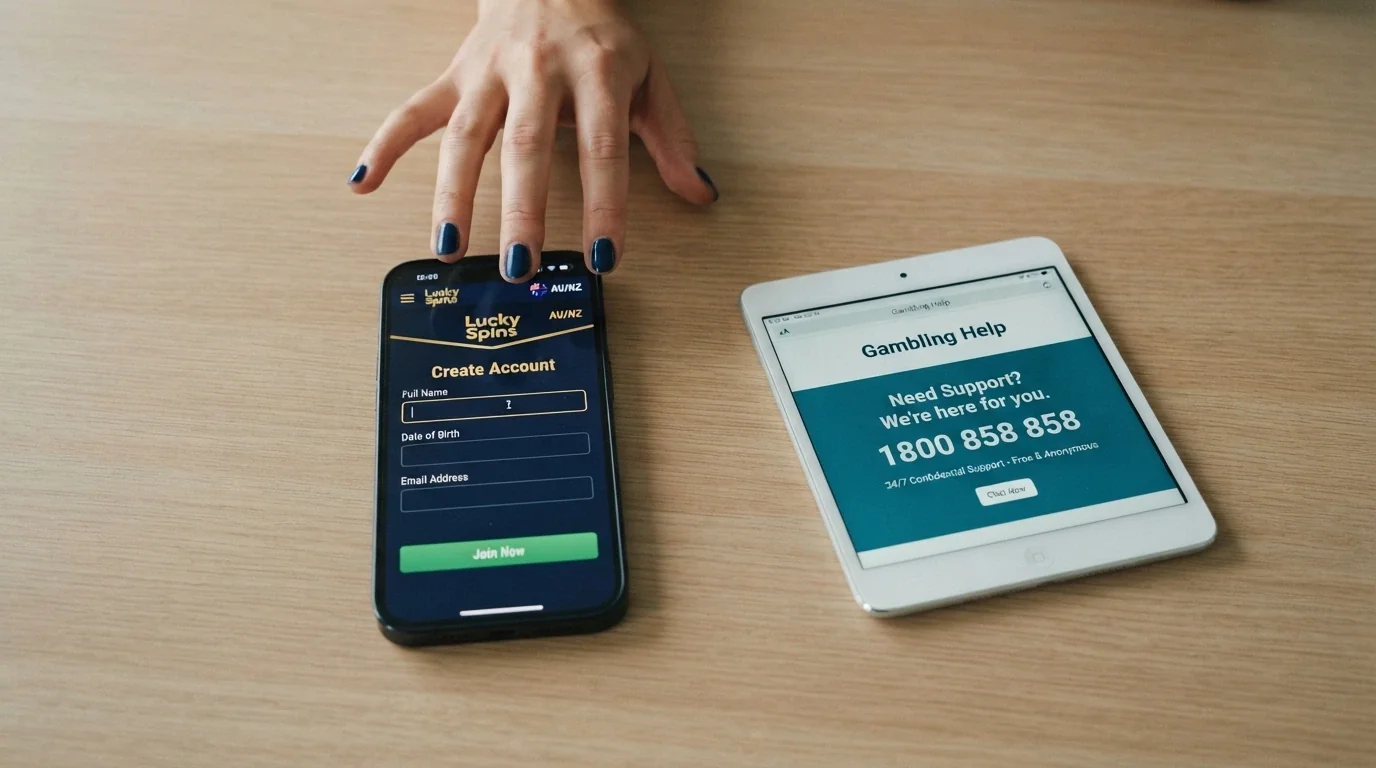
An offshore VIP casino gives the player the bonus, the tier ladder and the cashback. It does not give the player the Australian recourse the player would have at a licensed wagering operator. A withdrawal dispute at an offshore casino is governed by the operator’s terms page, not by Australian law. A self-exclusion under BetStop does not reach the offshore casino — the register binds Australian-licensed wagering services only.
The single clearest red-flag test is the deposit method. A site asking for a credit card or crypto deposit is operating outside Australian rules, by definition, since 11 June 2024. Every operator on this page passes that test as offshore — they all accept payment methods that are banned under Australian law for online wagering.
The harm research sets the stakes. Roy Morgan’s March 2026 data shows 2,857,000 Australians experiencing gambling harm from their own play; PGSI-tracked problem-gambling incidence hit 2.9% in 2024-25, an estimated 622,000 people and up 22% on the prior year. The annual health loss from gambling-related harm exceeds 400,000 Years Lived with Disability. Only 13.5% of moderate-risk and high-risk gamblers seek help, and 87.5% of regular gamblers who did not seek help said they did not feel they had a problem.
A VIP program, by design, accelerates the play. The tier thresholds run to A$25,000, A$100,000, A$25 million — volumes that put the player in the harm-incidence band by the time they reach the top tier. The cashback and the dedicated host are what the casino pays the player to keep wagering at that pace.
For a player who is going to play: the responsible move is to set the deposit limit before signing up, treat the bonus as a workload rather than a windfall, and use the Australian help infrastructure regardless of where the casino is licensed. BetStop (for the licensed wagering side), the National Gambling Helpline on 1800 858 858 (free, confidential, 24/7) and Gambling Help Online (gamblinghelponline.org.au) are the Australian resources. They do not reach the offshore casino, but they reach the player.
The clearest single check before depositing: if the site asks for credit card or crypto, it is outside Australian rules, and the protections Australians expect do not apply. The bonus is real. The offshore status is real. The two facts are not separable.
Frequently Asked Questions
What protections do I lose by playing at an offshore VIP casino in Australia?
An offshore VIP casino is not on BetStop — the register binds Australian-licensed wagering only. ACMA does not arbitrate offshore disputes, Australian Consumer Law does not apply, and DNS-level blocking can leave a player without access while a balance sits on the site. The National Gambling Helpline (1800 858 858) and Gambling Help Online still reach the player.
Are casino winnings taxable for Australian VIP players?
No. Betting and gambling winnings are not assessable income for an Australian individual under section 6-5 of the ITAA 1997, and losses are not deductible under section 8-1 — unless the person carries on a betting business. No Australian case has held an ordinary punter’s winnings assessable. The operator pays its own tax; the player does not.
Crown Rewards vs online VIP programs: which gives you more?
Crown Rewards and The Star Club convert play at land-based Crown and Star properties into Tier Points and Status Credits (5 Crown points per $1 on casino play for Crown; 100 Tier Points for Silver at The Star). Online VIP programs use cumulative wagering thresholds and higher cashback rates (10% at WinSpirit VIP Diamond). Each rewards structure suits a different player.
What is the minimum deposit to join a VIP casino program in Australia?
No Australian-licensed VIP casino exists. Among the offshore programs on this page, the welcome-tier minimums are A$20 at Skycrown, A$20–A$25 at RocketPlay, A$30 at WinSpirit. Royal Reels’ $10 no-deposit bonus is the lowest entry point, capped at A$50 maximum cashout. VIP tier entry requires cumulative wagering well above the deposit minimum — Jackpot Jill’s Gold starts at roughly A$5,000 lifetime wagered.
How do I check whether a casino site is allowed to serve Australians?
The clearest signal is the deposit method. Credit cards and crypto have been banned for online wagering in Australia since 11 June 2024. A site asking for either is, by definition, outside Australian rules — a licensed Australian wagering operator cannot legally accept either. There is no such licence for online casino games.
How does a VIP program actually accelerate losses for high-rollers?
A VIP program rewards volume rather than wins. Tier thresholds here run from A$25,000 (Jackpot Jill Platinum) to A$25 million (Stake Diamond I–V). Cashback is a percentage of net losses — the more a player loses, the more it pays. The dedicated host and bespoke bonuses keep the volume coming. The Guardian documented one player receiving $43,700 in bonus bets over two years and placing 15,000+ bets worth nearly $1 million.
No-Deposit VIP Bonuses: Free Money or the Tightest Terms on the Page?
A no-deposit bonus is the rare offer where the player risks nothing to claim. The qualifier is the term sheet that comes with it.
Royal Reels offers a $10 no-deposit bonus with 40x wagering on the no-deposit winnings and an A$50 maximum cashout. A player who claims the $10, wagers it through to A$400 in turnover, and clears the wagering walks away with at most A$50. The bonus is free in the sense that no deposit was needed; it is not free in the sense that anything beyond A$50 is payable.
WinSpirit runs a no-deposit ladder at the VIP end of its program: A$150 at VIP Bronze, scaling to A$3,750 at VIP Diamond, with each bonus issued as a one-off at the tier entry. Reaching VIP Diamond requires the cumulative wagering needed to climb the 14-level ladder, so the A$3,750 no-deposit bonus is the payoff for the volume the player has already put through.
Jackpot Jill’s 100 wager-free free spins on Dragon Pearls are not a no-deposit offer — they are part of the A$7,500 deposit welcome package. The “wager-free” label means the free-spin winnings carry no further playthrough, but a A$200 maximum-win cap sits on the spin payouts.
The pattern is the same across all three. A no-deposit bonus is free to claim and expensive to clear. The terms the player signs when claiming are tighter than the terms on a deposit bonus, because the casino is taking the deposit risk on the standard offer and reclaiming it through the cap and the wagering on the no-deposit version.