
Best Casino Apps for Australian Players in 2026 — The Offshore Reality Nobody Puts on the Box
Every casino app an Australian can put on their phone is offshore. There is no licensed alternative. The Interactive Gambling Act 2001 makes it an offence to provide online casino games, online pokies and in-play sports betting to a person in Australia, and no licence for online casino exists federally or in any state or territory. So when a punter types “best casino app” into a search bar, what the rankings actually compare is ten different offshore brands competing for an audience their own government has decided not to license.
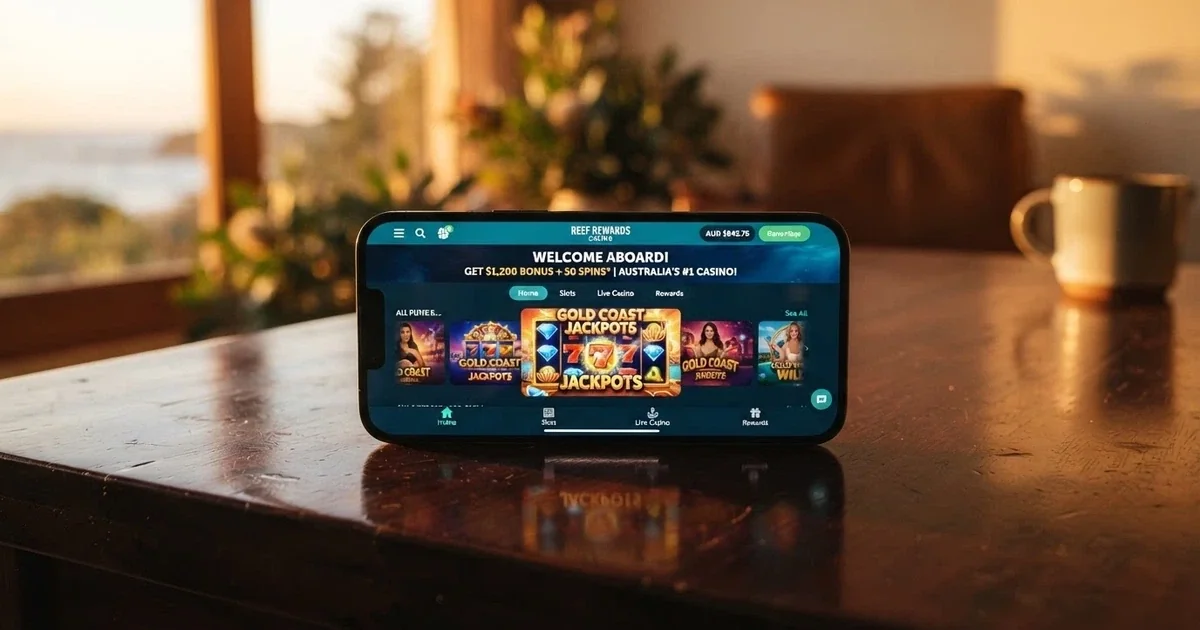
Current as of 13 September 2026 — figures cross-checked against ACMA public data, AUSTRAC guidance and each operator’s published terms page.
That single fact reshapes how to read this page. Speed, bonuses, game libraries and mobile polish are real differentiators — but the consumer protections a licensed Australian bookmaker is required to provide do not exist at any of the ten operators below. ACMA cannot recover a disputed withdrawal, BetStop cannot block a deposit, and the offshore licence that appears in each brand’s footer is not a substitute for the Australian regime it replaces. Anyone comparing apps should weigh that gap before weighing a welcome bonus.
Table of Contents
- What Makes a Casino App Worth Your Time
- Casino Apps on Android — APKs and Sideloading
- Casino Apps on iPhone and iPad — PWAs and Home-Screen Shortcuts
- The Cross-Device Reality — Mobile, Desktop and New Apps
- Top 10 Casino Apps for Australian Players — Compared Head-to-Head
- The Offshore Reality — Why Every Casino App an Australian Uses Is Unlicensed
- Real Money, Real Wins? What Casino Apps Actually Deliver on Cashouts
- Why Your 2026 Bonus Looks Bigger Than It Really Is
- Crypto Casino Apps — Faster Payouts, Zero Australian Protections
- Free-Play and Demo Mode — Try Before You Risk a Cent
- Playing Safely When the Safety Net Has Holes
- How We Evaluated These Casino Apps
- What This Means for Your Next Casino App
- Frequently Asked Questions
What Makes a Casino App Worth Your Time
Four criteria separate a usable offshore casino app from a liability, and the first one is not on the marketing page.
Mobile interface quality is the entry ticket. Pokies and table games need to load within a few seconds on a mid-range phone over 4G, and the lobby has to scale cleanly to portrait orientation on screens as small as 5.5 inches. Benchmarks on this front run from roughly 2–4 seconds for a representative offshore mobile site to “nearly instant” on Wi-Fi or 5G; anything past five seconds on a normal connection is a friction a punter will feel every session.
Game library and provider quality matters more than raw count. A library of twelve thousand titles that mixes the same five providers three thousand times each is not deeper than a smaller one with a curated spread. The presence of named providers — and the pokies RTP figures that those providers publish — is a stronger signal than the number itself.
Payment speed is the real differentiator. Two apps can advertise the same payout window and one can hit it while the other stalls on KYC. PayID, crypto and card-to-bank behave very differently across operators, and the gap is usually measured in hours, not minutes.
Bonus-term fairness sits above headline numbers. A 100% match bonus up to A$500 at 30x wagering is worth A$15,000 in required turnover before a cent comes out — and that arithmetic is the difference between a promotional offer and a real one. The same A$500 with 50x wagering turns into A$25,000 in turnover, and a no-deposit bonus with x50 and a A$100 cashout cap rarely pays out anything at all.
RNG certification underpins all four. A certificate from iTech Labs, eCOGRA, GLI or Quinel is what confirms a pokie’s advertised RTP is real, not a marketing figure. Without one, the house edge is unverified.
Casino Apps on Android — APKs and Sideloading
Google Play’s Australian storefront carries no real-money casino apps. The reason is local law: hosting those apps would put Google at odds with the Interactive Gambling Act, and the platform opts out rather than litigate. Offshore brands respond with APK sideloading — the player downloads an Android application package directly from the operator’s website and installs it after toggling “install from unknown sources” in their settings.
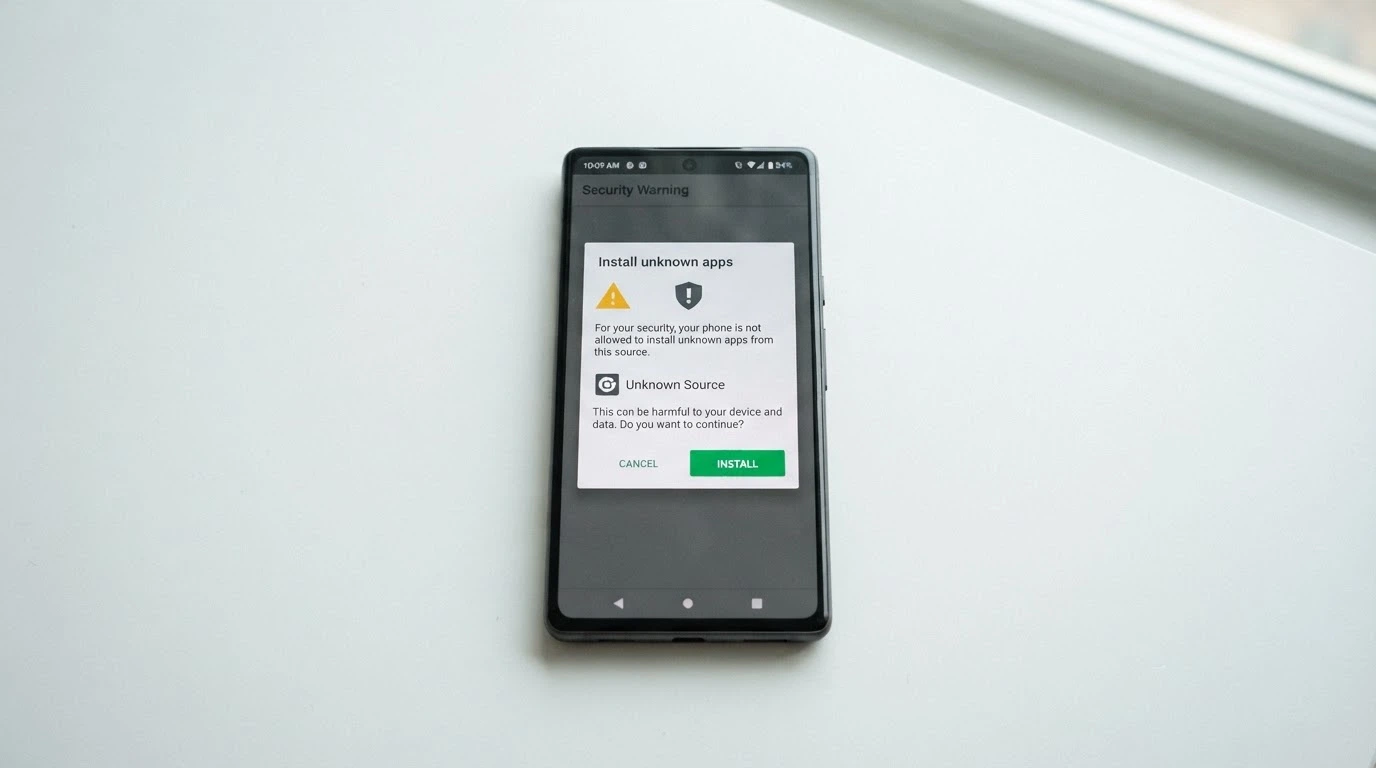
The process is straightforward: visit the casino site in Chrome, download the APK, allow installation from that source, open the file. Two or three taps, and the app icon appears in the launcher. What the install does not tell you is the trust you are placing in a file that never went through Google’s review. Google’s malware scan, permission audit and store-side checks did not run on that APK. If the operator’s domain is compromised, the file on it can be compromised too.
Verification before install is cheap and worth doing. Check that the URL matches the operator’s official domain, that the APK is signed by the developer listed on the casino’s about page, and that the version number matches what the casino advertises. ACMA domain blocking means mirror sites proliferate when a primary domain is taken down, and a player who downloaded a mirror’s APK has not downloaded the brand they think they have.
The trade-off is real. An APK install gets you a smoother, push-notification-capable experience than the browser site. The price is that every security check that would normally apply is on the player to perform themselves.
Casino Apps on iPhone and iPad — PWAs and Home-Screen Shortcuts
Apple’s guidelines prohibit real-money gambling apps that are not from licensed operators in the user’s jurisdiction. No licensed Australian casino app exists, so the App Store carries none. The iPhone workaround is a progressive web app — the operator’s mobile site saved as a home-screen shortcut via Safari’s “Add to Home Screen” option.
The mechanics: open the casino in Safari, tap the share icon, choose “Add to Home Screen,” name the shortcut. An icon appears on the home screen that launches the site in full-screen mode without the Safari chrome. It feels like a native app. It is not one.
PWAs can run pokies and table games, store a login session and accept deposits. They cannot use push notifications (a meaningful loss), cannot integrate with Apple Pay in the same way a native app would, and they depend on the operator keeping the site live. ACMA blocking hits a PWA harder than an APK because the web address is the app — block the domain and the home-screen icon stops working until the operator publishes a mirror.
The iPad experience is the same code, scaled up. Most modern casino HTML5 layouts reflow well to larger screens, though some live-dealer lobbies still feel like stretched-out phone screens. Browser tabs, multitasking and split-view all work; the home-screen shortcut is what makes the launch feel native.
A PWA is the only legal-feeling path to a real-money casino app on an iPhone in Australia. The “app” is, strictly, a bookmark with extra permissions.
The Cross-Device Reality — Mobile, Desktop and New Apps
Most casino apps Australians use are browser-based. A handful ship as Android APKs; on iPhone the experience is a PWA shortcut. On a laptop the same operator serves a desktop site that shares the account and the wallet. There is no separate “mobile version” of the account, no parallel bonus system, and no friction when switching from a phone to a tablet mid-session.
This cross-device continuity is one of the genuine wins of the offshore browser-based model. A punter who starts a deposit on desktop and finishes the wagering requirement on a phone does not need to download anything new. The opposite side of that convenience is the same browser-based model that lets ACMA block a domain in a single ISP-level action — and a blocked domain is the same blocked app on every device.
New casino apps enter the AU-facing market regularly in 2026. Affiliate sites track launches, new licences issue in Curacao and Anjouan, and operators rotate domains faster than the ACMA can take them down. The persistence of the offshore-only model is what does not change. Every new app is unlicensed in Australia; every new install involves either a sideloaded APK or a PWA shortcut; every new brand accepts payment methods the licensed Australian regime has banned.
The cross-device reality is the market’s defining feature. The market itself — unlicensed, payment-restricted, regulator-blocked — is the thing that has not shifted.
Top 10 Casino Apps for Australian Players — Compared Head-to-Head
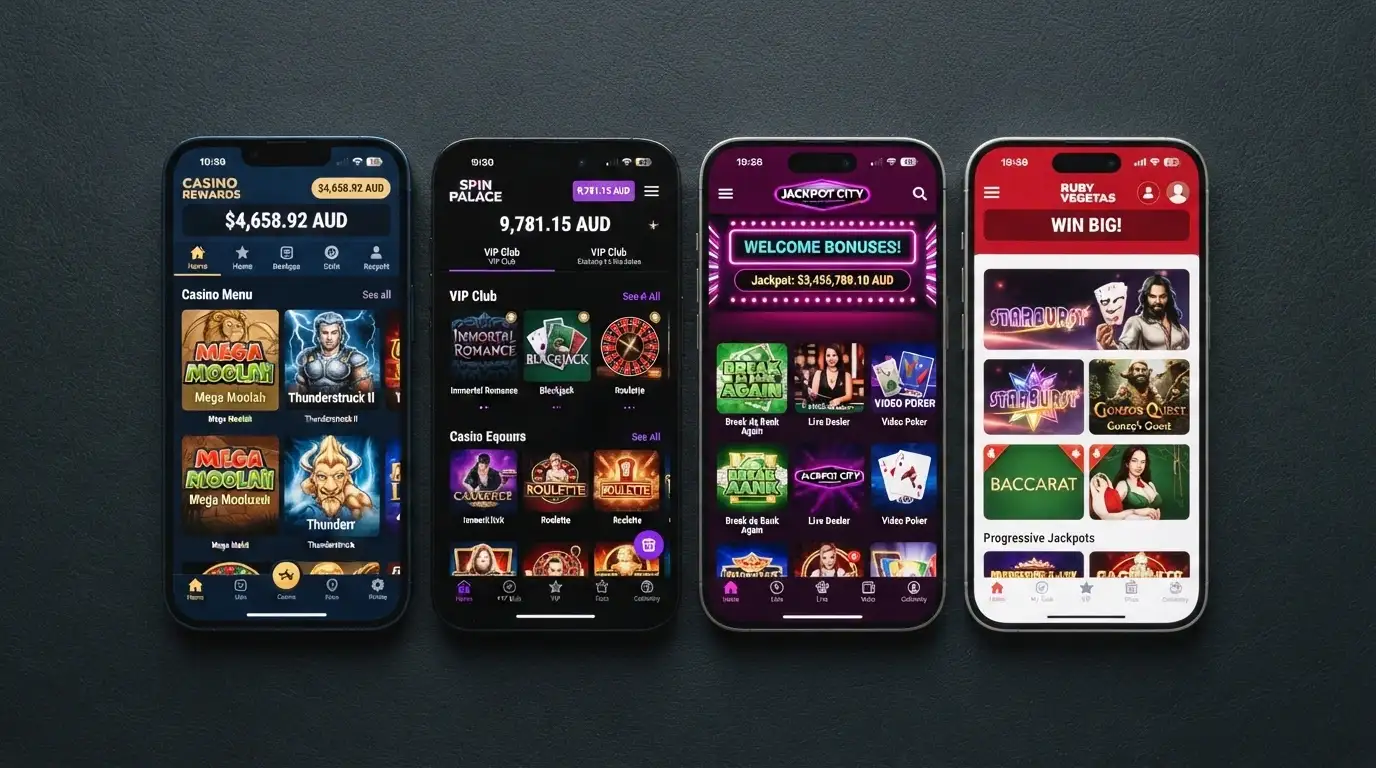
Ten offshore brands surface consistently in Australian-facing rankings. The table below compares them on what research surfaces cleanly — market share (where tracked), the no-deposit offer if one exists, and the single strongest reason an Australian punter might pick each one. Cells without a confirmed figure carry an em dash.
| Operator | Market share | No-deposit or free-spin offer | Key strength |
|---|---|---|---|
| Rocket Play | 9.4% (#3) | — | Six cryptocurrencies, instant payouts, no platform fee |
| SkyCrown | 8.55% (#4) | 40 free spins + A$10 chip (—) | Second-highest AU offshore share; faster card payouts |
| Royal Reels | 2.51% (#9) | A$10 free play (30x, A$200 cap) | Clear named terms on no-deposit bonus; daily deposit bonuses |
| Stake | 1.28% (#12) | — | Crypto-native; UFC and Drake sponsorships |
| Woo | — | — | Crypto withdrawals 2–6h, lowest bank interference for AU users |
| Joe Fortune | — | — | PayID 2–6h, crypto 1h, bank transfer 24–48h |
| Spinsy | — | 200 free spins (welcome) | Reddit community trust; ~12h average withdrawal |
| FairGO | 0.8% (#16) | 30 free spins (no-deposit, Fu Long Fu) | Long-running AU-branded offshore name |
| Caswino | — | 20 free spins (x50, 24h) | 12,000+ games on mobile; PayID A$10, crypto ~5 min |
| WinSpirit | 1.55% (#11) | — | Notable share among AU-facing offshore brands |
Market share is from third-party affiliate tracking and is best read as a usage signal, not an endorsement. Operators without a tracked share figure are surfaced in community sources and affiliate reviews but not in the top-20 tracking tables this run consulted. No-deposit offers vary in terms research could not always pin down; the gaps are real, not clerical.
Rocket Play
Rocket Play sits at 9.4% market share in third-party AU operator tracking — the third-largest offshore casino app Australians use. The licence is Curacao, and Curacao is not Australia; the app is browser-based, and there is no native install on an Australian phone or tablet.
What Rocket Play does well is payouts. Six cryptocurrencies (Bitcoin, Ethereum, Litecoin, Dogecoin, Bitcoin Cash and Tether) deposit and withdraw instantly, with no platform fee. The only multi-day method is bank transfer, at 3–7 business days — a window long enough to be worth avoiding if speed matters. Card payouts sit between crypto and bank, but Australian banks block a meaningful share of those transactions on their own.
Specifics on the welcome bonus, free spins, game-provider mix and demo-mode access remain unconfirmed. What is confirmed is the share figure, the licence and the crypto rails. A punter weighing Rocket Play is weighing speed of withdrawal and breadth of crypto support against the absence of confirmed bonus or provider data.
SkyCrown
SkyCrown’s 8.55% market share puts it at #4 in AU offshore tracking, just behind Rocket Play. The Curacao licence and browser-based mobile experience are the same shape as every other operator on this list. What sets SkyCrown apart is the no-deposit offer: 40 free spins plus a A$10 chip on registration. The 10-day window is the meaningful constraint: a player who does not clear the wagering inside that period loses the bonus and the winnings.
Card payouts are flagged as faster than average at SkyCrown, which for an AU punter is a real differentiator given how often Australian banks block card-to-card and card-to-bank transactions. Welcome bonus terms beyond the no-deposit offer were not confirmed this run.
Royal Reels
Royal Reels holds 2.51% AU market share (#9) and is the clearest example on this list of a named, terms-disclosed no-deposit bonus. A$10 in free play after registration and phone verification, with 30x wagering on the bonus amount and a A$200 maximum cashout on no-deposit winnings. The 100% welcome match up to A$500 on the first deposit carries the same 30x wagering.
That A$10 at 30x is A$300 of required turnover — the calculation section below works through what that translates to in spins and time. The A$200 cashout ceiling means even if the wagering clears and a punter wins more, the most they can withdraw from the no-deposit bonus is A$200. Daily deposit bonuses of 50%–200% match keep the promotional cycle going once the welcome offer is used. The licence is offshore (not Australian), the mobile experience is browser-based, and the 30x figure is identical across the welcome and no-deposit offers — a consistency most offshore operators do not provide.
Stake
Stake carries 1.28% AU market share and runs on a Curacao licence, in the same offshore pattern as the rest of the list. The platform is crypto-native, which for an AU punter means instant deposits and withdrawals in Bitcoin, Ethereum and the other coins the platform supports. The distinctive feature is visibility: UFC and Drake sponsorship deals have made Stake one of the most recognisable offshore brands among casual Australian punters.
Welcome bonus and free-spin data were not confirmed this run. The honest framing for a punter considering Stake is that the brand carries weight, the crypto rails work, and the promotional details are not surfaced from the searches conducted here. That gap is worth flagging — comparable offshore operators publish a headline welcome figure on their landing page, and an absence here is a meaningful absence.
Woo
Woo is operated by Dama N.V. under a Curacao licence. The browser-based HTML5 mobile experience scales correctly to small screens, and live dealer games are playable on mobile with a stable connection. Crypto withdrawals process in 2–6 hours after KYC — slower than Rocket Play’s instant crypto, but the best success rate and lowest bank interference of the offshore options for AU users.
The weakness is structural. Curacao licensing brings limited dispute remediation for Australian players, and Woo’s domains are blocked by ACMA more often than peers. The punter who deposits at Woo on Monday can find their URL unreachable on Friday, with a balance still on the platform and no Australian complaints body to call. Welcome bonus and free-spin data were not confirmed this run.
Joe Fortune
Joe Fortune is an AU-focused brand — the URL, the banking options and the speed claims are built around the Australian payment stack. PayID withdrawals clear in 2–6 hours; crypto withdrawals in approximately one hour; bank transfers in 24–48 hours. The browser-based mobile experience is tailored for AU players in a way the offshore-only brands are not.
Specifics on the welcome bonus, providers and market share are similarly unconfirmed. What is confirmed is the payment tier — and for a punter prioritising Australian banking rails above all else, Joe Fortune sits at the front of the queue.
Spinsy
Spinsy is a Reddit community favourite. The 100% welcome match plus 200 free spins is reported consistently across community threads, and withdrawal times average around 12 hours — faster than the bank-transfer baseline, slower than crypto at the leading operators. The community trust signal matters because offshore-casino reviews outside Reddit are overwhelmingly affiliate-marketing material, and player reports cut through that.
Wagering requirements on the Spinsy welcome offer were not confirmed this run. A punter drawn to Spinsy is drawn to the welcome package and the payout reputation; what they cannot pin down without registering is the multiplier on the bonus, the slot weighting for the 200 free spins, and the maximum cashout on bonus winnings.
FairGO
FairGO has been around the AU offshore market long enough that 0.8% market share (#16) understates familiarity. The 30 free-spin no-deposit offer on the Fu Long Fu slot, valid until 25 August 2026, is the only confirmed promotional detail from this run. The brand positions itself as an AU-branded name in a market dominated by European-licensed offshore operators.
Details regarding the broader welcome package, game providers and demo mode also lack confirmation. FairGO suits a punter who values brand familiarity and a low-friction no-deposit trial more than market-share signal or crypto speed.
Caswino
Caswino runs the full 12,000-plus game library on mobile — no stripped-down version, no reduced lobby. PayID deposits are A$10 minimum and instant; Visa and Mastercard from A$10; crypto (BTC, ETH, USDT, LTC) from A$20. PayID withdrawals clear in 1–2 hours; crypto withdrawals in approximately 5 minutes, fee-free. The 20 free-spin no-deposit bonus splits across verification steps (10 after phone, 10 after email), carries x50 wagering and expires in 24 hours.
The 24-hour window on the no-deposit spins is the tightest on this list. x50 wagering at the typical slot RTP turns into required turnover that is hard to clear in a day. The 255 free spins in the welcome package spread the volume over multiple deposits and are the more practical promotional entry. Welcome package wagering was not confirmed this run; bonus terms on the package should be checked before claiming.
WinSpirit
WinSpirit holds 1.55% AU market share (#11) — a meaningful slice of the offshore market and a stronger share than several operators with more brand recognition. The licence is offshore, the mobile experience is browser-based, and that is where the confirmed data stops.
Broad welcome, payout and provider specifics were not surfaced in this analysis. A punter drawn to WinSpirit is drawn on market-share signal alone, which is a thinner basis than the operators above with confirmed bonus terms and payout figures. The honest framing is that WinSpirit appears in the tracking tables but did not surface the specifics that would let it be compared head-to-head.
How These Apps Compare Across Features and Payouts
Market share is a usage signal. It tells you which offshore apps Australians actually log in to, and it does so imperfectly — the tracking tables this run consulted capture a subset of operators, and the figures are point-in-time snapshots that move as new brands launch and old domains are blocked.
No-deposit offers vary widely, and the variation is not random. A brand with a clear named bonus (Royal Reels’ A$10 at 30x) tends to have a clear wagering multiplier and a stated cashout ceiling; a brand with a vague promotional headline tends to leave both unspecified until the punter registers. The transparency of the offer, before deposit, is itself a signal worth weighing.
The key-strength column is what should drive a punter’s pick. A punter who wants instant crypto payouts picks Rocket Play; a punter who wants named no-deposit terms picks Royal Reels; a punter who wants the lowest bank interference picks Woo; a punter who wants the full library on mobile picks Caswino. Speed, fairness of terms, library depth and AU-rail optimisation are the four axes that matter, and the operator best on each is different.
The Offshore Reality — Why Every Casino App an Australian Uses Is Unlicensed
There is no Australian-licensed online casino. None. The Interactive Gambling Act 2001 prohibits the provision of online casino games, online pokies and in-play sports betting to persons in Australia. The prohibition is enforced by the ACMA through complaint investigation, warnings, civil penalty proceedings and ISP-level domain blocking.

The ACMA’s blocking record is concrete: 1,564 illegal gambling and affiliate websites blocked by Australian ISPs since November 2019, as at March 2026. More than 225 illegal services have withdrawn from the Australian market since enforcement was strengthened in 2017. The pace of blocking is faster than it looks, but new offshore domains appear faster than the regulator can take them down, which is why every player has encountered a mirror site at some point.
The IGA targets the provider, not the consumer. An individual Australian punter is not prosecuted under the Act. But “not illegal for you” is not the same as safe. ACMA cannot recover a disputed withdrawal. BetStop cannot block a deposit at an offshore casino. There is no Australian complaints body with authority over a Curacao licensee, and the site can be blocked at any time with a balance still on it.
That is the trade-off every punter on this page is making. The ten apps below are the practical consequence of a market the Australian government has chosen not to license, and every one of them operates outside the consumer-protection regime a licensed wagering operator is required to provide.
The Interactive Gambling Act — What It Actually Prohibits
The IGA makes it an offence to provide a prohibited interactive gambling service to a person physically in Australia. Prohibited services include casino games, online pokies and in-play betting on live sport. What is licensed is wagering on races and sport placed before the event begins, plus lotteries and keno — through state and territory licensees, with the Northern Territory Racing and Wagering Commission acting as the de facto national licensor for large online bookmakers under licence terms that run up to twenty years.
Section 15 of the Act is the operative provision. It targets the provider, not the consumer. A punter who deposits at an offshore casino has not committed an offence. The offshore operator has — and the consequence for the punter is not prosecution but the absence of the protections a licensed regime would provide.
The practical consequence of playing at a site the ACMA can block is that the URL can stop working at any moment. A punter with an unverified balance at a freshly blocked domain has lost access to that balance until the operator publishes a mirror site — and the mirror’s terms may differ from the original.
How to Tell a Trustworthy Offshore App from a Rogue One
Without an Australian licence to verify, a punter relies on four signals: the offshore licence itself, RNG certification, community consensus and the absence of obvious warning signs.
Most offshore casinos serving Australia hold a Curacao eGaming licence, now split into CEG and Antillephone sub-licences. A smaller number use Kahnawake, Anjouan or Malta Gaming Authority licences. The licence jurisdiction tells you which dispute resolution framework exists in theory — it does not tell you whether the operator honours it in practice. A Curacao-licensed brand with a history of slow payouts is still slow.
RNG certificates from iTech Labs, eCOGRA, GLI or Quinel are what verify a pokie’s house edge. Without certification, the RTP figure on a game’s paytable is a claim, not a measurement. Every reputable offshore operator publishes certification details in a footer or a dedicated fairness page; an operator that does not is signalling that the games cannot be audited.
Reddit community consensus on offshore casinos in Australia is dominated by withdrawal complaints. The most common patterns are delayed approvals after large wins, KYC documents requested immediately before the first withdrawal, and maximum win caps on bonus funds. None of these are unique to offshore operators — licensed operators face the same friction occasionally — but the pattern’s intensity in community threads is a real signal.
Warning signs are simple. No licence information anywhere on the site. No RNG certificate displayed. Withdrawal complaints dominating recent community threads. Pressure to deposit before terms can be read. None of these are smoking guns on their own, but a cluster of them is.
What You Give Up — Player Protections an Australian Licence Provides
The National Consumer Protection Framework for Online Wagering includes ten mandatory measures for licensed operators. The table below compares each measure against what an offshore casino app typically provides.
| Player protection measure | Licensed Australian wagering operator | Offshore casino app |
|---|---|---|
| No line of credit | Required | No restriction |
| Strong identity and age verification | Required | Required (operators run KYC to manage their own fraud risk) |
| Restricted incentives and sign-up offers | Required | None — offshore apps compete on bonus size |
| Easy account closure | Required | Varies; some offer one-click closure, others require email requests |
| Deposit limits | Required (operator-set, jurisdictional) | Varies; many offer voluntary tools, none required |
| Monthly activity statements | Required | Rarely offered |
| Consistent responsible-gambling messaging | Required | Inconsistent |
| Trained staff for harm identification | Required | Unverified |
| National Self-Exclusion Register (BetStop) | Required, binding | Not connected — BetStop does not reach offshore |
| Customer complaints via Australian body | Available | Unavailable — ACMA cannot recover funds offshore |
Every row in the right column is a protection an offshore app does not provide. The BetStop gap is the most consequential for self-excluded punters, because BetStop’s 67,480 registrations cover every Australian-licensed wagering service — and none of the ten apps on this page.
Real Money, Real Wins? What Casino Apps Actually Deliver on Cashouts
Playing for real money on an offshore app means real deposits, real spins and real wins. The marketing puts the wins at the front; the friction sits at the back, and the back is where the experience breaks.
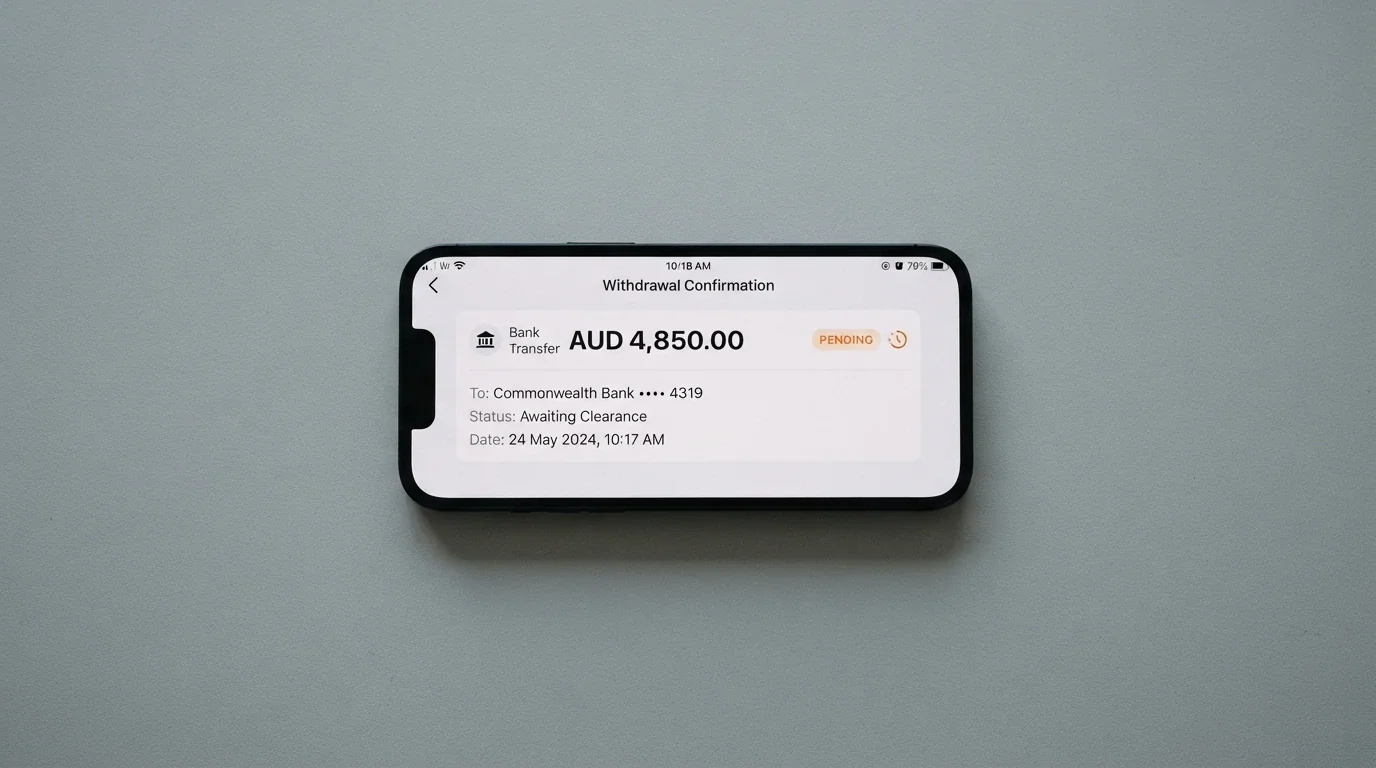
PayID deposits are the entry point most AU punters use. They process in 30 seconds to 2 minutes, with zero fees and minimums from A$10 to A$20. Crypto deposits are similar in speed, with minimums starting at A$20. Card deposits are where the friction starts: AU banks block a meaningful share of card transactions to offshore operators, and the failure rate is higher than PayID or crypto. Every dollar that does reach an offshore operator leaves the Australian regulatory perimeter — and the A$10–A$247,500 penalty for an Australian-licensed operator accepting that deposit is precisely why no licensed operator will take it.
Withdrawals are where the marketing claims get tested. PayID withdrawals clear in 1–2 hours at Caswino, 2–6 hours at Joe Fortune. Crypto withdrawals run from approximately 5 minutes at Caswino to 2–6 hours at Woo and instant at RocketPlay after platform processing. Bank transfers are 3–7 business days. Card-to-bank withdrawals are the slowest and most friction-heavy method for AU users — and they are the most likely to be declined by the bank.
Playing for Real Money — Deposits, Stakes and What Is at Risk
PayID is the cheapest, fastest deposit route for most AU punters. A$10 minimum, zero fees, 30 seconds to 2 minutes to land. Visa and Mastercard work in many cases, but the failure rate is higher — Australian banks apply blocks on gambling-related card transactions with varying aggressiveness, and a declined deposit is a deposit the punter does not get back the same way a PayID failure refunds within minutes.
Crypto works, but the payment method is itself a tell. Credit cards, credit-related products and digital currency are banned as payment for online wagering in Australia, commencing 11 June 2024 under the Interactive Gambling Amendment (Credit and Other Measures) Act 2023. An operator that fails to enforce the ban faces penalties up to A$247,500. A punter being asked for a credit card or crypto deposit is being served by someone outside the Australian regulatory perimeter — the payment method is the clearest signal that the operator is offshore.
The risk a real-money player is taking is structural. No Australian deposit protection applies. No Australian complaints body has authority. The balance sits in an account the ACMA can block the domain of at any time. The protections a licensed regime would provide — deposit ceilings, activity statements, easy account closure — are absent or voluntary.
Can You Actually Win? Payout Reliability and the Reddit Consensus
Offshore casino apps do pay out. The Reddit consensus is not “no one gets paid” — it is “withdrawal complaints dominate threads.” The difference matters. A punter who plays within the advertised terms at a reputable offshore operator will, in most cases, receive a withdrawal. The complaints cluster around the edges: large wins that trigger enhanced KYC, first withdrawals that stall while documents are reviewed, bonus winnings that hit a maximum cashout cap the punter did not read.
Delayed approvals after large wins are the single most-reported pattern. An offshore operator that suspects irregular play — multiple accounts, bonus abuse, sharp play on a single pokie — will request additional KYC documentation before processing. The delay can be days; in some reported cases, weeks. The punter’s money is not lost; it is held.
KYC documents requested immediately before first withdrawal is the second-most-reported pattern. The requirement is not unique to offshore operators — licensed Australian wagering operators run KYC too. The difference is that a licensed operator’s KYC is part of a regulated framework the punter can escalate to; an offshore operator’s KYC is internal policy with no escalation path.
Maximum win caps on bonus funds are the third. A no-deposit bonus with a A$100 cashout cap means a punter who wins A$500 from the bonus can only withdraw A$100. The cap is in the terms; the punter who did not read the terms is the punter who loses the A$400 difference.
The gap between “pays out” and “pays out fairly and on time” is where the friction lives.
Getting Your Money Out — Withdrawal Speed, Limits and KYC Hurdles
PayID withdrawals clear in 1–2 hours at Caswino, 2–6 hours at Joe Fortune and approximately 5 minutes for crypto at Caswino. RocketPlay processes crypto withdrawals instantly after platform processing. Woo’s crypto withdrawals take 2–6 hours after KYC. Bank transfers run 24–48 hours at Joe Fortune and 3–7 business days at RocketPlay. Card-to-bank withdrawals are the slowest and most friction-heavy method — they are also the most likely to be blocked or delayed by an AU bank.
KYC verification is the friction most punters meet on their first withdrawal. Identity documents, proof of address, sometimes proof of the deposit method. The verification can be done proactively — most reputable offshore operators let a punter submit documents before the first withdrawal request — and the proactive submission is what makes the second and subsequent withdrawals smooth.
What to expect on the first cashout: document request, 24–72 hours of review, then release. What to expect on the second: a faster turnaround, often within hours, because KYC is now on file. The pattern is consistent enough across the operators on this list that planning around it is worth doing.
Why Your 2026 Bonus Looks Bigger Than It Really Is
A casino bonus is marketed as free money. The wagering requirement, the cashout cap and the expiry date are the conditions that turn the headline into a real number, and the real number is usually smaller than the punter expected.

A 100% match bonus up to A$500 at 30x wagering on the bonus amount is A$15,000 in required turnover before a cent of winnings becomes withdrawable. At 35x, the same A$500 turns into A$17,500. At 50x — common on no-deposit offers — A$10 in bonus credit becomes A$500 in turnover, and that A$500 has to be turned into enough cash winnings to clear the multiplier and beat the cashout cap.
The mechanics are simple to explain and punishing to ignore. Every bonus is a multiplication of the bonus amount by a wagering multiple, expressed in turnover. Every bonus has an expiry. Many have a cashout cap that limits how much of the cleared winnings can be withdrawn. The punter who reads the terms before claiming is the punter who knows what the bonus actually costs.
Welcome and Sign-Up Bonuses — The Headline Numbers vs the Fine Print
A 100% match up to A$500 reads as A$500 in bonus money. The fine print reads as 30x wagering on the bonus, which means A$15,000 in turnover before withdrawal. At a typical pokie stake of A$1 per spin, that is 15,000 spins. At five seconds per spin, that is 75,000 seconds — roughly 21 hours of continuous play. The punter who expects to deposit A$500, claim the bonus and withdraw winnings after an hour’s play has misread the offer.
Royal Reels’ welcome package is 100% up to A$500 on the first deposit, with 30x wagering on the bonus amount. Spinsy offers 100% match plus 200 free spins, with the wagering requirements on the welcome package not confirmed this run. Typical Australian offshore welcome terms run 35x bonus-only wagering with no cashout caps on winnings and a 30-day expiry.
The “bonus-only” qualifier matters. Some operators apply wagering to the bonus amount alone; others apply it to the bonus plus the deposit. A 30x bonus-only requirement on a A$500 bonus is A$15,000 in turnover. A 30x bonus-plus-deposit requirement on a A$1,000 total (A$500 deposit + A$500 bonus) is A$30,000. The difference is the wording in the terms.
Some operators apply wagering to deposits even when no bonus is claimed. Neospin requires 3x mandatory wagering on all deposits, including those not used to qualify for any casino bonus — a warning example of how aggressive terms can be, and one of the reasons most operators do not publish a “no bonus, no wagering” deposit option.
No-Deposit Bonuses and Free Offers — Free Spins That Are Not Free
A no-deposit bonus costs nothing to claim — but it pays out very little in practice. Australian no-deposit bonuses typically offer 20–100 free spins, with wagering requirements from 30x to 50x. The typical terms run 50x wagering, A$50–A$100 cashout caps, and 7–14 day expiry.
Royal Reels’ A$10 no-deposit bonus carries 30x wagering and a A$200 maximum cashout on no-deposit winnings. SkyCrown’s no-deposit offer is 40 free spins plus a A$10 chip. Caswino’s 20 free-spin no-deposit splits across phone and email verification (10 + 10), carries x50 wagering, and expires in 24 hours. FairGO’s 30 free-spin no-deposit runs on the Fu Long Fu slot. VegasNow (an operator not on the featured list, used here as an illustrative example) offers 50 free spins on Big Bass Splash as a no-deposit bonus, with 40x wagering, a A$100 max cashout and 14-day expiry.
The arithmetic on a no-deposit bonus is a tighter version of the welcome-bonus arithmetic, compressed into a shorter window. At A$1 per spin and 5 seconds per spin, 50 free spins clear in roughly 4 minutes of real play — but the wagering on the resulting winnings is what extends the time. A punter who wins A$10 from 50 free spins at 50x wagering needs A$500 of turnover to convert it into a withdrawable balance. That is 500 spins, or roughly 42 minutes of play, inside the expiry window. The 7–14 day expiry makes the time pressure soft; the 24-hour expiry on Caswino’s offer makes it hard.
A no-deposit bonus is a trial tool, not a profit opportunity. The punter who treats it as a way to learn a pokie’s volatility or a casino’s withdrawal flow is using it well. The punter who expects to deposit nothing, claim a bonus and withdraw hundreds is misreading the offer.
Free Spins, Daily Deals and Giveaways
Beyond the welcome and no-deposit offers, the promotional cycle keeps depositing players on the deposit treadmill. Royal Reels runs regular promotions of 10–200 free spins on selected pokies, plus daily deposit bonuses of 50%–200% match. Caswino’s welcome package includes 255 free spins spread across deposits. The promotional volume is real, and each promotion carries its own wagering multiplier, expiry and often a cashout cap.
The promotional cycle works because each reload offer extends the same arithmetic as the welcome bonus. A 100% daily reload at 30x wagering doubles the deposit and then multiplies the bonus by 30 — the punter who takes every reload offer is effectively committing to 30x turnover on every dollar of bonus credit received.
Loyalty programmes and giveaways exist at most offshore operators, but the per-programme mechanics are not surfaced in the research conducted for this page. A punter who values ongoing promotions should look at the operator’s “promotions” page after registration; the welcome offer is rarely the best offer a long-term player receives.
Crypto Casino Apps — Faster Payouts, Zero Australian Protections
Crypto deposits and withdrawals are fast, cheap and nearly impossible for Australian banks to block. They are also illegal for licensed Australian wagering operators — and that is why every crypto casino app is offshore by definition.
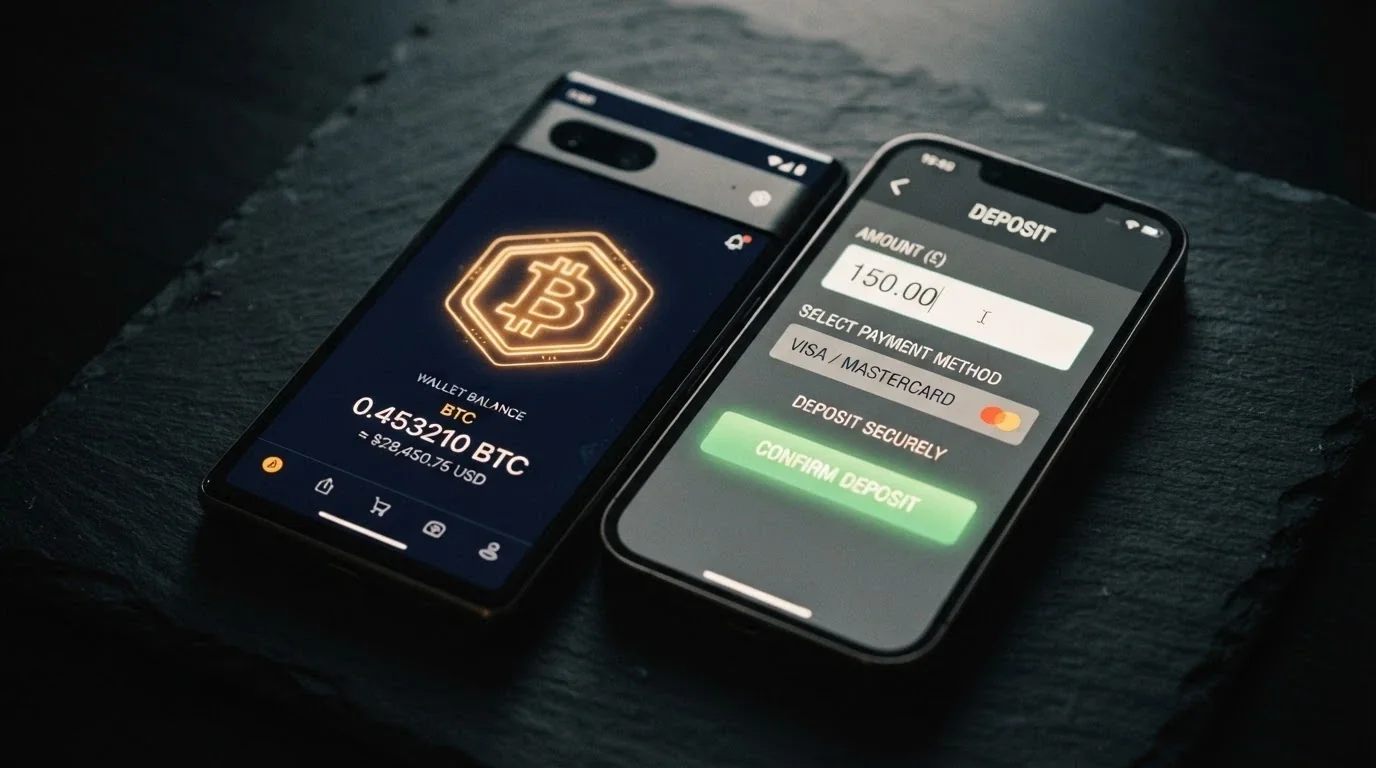
Credit cards, credit-related products and digital currency are banned as payment for online wagering in Australia from 11 June 2024. The Interactive Gambling Amendment (Credit and Other Measures) Act 2023 imposed the ban; penalties for operators that fail to enforce it run up to A$247,500. A punter being asked for a crypto deposit by a casino app is being served by someone outside the Australian regulatory perimeter. The payment method is itself a tell.
RocketPlay supports six cryptocurrencies — Bitcoin, Ethereum, Litecoin, Dogecoin, Bitcoin Cash and Tether — for deposits and withdrawals, all processed instantly with no platform fee. Caswino accepts BTC, ETH, USDT and LTC, with withdrawals in approximately 5 minutes, fee-free. Woo processes crypto withdrawals in 2–6 hours after KYC. Joe Fortune’s crypto withdrawal clears in approximately 1 hour. Across the ten operators on this list, crypto is the fastest withdrawal method, often by an order of magnitude.
Bitcoin and Crypto Casino Apps — How They Work in Australia
The recommended AU crypto flow in 2026 runs through an AUSTRAC-registered local exchange that supports PayID. CoinSpot and Independent Reserve are the two most commonly used. The sequence is: AU bank → PayID deposit to CoinSpot or Independent Reserve → swap AUD for USDT (TRC20 is the standard for low-fee transfers) → send USDT to the offshore casino wallet. The cost is the exchange’s spread on the AUD/USDT conversion plus the blockchain network fee on the USDT transfer — typically a few dollars in total.
Crypto withdrawals reverse the flow at the casino end. The punter requests a withdrawal in BTC, ETH, USDT or another supported coin, the casino processes it, and the funds arrive in the punter’s external wallet. From the wallet, the punter can swap back to AUD on the same exchange and PayID the funds to their bank. The total time from casino withdrawal request to AUD in the bank account runs from approximately 10 minutes (crypto at Caswino, plus exchange conversion) to several hours (RocketPlay’s crypto plus exchange processing).
The friction is the extra steps. A punter who uses PayID for both deposit and withdrawal is doing two transactions; a punter who uses crypto is doing four or five. The trade-off is speed and bank-block resistance — and for a punter whose bank declines card transactions to offshore operators, crypto is the only path that works reliably.
The Real Cost of Crypto Convenience — AUSTRAC, the Travel Rule and the 2024 Ban
The June 2024 ban on credit cards and crypto for licensed wagering is the regulatory ceiling for crypto at an Australian-licensed operator. No licensed wagering operator accepts crypto. Every crypto casino app is offshore by definition. The punter who uses crypto is using it because the operator is offshore, not because crypto is a preferred method at a licensed brand.
AUSTRAC’s Travel Rule applies to crypto transfers at A$10,000 and above when moving funds to offshore casinos. The reporting obligation sits with the digital currency exchange, not the punter, but a punter moving A$10,000 or more in a single transfer should expect the exchange to request identity verification and file a report. Below A$10,000, the Travel Rule does not apply, and most retail-scale transfers sit below the threshold.
From 1 January 2027, banks and payment providers gain express authority to block transactions to illegal gambling operators under the 2026 reform. The Interactive Gambling Amendment (Gambling Reform) Bill 2026 passed Parliament on 19 August 2026; the bank-blocking power is one of several measures commencing in the new year. The implication for crypto users is that while the ban is on the licensed operator’s acceptance — not on the punter’s use of crypto — the surrounding payment infrastructure is tightening.
Free-Play and Demo Mode — Try Before You Risk a Cent
Free-play casino apps and demo-mode pokies let a punter test games, learn the rules and see payout behaviour before depositing. Both are free. Both are limited in what they prove.
Free (Play-Money) Casino Apps
Free casino apps on the App Store and Google Play use play money only. They are a separate legal category from real-money offshore casino apps and do not run afoul of the Interactive Gambling Act because no real money crosses hands. Pokies, table games, blackjack, roulette and the occasional live-dealer simulation are all available in play-money form.
What free casino apps do not offer is real wins. The chips in a play-money app cannot be cashed out, the leaderboards are not paying leaderboards, and the in-app purchases buy more chips rather than unlocking a real-money mode. A punter who treats a free app as a way to kill time on the train is using it well; a punter who expects free-to-play to convert into real money is misreading the category.
The free-app landscape is large. Slot machine simulators, blackjack trainers, video poker apps and full casino suites all exist in the AU storefronts. None of them is a real-money casino, and none of them is the kind of product this page ranks. The IGA’s prohibition does not reach them because they do not offer real-money gambling.
Demo Mode — Practice Before You Deposit
Most offshore casino apps offer demo mode on pokies and table games. The demo runs a play-money balance through the same RNG and the same game mechanics as the real-money version, with the same RTP and the same volatility profile. A punter who plays 200 demo spins of a pokie before depositing is gathering the same information about hit frequency, bonus-round frequency and session volatility as 200 real-money spins would provide.
Demo mode does not prove payout reliability. The RNG is the same, but the demo balance cannot be withdrawn. What the demo does prove is whether the game is fun, how the bonus features trigger, and what a typical session looks like at a given stake. For punters new to offshore casinos, the demo is the cheapest way to evaluate a pokie before committing a deposit.
Live-dealer tables are almost never available in demo mode. The cost of running a live dealer studio means the tables are real-money only, and a punter who wants to evaluate a live-dealer experience will do it with real money on the line. Most reputable offshore operators offer a demo or play-for-fun toggle on pokies and table games; live dealer is the exception.
Playing Safely When the Safety Net Has Holes
Australian responsible-gambling infrastructure is among the most developed in the world. The harm-prevalence data, the consumer-protection framework and the self-exclusion register are all genuine and well-resourced. The infrastructure was built for the licensed wagering system, and it barely reaches the offshore casino apps Australians are using.
Approximately 2.1% of Australian adults — roughly 430,000 people — experience problem gambling, with high-risk gambling at 1.8% in 2022 (Australian Institute of Health and Welfare). The figures are stable year-on-year and represent the population the responsible-gambling system is designed to support. The system does not fully reach the offshore casino market, and that gap is the practical harm of the offshore route.
Deposit Limits, Time-Outs and Activity Statements — What Works Offshore
Licensed Australian wagering operators must provide deposit limits, monthly activity statements, easy account closure, trained staff for harm identification and consistent responsible-gambling messaging. The requirements sit in the National Consumer Protection Framework for Online Wagering and are enforced through the operators’ state and territory licence conditions. Deposit limits under those conditions differ between jurisdictions and are operator-set rather than a national statutory ceiling.
Offshore casino apps may offer some of these tools voluntarily. Deposit limits exist at several operators. Time-outs and self-exclusion at the operator level are common. Monthly activity statements are rare. Trained staff for harm identification is unverified at the offshore level — there is no public framework for assessing it. The practical gap is that a punter relying on offshore tools is relying on the operator’s goodwill, not on a legal obligation.
A punter who wants deposit limits, activity statements and a complaints path should pick a licensed Australian wagering operator and play the products they offer — sports and racing wagering, not casino. The product this page ranks is not that product.
BetStop, Self-Exclusion and Why It Stops at the Australian Border
BetStop — the National Self-Exclusion Register — has recorded 67,480 registrations in three years of operation as at 31 July 2026. Of those, 41,290 exclusions remain active. 78% of registrants are under 40, and 38% chose lifetime exclusion. One registration excludes a person from every Australian-licensed online and phone wagering service. The system works.
The system does not reach offshore casino apps. BetStop binds only Australian-licensed wagering services; an offshore casino is not connected to the register and will continue accepting a self-excluded person’s money. A person who has registered for BetStop and then opens an account at RocketPlay or SkyCrown has not stopped gambling. They have stopped gambling at the licensed operators and continued at the unlicensed ones.
From 1 January 2027, the 2026 reform strengthens BetStop. Direct marketing of wagering inducements is prohibited for 14 days after a customer signs up, for three months after a person deregisters from BetStop, and indefinitely for customers identified as at risk of gambling-related harm. The new restrictions tighten the licensed operators’ marketing practices. They do not extend BetStop’s reach to offshore casino apps.
Help is available regardless of where a person plays. The National Gambling Helpline is 1800 858 858 — free, confidential, staffed 24 hours a day, 7 days a week. Gambling Help Online (gamblinghelponline.org.au) offers online chat and counselling. The 2026 reform expands specialised financial counselling for people experiencing financial difficulty as a result of gambling harm. The help exists. The help does not require the offshore casino to stop accepting deposits.
How We Evaluated These Casino Apps
Every app on this page was assessed against the same five criteria: mobile experience and app availability, payment speed and method range, bonus-term fairness over headline value, game library size and provider quality, and community trust surfaced from Reddit and affiliate reports. Every operator’s licence jurisdiction was verified against the operator’s own published information. Market-share figures are drawn from third-party affiliate tracking and are best read as a usage signal.
Sources used: each operator’s published terms and bonus pages, ACMA public data on blocking and enforcement, AUSTRAC guidance on the crypto Travel Rule, the Department of Social Services for the National Consumer Protection Framework, AIHW for gambling harm prevalence, community forums for payout reliability, and competitor affiliate reviews for market-share signal.
The ranking does not measure legality. Every app on this page is offshore and unlicensed in Australia, and the ranking measures fit for Australian players within that constraint — not endorsement of legality or safety. The page’s intent is to give a punter comparing options enough information to make an informed choice, not to recommend a place to play.
A bonus-cost calculation runs through the Royal Reels A$10 no-deposit bonus at 30x wagering. The required turnover is A$300. At a representative A$1 stake per spin and a five-second interval between spins, that is 300 spins taking 1,500 seconds — approximately 25 minutes of continuous play. The calculation assumes only the bonus amount is wagered and the average pokie RTP across the qualifying games. It is an estimate, not a guarantee: a punter may complete the wagering faster on a high-volatility pokie with a large early win, or slower on a low-volatility pokie with steady small losses. Either way, the time commitment is the figure a punter should plan around before claiming the bonus.
What This Means for Your Next Casino App
The best casino app for an Australian player is the one whose risks are understood before the first deposit. The ten apps on this page are not equivalent on that front, and they are not equivalent on bonuses, payouts or library size either.
Three things to check before registering. First, the licence jurisdiction: Curacao, Anjouan, Kahnawake or Malta Gaming Authority are the realistic options, and none of them is an Australian licence. Second, the payment method offered: if the deposit screen asks for credit card or crypto, the operator is offshore by definition — those methods are banned for licensed Australian wagering. Third, the bonus terms: wagering multiplier, cashout cap and expiry together determine what the bonus actually costs.
The offshore-only reality means no app is safe in the Australian regulatory sense. There is no Australian deposit protection, no Australian complaints body with authority, no BetStop coverage and no guarantee that the URL the punter registered at will be reachable tomorrow. ACMA domain blocking is ongoing; 1,564 sites blocked as at March 2026, with mirror sites appearing as fast as primary domains are taken down.
A punter prioritising speed of withdrawal picks Rocket Play or Caswino. A punter prioritising named, terms-clear no-deposit bonuses picks Royal Reels. A punter prioritising the lowest bank interference on deposits picks Woo or Joe Fortune. A punter prioritising community trust picks Spinsy. A punter prioritising the largest mobile library picks Caswino. A punter prioritising brand familiarity picks FairGO.
The one thing to remember: if an app asks for credit or crypto, it is offshore, and the ten consumer-protection measures a licensed Australian wagering operator provides are not in play. The bonus looks bigger than it is, the withdrawal can stall at KYC, and the site can be blocked at any time. None of that changes by picking a better operator within the offshore market — it changes by understanding the offshore market is the only market there is.
Frequently Asked Questions
Can I download real-money casino apps from the App Store or Google Play in Australia?
No. Google Play and Apple’s Australian storefronts do not carry real-money casino apps because that would conflict with the Interactive Gambling Act 2001. Offshore casino apps reach Australian phones via Android APK sideloading or iPhone PWA shortcuts added to the home screen through Safari.
What is the safest way to deposit money into a casino app in Australia?
PayID is the safest mainstream method: deposits process in 30 seconds to 2 minutes with zero fees, minimums from A$10 to A$20. Crypto (Bitcoin, Ethereum, USDT) is faster but signals the operator is offshore, since licensed Australian wagering operators have been banned from accepting crypto since June 2024. Card deposits fail more often because Australian banks block gambling-related card transactions.
How do I know if a casino app is trustworthy if it is not licensed in Australia?
Check the offshore licence jurisdiction (Curacao, Anjouan, Kahnawake or Malta Gaming Authority), look for an RNG certificate from iTech Labs, eCOGRA, GLI or Quinel, and read recent Reddit community threads for withdrawal complaint patterns. Missing licence information, no RNG certificate displayed and withdrawal complaints dominating recent threads are warning signs.
What wagering requirements should I expect on casino app bonuses in Australia?
No-deposit bonuses typically carry 30x to 50x wagering with A$50–A$200 cashout caps and 7–14 day expiry. Welcome match bonuses typically run 35x bonus-only wagering with no cashout caps on winnings and 30-day expiry. A 30x bonus on a A$500 welcome bonus means A$15,000 in required turnover before withdrawal.
Will my bank block deposits to an offshore casino app?
Often, yes. Australian banks block a meaningful share of card transactions to offshore gambling operators, particularly card-to-bank withdrawals. PayID and crypto bypass the card-block layer but the operator remains offshore. From 1 January 2027, banks gain express authority to block transactions to illegal gambling operators under the 2026 reform.
Are gambling winnings taxable in Australia?
No. Betting and gambling winnings are not assessable income under section 6-5 of the ITAA 1997, and gambling losses are not deductible under section 8-1, unless the person is carrying on a business of betting or gambling. No Australian case has held the winnings of an ordinary punter assessable. This is general information, not tax advice.