
Best Keno Online Casino Australia: What the Offshore Market Actually Looks Like
 Available in AU
A keno draw takes about thirty seconds to play and the rules fit on a napkin, yet the Australian keno market is one of the most lopsided in iGaming. The licensed product is land-based and runs every three minutes in pubs and clubs; the offshore version sits on a browser, pays back 90 to 98 per cent, and operates in a legal vacuum. That is the page in full: ten offshore brands ranked by how heavily they reach Australian keno players, a single confirmed bonus headline, and a long, honest section on what changes — and what doesn’t — under Australian law.
This article was last checked against data current as of 18 October 2026 and cross-referenced with the Australian Communications and Media Authority’s published enforcement figures, The Lott’s published keno rules and KenoGO’s published draw information.
Table of Contents
- What Keno Actually Is — and How Australians Play It Online
- The 2026 Keno Casino Line-Up: 10 Offshore Sites Australians Use
- Every Keno Variant Worth Knowing — and the One That Costs You Least
- Bitcoin and Crypto Keno: Playing with Digital Currency
- Why Online Keno Sits Outside Australian Law
- Where to Get Help: Responsible Gambling for Keno Players
- How We Selected and Ranked These Keno Casinos
- Your Move: What to Do Before You Play Keno Online
- Frequently Asked Questions
What Keno Actually Is — and How Australians Play It Online
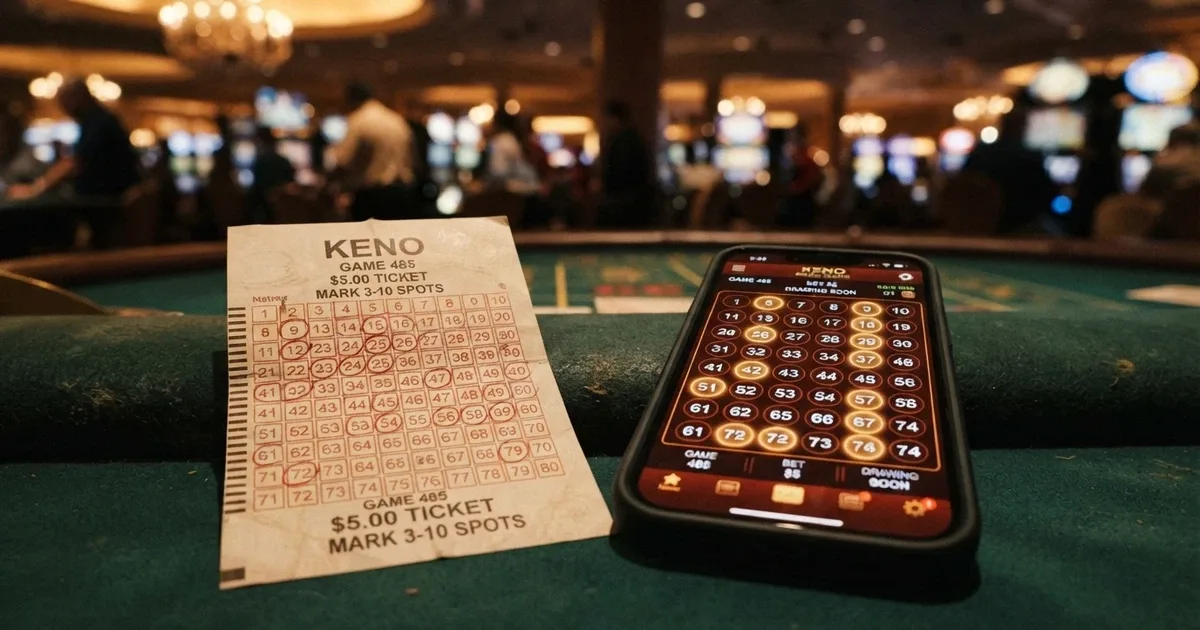
Keno is the simplest game in the casino. A draw spits out twenty numbers from a pool of eighty, the player marks between one and ten of them on a card before the draw, and the number of matches — the “catch” — decides the payout. The form is older than the slot machine and the design is older than the lottery terminal. What has changed is where Australians play it, and that is what this page is about.
What Is Keno? A Quick Primer
A keno card is a grid of eighty numbers, usually rendered as eight rows of ten. The player picks between one and ten numbers, called “spots,” before the draw. A random-number generator — or, in live-dealer rooms, a physical draw — selects twenty winning numbers. Every spot that matches is a “catch,” and the payout table scales steeply: a one-spot that catches pays roughly even money, a four-spot with all four catches pays in the high double digits, and a ten-spot with all ten catches pays the headline figure that lures players to the game in the first place. The exact return to player sits somewhere in the nineties on most offshore titles, but the base-rate house edge never disappears.
Most players use QuickPick, the casino’s automated number generator, because every number carries the same probability and a human’s “lucky” selection is statistically indistinguishable from a machine’s. The draw itself takes a few seconds, the result is immediate, and the next game is a click away. That is the entire game.
How Australians Play Keno Online
The journey from Australian internet connection to offshore keno table is frictionless, which is the first thing worth knowing. A player searches, lands on a casino, registers with an email address and a password, deposits in Australian dollars — or increasingly in cryptocurrency, which the Australian government banned for online wagering in June 2024 — picks a keno variant, marks a card, and watches a draw. The whole loop happens inside a browser tab on a phone, a laptop, or a tablet. There is no Australian app to install because no Australian online casino exists to build one.
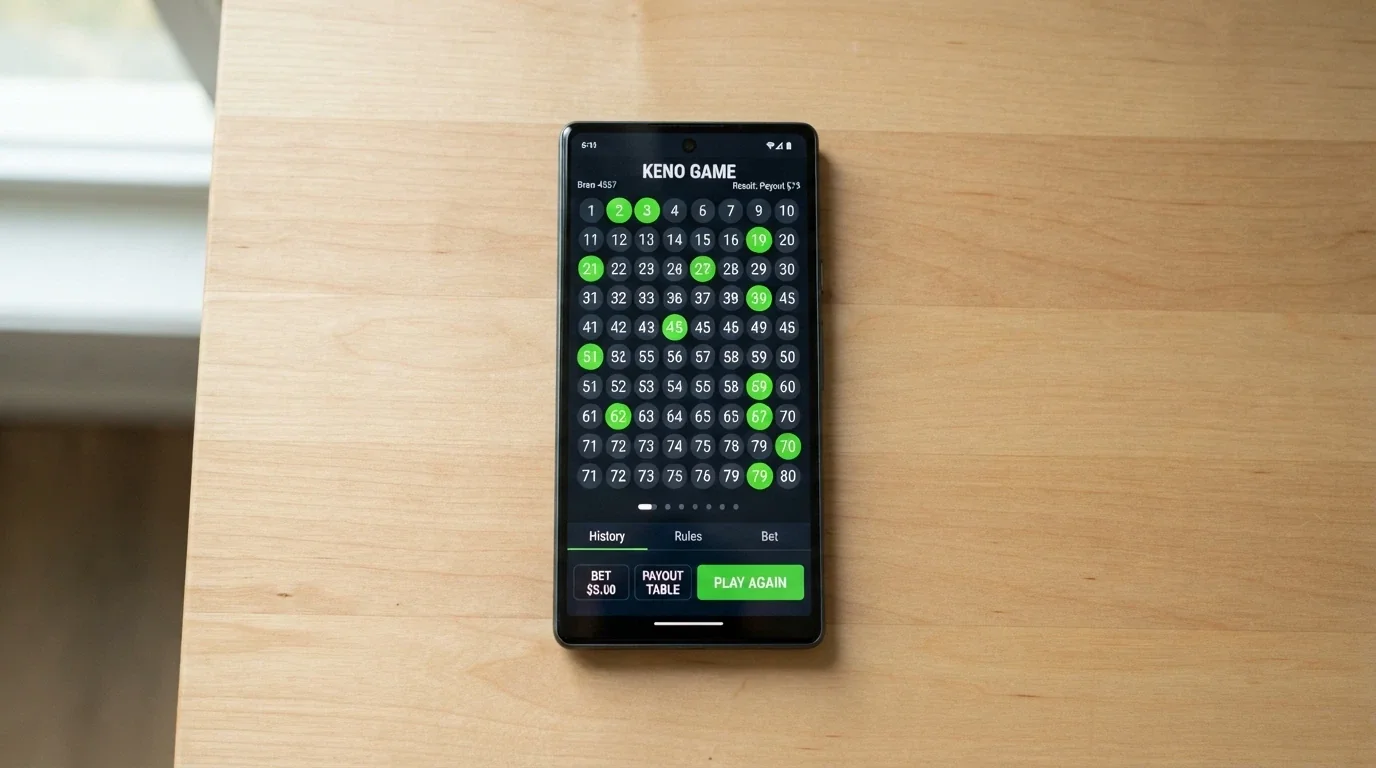
Betting limits on these sites typically run from A$0.10 to A$100 per game, which is wider than any retail keno lounge in the country. AUD is accepted at most of them. Identity verification may or may not happen at registration, and may or may not happen at withdrawal — a point worth its own section further down. The draw frequency depends on the variant, from a thirty-second Speed Keno round to a multi-card format that lets a player run twenty cards in a single draw.
What this journey does not include is an Australian licence. The federal Interactive Gambling Act 2001, as amended in 2017, makes it an offence to provide an online casino game — keno included — to a person in Australia. Every site a player reaches through a search engine is breaking that law by serving the Australian market, and the regulator has been blocking such sites at the DNS level since November 2019.
The Lott and KenoGO: Australia’s Only Legal Keno Products
The legal keno product in Australia is a lottery, not a casino game. The Lott, which runs the national lottery draws, and KenoGO, which is its dedicated keno brand, operate land-based and retail keno through state and territory licence holders. There is no online casino keno product licensed in the country, because the law does not permit one. The licensed alternative is a different game with different math, and treating it as a substitute for offshore keno without naming the trade-off is a disservice to the reader.
KenoGO’s flagship product, KenoGO Classic, runs a draw every three minutes and offers a top prize of A$1,000,000 on a A$1 entry. KenoGO Bonus, the higher-stakes product, multiplies winnings by up to ten and offers a A$10,000,000 jackpot from a A$2 ticket. Both products are available at licensed venues and through registered retail partners, with identity verification required for any prize claim above the threshold. Two side games are bolted onto the standard format: Keno Coin Toss, where the player guesses whether most of the drawn numbers fall in the 1–40 or 41–80 half, and Keno Combo, which lets the player build number combinations for additional chances. The return to player on the licensed product sits at around 75 per cent, and the house edge holds near 25 per cent across spot types 1 to 10, 15, 20 and 40. That is roughly twenty percentage points worse than what a player gets on most offshore titles, and the gap is the entire reason the offshore market exists.
The honest framing: licensed Australian keno offers a venue, a guarantee of payment, a regulator to complain to, and self-exclusion through BetStop. Offshore keno offers a higher return, more variants, and none of those things. Neither is the “right” answer in the abstract; the right answer depends on which trade-off the player is willing to make.
Keno Casino Apps and Mobile Play
There is no Australian keno casino app because there is no Australian keno casino. Every brand in the ranking that follows runs through a mobile browser — the same Safari or Chrome tab a player uses to read this page. The experience is responsive rather than native, which means the games are HTML5 builds served from the operator’s servers, scaled to fit whatever screen opens them. Performance is fine on a modern phone, the registration flow is shorter than a retail sign-up, and a game loads in a few seconds.
The absence of a native app is a small loss in polish and a substantial gain in convenience: nothing to install, nothing to update, nothing to take up storage. The same keno game a player runs on a laptop at home runs on a phone on a bus. That is also the architecture of a service operating outside the app stores’ gambling policies — Google and Apple both prohibit real-money casino apps in the Australian market, and the browser-based delivery route is what every offshore operator uses to reach a phone anyway.
Welcome Bonuses That Cover Keno Play
A welcome package on an offshore keno site typically combines a deposit match — the casino adds a percentage of the player’s first deposit as bonus money — with a bundle of free spins, usually on slot games rather than keno. The match percentages get loud. SkyCrown’s confirmed welcome offer (detailed further below) is the primary example of this aggressive marketing. A player who deposits the equivalent of AU$100 walks away with a AU$450 bonus on top, and a AU$550 bankroll, before a single number is picked.
The wagering requirement is the number that matters, and the one most bonus pages handle last. A 30× wagering requirement on a AU$450 bonus means the player must wager A$13,500 in qualifying bets before any of the bonus money converts to withdrawable cash. At 20 keno games an hour and a A$5 average stake, that is roughly 135 hours of play, or a working week of round-the-clock keno. The bonus does not change the house edge; it changes how much of the player’s own money has to cycle through the casino before they can leave with anything. Free spins on slots usually contribute 100 per cent to wagering; keno often contributes less, and the percentage is buried in the bonus terms. A player who plans to clear a bonus on keno alone should read the terms page before depositing a cent, and should know that “30× the bonus” is a different hurdle from “30× the bonus plus deposit.” Both phrasings appear, and they are not the same number.
Validity windows are the other quiet trap. Bonuses expire — a week is a common window — and any uncleared bonus at expiry is removed along with any winnings that came from it. None of this is hidden; it is in the terms. None of it is unusual for the offshore market. The player who reads the terms before claiming has a better session than the player who reads them after.
The 2026 Keno Casino Line-Up: 10 Offshore Sites Australians Use
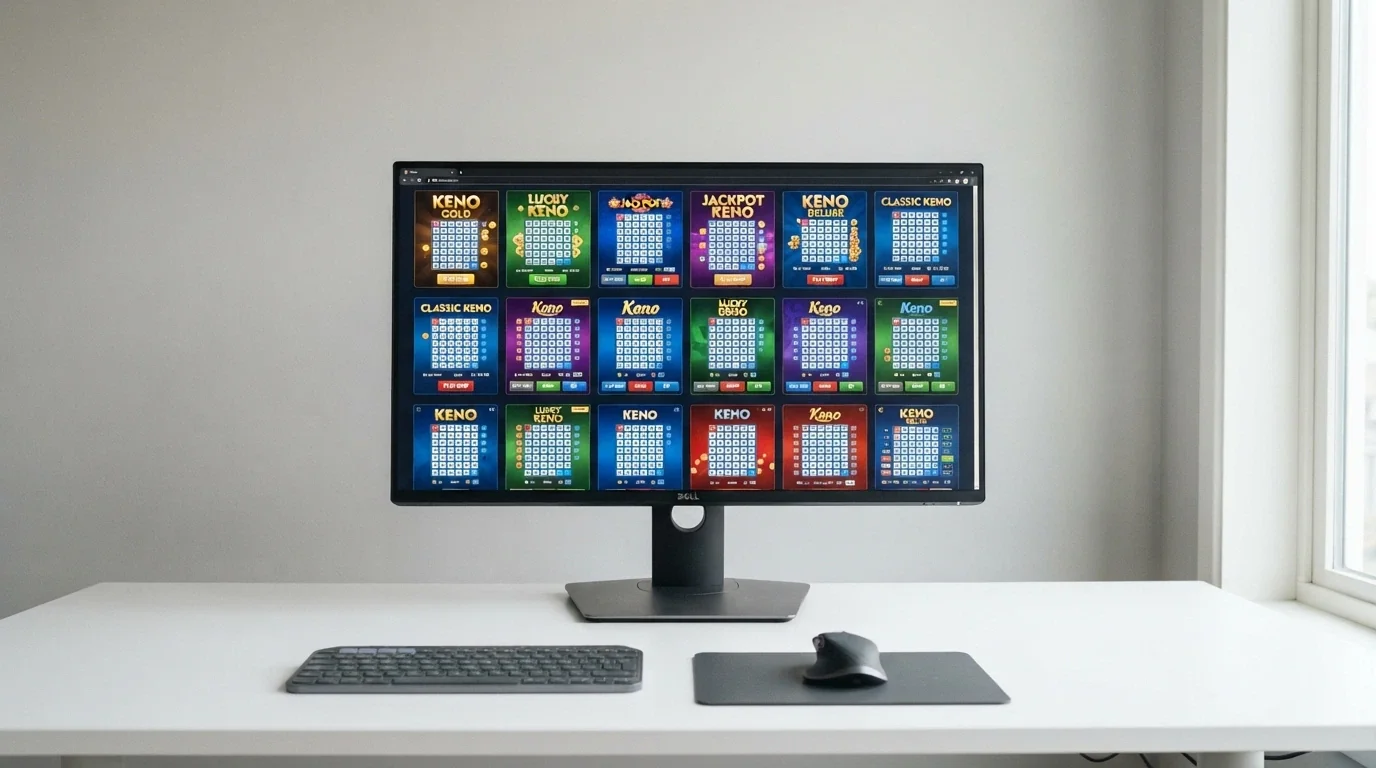
The table below ranks ten offshore brands by their reach among Australian keno players. Every one of them operates outside Australia, none of them holds an Australian licence, and the Interactive Gambling Act 2001 prohibits them from providing their product to a person in Australia. The ranking reflects verified market reach — how heavily each brand shows up for the AU keno audience — not a licence none of them holds. The Lott and KenoGO, the only legal keno products, are covered earlier in this page and do not appear in the ranking, because they are not online casino keno.
| Operator | Licence status | Keno availability |
|---|---|---|
| Rocket Play | Offshore — no Australian licence | Yes |
| SkyCrown | Offshore — no Australian licence | Yes |
| Royal Reels | Offshore — no Australian licence | Yes |
| Stake | Offshore — no Australian licence | Yes |
| FairGO | Offshore — no Australian licence | Yes |
| Bizzo Casino | Offshore — no Australian licence | Yes |
| WinSpirit | Offshore — no Australian licence | Yes |
| Rainbet | Offshore — no Australian licence | Yes |
| Scream Casino | Offshore — no Australian licence | Yes |
| Rocket Casino | Offshore — no Australian licence | Yes |
A note on the table’s emptiness. Per-operator bonus terms, wagering requirements, game-provider line-ups and validity windows were not verifiable from publicly available sources during the research window. SkyCrown’s 450 per cent up to AU$8,000 plus 400 free spins at 30× wagering is the one confirmed headline offer, and it is named in the operator section below. Every other cell in a fuller comparison would either repeat a number from research or invent one, and the second option is the one this page refuses. A player who lands on any of these brands should treat the terms page on the site itself as the source of truth on the offer, not a review page.
What every one of these brands has in common matters more than what divides them. None of them can be reached by BetStop, the National Self-Exclusion Register. None of them is covered by Australian consumer protection law. None of them is answerable to the ACMA in the way a licensed Australian wagering service is, and the ACMA cannot recover a player’s money if an offshore operator refuses a withdrawal. The Australian government is not prosecuting individual players — the IGA targets the provider, not the punter — but the protection gap is real, and the protection gap is the same for every brand in the table.
Rocket Play
Rocket Play tops this ranking because it reaches Australian keno players more reliably than the rest of the set. The brand runs an offshore casino platform that includes keno among its instant-win and number-draw titles, alongside the slot library and the live-dealer rooms that drive most of its traffic. The Australian-facing presentation is built around AUD deposits, and the site’s mobile experience is a standard responsive browser build that works on a phone without a separate app.
What the page can say with confidence: Rocket Play offers keno, operates outside Australia, and accepts Australian players. What it cannot say — because the research did not confirm the figure — is the size of the welcome package, the wagering multiple on any bonus, the game providers behind the keno lobby, or the validity window on a promotional offer. A player who lands there should read the bonus terms before depositing, the same as on any offshore site. The verdict: Rocket Play is the top of this list on reach, not on offer — the offer has not been independently confirmed, and the page refuses to invent a number that sounds plausible.
SkyCrown
SkyCrown is the only brand in this ranking with a confirmed welcome package, and the package is the loudest in the set. The casino offers a 450 per cent deposit match up to AU$8,000, plus 400 free spins, with a 30× wagering requirement on the bonus. The library runs to more than 7,000 games across multiple providers, which makes it one of the larger lobbies in the offshore market and the place where a keno player is least likely to find the game they want missing.
The 450 per cent number is the kind of headline that gets screenshotted. The reality behind it is the wagering: a player who deposits A$100 and claims the full match receives a AU$550 bankroll but must cycle A$13,500 in qualifying bets before any of the bonus money becomes withdrawable. Keno is one of the slower games to clear a bonus on, because a keno round lasts longer than a slot spin, and the game-weighting percentage — how much of a keno bet counts toward wagering — is the kind of detail that lives in the terms page rather than the marketing banner. A player who treats the 450 per cent as “free money” is in for a long week. A player who treats it as a larger bankroll with a 30× exit fee has the right mental model. The verdict: SkyCrown is the offer with the most generous confirmed headline in this set, and the offer is generous in the way all of these offers are generous — at the cost of time at the table.
Royal Reels
Royal Reels is a familiar name in the offshore market and reaches Australian keno players through the same channel as the rest of this set: search, social, and the affiliate network that surrounds every brand in the table. The platform offers keno among its instant-win and number-draw games, and the broader library covers slots, table games and live-dealer rooms. The Australian-facing features — AUD deposits, browser-based mobile play, English-language support — are standard for the segment.
What research did not confirm: the size of the welcome offer, the wagering terms, the bonus validity, the keno providers in the lobby, or any responsible-gambling features beyond what the platform’s standard tooling provides. A player evaluating Royal Reels should approach it the same way as Rocket Play: as an offshore operator that reaches the Australian market, with the same protection gap that applies to every brand in the table. The verdict: consistent with the broader offshore market, offering the same standard experience and subject to identical limitations regarding consumer protection.
Stake
Stake sits at a different end of the offshore market from the rest of this set. The brand is crypto-native — its original payment rail is Bitcoin and a long list of altcoins, and its banking page leans into digital-asset funding in a way that the AUD-first brands in this ranking do not. For an Australian player, that is a meaningful difference, and not only because of convenience. The Australian government banned credit cards and digital currency for online wagering in June 2024, and a site that asks for a crypto deposit is, by definition, operating outside the Australian rules. The payment method is itself a tell.
Stake offers keno among its games, and the platform’s brand recognition — it sponsors sporting organisations and is one of the more public-facing offshore brands in the world — means it reaches Australian players through channels the smaller brands do not. The trading-off is the same as everywhere else: no Australian licence, no BetStop coverage, no Australian consumer protection if a withdrawal goes wrong. The verdict: a prominent crypto-focused site. It appeals to players comfortable with digital assets, though it bears the same fundamental risks as the other unlicensed offshore brands.
FairGO
FairGO is an Australian-facing brand in the offshore segment — the name and the presentation lean into the AU market, the deposit page is built around AUD, and the platform’s promotion language is written for an Australian reader rather than translated from a global template. That does not change its licence status. The brand is offshore, holds no Australian licence, and operates outside the Interactive Gambling Act’s prohibition only because the ACMA’s enforcement targets the provider, not the brand’s positioning.
The keno offer is part of a wider instant-win and casino-game library, and the mobile experience runs through a standard browser build. What research could not confirm: the welcome offer size, the wagering multiple, the bonus validity, the providers behind the keno games, and the responsible-gambling tooling on the platform. A player who values an Australian-facing presentation will find that here; a player who values Australian consumer protection will not. The verdict: this brand targets the Australian demographic but operates as an unlicensed entity, devoid of local regulatory protections.
Bizzo Casino
Bizzo Casino reaches Australian keno players through the broader affiliate and search network that surrounds the offshore market, and the platform’s game library includes keno among its instant-win titles. The brand’s positioning is built around a wide game catalogue and frequent promotional activity, and the Australian-facing features are standard for the segment: AUD deposits, browser-based mobile play, English-language support.
What the page can say: Bizzo Casino is offshore, offers keno, and accepts Australian players. What it cannot say, and what research did not confirm, is the size of the welcome bonus, the wagering terms, the keno provider names, or any specific responsible-gambling tooling. The verdict: a standard offshore option with a wide game library. As with all sites here, it provides no regulatory oversight, making it essential for players to verify terms independently.
WinSpirit
WinSpirit is a smaller presence in the offshore market than the top of this ranking, but it reaches Australian keno players and the platform includes keno among its games. The brand’s positioning leans into a visual identity rather than a specific product angle, and the standard offshore offering — deposit match bonuses, free spins, a slot-led library with keno and instant-win titles attached — is what a player finds on the site.
Per-operator figures were not confirmed during the research window: welcome offer, wagering requirements, game providers, bonus validity, and responsible-gambling features are all details a player will need to read on the site itself. The protection gap is the same as everywhere in this table, and the ACMA’s DNS-level blocking can take any offshore site offline at short notice, including one with a balance still attached to a player’s account. The verdict: a functional site for offshore play. Its presence here is based on reach, not a licence, and users face the typical risks associated with unlicensed offshore operators.
Rainbet
Rainbet sits in the same position as WinSpirit on this page: a brand that reaches Australian keno players, that offers keno, and that the research confirmed by market reach rather than by per-operator verification. The platform is offshore, holds no Australian licence, and operates under the same Interactive Gambling Act prohibition that applies to every brand in the table.
What the page can say with confidence: Rainbet offers keno, accepts Australian players, and runs the standard offshore casino experience — deposit bonuses, free spins, instant-win games, browser-based mobile play. What it cannot say: the size of the welcome offer, the wagering multiple, the keno providers, or any specific responsible-gambling tool on the platform. The verdict: an operator chosen purely for its reach, lacking both a licence and the safeguards Australian consumers expect.
Scream Casino
Scream Casino is an offshore brand that reaches Australian keno players and offers keno among its games. The platform’s broader offering covers slots, table games and live-dealer rooms, and the Australian-facing features are standard for the segment: AUD deposits, browser-based mobile, English-language support.
Research did not confirm Scream Casino’s welcome offer, wagering terms, game providers, bonus validity, or responsible-gambling features during the verification window. The brand’s licence status is the same as every other entry in this table: offshore, no Australian licence, outside the ACMA’s jurisdiction in any way that protects the player. The verdict: a brand that lacks verifiable operational details, providing another example of the risks associated with the offshore market.
Rocket Casino
Rocket Casino closes the ranking on reach, the same metric that put Rocket Play at the top. The two brands are separate operators — the name is the only thing they share — and both reach the Australian keno market through the offshore casino network. The platform offers keno, accepts Australian players, and runs the standard offshore experience.
What the page will not invent: a welcome offer size, a wagering multiple, a bonus validity window, a list of keno providers, or any specific responsible-gambling feature. The brand is offshore, and the protection gap is the same as the rest of the table. The verdict: a working option for an Australian keno player who finds the brand through search, with the same trade-offs as the rest of the set.
Every Keno Variant Worth Knowing — and the One That Costs You Least
The variant an Australian keno player picks is the single biggest cost-of-play decision on the page. The 20-from-80 draw is the same in every variant, the spot selection is the same, and the payout table structure is the same. What changes is the pace, the multiplier, and the return to player, and the gap between variants is the gap between a session that costs A$25 an hour and one that costs A$5.
Classic, Power and Speed: Every Keno Variant Explained
The four variants that dominate an offshore keno lobby are Classic, Power (or Super) Keno, Speed Keno, and Multi-Card. The differences are mechanical rather than mathematical — the underlying 20-from-80 draw and the spot-selection rules are identical, and the house edge is set by the return-to-player percentage the operator publishes, not by the format of the round.
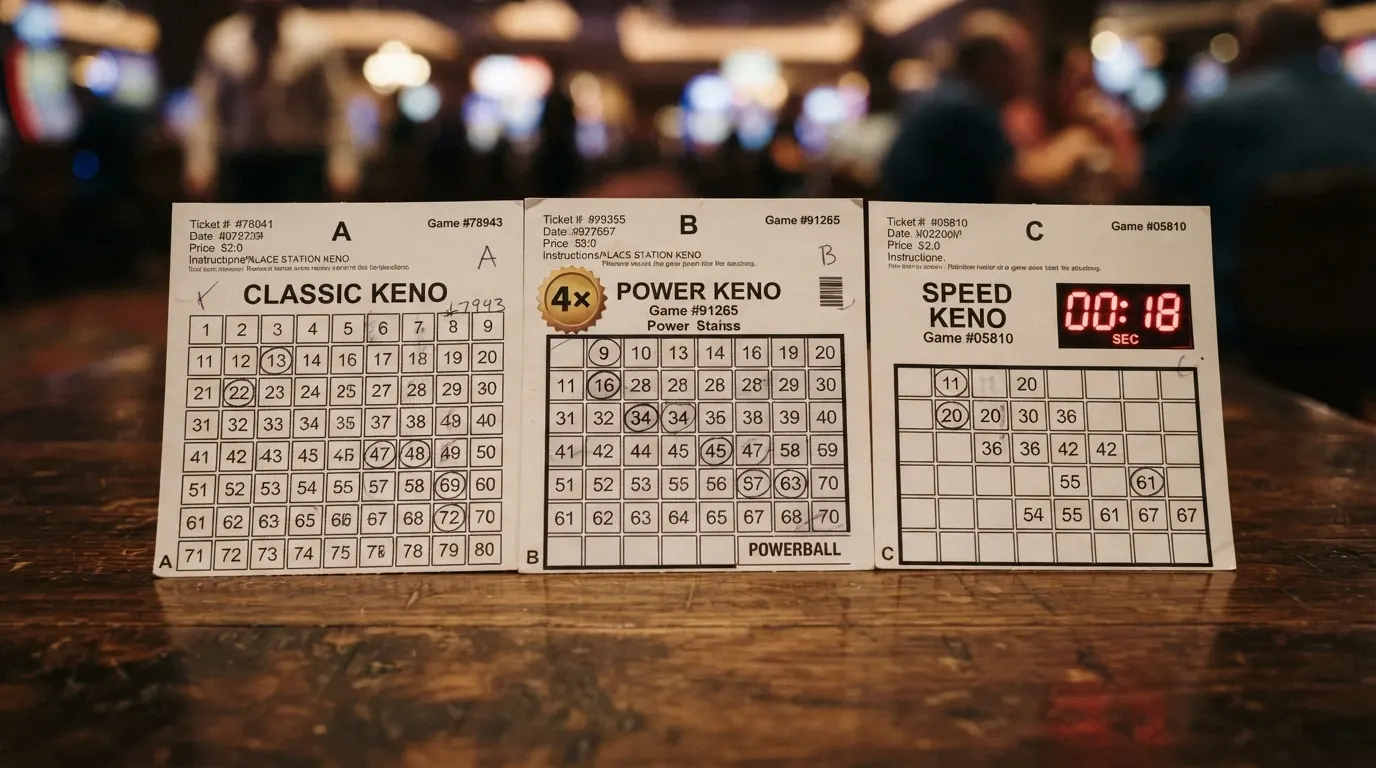
Classic Keno is the format the rest are built from. The player picks between one and fifteen numbers, the draw selects twenty from eighty, and the catch determines the payout. The round lasts as long as a player takes to make a selection, and most rounds run in a relaxed, click-pause-click rhythm that suits a player who wants to think about their numbers.
Power Keno, sometimes called Super Keno, applies a multiplier — usually 4× — to the payout when the player catches all of their selected spots. A four-spot with a 4× multiplier pays roughly four times the standard four-spot prize, and a ten-spot with a 4× multiplier pays the headline figure the marketing tends to lead with. The catch is that the non-jackpot payouts are often trimmed to fund the multiplier, so the variant is generous at the top and stingier in the middle. A player whose target is a small, frequent win should not play Power Keno; a player whose target is a memorable payout should know that the odds of triggering the multiplier are the same as the odds of hitting the top prize in the standard game.
Speed Keno is the format for a player who wants volume. Rounds run every thirty to sixty seconds, the selection is reduced to a click-and-go, and the player is back to the next draw before the previous result has finished animating. The house edge is the same as Classic; the cost per hour is higher because more games go past. Twenty Speed Keno games an hour at A$5 a draw is A$100 of turnover, and at a 95 per cent return to player the expected loss is around A$5 an hour. The variant does not punish the player; the pace does.
Multi-Card Keno runs multiple cards in a single draw — up to twenty cards simultaneously, each with its own spot selection. A player who wants to cover more of the 80-number field without picking twenty individual spots runs several cards at once, and the cost scales with the number of cards. The house edge does not change. The volatility does, because a multi-card bet hedges across the same draw, and a player who would otherwise run one card at A$5 can spread the same A$5 across four cards at A$1.25 each. The total exposure is the same; the variance is lower.
Keno Slots, Pokies and Instant-Win Alternatives
Keno the draw game is not keno the slot. A keno-themed slot uses a keno grid as its visual frame but the math is a slot machine: reels, paylines, a random-number generator that produces a result on every spin, and a return to player that is configured per title rather than per draw. The “keno” branding on a slot is a marketing choice, not a mechanics choice, and the player who treats a keno slot as a draw game is going to be surprised by both the pace and the payout structure.
The online keno return to player of 90 to 98 per cent, typically 94 to 96 per cent on the better titles, refers to the draw-based game. Keno slots can sit anywhere in the casino slot range, which is broader and can be lower at the bottom end. A player who wants the keno experience should pick a draw game in the casino’s instant-win or specialty section, not a slot with keno in the name.
| Variant | Mechanics | Best For |
|---|---|---|
| Classic Keno | Standard 80-ball | Analytical players |
| Power Keno | Multiplier-based | Jackpot seekers |
| Speed Keno | Rapid-fire rounds | Volume players |
| Multi-Card | Multiple cards per draw | Hedging volatility |
Pokies — the Australian word for slot machines — with keno themes occupy the same space: a familiar visual frame wrapped around slot math. The same caveat applies. A keno draw game is a draw game; a pokie is a pokie.
Live Keno: Real-Time Draws with a Dealer
Live keno streams a real draw from a studio, with a dealer, a physical ball machine or random-number display, and a chat function for the players at the table. The format replicates the feel of sitting at a retail keno lounge without the venue. A player marks a card on the screen, the dealer runs the draw, the balls come up, and the payout is calculated in front of the player. The round takes longer than an automated draw — a couple of minutes rather than thirty seconds — but the trust factor is higher, because the player can see the draw.
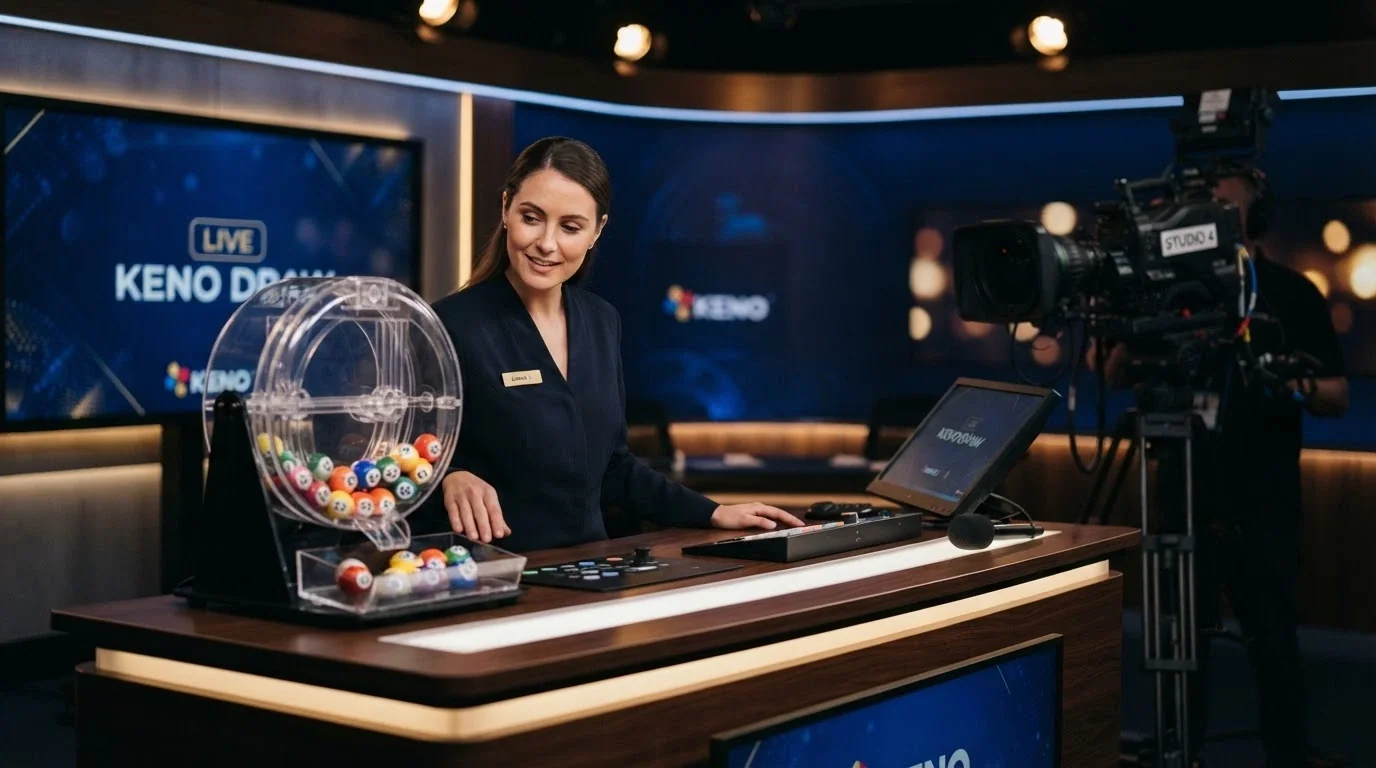
The return to player on a live keno game is typically in line with the rest of the offshore market, somewhere in the nineties. The variant matters more for the experience than for the math. A player who values pace will not play live keno; a player who values the feel of a real draw will not play Speed Keno. Both are valid choices, and the cost difference is smaller than the marketing makes it sound.
Multi-Card and 4-Card Keno: Playing More Numbers at Once
Multi-Card Keno is the variant a player picks when they want to cover more of the 80-number field without thinking their way through twenty separate selections. Up to twenty cards can run in a single draw, each card with its own spot count and its own stake. The bet per card is set independently, and the total outlay is the sum of the per-card stakes.
The key thing to understand about multi-card is that it does not change the odds of any individual draw. The same twenty numbers come up whether a player is running one card or twenty, and the catch on each card is independent. What multi-card does is smooth the variance: a player who runs four cards at A$1.25 each will hit a meaningful catch more often than a player who runs one card at A$5, because the same draw is producing four chances to win instead of one. The total stake is the same; the distribution of outcomes is flatter. A player with a tight bankroll who wants a longer session can use multi-card to stretch a A$20 bankroll across more rounds, and the house edge is unchanged.
Free-Play and Demo Keno: Practising Without Risk
Most offshore casino sites run their keno games in demo mode alongside the real-money version. A player can open the game, mark a card, watch the draw, and see the payout, all without depositing or registering on some sites. The demo version uses the same random-number generator as the real-money version, which means a player who tests a variant in demo is testing the actual game they will play for real money, not a watered-down preview.
The value of demo play is in learning the variants. Power Keno’s payout structure is only obvious when a player has seen a few rounds; the difference between a four-spot and a six-spot is only obvious when a player has watched both miss. Demo mode is also where a player can test a site’s mobile performance, draw speed and game-weighting policy before committing a deposit. A player who skips demo and goes straight to real money is paying to learn.
Real-Money Keno: Stakes, Payouts and the Session Cost
Betting limits on offshore keno sites typically run from A$0.10 to A$100 per game, which is wider than any retail keno venue in the country. A player with a small bankroll can play at A$0.10 a draw; a player with a large bankroll can play at A$100. The limits matter because they set the floor and ceiling on a session’s exposure, and the gap between the floor and the ceiling is the gap between a casual round and a serious one.
A real-money session at A$5 a draw, twenty draws an hour, is A$100 of turnover per hour. At a 95 per cent return to player, the expected loss is A$5 an hour. At a 75 per cent return to player — the figure on the licensed Australian product — the expected loss is A$25 an hour for the same stake and pace. The stake and the pace are the player’s choice; the return to player is the game’s choice, and the difference between a offshore title at 95 per cent and a licensed draw at 75 per cent is the difference between A$5 and A$25 of expected loss on the same hour. That is the trade-off, in numbers, and every keno decision on this page sits somewhere inside it.
Keno Rules in 60 Seconds
The complete keno rule set fits in a short paragraph. The player picks between one and ten spots — fifteen on some variants — from a card of eighty numbers. Most games offer a QuickPick option, where the casino’s number generator picks the spots. The draw selects twenty numbers from the eighty, the catch is the number of spots that match, and the payout table scales with the catch and the spot count. Higher spot counts pay more for a full catch and less for a partial catch; the trade-off is between a frequent small win and a rare large one.
The minimum age for all commercial gambling in Australia is 18, and that includes any online keno play. A player under 18 should not be on these sites at all, and an offshore casino that does not verify age is one more protection the player is missing.
Keno Strategy, Odds and RTP: What the Numbers Actually Mean
No selection method beats the house edge on keno. Every number in the 80-number pool carries identical probability, and a player’s “lucky” seven is no more likely to come up than the seven the QuickPick chose. The strategies that get marketed — hot numbers, cold numbers, due numbers, pattern plays — are superstition with a casino-friendly veneer, and the only thing they reliably change is how long a player sits at the table.
The real numbers are the odds. A four-spot that catches all four happens once in 326 games; a six-spot once in 7,753; an eight-spot once in 230,115; a ten-spot once in 8.9 million. The return to player sits between 90 and 98 per cent on the offshore market, typically 94 to 96 per cent on the better titles, and around 75 per cent on the licensed Australian product. The house edge is 1 minus the RTP, and it holds across every variant and every spot count.
The practical sweet spot, for a player who wants a session that produces a meaningful top payout without the variance of a ten-spot, is five to seven numbers. The five-spot hits a full catch more often than the eight-spot, pays a smaller top prize, and the session cost is more predictable. None of this changes the house edge; it changes the shape of the session.
Bitcoin and Crypto Keno: Playing with Digital Currency
A small number of offshore keno sites accept Bitcoin and other cryptocurrencies, and the experience is a different world from the AUD deposit route — faster settlement, no bank involvement, and a payment method the Australian government has banned for online wagering since June 2024. The crypto route is a tell, in other words, and the protection gap is wider, not narrower, for a player who funds with digital currency.
How Bitcoin Keno Works on an Offshore Site
A Bitcoin keno deposit starts with a wallet — the player’s own, not the casino’s — and ends with a balance on the casino site denominated in BTC or converted to AUD at the casino’s exchange rate. The flow is fast: a transfer confirms in minutes, the balance appears in the player’s account, and a keno round is a click away. Withdrawal reverses the process, with the casino sending BTC back to the player’s wallet, and the player converting to AUD on an exchange of their choice.
Every step of this flow happens outside the Australian banking system. There is no bank transfer, no PayID, no BPAY, and no debit card. The Australian government banned credit cards and digital currency for online wagering in June 2024, and the ban carries penalties of up to A$247,500 for an operator that fails to enforce it — which is part of why the only operators that ask for crypto are operators outside Australian rules. The payment method is the tell.
What Crypto Anonymity Actually Means for an Australian Player
The pitch for crypto gambling is anonymity. The reality is more complicated. The blockchain is public, which means every transaction is recorded on a ledger anyone can read. The casino knows who the player is at cashout, because the player has to verify their identity to withdraw. The Australian Taxation Office can request blockchain records through a court order. The only privacy crypto actually adds, in the offshore-gambling context, is privacy from the player’s own bank, and a bank is not the entity an Australian player needs privacy from.
The crypto ban is not arbitrary. The Australian government banned crypto deposits for online wagering because crypto made it harder to track and block the offshore market. The ban is a tell about the operators who ignore it: a casino that takes Bitcoin from an Australian player is, by definition, an operator outside the Australian rules. The same legal exposure applies, and the same protection gap applies, and the only thing crypto changes is the payment rail.
A final note on tax. Betting and gambling winnings are not assessable income under Australian tax law, and losses are not deductible, unless the person is carrying on a business of gambling. Crypto keno winnings sit inside that rule. The fact that the win arrives as BTC rather than AUD does not change the tax treatment; converting the BTC to AUD is the same as receiving the AUD, and the ATO’s view is the same in either case.
Why Online Keno Sits Outside Australian Law
The Interactive Gambling Act 2001, as amended in 2017, makes it an offence to provide an online casino game — keno included — to a person physically in Australia. This is not a grey area. The law is explicit, the regulator is active, and the enforcement record is long. The player is not the target, but the protection gap the law creates is real, and a player who understands both the law and the gap makes a better-informed decision than a player who understands neither.
The Interactive Gambling Act and What It Actually Bans
The IGA was passed in 2001 and strengthened in 2017. The 2017 amendment closed the loophole that had let offshore sportsbooks serve the Australian market, and it extended the prohibition to online casino games, online pokies and in-play sports betting. The law makes it an offence to provide a prohibited interactive gambling service to a person in Australia. “Prohibited” is the operative word: the service is named in the legislation, the prohibition is absolute, and the law targets the provider of the service rather than the customer.
The player is not prosecuted under the IGA. The Act’s enforcement teeth are aimed at the operator — civil penalty proceedings, formal warnings, and referrals for further action — and the ACMA has been using those teeth since 2017. The Australian individual player can place a bet with an offshore casino without committing an offence under the IGA. That is not the same as saying the play is legal, because the law does not need to criminalise the player to leave the player unprotected. The offshore casino is not licensed, not regulated, and not answerable to any Australian body; the player who has a dispute with the operator has no Australian complaints body to take it to, and the ACMA cannot recover the player’s money.
The ACMA: Australia’s Online Gambling Enforcer
The Australian Communications and Media Authority is the federal regulator that enforces the IGA. Its tools include investigating complaints, issuing formal warnings, pursuing civil penalty proceedings, and directing Australian internet service providers to block illegal gambling sites at the DNS level. The ACMA has been using those tools since 2017, and the enforcement record is substantial.
Since the first blocking request in November 2019, the ACMA has had 1,564 illegal gambling and affiliate websites blocked by Australian ISPs, with the figure standing at 1,564 as at March 2026. More than 225 illegal services have withdrawn from the Australian market since enforcement was strengthened in 2017. The blocking is DNS-level, which means the site becomes unreachable through Australian internet connections but remains live everywhere else. A site can be blocked at any time, and a balance sitting on a blocked site is, in practical terms, a balance the player may not be able to withdraw.
The ACMA also runs a complaints process for Australian consumers, but the process is not a recovery mechanism. The regulator can investigate, warn, and refer an operator for enforcement; it cannot compel an offshore casino to pay a disputed withdrawal. The protection gap is structural, and the ACMA’s enforcement record is the proof.
What the 2026 Reform Changes for Keno Players
The Interactive Gambling Amendment (Gambling Reform) Bill 2026 passed Parliament on 19 August 2026, and its measures commence on 1 January 2027. The reform adds three new tools to the existing prohibition, and each one tightens the net on the offshore market.
From 1 January 2027, banks and payment providers gain express authority to block transactions to illegal gambling operators. A player whose bank blocks a transaction to an offshore casino will see the payment fail, and the casino will see the player as unbankable. This is the most consequential of the three changes for the offshore keno market, because it cuts off the AUD deposit route that most players currently use.
From 1 January 2027, wagering advertising is capped at no more than three ads per hour between 6:00 am and 8:30 pm, with a live-sport blackout from fifteen minutes before a live event until five minutes after it ends. The reform also bans the broadcasting of sporting odds outright, bars athletes, celebrities and influencers from promoting wagering products, and bars radio wagering ads during school drop-off and pick-up times. None of this directly targets the offshore keno player; all of it shapes the environment around the offshore keno market.
From 1 January 2027, direct marketing of inducements is prohibited for fourteen days after a customer signs up, for three months after a person deregisters from BetStop, and indefinitely for customers identified as at risk of gambling-related harm. The bonus offers and “free spins” emails that offshore casinos send to Australian players are, from 1 January 2027, on the wrong side of the new inducement rules — though the rules bind Australian-licensed operators and the ACMA’s enforcement, not the offshore casinos themselves.
The 2026 reform does not legalise online casino keno. It does not grant any operator an Australian licence. It tightens the prohibition and gives the regulator three new tools to enforce it.
What an Offshore Keno Licence Means for Your Money
An offshore casino licence is a licence issued by a regulator in another country — Curaçao, Malta, Gibraltar, the Isle of Man, and a handful of smaller jurisdictions. The licence gives the operator permission to run a casino in that country. It does not give the operator permission to serve Australian customers, and it does not give an Australian player the protections of Australian law.
The concrete consequences of that gap are four. There is no Australian consumer protection on an offshore site, which means a player with a dispute has no Australian complaints body to take it to. There is no BetStop coverage, which means a self-excluded player can still deposit and still play, because BetStop binds Australian-licensed wagering services and the offshore casino is not one. There is no withdrawal recourse if the operator refuses a payout, voids a win or closes the account, because the operator is answerable to a regulator in another country that may or may not take the complaint seriously. And there is site-blocking risk, because the ACMA can direct Australian ISPs to block the site at any time, and a balance sitting on a blocked site is a balance the player may not be able to access.
A player who understands those four points has the information to make a real choice between licensed Australian keno and an offshore alternative. A player who does not has not been told the trade-off honestly.
Where to Get Help: Responsible Gambling for Keno Players
The responsible-gambling infrastructure in Australia is built around licensed wagering. Offshore keno sites are outside every part of it, and a player who needs the tools that infrastructure provides has to use the tools directly rather than expecting the offshore casino to provide them.
The Safety Tools Available to Australian Keno Players
The licensed wagering customer in Australia has access to a layered set of responsible-gambling tools. State and territory regulations require customer-set deposit limits, activity statements, and time-out or take-a-break options. BetStop, the National Self-Exclusion Register, lets a player exclude themselves from every Australian-licensed online and phone wagering service in a single registration, with exclusion periods ranging from three months to a lifetime. The register went live in August 2023, and as at 31 July 2026 it had recorded 67,480 registrations, with 41,290 exclusions still active. Seventy-eight per cent of registrants were under 40, and thirty-eight per cent chose a lifetime exclusion. The numbers tell a story about who the system is built to protect.
The helpline is the National Gambling Helpline, 1800 858 858, free, confidential, staffed 24 hours a day and seven days a week. Online chat and counselling are available through Gambling Help Online at gamblinghelponline.org.au. The helpline is the front door for anyone who is worried about their own gambling or someone else’s.
The offshore gap is the part that matters for an Australian keno player on an offshore site. BetStop binds Australian-licensed wagering services. An offshore casino is not one. A player who has registered with BetStop and then deposits at an offshore casino has not breached the self-exclusion — there is no breach, because the offshore casino is outside the system — but the player has also not been protected by it. The offshore casino has no obligation to check BetStop, no obligation to honour a self-exclusion registered with an Australian body, and no obligation to do anything other than take the deposit.
What the Ranked Sites Actually Do About Player Safety
The ten brands in the ranking are offshore operators, and what each one does about player safety is determined by the operator’s own house rules and the licence the operator holds in another country. Research did not confirm per-operator responsible-gambling tooling during the verification window, so the page refuses to attribute specific deposit-limit, session-timer or self-exclusion features to specific brands. A player who lands on any of these sites should look for the responsible-gambling page in the footer, read what is on it, and test what is offered. The licensed Australian keno product has the tools by regulation; the offshore product has whatever the operator chooses to provide.
The two specific things a player should look for are a deposit-limit tool that the operator enforces — not a slider the player can move at will, but a cooling-off period after a limit is raised — and a self-exclusion option that the operator actually honours. A self-excluded player who can still log in and still deposit has not been excluded. A deposit limit that can be lifted with a single click and no waiting period is not a limit.
How We Selected and Ranked These Keno Casinos
The ranking is built on market reach, not on a licence none of the brands hold. The set of ten operators was drawn from Australian market-share tracking — the brands that actually reach Australian keno players through search, affiliate networks, social channels and brand awareness. The order in the table is the order of reach, with the brand reaching the largest share of the Australian keno audience at the top and the brand with the narrowest reach at the bottom.
Licence status was checked against the ACMA’s published register, and the result is uniform: no Australian online casino licence exists. The IGA prohibits the product, and no state or territory issues a licence for it. Every brand in the ranking is offshore; the licence each holds is a foreign licence that authorises the operator to run a casino in the licence’s jurisdiction, not in Australia.
Bonus and game data were cross-referenced against publicly available sources, with SkyCrown’s headline offer (450% deposit match up to AU$8,000 plus 400 free spins, 30× wagering) confirmed from one of those sources. Per-operator figures for the other nine brands were not verifiable from public sources during the research window, and the table reflects that. The ranking does not invent bonus terms, wagering multiples, or game-provider lists to fill the gaps. The gaps are the gaps, and the player who lands on any of these sites reads the site’s own terms page as the source of truth on the offer.
The ranking criteria are reach, then game availability, with both measures drawn from the market-share data. No weightings have been invented beyond that, and no operator has been moved up or down the table to favour a particular brand.
Your Move: What to Do Before You Play Keno Online
The decision an Australian keno player makes is not “which site is best.” It is “which trade-off am I willing to make.” The licensed Australian product pays back around 75 per cent, runs in a venue or through a registered retail partner, and comes with every protection Australian law provides: a regulator, a complaints body, BetStop coverage, deposit limits, activity statements, the helpline. The offshore product pays back 90 to 98 per cent, runs through a browser on a phone, and comes with none of those things. The two are different products, and the right answer for one player is not the right answer for another.
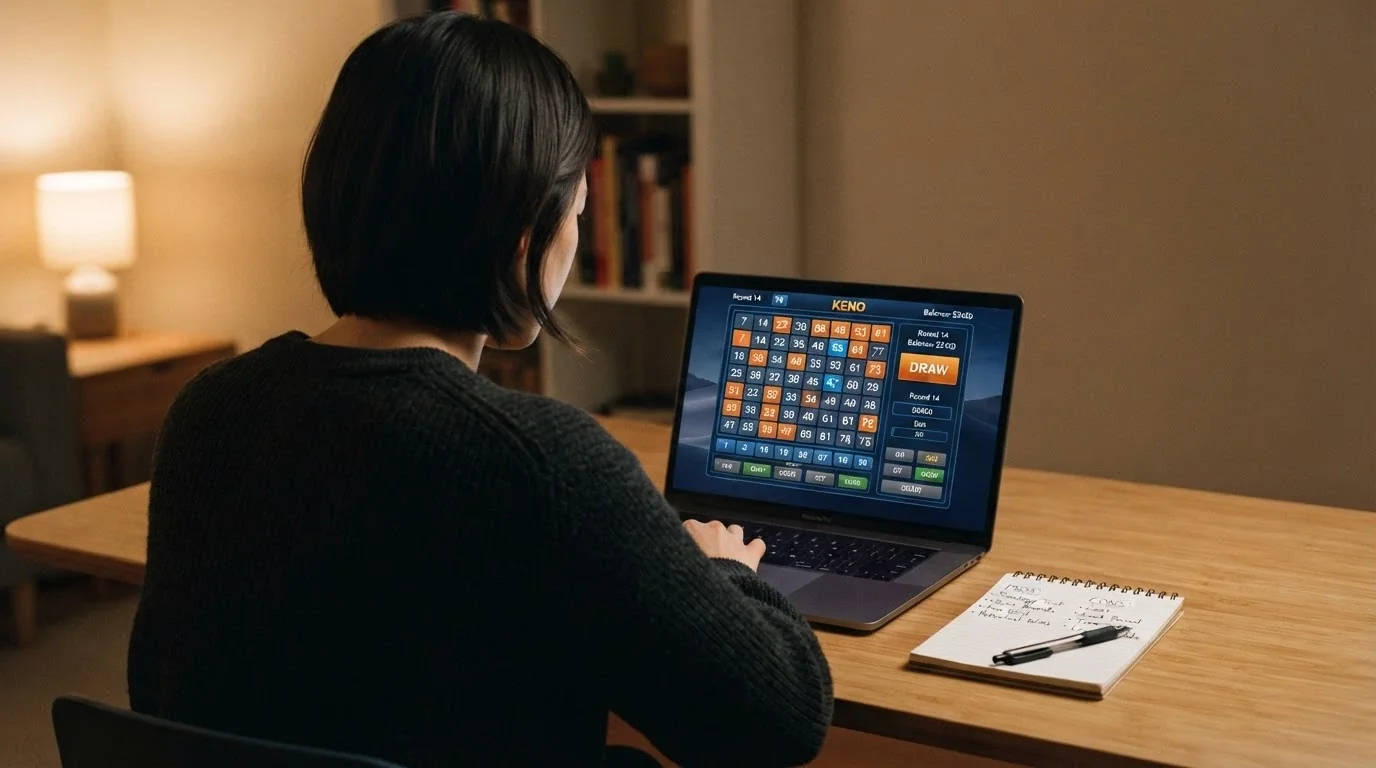
The practical checklist is the same either way. A player who decides the licensed product is the right call knows the RTP is lower and the session costs more, and pays for the protection with that difference. A player who decides the offshore product is the right call should deposit an amount they are prepared to lose, set their own deposit limit and session timer before they start playing, and use the helpline or BetStop if the play stops being fun. The offshore product is built to take money; the player’s job is to put the guardrails in place that the product does not provide.
The one question that matters most is whether the player can walk away from a session having lost the budget they set, without topping up. The licensed product’s guardrails do that work; the offshore product leaves the player to do it themselves. A player who can do it themselves does not need the licensed product. A player who cannot should not be on the offshore product at all.
The helpline is 1800 858 858, free and staffed around the clock. The online counselling service is gamblinghelponline.org.au. BetStop is at betstop.gov.au. These are the resources the licensed wagering customer takes for granted; the offshore keno player has to reach for them on their own.
Frequently Asked Questions
Is online keno legal in Australia?
No. The Interactive Gambling Act 2001, as amended in 2017, makes it an offence to provide an online casino game to a person in Australia, and online keno falls inside that prohibition. The licensed alternative is land-based and retail keno through The Lott and KenoGO, with draws every three minutes and a return to player around 75 per cent.
What is the best keno casino for Australian players in 2026?
No Australian-licensed online keno casino exists, because the IGA prohibits the product. The ten brands in the ranking above are offshore operators that reach Australian keno players through the offshore market. The right pick depends on what the player values — bonus size, game selection, payment method, mobile experience — and the page reviews each brand on those terms.
Are keno winnings taxable in Australia?
No, not for a recreational player. Betting and gambling winnings are not assessable income under section 6-5 of the ITAA 1997, and gambling losses are not deductible under section 8-1. The exception is a person who is carrying on a business of betting or gambling, which is a different scale of activity than a recreational keno player.
How does BetStop affect keno players?
BetStop is the National Self-Exclusion Register, and it binds Australian-licensed wagering services. A player who registers with BetStop is excluded from every Australian-licensed online and phone wagering service for the period they select. The exclusion does not reach offshore casinos, because offshore casinos are not Australian-licensed services, and a BetStop registration does not stop an offshore site from taking a self-excluded player’s money.
What payment methods can I use for online keno in Australia?
The Australian government banned credit cards and digital currency for online wagering in June 2024, and the ban carries penalties of up to A$247,500. The legal payment routes for licensed wagering are debit card, bank transfer, PayID/Osko and BPAY. Offshore casinos that ask for a credit card or crypto deposit are operating outside the Australian rules, and the payment method is itself a tell. From 1 January 2027, banks and payment providers gain express authority to block transactions to illegal gambling operators.
What is the difference between licensed Australian keno and online keno?
Licensed Australian keno is a land-based and retail lottery product through The Lott and KenoGO, with a return to player around 75 per cent, draws every three minutes, and the full suite of Australian consumer protections. Online keno is offered by offshore casinos, with a return to player typically between 90 and 98 per cent, browser-based play, and no Australian consumer protection. The licensed product is safer; the offshore product pays back more. Neither is a substitute for the other, and the right choice depends on which trade-off the player is willing to make.
Created by the ”Fast Payout Casinos AU” editorial team.