
How Australians Deposit and Withdraw at Online Casinos in 2026
 Available in AU
Data current as of 18 October 2026, verified against the ACMA register of legal wagering providers and the regulator’s published payment-method guidance.
If you have ever typed “online casino” into a search engine from an Australian IP address, you have already met the central paradox this page is built around. The product does not exist, and the payment methods for it definitely do. The Interactive Gambling Act 2001 prohibits online casino games, online pokies and in-play betting, and no licence for any of it exists in any Australian state or territory. Yet hundreds of thousands of Australians deposit at offshore casino sites every month, choose a payment rail, and wait for a withdrawal to land. The payment screen is the first place that legal reality becomes visible, and the first place a player can tell whether the operator they are about to use is operating inside the Australian framework or outside it.
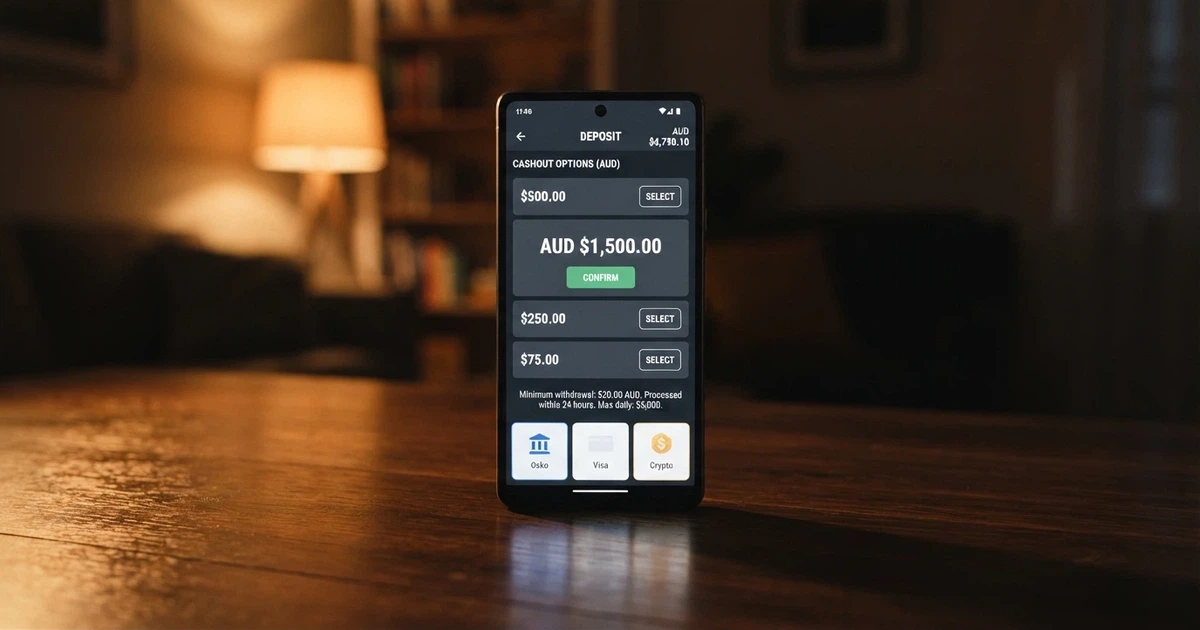
This page is the comparison the search results do not give you. It sorts the payment methods Australians actually use in 2026 by what matters at the cashier — speed in, speed out, fees, deposit-only traps and the legal status of the method itself. It treats the offshore reality plainly, because the offshore reality is what most readers face. And it finishes with the practical course of action the data supports, not a list of operators to sign up with.
Table of Contents
- Why Every Deposit Route in Australia Tells a Story
- The Payment Methods That Actually Work for Australian Players in 2026
- Cryptocurrency Casino Payments: Legal for You, Illegal for the Operator
- Paying by Phone: Mobile Deposits Are Fast, but They Only Go One Way
- The Legal Reality: What Your Payment Method Says About the Operator
- Responsible Gambling: Tools That Work Regardless of Where You Play
- 10 Offshore Casinos Australian Players Use — and How Each One Handles Your Money
- How We Evaluated These Casino Payment Methods
- What Australian Players Should Actually Do About Casino Payments in 2026
- Frequently Asked Questions
Why Every Deposit Route in Australia Tells a Story
A payment method is not a neutral technical choice. In Australia, the rails available to a casino player carry regulatory meaning, and the screen that asks for your deposit carries more information than the licence page at the bottom of the website. A site that asks for a credit card or a cryptocurrency deposit from an Australian player has already told you it is operating outside Australian rules, because credit cards and digital currency have been banned as payment for online wagering since 11 June 2024. The rail you pick does not just move money. It places you inside or outside the framework.
The legal vacuum creates a market where Australian players gravitate toward PayID and away from the methods the IGA 2001 names. Over 42% of Australian online casino players use PayID for deposits, a share that has only grown since POLi shut down in 2023. The vacuum also creates the conditions for speed competition: crypto operators time their withdrawals in minutes, e-wallets in hours, PayID in the same hours when the casino-side review cooperates, and bank transfers in days. The fastest rail is rarely the one a player starts on, and the slowest is often the one they end on when they want to cash out.
What “best payment method” actually means for an Australian player
The word “best” does a lot of work in this market, and most of it badly. A method that is best for depositing a small amount in seconds is not the best method for withdrawing A$5,000 of winnings before the weekend. A method that hides the transaction from a bank statement is the best method for a player who values privacy, and the worst method for a player who later needs the same bank to cooperate on a dispute. The criteria that actually matter are four: speed in, speed out, legal status, and reversibility — whether you can get the money back through your own bank if something goes wrong.
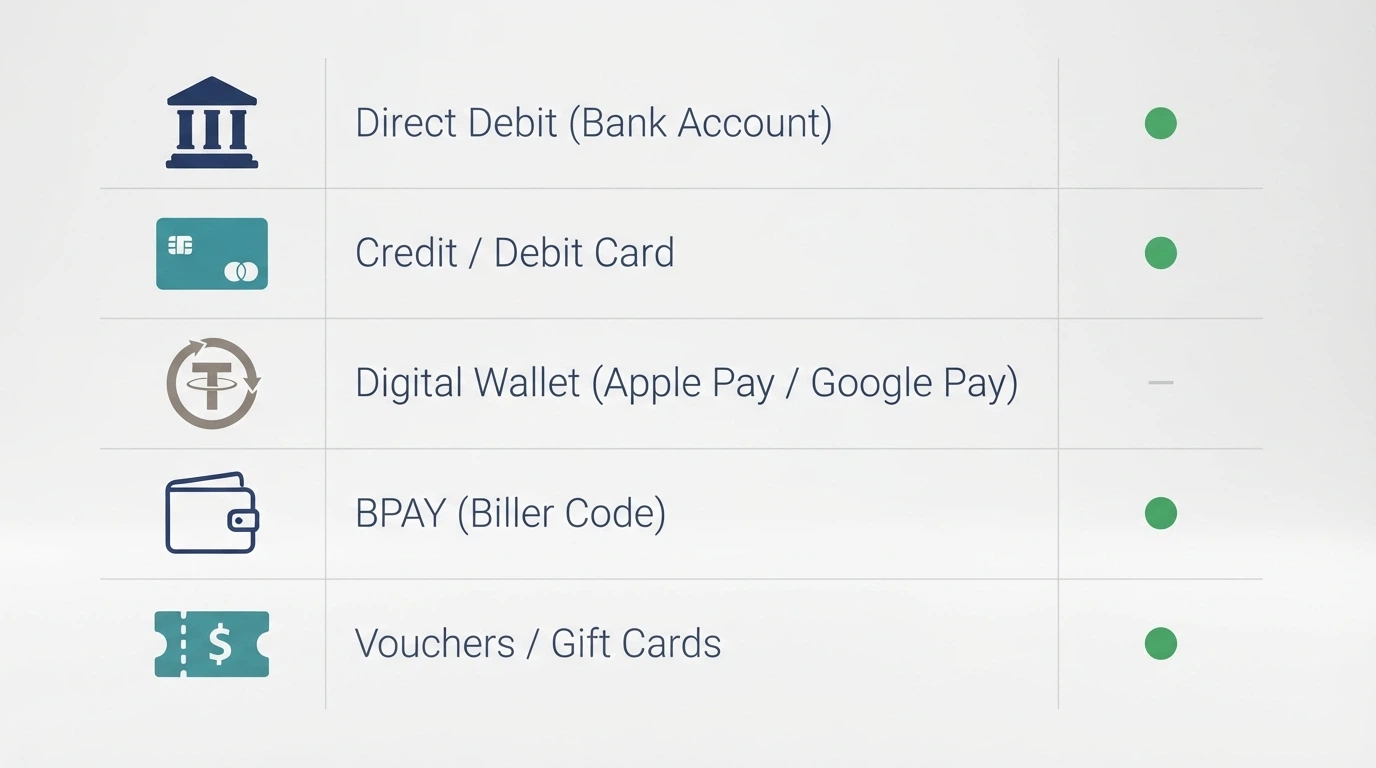
The most important fact about the Australian market is the one no payment method can fix: no method is legal for online casino in Australia, because the product itself is prohibited. A credit card or crypto deposit request is a signal the operator is outside Australian rules, because those two methods are banned even for licensed wagering. A debit card, bank transfer, PayID or BPAY deposit is legal for licensed wagering (sports and race betting), but no online casino is a licensed wagering operator, so the legal status of the rail does not transfer to the legal status of the transaction.
The hidden infrastructure behind every casino deposit
The deposit a player makes at an offshore casino passes through three layers it never sees. The first is the player’s own bank, which sees a transaction tagged with a merchant category code that may or may not be on the bank’s gambling-prohibited list. Visa and Mastercard deposits at Australian-facing casinos are sometimes blocked by AU banks for exactly this reason — the merchant category code reads as gambling, and the issuing bank declines or flags the transaction. The second layer is the payment processor or gateway that aggregates transactions for offshore operators and routes them to acquiring banks in jurisdictions where gambling merchant categories are accepted. The third is the operator’s own cashier, which reconciles the deposit to the player account.
PayID changed the first two layers for the better. PayID deposits settle in under 60 seconds because the New Payments Platform processes them as a real-time bank-to-bank transfer, and most Australian banks do not block Osko payments to gambling merchants as aggressively as they block card transactions. The daily cap on PayID at most banks sits in the A$1,000 to A$20,000 range, and most banks make the cap adjustable in-app. CommBank has had a public policy since mid-2023 of declining or limiting payments to high-risk crypto exchanges, with daily caps around A$10,000 applied to several exchanges including Binance Australia. The bank sees the deposit, and the bank decides whether to let it through.
How the payment landscape shifted for Australian players
The market an Australian player faces in 2026 is not the market they would have faced three years ago. The credit card and crypto ban commenced on 11 June 2024 under the Interactive Gambling Amendment (Credit and Other Measures) Act 2023, closing the two most familiar deposit routes at any operator targeting Australian customers under Australian rules. POLi shut down and ceased operations in 2023, taking the most-used Australian bank-to-casino bridge with it. The Interactive Gambling Amendment (Gambling Reform) Bill 2026 passed Parliament on 19 August 2026, and from 1 January 2027 banks and payment providers gain express authority to block transactions to illegal gambling operators. That last change is the one that will reshape this page’s content over the next year.
The bill does not ban online casino play, because that product is already banned under the IGA 2001. What it does is give the banks the explicit statutory cover to refuse transactions to offshore operators — a power they have been exercising piecemeal through merchant category codes and risk policies. The practical effect on a player in 2027 will be more declined deposits at the bank-side, more sites losing their payment-processor relationships, and more Australian-facing operators moving toward methods the banks have not yet learned to block. The player who picked their rail in 2026 will need to pick it again in 2027.
The Payment Methods That Actually Work for Australian Players in 2026
A practical walk through every rail an Australian can use at an offshore casino in 2026 — what clears, what gets blocked, and what speed to expect when the money goes the other way. Every method below is deposit-capable at one operator or another, but only some are withdrawal-capable, and the gap between the two directions is where most of the friction lives.
| Method | Deposit time | Withdrawal time | Fees | Deposit-only? |
|---|---|---|---|---|
| PayID / Osko | Under 60 seconds | 25 min – 5 hours (best operators) up to 36–72 hours door-to-door at PayID-only sites | Free from Australian banks; casino-side AML review can stretch time | No |
| Visa / Mastercard debit | Instant | 2–5 business days | None at most operators | No |
| Bank transfer (BSB/account) | 1–24 hours | 1–3 business days | A$5 at some operators | No |
| E-wallets (Skrill, Neteller, eZeeWallet, MiFinity, PayPal) | Instant | 30 min – 2–3 days | Skrill charges 1.45% on withdrawal | No |
| Apple Pay / Google Pay | Instant (biometric) | Not supported | None at casino side | Yes |
| Cryptocurrency (BTC, ETH, USDT, etc.) | Minutes after blockchain confirmations | 10 min – 5 hours door-to-door | Network fee (paid by player or operator); no platform fee at most featured operators | No |
| Neosurf voucher | Instant after PIN entry | Not supported | None | Yes |
| POLi | Unavailable since 2023 | N/A | N/A | Yes (was) |
The table tells one story at a glance: the fastest deposit is rarely the fastest withdrawal, and several of the fastest deposit methods do not support withdrawals at all. Apple Pay, Google Pay and Neosurf are deposit-only, which means a player who funds their account with one of these rails needs a second rail on file before they can cash out. POLi is included for completeness — it is gone, but several 2026 competitor pages still list it as active.
E-wallets: Skrill, Neteller, and the platforms that keep your bank statement clean
An e-wallet sits between a player’s bank and the casino, holding funds in a separate balance that does not appear on the bank statement as a gambling transaction. E-wallet deposits (Skrill, Neteller, PayPal, Payz) are instant, and the withdrawals take around 2–3 days on average — though eZeeWallet and MiFinity compress that window, and PayPal clears at some operators inside an hour. eZeeWallet offers more than 50 local payment methods and supports AUD. MiFinity integrates 40+ payment methods and supports 15 currencies including AUD. For a player whose bank has tightened its gambling merchant-category rules, the e-wallet layer is the route that keeps the deposit from being declined on the way in.
The cost of the layer is real and not symmetric. Skrill charges a 1.45% withdrawal fee on the way out, which on a A$1,000 cashout is A$14.50 the player did not pay to deposit. eZeeWallet and MiFinity are AUD-friendly and lower-fee at most operators, but their 2–3 day withdrawal ceiling is still slower than crypto or, at the best operators, PayID. The e-wallet is the deposit rail of choice for players who want their bank uninvolved. It is rarely the fastest way to receive winnings.
Debit cards and bank transfers: the familiar rails with hidden friction
Visa and Mastercard debit are the methods every Australian already has. Deposits are instant, which is the rail’s strongest pitch. Withdrawals take 2–5 business days, which is the rail’s strongest objection. The friction in the middle is the part competitors do not write about: AU banks sometimes block the deposit outright because the merchant category code reads as gambling, the fraud team calls the cardholder to confirm the transaction, and the player is left explaining a gambling deposit to a bank that has just decided to flag it. The mid-transaction block is more common at credit cards than debit cards, but the merchant-category restrictions hit both.
Bank transfer is the slow lane. Deposits take 1–24 hours, withdrawals take 1–3 business days, and a few operators charge an explicit A$5 fee on the way out. The advantage of bank transfer is that it always works — no merchant category block, no daily cap below A$1,000, no need to hold crypto or an e-wallet balance. For a player withdrawing a large amount in a single transaction, bank transfer is the rail that will not fail. The cost is time, and the cost is paid in days.
PayID and Osko: the 60-second deposit that changed the game
PayID is the most popular fiat banking method for Australian casino deposits, with over 42% of Australian online casino players using it. It bridges the gap between a player’s bank account and the casino using a simple identifier — a mobile number or an email — instead of a BSB and account number. The deposits settle in under 60 seconds because the NPP processes them as a real-time bank-to-bank transfer, and PayID itself is free — Australian banks do not charge for sending or receiving an Osko payment. The minimum deposit at most operators runs from A$10 to A$30, and most banks cap daily Osko/PayID transfers at a configurable amount, commonly A$1,000 to A$20,000.
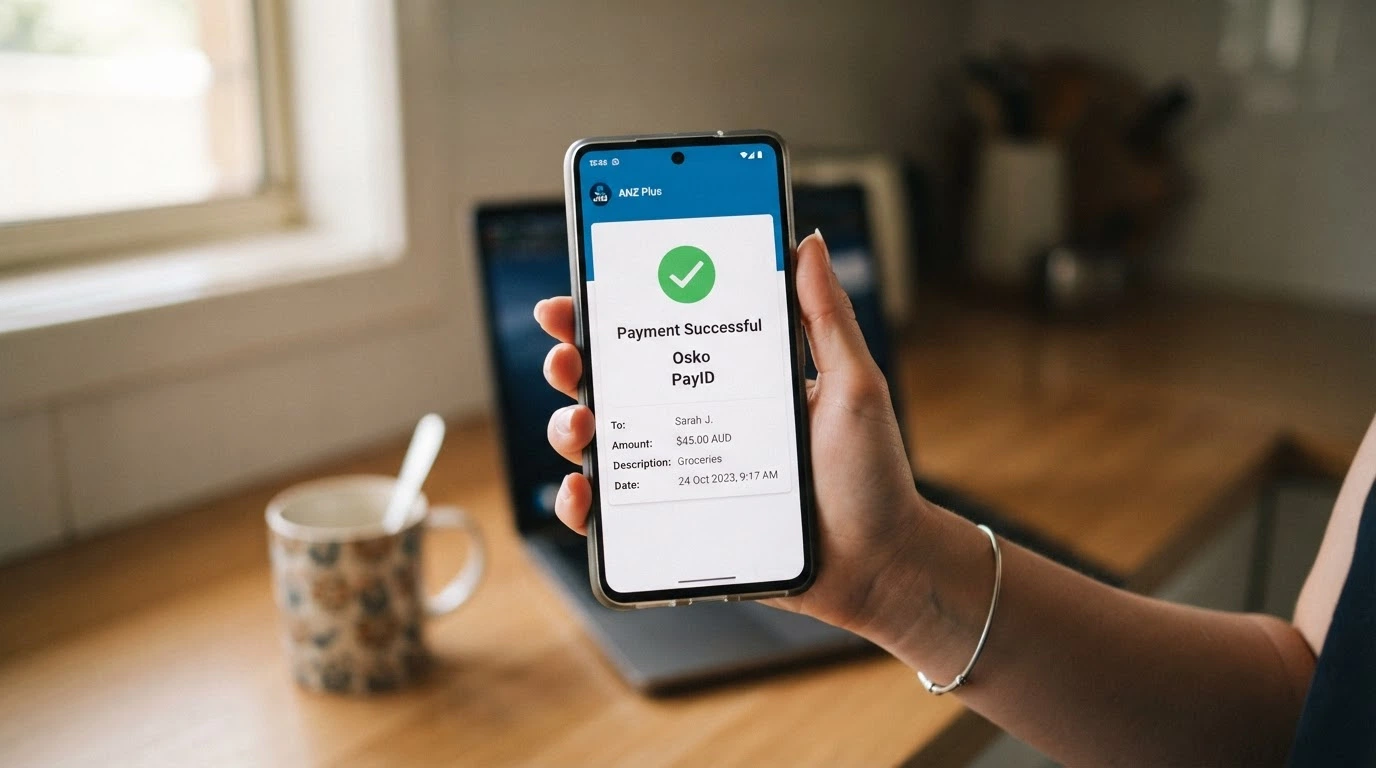
The withdrawal speed at PayID is where the marketing meets the reality. PayID withdrawal times vary sharply by operator: Hell Spin processes in 25 minutes, Goldenbet in 28, Lucky7 in 35, and LuckyVibe within an hour. These are casino-side review times, not rail times — the rail is instant. Slower operators push PayID withdrawals out to approximately 5 hours, and PayID-only operators stack a 12–24 hour casino processing window on top of a 24–48 hour bank rail, producing a door-to-door time of 36–72 hours. PayID withdrawals require casino-side internal AML review, wagering clearance confirmation, and sometimes batch processing windows. The rail is fast. The cashier is the bottleneck.
POLi: the payment method that vanished in 2023
Several 2026 competitor pages still list POLi as an active deposit method at Australian casinos. They are wrong. POLi was shut down and ceased operations in 2023, and it is no longer available at any Australian casino. The method was deposit-only — no POLi casino in Australia offered direct POLi withdrawals, players cashed out via bank transfer, e-wallet, or crypto — but at least it cleared in 2022. A casino cashier that lists POLi as an option in 2026 is showing an Australian player a rail that does not exist, and that is a useful early signal about how carefully that operator maintains its payment page.
PayID is the functional replacement. Same bank-to-bank rail, same NPP processing, same identifier-based convenience, but available, regulated, and supported by every major Australian bank.
Prepaid and voucher methods: Neosurf, Paysafecard, and paying without a paper trail
Neosurf vouchers are prepaid one-use instruments available in A$10, A$50 and A$100 denominations. A player buys a voucher at a retail outlet, scratches off the PIN, and enters it on the casino deposit form. The deposit clears instantly and the bank never sees a merchant category code for gambling. The privacy ceiling is the reason a player picks Neosurf: a spouse reviewing a bank statement will not find the deposit there.
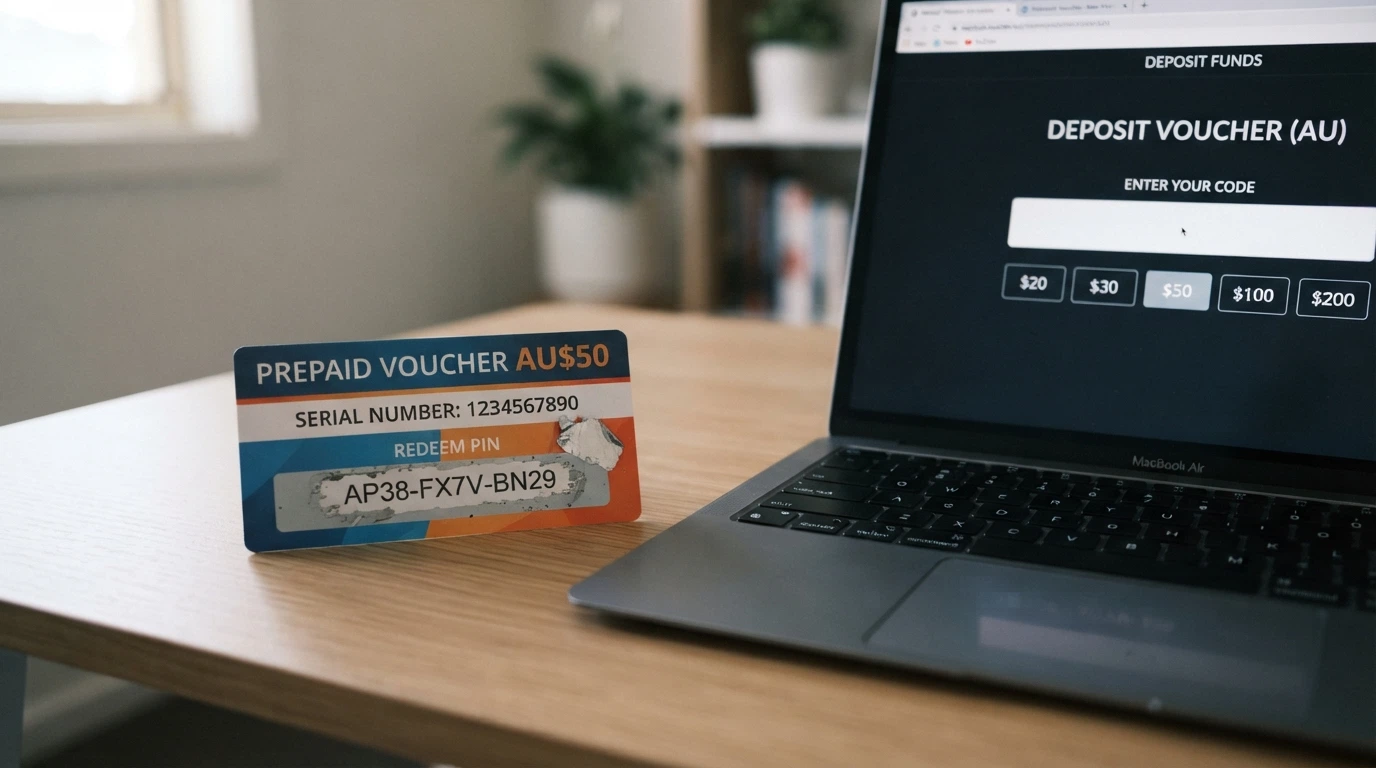
The ceiling is also the trap. Neosurf is deposit-only — withdrawals must use a different method. Most Australian sites accept Neosurf deposits from around A$20, and users can combine multiple vouchers to exceed the A$100 single-voucher maximum. The withdrawal pairing at most operators is Jeton e-wallet, with processing times of 24–48 hours. That is the gap a player needs to plan for before depositing: a Neosurf-funded account will need a PayID, bank transfer, e-wallet or crypto rail on file to cash out, and the first withdrawal will trigger KYC at most operators. The voucher buys privacy on the way in. It spends it on the way out.
Payout speed: why some withdrawals clear in minutes and others take days
The fastest verified crypto withdrawal in 2026 is 10 minutes, recorded at Rolling Slots via Solana. PayID withdrawal times at the best operators are measured in 25 to 35 minutes. E-wallet withdrawals sit in the 30-minute to 3-day band depending on operator. Bank transfer sits in days. Crypto total door-to-door times at major operators run: Stake approximately 2 hours, BC.Game approximately 3.5 hours, Bitstarz approximately 4.5 hours, Wild Fortune approximately 5 hours. The numbers cluster around an order of magnitude: minutes for crypto, hours for PayID and e-wallet, days for cards and bank transfer.
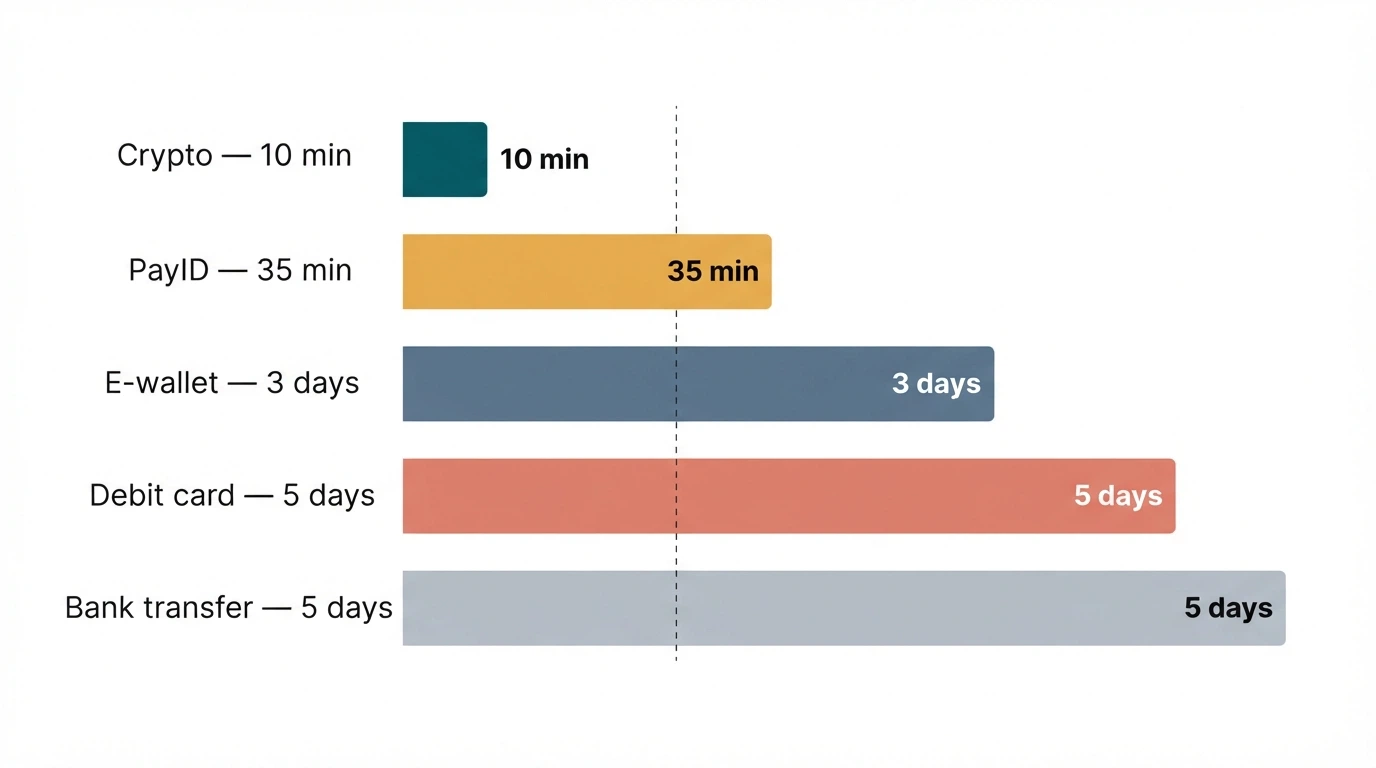
The reason for the spread is not what most players assume. The payment rail is the second-fastest piece of the puzzle. The slowest piece is the casino-side review — the AML check, the wagering clearance confirmation, the bonus-term audit, the KYC verification on the first payout. A PayID withdrawal at an operator that runs an automated review pipeline lands in minutes. The same PayID withdrawal at an operator that batches reviews twice a day lands in 12 hours. The rail is not the bottleneck. The cashier is.
Cryptocurrency Casino Payments: Legal for You, Illegal for the Operator
Crypto deposits at online casinos are in a strange legal position for Australian players. The player is not prosecuted under the IGA 2001 — the Act targets the provider, not the punter. Australian player crypto play is legal for the player. The operator accepting crypto from Australians is breaking the law, because the credit card and digital currency ban commenced on 11 June 2024 and effectively closed crypto onboarding for any operator targeting Australian customers under Australian rules. The player is on the right side of the law. The operator is on the wrong side of it.
The practical on-ramp route that works in 2026 runs through an Australian exchange, not directly from a bank card. The cleanest route is AU bank to CoinSpot or Independent Reserve, then USDT TRC20 to the offshore casino, then reverse the chain to cash out. AUSTRAC’s Travel Rule applies at the A$10,000 threshold, which means transactions of that size or above trigger additional reporting. Below the threshold, the route is friction-free except for one thing: CommBank has had a public policy since mid-2023 of declining or limiting payments to high-risk crypto exchanges, with daily caps in the A$10,000 region applied to several exchanges including Binance Australia. Two of three A$5,000 test transfers from CommBank to Binance Australia via PayID were declined outright in March 2026. Independent Reserve cleared in 12 minutes.
Crypto deposits: Bitcoin, Ethereum, USDT, and the on-ramp that actually works
The path from an Australian bank account to an offshore casino wallet in 2026 is four steps. Step one: a PayID transfer from the bank to a local exchange — CoinSpot or Independent Reserve, both of which clear Australian dollar deposits reliably. Step two: buy USDT TRC20 (or BTC, ETH, LTC, depending on the casino’s accepted rails). Step three: send the crypto to the casino wallet address. Step four: play. The reverse path on cashout is the same steps in reverse, with the added complication of selling the crypto on the exchange and PayID-ing the Australian dollars back to the bank account.
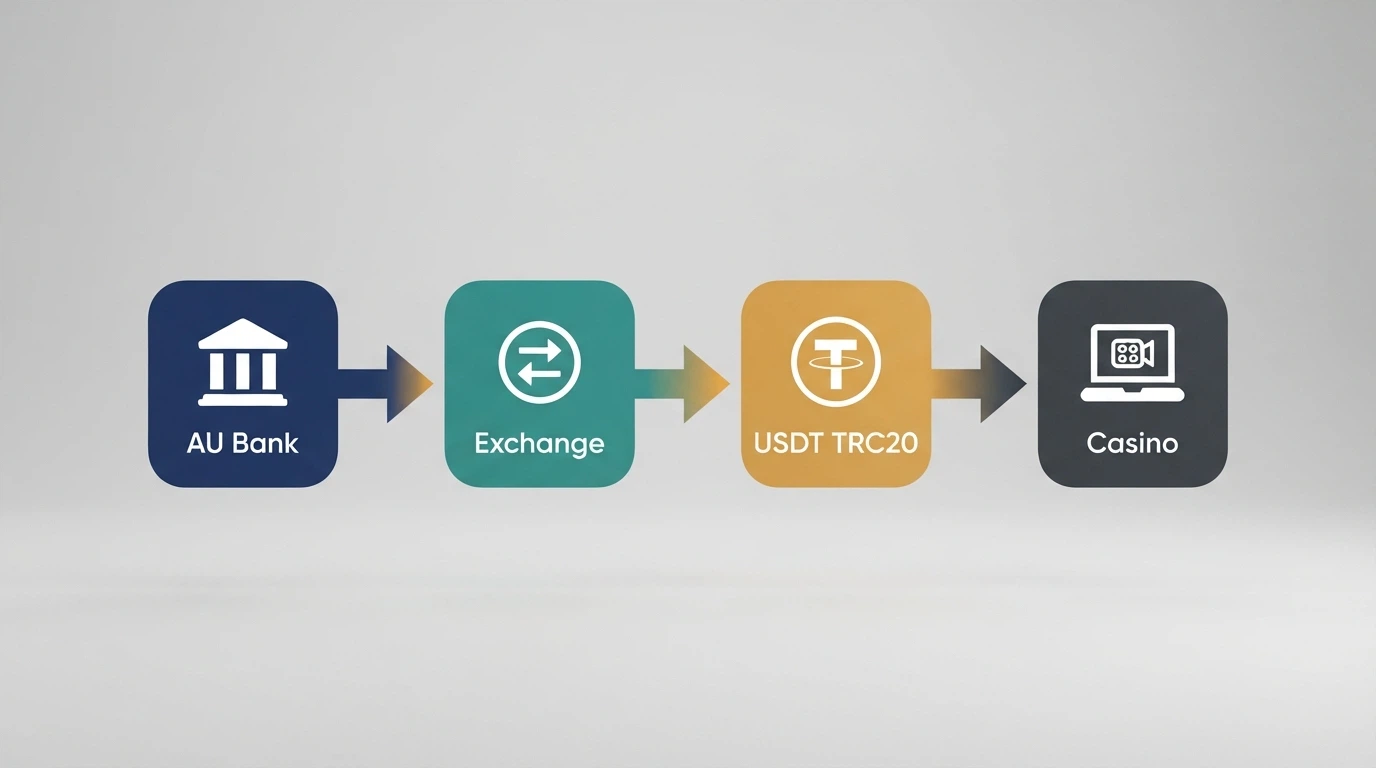
The on-ramp failure point is the first step. CommBank’s policy of declining payments to high-risk exchanges means that an Australian player whose primary bank is CommBank may find the PayID to Binance Australia declined at the bank side, even though PayID itself is instant. Independent Reserve and CoinSpot clear more reliably because their merchant category codes are less closely watched by the major banks. The test data is unambiguous: in March 2026, two of three A$5,000 PayID transfers from CommBank to Binance Australia were declined outright. The same transfers to Independent Reserve cleared in 12 minutes.
The fastest verified crypto withdrawal in 2026 is 10 minutes, recorded at Rolling Slots via Solana. Total door-to-door times at major operators are: Stake approximately 2 hours, BC.Game approximately 3.5 hours, Bitstarz approximately 4.5 hours. The casino-side processing window dominates the timeline — once the casino approves the withdrawal, the blockchain settlement is fast.
Playing without a name: what anonymity really means at an offshore casino
“Anonymous” at an offshore casino means no name on the deposit. It does not mean no name at the cashout. KYC verification is typically triggered by the first payout, larger cashout, bonus win, payment method mismatch or crypto proof of wallet ownership. A player who deposited with a Neosurf voucher and is now trying to withdraw A$3,000 of winnings will be asked for ID at most operators, regardless of how the deposit was made. The privacy ceiling is on the way in, not on the way out.
The trade-off is sharp. A casino that never asks for ID is a bigger red flag than one that does — the casino that does not verify identity is the casino most likely to disappear with the balance. AUSTRAC’s Travel Rule applies at the A$10,000 threshold, so any crypto withdrawal above that size will trigger additional identity verification at the exchange level regardless of what the casino asks for. Prepaid vouchers and crypto deposits buy a player privacy from their bank. They do not buy a player anonymity from the casino or from Australian financial regulators.
Paying by Phone: Mobile Deposits Are Fast, but They Only Go One Way
Mobile payment at an Australian-facing casino in 2026 runs through two rails: Apple Pay and Google Pay. Both are deposit-only. Both use biometric authentication — FaceID on Apple Pay, fingerprint on Google Pay — for the deposit flow. Both clear instantly at operators that support them. Neither supports a withdrawal back to the wallet, which means a player funding their account from Apple Pay or Google Pay needs a second rail on file before they can cash out.
The mobile layer is thinner than the marketing suggests. Apple Pay and Google Pay are deposit-only methods with no direct withdrawal. Most competitor pages mention them in passing because the coverage is partial — not every operator supports them, and the operators that do support them rarely highlight the deposit-only limitation. The biometric authentication is a genuine security upgrade over a typed card number, but it does not change the legal status of the transaction, the speed of the withdrawal, or the requirement to verify identity at first cashout.
Apple Pay and Google Pay: tap-to-deposit with biometric security
The deposit flow with Apple Pay or Google Pay is the fastest at any Australian-facing casino. The player authenticates with FaceID or fingerprint, the funds clear instantly, and the casino credits the account. There is no merchant category block from the bank — the issuing bank sees an Apple Pay or Google Pay transaction tagged to a digital wallet, not a gambling merchant. There is no PayID daily cap to check. There is no card number to mistype.
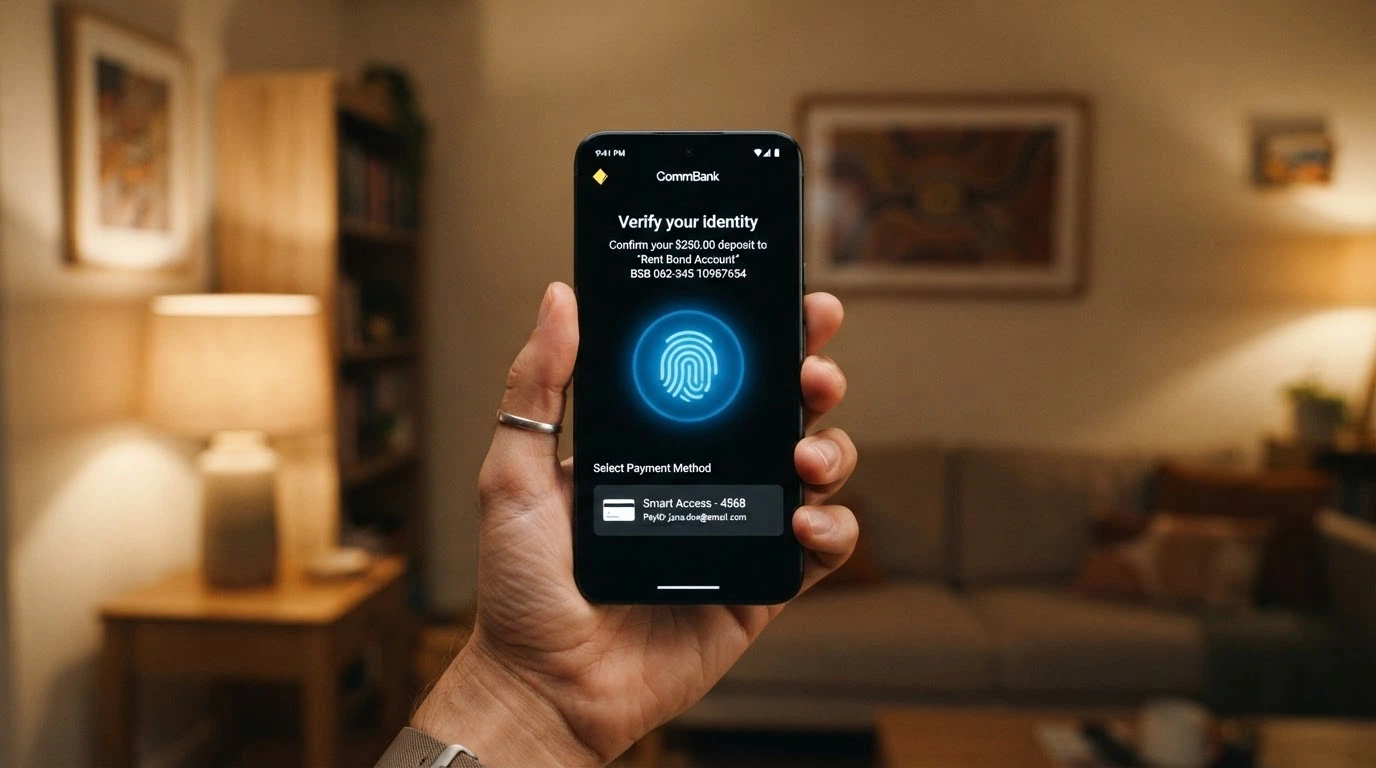
The withdrawal problem is structural. Apple Pay and Google Pay are not bank accounts. They are presentation layers over a card or bank account, and the card networks and wallet providers do not support a casino sending money back to them. A player funding their account with Apple Pay needs a PayID, bank transfer, e-wallet or crypto rail to cash out — and the first withdrawal will trigger KYC at most operators. The fastest deposit at any casino is also the rail that forces the player to plan a second rail before they deposit the first dollar.
Mobile carrier and SMS payments: the niche route few Australians use
Phone-bill and SMS-billed casino deposits exist as a mechanism but barely register in the Australian-facing market. A player can, in principle, deposit at an offshore casino by charging the deposit to a phone bill or a prepaid mobile balance, with the transaction appearing as a carrier charge rather than a bank or card transaction. The transaction caps are tight — typically well below A$50 per charge and well below A$200 per month — which makes the route impractical for serious play. The route is more common in European markets where mobile carriers are integrated into payment gateways, and almost absent at Australian-facing operators.
The structural problem is the same one prepaid vouchers have: the deposit-only limitation. A carrier-billed deposit cannot be withdrawn to the same carrier account, so the player needs a second rail on file for the cashout, and the first withdrawal triggers KYC. For a player whose bank has declined gambling transactions outright, a carrier-billed deposit is a way to fund an account without touching the bank — but it is not a way to keep gambling off the bank statement, because the cashout rail will land there.
The Legal Reality: What Your Payment Method Says About the Operator
In a market with no legal online casino, the payment screen is the first and clearest signal of whether an operator is inside or outside Australian rules. A licensed Australian wagering operator accepts debit cards, bank transfers, PayID/Osko and BPAY. The credit card and crypto ban commenced on 11 June 2024, so an Australian-facing casino that accepts either of those methods is breaking the prohibition. The Gambling Reform Bill 2026 passed Parliament on 19 August 2026, and from 1 January 2027, financial institutions will be authorised to refuse payments to illegal gambling operators. The legal reality has tightened every year since 2017, and the next tightening is months away.
The ACMA register of legal operators lists 222 entries. No online casino appears on it, because no online casino licence exists in Australia. The register covers licensed wagering operators (sports and race betting) and licensed lotteries. Every casino on this page, and every casino an Australian player will encounter in a Google search, is offshore — operating outside Australian rules, accepting Australian players, and relying on payment rails the ACMA cannot directly block but the banks are increasingly willing to decline.
Licensed versus unlicensed: why the payment screen is the first red flag
A legal deposit route for licensed Australian wagering is one of four: debit card, bank transfer, PayID/Osko, or BPAY. A casino asking for anything else — credit card, crypto, an e-wallet not on the ACMA’s accepted rails for licensed wagering — is showing that it is not a licensed wagering operator. The credit card and crypto deposit request is the clearest tell, because those two methods are explicitly banned even for licensed operators. An Australian who is asked for a credit card or a crypto deposit by a gambling site is being served by someone outside the Australian rules. The payment method is itself a tell.
The practical consequences of playing at an unlicensed operator run in a single direction. There is no Australian consumer protection. There is no BetStop coverage — BetStop binds Australian-licensed wagering services only, and an offshore casino is not connected to the register. There is no recourse if the operator refuses a withdrawal, voids a win, or disappears. There is no Australian-licensed complaints body to escalate to. The site can be ACMA-blocked at any time, with the player’s balance still sitting in it.
The ACMA, AUSTRAC, and the watchdogs that police Australian gambling payments
The Australian Communications and Media Authority has had 1,788 illegal gambling and affiliate websites blocked by Australian ISPs since its first blocking request in November 2019. Over 230 illegal services have withdrawn from the Australian market since enforcement was strengthened in 2017. The blocking is DNS-level — Australian ISPs redirect requests for blocked domains to a notice page. The cash balance on a blocked site does not come back with the redirect. AUSTRAC’s Travel Rule applies at the A$10,000 threshold, so large crypto transactions trigger additional reporting at the exchange level regardless of what the casino does.

The payment-blocking provision commencing 1 January 2027 changes the enforcement landscape. Banks and payment providers gain express authority to block transactions to illegal gambling operators. A PayID transfer from a major Australian bank to an offshore casino’s payment processor may be declined at the bank side, not the casino side. The casino does not even see the attempted deposit. The provision does not change the legal status of the product — online casino is already prohibited under the IGA 2001 — but it gives the banks explicit statutory cover for a refusal pattern they have been building through merchant category codes and risk policies since 2017.
Legal payment routes for Australian players: what the IGA actually permits
The four legal deposit routes for licensed Australian wagering are debit card, bank transfer, PayID/Osko and BPAY. The IGA 2001 prohibits online casino games, online pokies and in-play betting. There is no licence for online casino anywhere in Australia. Wagering on races and sport placed before the event begins is legal, through operators licensed by a state or territory — most commonly the Northern Territory, where the Northern Territory Racing and Wagering Commission administers Licensing NT. Lotteries and keno are legal under state frameworks. Online casino is not.
The critical distinction is between licensed wagering (sports and race betting, pre-event) and the prohibited online casino product. A debit card deposit at a licensed bookmaker is a legal transaction. A debit card deposit at an offshore casino is a transaction with a legal product on the receiving end. The rail is identical; the product is not. Wagering operators pay state-based point-of-consumption tax, typically 10–15% of net wagering revenue. The Northern Territory levies 5% wagering tax plus a 0.05% racing levy. The individual player is not prosecuted under the IGA — the Act targets the provider. There is no stake tax or levy on winnings.
Responsible Gambling: Tools That Work Regardless of Where You Play
The controls that actually reduce harm are not all government-backed, and they do not all depend on the operator being licensed. About 2.1% of Australian adults — roughly 430,000 people — experience problem gambling, with the Australian Institute of Health and Welfare putting high-risk gambling at 1.8% in 2022. The National Gambling Helpline is 1800 858 858, free, confidential, staffed 24/7, with online chat and counselling through Gambling Help Online at gamblinghelponline.org.au. State-based services also offer telephone and in-person counselling. Self-test tools are available through Gambling Help Online. The support infrastructure is comprehensive at the Australian end and absent at the offshore casino end.
Deposit limits, session caps, and the controls you set yourself
Operator-level deposit limits, session time caps and loss limits work at any casino that offers them — licensed or not, Australian-facing or not. The tools are set inside the responsible-gambling panel of the casino account, and a serious operator enforces them across deposit, wager and time. Activity statements and reality-check prompts give a player a running total of what they have spent in a session, which is the harm-reduction intervention the data supports most strongly. A player who sets a deposit limit before depositing, and reads their activity statement after the session, has done more for their own protection than any external regulator can do for them.
The difference between operator-level tools and BetStop is jurisdiction, not functionality. BetStop is the government-backed register — one registration excludes a player from every Australian-licensed wagering service. Operator-level tools are exactly what they sound like: a setting at the casino. A player who wants the strongest possible tool picks BetStop for the licensed side of the market and sets operator-level limits for the offshore side. Neither tool reaches across the divide. Both work inside it.
Self-exclusion and BetStop: what it covers and what it cannot reach
BetStop — the National Self-Exclusion Register — went live in August 2023. It has recorded 67,480 registrations, with 41,290 exclusions still active as at 31 July 2026. 78% of registrants were under 40. 38% chose lifetime exclusion. One registration excludes a person from every Australian-licensed online and phone wagering service in a single step, and licensed operators must not accept them or send them marketing.

BetStop binds Australian-licensed wagering services only. An offshore casino is not connected to the register and will continue accepting a self-excluded person’s money. A player who has registered with BetStop and then deposits at an offshore casino is not protected by BetStop. The protection is on the player — to set deposit limits at the offshore operator, to use the operator’s own self-exclusion and account-closure tools, and to seek support from the National Gambling Helpline on 1800 858 858. From 1 January 2027, marketing of inducements will be banned for three months after a person deregisters from BetStop — a recognition that the gap between exclusion and return is the most vulnerable window.
10 Offshore Casinos Australian Players Use — and How Each One Handles Your Money
The featured set below is ranked by payment-method breadth, withdrawal speed and transparency of terms. Every operator is offshore — no Australian online casino licence exists, because the product is prohibited under the IGA 2001. The payment-method and welcome-bonus data below was verified against operator cashier pages and independently published Australian-facing casino review sites. Where research did not surface specific figures for an operator, the relevant cell carries the no-data marker rather than a guess.
| Operator | Australian licence status | Key payment rails | PayID support | Welcome bonus |
|---|---|---|---|---|
| Rocket Play | Offshore — no AU licence | Visa/MC, MiFinity, CashtoCode, 6 crypto (BTC, ETH, LTC, DOGE, BCH, USDT), bank transfer | Yes | Up to A$2,000 + 100 free spins (40x, 5-day) |
| Skycrown | Offshore — no AU licence | Visa, MC, PayID, PayPal, Skrill | Yes | 100% up to A$200 + free spins over 3 deposits (30x, 7-day) |
| Royal Reels | Offshore — no AU licence | PayID (from A$10), Visa/MC, Neosurf, Skrill, Neteller, 5 crypto (BTC, ETH, LTC, USDT, DOGE) | Yes | A$20 minimum deposit (—) |
| Bizzo Casino | Offshore — no AU licence | Visa, MC, Bitcoin, Ethereum, bank transfer, MiFinity | — | Up to A$7,250 + 175 free spins + 1 bonus game (40x, 14-day) |
| Stake | Offshore — no AU licence | Crypto-first (BTC, ETH, LTC, USDT and others) | — | — |
| Rainbet | Offshore — no AU licence | Crypto, Interac, Pix, AstroPay, SEPA; 18 currencies inc. AUD | — | Up to $2,100 + 60 free spins over 3 deposits (40x, 7-day) |
| Neospin | Offshore — no AU licence | PayID, bank transfer, eZeeWallet, crypto (BTC, ETH, LTC) | Yes | — |
| WinSpirit | Offshore — no AU licence | — | — | — |
| Scream Casino | Offshore — no AU licence | — | — | — |
| FairGO | Offshore — no AU licence | — | — | — |
The cells with the em-dash marker carry it deliberately. Research did not surface PayID coverage for four operators in the featured set, and the welcome-bonus terms for three operators were not surfaced this run. Filling those cells with assumptions would have produced a comparison table that read like a competitor listicle — confident and wrong. The honest table is the one above, with its gaps visible.
Rocket Play
Rocket Play has the broadest payment-method spread in the featured set, and the rail that matters most for Australian players is the one that moves fastest. Crypto and MiFinity withdrawals are instant with no platform fee, after the casino-side review completes. Six cryptocurrencies are supported — Bitcoin, Ethereum, Litecoin, Dogecoin, Bitcoin Cash and Tether — alongside Visa/Mastercard (A$25 minimum), MiFinity (A$30 minimum, instant), and CashtoCode for deposit-only top-ups up to A$800. The bank transfer withdrawal is the operator’s slowest method, at 3–7 business days, which is the longest withdrawal window of any operator in the featured set.
The welcome package is up to A$2,000 plus 100 free spins across two deposits, with 40x wagering, a 5-day expiry, a A$5,000 maximum win cap and a A$7.50 maximum bet while a bonus is active. The bonus requires a minimum A$30 deposit — A$5 more than the card and MiFinity minimums, which is the operator pricing the welcome package out of the smallest deposit band. For an Australian player with a moderate bankroll who can meet the A$30 threshold and prefers crypto or MiFinity for the cashout, Rocket Play is the operator with the broadest rail coverage in the set.
Skycrown
Skycrown is the operator where e-wallet withdrawals clear in 30 minutes — the fastest fiat e-wallet speed in the featured set — but the bank transfer path costs A$5 and takes 3–5 business days. The payment-method spread covers Visa, Mastercard, PayID, PayPal and Skrill, with deposits instant across the board. The minimum deposit is A$10 for e-wallets and A$20 for cards, which is the lowest entry point in the featured set for a card-funded player.
The welcome bonus is 100% up to A$200 plus free spins spread over the first three deposits, with 30x wagering and a 7-day expiry. An alternate source reports the package as up to A$500. The discrepancy is the kind of inconsistency that shows up across affiliate pages — the operator’s own cashier is the source of record. For a player who prefers e-wallets over crypto and wants the fastest possible fiat cashout, Skycrown’s PayPal and Skrill windows are the standout.
Royal Reels
Royal Reels is the PayID-first operator with the lowest PayID entry point in the featured set — A$10, instant. The full payment-method spread is PayID, Visa, Mastercard, Neosurf, Skrill, Neteller, and five cryptocurrencies (BTC, ETH, LTC, USDT, DOGE). Crypto withdrawals are near-instant after checks, from a A$30 floor. Fiat withdrawals start from A$50. PayID withdrawals clear in 5–24 hours after the casino-side checks, with a per-transaction cap of A$9,000 and a standard weekly withdrawal cap of A$10,000.
The A$10,000 weekly cap is the figure that matters for a player on a winning streak. A player withdrawing A$10,000 per week in PayID will hit the cap before the month is out, and the remainder sits in the account until the next weekly window opens. For a player who wants a low PayID entry point and a broad fiat and crypto spread, Royal Reels is the strongest PayID-first operator in the featured set. For a high-volume player, the weekly cap is the constraint to plan around.
Bizzo Casino
Bizzo Casino has the largest welcome package in the featured set — up to A$7,250 in bonus money, 175 free spins, and a bonus game. The first-deposit match scales with deposit size: 50% for A$20–A$50 deposits, 75% for A$25–A$200 deposits, and 125% for deposits of A$250 or more. The wagering requirement is 40x with a 14-day validity. There is also a 200% crypto welcome bonus up to A$800 on the first crypto deposit, which is the largest crypto-specific bonus in the featured set.
The payment-method spread is uniform: Mastercard, Visa, Bitcoin, Ethereum, bank transfer and MiFinity, all with a A$10 minimum deposit and a A$10 minimum withdrawal. The low floors and the broad rail coverage make Bizzo the operator with the lowest barrier to entry in the featured set. The bonus terms are where the operator distinguishes itself — a player who can meet the A$250 first-deposit tier to unlock the 125% match is taking the operator’s best offer, and the 14-day validity is the longest bonus window in the set.
Stake
Stake is the crypto-first operator with a 1.28% Australian market share — a meaningful share for a crypto-only platform and a signal of how deeply crypto adoption has cut into the Australian market. The payment model is primarily cryptocurrency deposits and withdrawals: BTC, ETH, LTC, USDT and others as primary rails. Fiat methods vary by region and were not surfaced for the Australian-facing cashier this run. For a player who holds crypto, Stake is the operator with the lowest deposit friction — there is no fiat conversion, no PayID cap, and no bank-side merchant category check on the way in.
The total door-to-door withdrawal time at Stake is approximately 2 hours, factoring in casino processing, exchange conversion, and PayID back to the player’s bank account. That figure includes the on-ramp and off-ramp through an Australian exchange — it is the total time from a player’s “withdraw” click to the Australian dollars landing in their bank. For a player who is not holding crypto, the absence of fiat rails is the structural limitation. The cleanest path to Stake is the one in the crypto section above: AU bank to CoinSpot or Independent Reserve, then USDT TRC20 to the Stake wallet, then reverse the chain to cash out.
Rainbet
Rainbet is the multi-currency platform with on-site crypto purchase, supporting 18 currencies including AUD. The payment-method spread covers cryptocurrencies plus Interac, Pix, AstroPay and SEPA. The minimum deposit is $15 for general deposits and $30 to unlock the welcome bonus. The welcome package is up to $2,100 plus 60 free spins across three deposits (100% up to $700 + 20 free spins on the first deposit, 50% up to $700 + 20 free spins on the second, 100% up to $700 + 20 free spins on the third), with 40x wagering, a 7-day expiry, and a maximum bet capped at 2% of the deposit.
The on-site crypto purchase option is the standout feature for a player who does not already hold crypto — it removes the on-ramp step from the flow described in the crypto section above. A player can deposit Australian dollars at Rainbet, purchase crypto on the platform, and play without ever touching an external exchange. The cost of that convenience is built into the exchange rate Rainbet offers, and a player who already uses CoinSpot or Independent Reserve will get a better rate on the open market. The welcome bonus terms are competitive with the rest of the featured set, and the max-bet cap of 2% of deposit is the strictest in the set.
Neospin
Neospin is the operator that structured its withdrawal tiers around method and amount. PayID withdrawals are A$50 to A$5,000 per request, usually within 2 hours. Bank transfer withdrawals are A$200 to A$10,000, taking 1–3 days. eZeeWallet withdrawals are A$20 to A$4,000, instant once approved. Crypto withdrawals are A$100 minimum, taking 1–30 minutes after blockchain confirmations. The operator covers miner fees on crypto withdrawals, which is the kind of detail that compounds over dozens of cashouts.
The four-tier withdrawal structure tells the reader something about the operator’s banking relationships: PayID is the preferred rail, e-wallet is the next-fastest, crypto is for players who already hold it, and bank transfer is the slow fallback for amounts above A$5,000. For a player who wants the lowest friction PayID withdrawal in the featured set, Neospin is the operator — the 2-hour PayID window is the floor of what is achievable when the casino-side review is automated.
WinSpirit
WinSpirit appears in the Australian market-share top 15, which places it among the operators Australian players are actually using. Detailed payment data was not surfaced this run, so the comparison above marks the cells honestly. An operator at WinSpirit’s market position typically offers a broad fiat and crypto spread — Visa/Mastercard, PayID, e-wallets, and at least two or three cryptocurrencies — but the specific rails, minimum deposits and withdrawal speeds for the Australian-facing cashier should be verified on the operator’s own cashier page before any deposit. A player who encounters WinSpirit through an affiliate link should treat the payment-method list on that affiliate page as a starting point, not a source of record.
Scream Casino
Scream Casino also appears in the Australian market-share top 15 and carries the same data gap as WinSpirit — the operator’s position in the market is documented, but the specific payment-method coverage for the Australian-facing cashier was not surfaced this run. A casino of this profile typically supports the standard Australian-facing payment spread: PayID, Visa/Mastercard, bank transfer, e-wallets, and a small set of cryptocurrencies. The withdrawal speeds, minimum deposits, fees and any deposit-only limitations need to be checked on the operator’s cashier page directly. The comparison table above marks these cells deliberately.
FairGO
FairGO rounds out the Australian market-share top 15 and is an operator Australian players encounter regularly. Detailed payment data for the current cashier was not surfaced this run. An operator at FairGO’s market position typically offers PayID and bank transfer as the primary fiat rails, with Visa/Mastercard and a smaller crypto set than the offshore-first operators higher in the table. The withdrawal structure, minimum deposit thresholds, and any fees need to be verified on the operator’s own cashier page before committing funds. The comparison table above marks these cells honestly. A player who sees FairGO listed on a competitor page with a specific payment-method claim should treat that claim as unverified until checked against the operator’s own page.
How We Evaluated These Casino Payment Methods
Every figure on this page is checked against a named source. The payment-method speeds and operator payment data come from operator cashier pages and from independently published Australian-facing casino review sites, with the deposit and withdrawal times cross-checked across multiple sources where available. The regulatory figures — the ACMA blocking totals, the BetStop registration count, the AUSTRAC Travel Rule threshold, the credit card and crypto ban commencement date — come from the ACMA register and from the regulator’s published guidance. The 2026 Reform Bill figures come from the parliamentary record and from the Australian Labor Party’s published policy summary. The legal-status statements come from the IGA 2001 and its amendments.
The criteria that ordered the ranking were five. Payment-method breadth — how many rails an operator supports. Withdrawal speed — the fastest and slowest method at each operator, with the fastest rail weighted higher. Minimum deposit accessibility — the lowest amount a player can fund the account with. Transparency of terms — the clarity of the operator’s own cashier page on fees, limits, and processing windows. Legal status relative to Australian regulation — every operator in the featured set is offshore, so this criterion separates operators on the strength of their stated licence and the quality of their responsible-gambling tools rather than on Australian licensing.
The limitation is the gap in the data. Three operators in the featured set — WinSpirit, Scream Casino and FairGO — had payment data not surfaced this run, and their cells in the comparison table carry the no-data marker. Filling those cells with assumptions would have produced a confident comparison that read like a competitor listicle. The honest comparison is the one with its gaps visible.
What Australian Players Should Actually Do About Casino Payments in 2026
The single most important payment decision an Australian player makes is choosing a withdrawal rail before making a deposit. A deposit on Apple Pay or Google Pay or Neosurf is fast and frictionless. The same rail will not cash out the winnings. A player who deposits with a deposit-only method and has not set up a PayID, bank transfer, e-wallet or crypto rail for the withdrawal will discover the gap at the worst possible moment — when they have a balance they want to take out and the cashier asks them to nominate a different method.
The fastest, cheapest and most reliable route for an Australian player in 2026 is PayID in and crypto out. PayID deposits settle in under 60 seconds and are free from Australian banks. Over 42% of Australian online casino players already use PayID, and the rail is supported by every major Australian bank. Crypto withdrawals are the fastest cashout — 10 minutes at the fastest verified operator (Rolling Slots via Solana), 2–5 hours door-to-door at the major crypto-first operators. The cost is the time spent on the on-ramp through an Australian exchange, and the risk is the bank-side decline pattern at CommBank for transfers to high-risk exchanges. A player whose bank is CommBank and who plans to use Binance Australia as the on-ramp should pick Independent Reserve or CoinSpot instead — both cleared the A$5,000 PayID test transfers in March 2026.
The concrete risk of depositing by a method that cannot be used for withdrawal is the prepaid and debit-card trap. A Neosurf voucher buys privacy on the way in and forces a second rail on the way out, with the first withdrawal triggering KYC at most operators. A Visa debit deposit is instant on the way in and takes 2–5 business days on the way out, and the AU bank may decline the deposit at the merchant category level before the player ever sees the cashier. A player who values their time picks PayID or crypto. A player who values their privacy picks Neosurf and plans for a Jeton e-wallet pairing on the withdrawal.
The 2027 payment-blocking provision makes payment-method diversity more important than it was last year. From 1 January 2027, banks and payment providers gain express authority to block transactions to illegal gambling operators. A PayID transfer to an offshore casino’s payment processor may be declined at the bank side, not the casino side. An Australian-facing operator that loses its payment-processor relationship in 2027 may switch to a less familiar rail overnight. A player whose deposit method is the one the bank just learned to block has no fallback. The defensive play is to keep at least two rails available — PayID and crypto, or PayID and an e-wallet — so that a bank-side block on one rail does not lock the player out of their balance.
The one thing every Australian player should do before depositing a dollar is verify the operator’s current payment rails on its own cashier page, not on a third-party list. Competitor listicles are out of date within months — several 2026 pages still list POLi as active, four years after POLi shut down. The operator’s own cashier is the source of record for current rails, minimum deposits, fees and processing windows. An Australian player who trusts a third-party payment-method list over the operator’s own page is reading from a source the operator itself has not updated.
The judgement this page reaches is the one the data supports. The fastest, cheapest and most reliable route for an Australian player in 2026 is PayID in and crypto out. Any operator that asks for a credit card is operating outside every Australian rule, because credit cards have been banned as payment for online wagering since 11 June 2024. Any operator that asks for a cryptocurrency deposit is also outside the rules — the same ban covers digital currency. The payment method is the first and clearest signal of where the operator stands relative to Australian law, and the payment screen is the place to read it.
Frequently Asked Questions
Why is my bank blocking my casino deposit in Australia?
Australian banks apply merchant category restrictions to gambling transactions, and the issuing bank can decline a Visa/Mastercard deposit before it reaches the casino cashier. PayID transfers are blocked less often because the NPP rail is processed as a real-time bank-to-bank transfer, but CommBank and Westpac have stepped up declines to high-risk crypto exchanges since mid-2023. If your bank is blocking a deposit, switching from card to PayID is the first fix.
Can I use a credit card to deposit at an online casino in Australia?
No. Credit cards and credit-related products, including digital wallets linked to credit cards, have been banned as payment methods for online wagering since 11 June 2024 under the Interactive Gambling Amendment (Credit and Other Measures) Act 2023. An offshore casino that asks for a credit card deposit from an Australian player is operating outside the Australian rules — the payment method is the signal.
Is POLi still available for casino deposits in Australia in 2026?
No. POLi was shut down and ceased operations in 2023. It is no longer available at any Australian casino. Several 2026 competitor pages still list POLi as active, and those pages are running outdated information. PayID is the functional replacement — same NPP rail, same identifier-based convenience, and supported by every major Australian bank.
What happens to my casino balance if an offshore site is blocked by ACMA?
The blocking is DNS-level — Australian ISPs redirect requests for blocked domains to a notice page. The balance on the blocked site does not come back with the redirect. The ACMA has had 1,788 illegal gambling and affiliate websites blocked since November 2019, and over 230 illegal services have withdrawn from the Australian market since 2017. There is no Australian consumer protection regime that forces the operator to return the balance.
Are crypto deposits at online casinos legal for Australian players?
Crypto play is legal for the Australian player — the IGA 2001 targets the provider, not the punter. The operator accepting crypto from Australians is breaking the law, because the credit card and digital currency ban commenced on 11 June 2024 closed crypto onboarding for any operator targeting Australian customers under Australian rules. The cleanest on-ramp route in 2026 runs through an Australian exchange — CoinSpot or Independent Reserve — then USDT TRC20 to the offshore casino, with the reverse chain on the cashout.
Prepared by the Fast Payout Casinos AU editorial staff.