Understanding the Australian Landscape for Offshore Online Gambling in 2026
 Available in AU
Online casino is prohibited in Australia. There is no federal licence, no state licence, no territory licence — the Interactive Gambling Act 2001 makes it an offence to provide an online casino, online pokies or in-play sports betting to a person physically in Australia. Every brand on this page exists because of that ban, not in spite of it. They are offshore operators, run from Curaçao, Anjouan, the Tobique Gaming Commission in Canada and other jurisdictions outside Australia, and they accept Australian players under their own house rules.
This is the page for an Australian reader who has already noticed the gap between what they want to play and what the law lets them play at home, and wants to know what the offshore offer actually looks like, what it costs, and what it does not give them. Roughly 17% of Australians gambled on online casino games in 2022, and more than half of the adults who gambled in 2025 did so mainly online. The traffic is real. The legal status of the product is settled. The interesting question is what the player trades away when they cross the border.
Current as of 18 October 2026 and verified against the public registers of the Australian Communications and Media Authority (ACMA), Gambling Help Online and the relevant offshore regulators.
Table of Contents
- What an “International Casino” Actually Means for Aussie Players
- Where Australians Play: 10 International Casinos Compared
- The Games That Fill an International Casino Lobby
- Why Your No-Deposit Bonus Is Smaller Than It Looks
- The Legal Reality: Offshore Casinos and Australian Law
- Staying in Control: Player Protections That Do and Don’t Reach You
- How We Evaluated These International Casinos
- What the Numbers Mean for Your Next Move
- Frequently Asked Questions
What an “International Casino” Actually Means for Aussie Players
“International casino” is the term Australian-facing review sites use for an offshore gambling site that accepts Australian players. It is not a legal category — Australian law does not recognise a class of “international” online casinos and let them in. It is a marketing label that means the site operates outside Australia, holds a licence from a regulator in another country, and chooses to let Australians register and play.
The reason the term exists at all is the product gap. Australian law lets licensed operators offer pre-match race and sport wagering, lotteries, keno and land-based casino games. Online casino, online pokies (slots) and in-play betting are prohibited outright — the Interactive Gambling Act 2001 has said so since 2001, and the 2017 amendment closed the loopholes that let offshore brands advertise to Australians. So a player who wants to spin a slot from their phone, sit at a live blackjack table streamed from a studio, or play a hand of baccarat at 11 pm has nowhere legal in Australia to do it. The international casino fills that gap by simply being somewhere else.
Real money is the default mode at these sites. Players deposit in Australian dollars where the operator supports AUD, or in crypto where it does not, and stake on the same game categories any regulated European market offers: pokies, live dealer tables, RNG table games, video poker, crash games, game-show formats. The catalogue reach is broader than what an Australian-licensed bookmaker can legally offer, because none of those products is in scope for an Australian licence. Roughly 17% of Australians gambled on online casino games in 2022, which is a measure of how much demand the prohibition has not eliminated.
When an Australian-facing review site names “the best international casinos”, the underlying set is remarkably consistent. Australian search results turn up the same ten offshore brands again and again: RocketPlay, Skycrown, RoyalReels, Stake, Wild Tokyo, Rolling Slots, WinSpirit, Rainbet, FairGO and Scream Casino. Every one is offshore, every one is unlicensed in Australia, and several of them have been blocked by ACMA at the ISP level — RoyalReels is a useful example, blocked in Australia and still reached through mirror domains. ACMA has had 1,564 illegal gambling and affiliate websites blocked by Australian ISPs since November 2019, and more than 225 illegal services have withdrawn from the Australian market since 2017. The names in this article exist on the other side of that line.
Offshore vs. Domestic: The Defining Line
The IGA’s prohibition is on the provider, not the player. A person in Australia can open an account at an offshore casino, deposit money, play and withdraw — the Act does not make that an offence. What it does make an offence is the operator’s act of providing the service to a person in Australia. So when an Australian-facing review site writes “international casino”, it is naming an operation the operator is committing to from a country where its Australian traffic is illegal.
The licensed Australian market is narrower than many players realise. It is built around pre-match race and sport wagering, lotteries and keno, and the state-licensed land-based casinos (Crown Melbourne, The Star Sydney, Crown Perth, The Star Gold Coast, The Star Brisbane and so on). Northern Territory Racing and Wagering Commission / Licensing NT is the de facto national wagering licensor, and the point-of-consumption taxes that fund harm-reduction services sit on top of that framework. There is no Australian regulatory structure that knows what an online slot is, and no Australian licence for a site to hold. The phrase “international casino” is shorthand for “a casino Australia will not licence, run by an operator Australia cannot regulate, accepting players the Act says the operator should not be serving”.
That is the defining line. Everything else on this page — the licences, the bonuses, the payment methods, the wagering requirements — sits on the offshore side of it.
Changes Effective 1 January 2027
| Measure | Detail |
|---|---|
| Advertising | Max 3 ads per hour (6am–8:30pm); live-sport blackout (15m before–5m after) |
| Promotion | Influencers/athletes barred from promoting wagering; sports odds broadcast banned |
| Inducements | Prohibited for 14 days post-signup; 3 months post-BetStop; indefinite for at-risk users |
| Payments | Banks/payment providers can block transactions to illegal operators |
Why Australians Cross the Digital Border
The reason is the product. An Australian-licensed wagering operator cannot offer online pokies, live dealer casino, online blackjack, online roulette, online baccarat or in-play sports betting. The offshore lobby fills all six gaps in one go, and that is what pulls the traffic. A player who has decided they want a live Lightning Roulette table at 9 pm is not comparing international casinos with Australian-licensed options, because the Australian-licensed option does not carry the game.
It is worth being honest about what offshore play offers that licensed Australian play cannot, and what licensed Australian play offers that offshore play cannot. The offshore side has the games. The licensed side has the protection — BetStop, the activity statement regime, the ACMA complaints body, debit-card and PayID rails that the IGA framework still governs. The rest of this page works out what an Australian player is trading for the game catalogue.
Real Money, Real Reach: What These Sites Deliver
Deposits at international casinos flow through three channels: cards (Visa and Mastercard, where the operator accepts them), crypto (Bitcoin, Ethereum, Litecoin, USDT, USDC and others) and a thinner layer of e-wallets and bank transfer. The Australian credit-card and crypto ban, in force since 11 June 2024, is a signal worth reading carefully. Under the Interactive Gambling Amendment (Credit and Other Measures) Act 2023, credit cards, credit-related products and digital currency are banned as payment for online wagering in Australia, with penalties of up to A$247,500 for an operator that fails to enforce it. The legal deposit routes for licensed wagering are debit card, bank transfer, PayID/Osko and BPAY, and identity verification is required to open an account.
A site that takes a credit card or a Bitcoin deposit from an Australian player is operating outside Australian rules. The transaction is a red flag, not just a payment method. From 1 January 2027, the Interactive Gambling Amendment (Gambling Reform) Bill 2026 takes effect, granting banks and payment providers the authority to stop transactions to prohibited gambling operators, acknowledging that payment rails are the offshore industry’s primary vulnerability. Crypto, the payment channel that lets an offshore site take Australian money today, is the channel the same reform is built to throttle.
The game catalogue is the other half of the reach. International casinos run thousands of pokies, hundreds of live dealer tables, full RNG table games suites, and the game-show and crash formats that have become standard at offshore brands. Wild Tokyo carries 8,000+ slots from 100+ providers. Spinbet runs 3,200+ pokies and 180+ live tables. Spinight sits above 5,000 games. The number is not a marketing line for its own sake — at this scale the catalogue is its own kind of moat, because no Australian-licensed operator could match it even if the law changed tomorrow.
The Brands That Dominate the Offshore Conversation
The ten brands this page ranks are the names that consistently surface in Australian-facing review traffic: RocketPlay, Skycrown, RoyalReels, Stake, Wild Tokyo, Rolling Slots, WinSpirit, Rainbet, FairGO and Scream Casino. They are not the only offshore casinos serving Australians — the offshore market is much larger — but they are the recurring set, the names the affiliate review sites keep returning to.
What unites them is everything that matters legally. None of them holds an Australian licence, because no Australian licence for online casino exists. Several are ACMA-blocked, and a couple are reached through mirror domains. Most accept a combination of cards, crypto and e-wallets, and that combination is itself a marker of how far offshore the operator sits. The only thing that distinguishes one from another in any way the comparison table can capture is the level of verifiable detail the operator publishes, and that is uneven.
The legal backdrop does not change. ACMA has blocked 1,564 illegal gambling and affiliate sites since November 2019 and more than 225 services have left the Australian market entirely since the 2017 amendment. The brands on this list have chosen to keep accepting Australian players anyway. The block list, the licensing map and the brand set are three views of the same market, and they tell the same story.
Where Australians Play: 10 International Casinos Compared
| Operator | Offshore Licence | Welcome Offer Shape | Payment Methods |
|---|---|---|---|
| RocketPlay | Curaçao GCB — OGL/2024/1307/0748 | Casino welcome bonus, reloads, cashback (terms not confirmed) | BTC, ETH, LTC, DOGE, USDT, USDC, Visa, Mastercard, bank transfer |
| Skycrown | Curaçao eGaming (number not confirmed) | — | — |
| RoyalReels | Unverified; inconsistent across domains | 100% up to A$500 + AU$10 no-deposit chip, 30–40× wagering | Visa, Mastercard, PayID, bank transfer, BTC, ETH, USDT |
| Stake | Curaçao (number not confirmed) | — | Crypto-primary (BTC, ETH, LTC, others) |
| Wild Tokyo | Not confirmed | Up to A$3,300 + 450 free spins, 50× wagering | BTC, e-wallet, bank transfer, USDT |
| Rolling Slots | Curaçao eGaming + Anjouan Gaming | 260% bonus + 700 free spins | AUD, Bitcoin, e-wallets, bank transfer |
| WinSpirit | Not confirmed | A$20 no-deposit bonus cash (per one source) | Crypto wallet |
| Rainbet | Not confirmed | — | — |
| FairGO | Not confirmed | 15 free spins on Bubble Bubble 2 (no-deposit), 60× wagering | — |
| Scream Casino | Not confirmed | — | — |
The table is shorter than a marketing-grade comparison would be, on purpose. Every cell with a figure traces to the operator write-ups below; every cell with an em dash is a field research could not confirm this run. The cells that look thin — Skycrown’s whole row, Rainbet, Scream Casino — are thin because the public data is thin, and that gap is itself the most useful signal on the page.
The ranking is built on fit to the Australian market (traffic and presence in AU-facing search results), not a claim of “best” in any absolute sense, and not a legal endorsement. No operator on this page holds an Australian licence; no operator could hold one, because the licence does not exist. The ordering is a market-ordering, not a recommendation.
How We Built This Ranking
The comparison draws on Australian-facing affiliate reviews (the kind of sites an Australian player searching for offshore casinos would actually see), the operators’ own published terms pages, and the ACMA public register of blocked sites. Three things are checked for every operator: licence verifiability against the regulator named on the operator’s own page, the transparency of the bonus terms published in the public T&Cs, and the payment reach an Australian player would actually have when they opened an account.
The limits of what a review round can confirm are visible in the table. The Australian-licensed bookmakers that dominate pre-match wagering publish a single, regulator-mandated set of product disclosure documents — the offshore industry does not. Several operators on this list publish a welcome bonus headline and almost nothing else. Where research could not confirm a field — a licence number, a wagering multiple, a payment method, a minimum deposit — the table shows an em dash rather than a guess. A reader who treats a thin row as a sign to dig further is reading the table the way the audit reads it.
RocketPlay: Curaçao-Licensed With a Crypto-First Payments Stack
RocketPlay is the cleanest licence story in the featured set. It is operated by Scores55 Tech B.V. and licensed by the Curaçao Gaming Control Board under OGL/2024/1307/0748, which is a register-verifiable licence number rather than the “Curaçao eGaming” label that several other operators carry without the underlying identifier. The game catalogue runs to “thousands” of titles from Pragmatic Play, NetEnt, Microgaming and Evolution — a stack that covers the pokies, live dealer and RNG table verticals an Australian player would expect from a full-scale offshore lobby. Minimum deposit is A$25 (or the crypto equivalent), and the payments stack is the giveaway on what kind of player the operator has built for: Bitcoin, Ethereum, Litecoin, Dogecoin, USDT, USDC, plus Visa, Mastercard and bank transfer on the fiat side. ACMA has blocked the site in Australia, which puts it in the same legal category as the rest of the list — the Curaçao licence does not move RocketPlay across the IGA line.
The bonus shape is the soft spot in the write-up. Research confirmed a casino welcome bonus, reloads and cashback as categories, but did not surface the specific amounts, free-spin count, wagering multiple or bonus validity this run. A player who needs those numbers before depositing will not find them in this article. The verdict here is straightforward: RocketPlay is the operator to short-list first if verifiable Curaçao licensing and a broad crypto stack are the criteria — it is also the operator where the published terms need to be read in full at the brand’s own site before any commitment.
Skycrown: A Top-Four AU Brand With Thin Public Data
Skycrown is one of the more visible Australian-facing offshore brands, named in operator-level research as a top-four AU market-share brand in the international-casino segment. It holds a Curaçao eGaming licence, which is the regulatory family the rest of the set sits in, although the specific licence number was not confirmed in the public-facing search results this run ran through.
What is striking is how little else the public data carries. The welcome bonus, free-spin count, wagering multiple, bonus validity, minimum deposit and payment-method set are all fields research could not confirm for Skycrown. In a row of mostly thin operator entries, Skycrown is the one that surprises a reader, because the brand has the visibility but the brand has not published the detail. That gap is a meaningful signal: a high-traffic brand that does not publish its bonus terms is asking an Australian player to register and deposit on less information than the licensed market requires of any wagering service. Treat the brand as one to verify, not as one to default to.
RoyalReels: ACMA-Blocked, Mirror-Accessed, and Still Reached
RoyalReels is the operator on the list that tells the legal story most plainly. ACMA has blocked the site in Australia, which means an Australian ISP will not resolve the canonical domain — the operator stays reachable through mirror domains, which is a working solution for the player and a working answer to the question of how serious the block actually is at the ISP level. The welcome offer is well documented: 100% up to A$500 with a separate AU$10 no-deposit signup chip, and typical wagering sits at 30–40× the bonus, which is at the lower end of the no-deposit range this page covers. The payments stack runs Visa, Mastercard, PayID, bank transfer, Bitcoin, Ethereum and USDT — a hybrid fiat-and-crypto mix that puts RoyalReels close to the centre of the market.
The licence story is the loose thread. The operator publishes licence information but the record is inconsistent across mirror domains, which the research flag calls out plainly. A player who treats licence verifiability as a screening criterion has to dig further than the homepage to settle the question. The game catalogue is described as “plenty of pokies and live lobbies” from known suppliers, which is directionally accurate but not a count a player can plan around. The right read of RoyalReels is: real bonus numbers, a real Australian-rail option through PayID, and a licence record that needs more work than the operator’s marketing copy.
Stake: The Crypto Giant Operating Outside Australian Rules
Stake is the most globally recognised brand in the offshore market — a crypto-first platform with sponsorship deals, sport partnerships and a brand weight that none of the other names on this list carry. The site holds a Curaçao licence, the regulatory family the rest of the set sits in, although the specific licence identifier was not confirmed in the public-facing search results this run.
The interesting thing about Stake is what is not on the page. The welcome bonus, free-spin count, wagering multiple, game-provider list, minimum deposit and ACMA-blocking status were not confirmed for the Australian-facing search results. A player who knows Stake from its international marketing will find a thinner public profile when they look for the Australian specifics. The payments stack is the part the brand is built around: BTC, ETH, LTC and the other major coins as the primary rails, with fiat secondary. Stake is the brand a player chooses when the crypto positioning is the reason for choosing it — and it is also the brand where the AU-specific offer needs to be checked at the operator’s own site before any commitment.
Wild Tokyo: 8,000-Plus Pokies and a A$3,300 Welcome Tag
Wild Tokyo is the operator with the largest confirmed game catalogue in the featured set. The site carries 8,000+ slots from 100+ software providers, with 500+ live dealer tables alongside, and the provider list runs from Pragmatic Play to Belatra to Play’n GO — a spread that covers the standard pokie studios, the niche providers and the live-dealer majors. The welcome package is the most generous headline in the set: up to A$3,300 plus 450 free spins, structured as a multi-tier offer across the first deposits, with a 50× wagering requirement attached. Payments run BTC, e-wallet, bank transfer and USDT.
Where Wild Tokyo gets expensive for the player is the 50× wagering. A A$3,300 welcome package at 50× means A$165,000 of turnover obligation before any bonus-derived winnings can be withdrawn. The bonus is real money the player has not earned yet, in the strict sense — it is a target they have to clear, and the maths of clearing it is the point of the calculation in the next section. Licence status was not confirmed this run, so the player who wants the catalogue breadth and the bonus headline is taking Wild Tokyo on the same terms as the rest of the set: a Curaçao-family licence, no Australian oversight, no BetStop coverage. The verdict is a familiar shape — generous headline, steep attached cost, and the player has to do the multiplication themselves.
Rolling Slots: Dual Licence and a 260% Welcome Bonus
Rolling Slots is the operator in the featured set that holds two licences — a Curaçao eGaming licence and an Anjouan Gaming licence — which is unusual in the segment. The welcome offer is the highest percentage match in the set: 260% bonus plus 700 free spins, attached to a multi-deposit structure. The payments stack covers AUD, Bitcoin, e-wallets and bank transfer, and the operator runs AUD as a base currency, which simplifies the FX question for an Australian player.
Where the data softens is the same place several other rows soften. Wagering multiple, bonus validity, minimum deposit, the specific licence dates and ACMA-blocking status were not confirmed this run. A player who likes the dual-licence story needs to look at the smaller print themselves. The right read of Rolling Slots is: the most generous percentage match on the page, AUD support, and a thin publication of the terms that decide whether the offer is worth claiming.
WinSpirit: A$20 No-Deposit Cash and Fast Crypto Payouts
WinSpirit is one of two operators in the featured set with a confirmed no-deposit offer — A$20 bonus cash, available without an initial deposit, per one Australian-facing review source. That makes it a useful counterpoint to the deposit-gated welcome packages that dominate the rest of the list. The other side of the offer is what a no-deposit bonus actually costs the player: the cash carries a wagering requirement, the requirement was not confirmed this run, and the cashout cap on no-deposit wins at the segment level is small — typically A$100 to A$200. The crypto wallet payouts are noted as fast by reviewers, which fits the rest of the crypto-first operators in the set.
The licence, game providers, the wagering multiple, bonus validity, minimum deposit and ACMA-blocking status are not on the page. WinSpirit is one of the operators to read as a thin published profile that the A$20 offer does not fill in. The verdict: a no-deposit entry point is real value if the player understands the attached cost, and the cost is in the small print, not the headline.
Rainbet: Limited Public Data on an AU-Trafficked Brand
Rainbet is the operator that appears in Australian-facing search results for international casinos, and that is most of what the public record carries. Licence, welcome bonus, free spins, wagering multiple, game providers, payments, minimum deposit and ACMA-blocking status were all not confirmed this run. The row is one of the thinnest in the table by design — what research could verify is what made it onto the page, and Rainbet did not produce enough to fill the cells.
The reading here is about what a near-zero published record means for a player doing due diligence. An operator that does not publish its licence identifier, its bonus terms or its payment-method set is asking the player to register and deposit on trust, in a market where the licensed alternative is gone. A player who treats absence of verifiable data as itself a data point has the right frame. Rainbet is the operator on this page to investigate before depositing, not the one to default to.
FairGO: 15 No-Deposit Free Spins and a 60× Wagering Hurdle
FairGO is the second operator in the featured set with a confirmed no-deposit offer, and it is the more punishing of the two. The offer is 15 free spins on Bubble Bubble 2, available without deposit, with a 60× wagering requirement on whatever those spins produce. Sixty times is the steepest confirmed wagering multiple in the set, and it is the number that makes the offer look very different from a casual “free spins” headline.
The licence, the deposit-bonus side of the offer, the game providers, the payments, the minimum deposit and the ACMA status are all not confirmed this run. FairGO is the same shape as WinSpirit — a no-deposit entry point with attached conditions the player has to multiply through themselves, and a wider public record that does not survive the verification step. The verdict: the no-deposit route is a real entry, and the 60× is the price.
Scream Casino: Sparse Public Data, Present in the Market
Scream Casino rounds out the featured set in the same position as Rainbet — present in AU-facing search results, almost nothing verifiable in the public record. Licence, welcome bonus, free spins, wagering, game providers, payments, minimum deposit and ACMA status: all not confirmed this run. The row is thin on purpose, and the reading is the same reading as the Rainbet verdict.
A player who finds Scream Casino in their own search is not getting a complete answer from the comparison on this page. The honest verdict is to treat the brand as one that needs independent verification before any deposit, and to recognise that a comparison page which did fill in the gaps for Scream Casino would be filling them in with something other than evidence.
The Games That Fill an International Casino Lobby
The Australian gambling market is unusual. Pokies — the Australian name for slot machines — accounted for A$191.2 billion in turnover in 2022–23, up 20.9% on the previous year, which is the single largest share of any gambling category by a wide margin. Online gambling revenue, across the legal and illegal channels, surged 165.7% year-on-year to A$75.4 billion in the same year, and made up 31% of the nation’s total gambling turnover. The growth in online is being driven by the categories the IGA bans domestically, which is the structural reason the offshore lobby is so heavily weighted toward pokies and live dealer tables.
Pokies: The Engine of Every Offshore Lobby
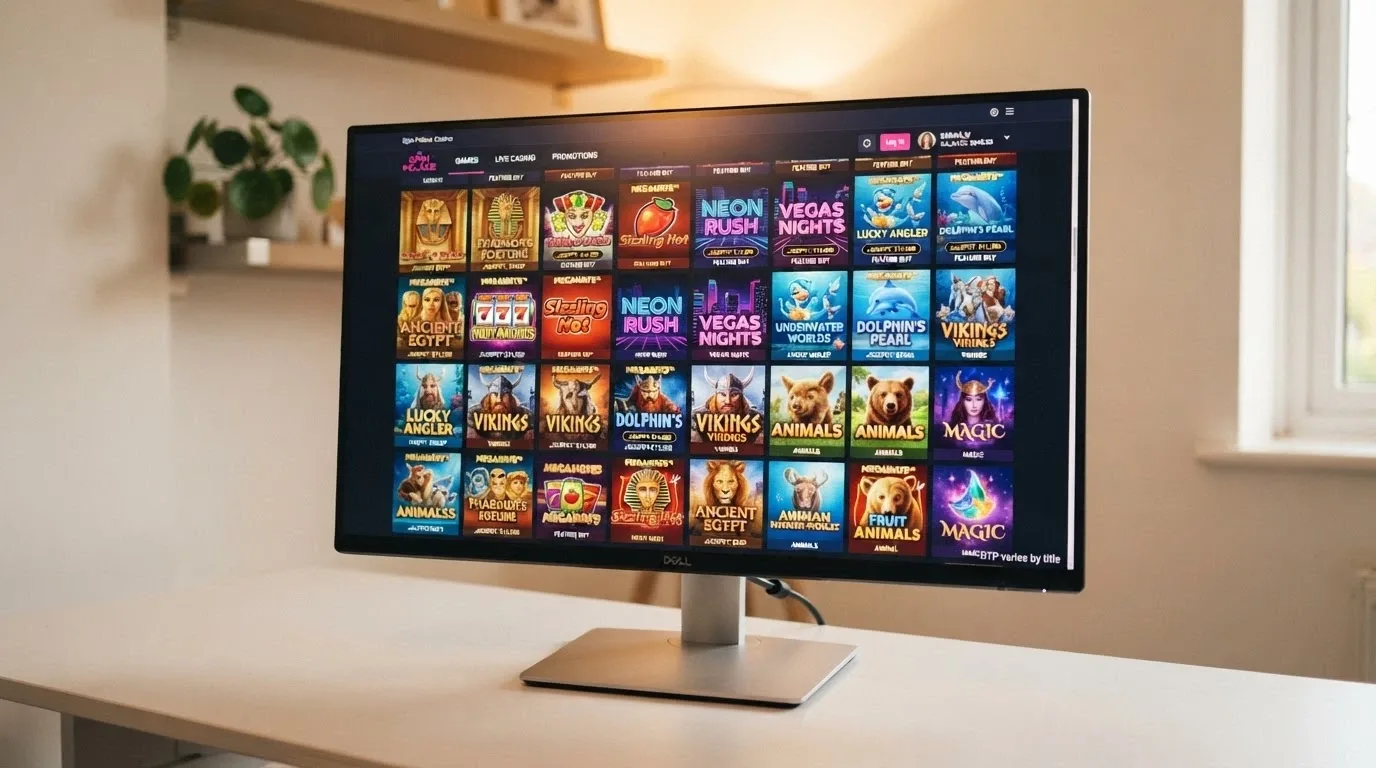
Pokies are the centre of gravity at every international casino on this list. The Australian cultural attachment to the format goes back to the club and pub machines, and the offshore lobby reads that attachment in catalogue size. Wild Tokyo runs 8,000+ slots. Spinbet runs 3,200+ pokies. Spinight sits above 5,000 games. The titles come from Pragmatic Play, Play’n GO, NetEnt, Microgaming, Belatra and a long tail of smaller studios, and the catalogue is the operator’s main marketing asset — bigger is presented as better, and the volume of titles is genuinely large.
The harm data gives the category its weight. Gaming machines are responsible for 54.8% of gambling harm in NSW, even though they are only one segment of the broader market. One in five NSW adults — 21% — experience gambling harm in some form, and a substantial share of that harm traces back to pokies. A player who knows the catalogue is large and the format is the dominant source of harm is reading the lobby the way the data asks them to. Per-title RTP and volatility figures are not published in the comparison on this page, because research did not confirm them for any featured title — a player who needs an RTP for a specific game has to read the game’s information panel on the operator’s site.
Live Dealer Tables: Real Dealers, Real-Time
Live dealer is the second pillar of the international casino lobby. Wild Tokyo carries 500+ live dealer tables; Spinbet runs 180+ live tables from Evolution Gaming and Ezugi; Spinight’s provider list includes Evolution among its core studios. The format — a real dealer, a real wheel or shoe, a video stream to the player — sits between the offshore and the licensed market in a way that is worth naming: it is the product the Australian law prohibits most strictly, and the product the offshore industry has invested in most heavily.
The supply chain is concentrated. Evolution Gaming is the largest live-dealer studio in the world, Pragmatic Play Live has grown into the second major supplier, and the long tail of providers (Ezugi, Asia Gaming, Vivo Gaming, SA Gaming) sits below them. The result is that most international casino live lobbies read similarly — a couple of hundred tables, the same game-show formats (Crazy Time, Monopoly Live, Lightning Roulette), the same blackjack and roulette variants. A player choosing between operators on live-dealer breadth is choosing on degree, not on kind.
Beyond the Reels: Table Games and Specialist Titles
The third tier of the offshore lobby is the part the marketing talks about least and the player notices most when they look for it: RNG table games, video poker, crash games, scratch cards and the specialist titles that round out a catalogue. Blackjack, roulette and baccarat all run in their RNG forms alongside the live versions, often in dozens of variants per game. Video poker runs in its own corner, with multi-hand and bonus-poker variants that an Australian land-based pub rarely offers. Crash games — Aviator, JetX and their imitators — are the recent format, a single-screen multiplier bet that has become a standard at crypto-first operators.
The catalogue reach is wider than any Australian-licensed operator could match, and the offering across operators is similar enough that the choice between them is rarely made on this segment alone. A player who already plays live dealer at one international casino and wants the same game at another will find it, with the same provider and a similar interface.
The Providers Behind the Games
The provider list at an international casino is a proxy for catalogue quality, in the same way a publishing imprint is a proxy for a bookshop. The names that recur on the featured set are the major studios an Australian player would recognise from any global online casino:
- Pragmatic Play — pokies, live dealer, the Drops & Wins promotional engine
- NetEnt — branded pokies, the Gonzo’s Quest / Starburst catalogue
- Microgaming — the long-running pokie catalogue, Mega Moolah progressive jackpots
- Evolution — the dominant live-dealer supplier, plus the game-show formats
- Play’n GO — Book of Dead, Reactoonz and a long catalogue of high-volatility pokies
- Belatra — a smaller studio with a foothold at Wild Tokyo and others
- Ezugi — the second-tier live-dealer supplier, present at Spinbet and elsewhere
Provider count is itself a metric. Wild Tokyo lists 100+ providers, Spinbet runs 27+ providers, and the long tail stretches out from there. The count is a rough catalogue-size signal, not a quality signal, and a player who already knows which studio they want to play is reading the provider list rather than the count.
Why Your No-Deposit Bonus Is Smaller Than It Looks
A no-deposit bonus is the offer that looks like the cleanest win in an international casino’s marketing: free money, or free spins, with no deposit required. Three of the featured operators carry a confirmed no-deposit offer — RoyalReels with an AU$10 signup chip, WinSpirit with A$20 bonus cash, FairGO with 15 free spins on Bubble Bubble 2. The other seven do not publish a no-deposit offer in the public data this run surfaced, which means a deposit-gated welcome package is the only entry point.
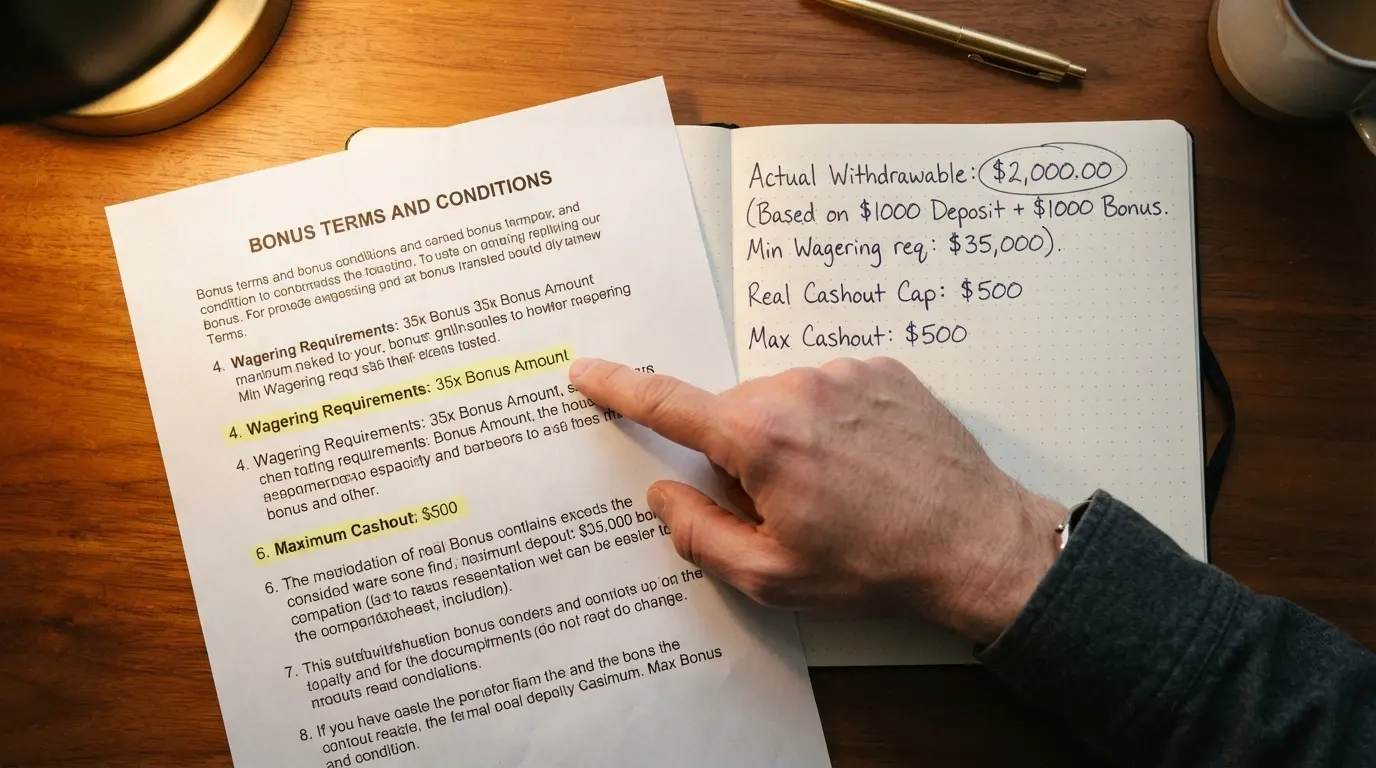
The catch is what the no-deposit offer actually costs the player. A free chip and a free spin both come with a wagering requirement that has to be cleared before any winnings can be withdrawn, and a cashout cap that puts a hard ceiling on the win. The shape of the cost is the same in every case, and the size of the cost varies by operator and offer.
The Shape of a No-Deposit Offer at an International Casino
A no-deposit offer at an international casino comes in three forms. The free chip is a fixed amount of bonus cash credited to a new account with no deposit, which is what RoyalReels offers as an AU$10 signup. Bonus cash is the same idea at a different scale, which is what WinSpirit offers as A$20. Free spins on a named title is the third form, and the offer is tied to a specific pokie — FairGO’s 15 free spins on Bubble Bubble 2 are the example. In all three cases the offer sits behind a wagering requirement and a cashout cap that the marketing page does not lead with.
The no-deposit offer is also rarer than the welcome bonus. Most international casino welcome packages are deposit-gated — the player has to deposit to claim them, and the bonus is a percentage of the deposit with a free-spin top-up. A no-deposit entry is the marketing lever, and not every operator publishes one. The players who see no-deposit offers in their search results are seeing the operators who chose to make one the entry point.
Wagering Multipliers: The Fine Print That Eats Your Winnings
The wagering requirement is the real price of a “free” bonus. A wagering multiple of 30× on a AU$10 no-deposit chip means the player has to place A$300 in total bets before any winnings can be withdrawn. A 40× multiple on the same chip is A$400. The 50× that is typical for an offshore free chip — and is attached to the Wild Tokyo deposit welcome, not to a no-deposit offer — means the player has to place A$3,750 in total bets to clear an A$75 no-deposit free chip, which is the segment benchmark this run surfaced. FairGO’s 60× on 15 free spins is the steepest confirmed multiple in the set.
The cashout cap is the second half of the cost. A no-deposit free chip typically carries a cashout cap of A$100 to A$200, which is the maximum a player can withdraw from winnings generated by the bonus. The combination is the part to read carefully. A player who clears A$3,750 in turnover on a 50× no-deposit chip and wins A$500 in the process is allowed to withdraw A$100 to A$200 of it, and the rest is forfeit. The marketing line is “free money”; the fine print is A$3,750 in bets to clear, with a hard ceiling on the win. The arithmetic is the offer’s real price, and the calculation in the next section runs it.
The Legal Reality: Offshore Casinos and Australian Law
The legal status of online casino in Australia is settled, has been for a long time, and is reinforced by a 2026 reform package that takes effect on 1 January 2027. Every brand on this page operates outside that framework, and the player who deposits at any of them is the only party to the transaction the IGA does not criminalise. The next three sections lay out what the law says, what the player gives up by playing offshore, and what changes on 1 January 2027.
What the Interactive Gambling Act Actually Says
The Interactive Gambling Act 2001 makes it an offence to provide an online casino, online pokies or in-play sports betting to a person in Australia. There is no licence for online casino anywhere in the country — not federally, not in any state or territory. The 2017 amendment closed the loopholes offshore operators had used to advertise to Australians, and gave the Australian Communications and Media Authority (ACMA) the enforcement and site-blocking powers it now uses. The individual player is not prosecuted under the Act — it targets the provider, not the person accessing the service. The minimum age for all commercial gambling in Australia is 18.
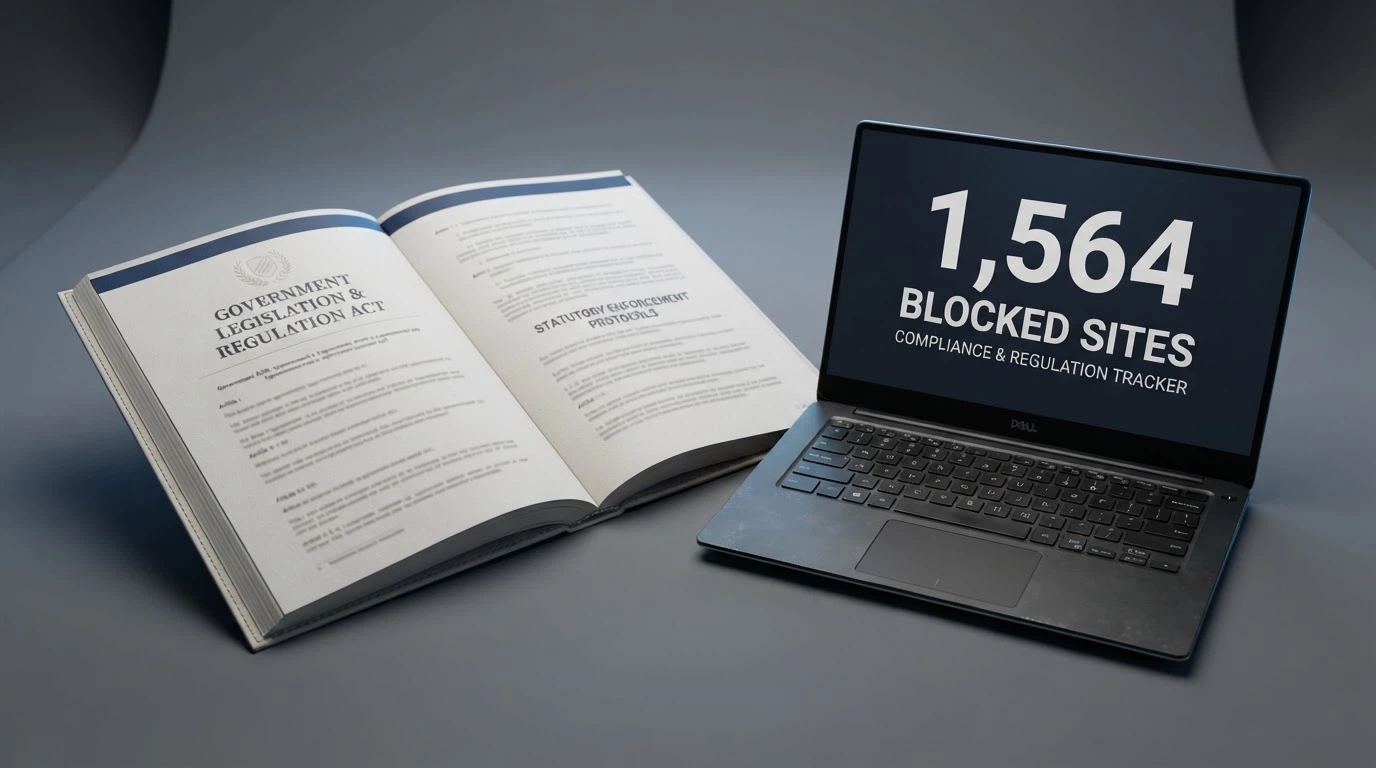
ACMA has had 1,564 illegal gambling and affiliate websites blocked by Australian ISPs since its first blocking request in November 2019, and more than 225 illegal services have withdrawn from the Australian market since enforcement was strengthened in 2017. The blocking record is the measure of how seriously the regulator takes the prohibition, and the withdrawal record is the measure of how many operators have decided the cost of serving Australians outweighs the revenue. The brands on this page have decided otherwise.
The contrast with the licensed market is worth holding in mind. A licensed Australian wagering service can offer pre-match race and sport wagering, lotteries and keno, and nothing else. The point-of-consumption tax (typically 10–15% of net wagering revenue, set by each state) funds harm-reduction services. The product this page is about — online casino — is not in the licensed offering, by design.
What You Give Up When You Play Offshore
The protection an Australian player gives up by depositing at an international casino is the substantive answer to the question of what offshore play costs. Five things disappear at the border.
BetStop stops working. The National Self-Exclusion Register — launched 21 August 2023, with 67,480 registrations and 41,290 active exclusions as at 31 July 2026 — binds every Australian-licensed online and phone wagering service, and that is all it binds. A self-excluded player can still open an account at any operator on this page, deposit and play. The register that covers the licensed market is invisible to the offshore one.
The credit-card and crypto ban stops being enforced. From 11 June 2024, credit cards, credit-related products and digital currency have been banned as payment for online wagering in Australia, with penalties of up to A$247,500 for an operator that fails to enforce the ban. A site that takes a credit card or a Bitcoin deposit from an Australian player is operating outside Australian rules, and that is a different category of red flag from a slow payout. The ban is the law, the offshore site is the breach, and the player is the channel.
ACMA cannot recover a player’s money. The regulator can investigate, issue formal warnings, start civil penalty proceedings and direct ISPs to block illegal sites. It cannot pay back a balance, force a withdrawal, or arbitrate a dispute with an offshore operator. The Australian complaints body is not connected to the offshore market, in either direction.
A blocked site can leave a balance on it. ACMA blocks work at the ISP level. A site that is blocked while a player has a balance on it is not reachable to play, and is not always reachable to withdraw from. Mirror domains solve access for most operators, but the legal status of a balance at a blocked-and-mirrored site is the kind of question the licensed market would answer in a regulator’s complaint process, and the offshore market answers nowhere.
The 2026 reform tightens the same levers. Starting 1 January 2027, financial institutions have express legislative power to intercept payments directed to illegal gambling services, a move designed to strengthen the payment-rail restrictions already in place.
The 2026 Reform: What Changes on 1 January 2027
The Interactive Gambling Amendment (Gambling Reform) Bill 2026 passed Parliament on 19 August 2026, and its measures commence on 1 January 2027. The reform is not in force as of writing — the rules below become law in the new year, and they will not change the legal status of the operators on this page, which is already prohibited, but they will change the shape of how the prohibition is enforced.
On advertising: from 1 January 2027, no more than three wagering advertisements are permitted per hour between 6:00 am and 8:30 pm, and no wagering advertising is allowed from 15 minutes before a live sporting event until 5 minutes after it ends. On promotion: athletes, celebrities and influencers are barred from promoting wagering products, the broadcasting of sporting odds is banned outright, and online wagering ads may only be shown to logged-in users who have been confirmed over 18, with an opt-out offered. On inducements: direct marketing of inducements is prohibited for 14 days after a customer signs up, for three months after a person deregisters from BetStop, and indefinitely for customers identified as at risk of gambling-related harm. On payments: transaction-blocking powers are extended to banks and payment providers for illegal gambling.
The inducement rules are the closest fit to this page. A 14-day cooling-off on direct marketing, a three-month cool-down after BetStop deregistration, and an indefinite bar for at-risk customers are all the kind of restriction the licensed wagering market has been moving toward, and they are the framework the offshore market operates outside. From 1 January 2027, an Australian-licensed operator that ignores those rules is breaking the new law, and an offshore operator that ignores them is doing what the offshore market already does.
Staying in Control: Player Protections That Do and Don’t Reach You
The Australian harm-reduction infrastructure is serious, well-funded, and stops at the licensed border. Roughly one in five Australian adults reported risky gambling in 2025 — 19.4%, up from 13.7% the year before, the highest level in six years. Approximately 622,000 Australians are classified as problem gamblers under the Problem Gambling Severity Index, up 22% year-on-year. Online gambling accounts for 45–50% of calls to counselling and support services, which is the share of the demand that has moved offshore with the product. The infrastructure exists because the problem is large, and the offshore market is where a substantial part of the problem now lives.
BetStop: The Safety Net That Stops at the Border
BetStop — the National Self-Exclusion Register — launched on 21 August 2023, and a single registration excludes a person from every Australian-licensed online and phone wagering service. As at 31 July 2026, the register had 67,480 registrations across three years of operation, of which 41,290 exclusions were still active — more than 60% of everyone who has ever registered. The demographic skew is striking: 78% of registrants are under 40, and 38% chose lifetime exclusion. The register has been effective at the level it was designed for.
What BetStop does not cover is the entire point of this section. The register binds Australian-licensed wagering services only, and an offshore casino is not connected to the register. A self-excluded player can still open an account at RocketPlay, deposit at Rolling Slots, or play at Wild Tokyo, because none of those operators checks the Australian register. The protection that holds the Australian-licensed market together is invisible at the operators on this page. A player who needs the protection BetStop offers has to understand that the protection stops where the licensed market does, which is the same line the rest of this page is drawn on.
Where to Get Help When Gambling Causes Harm
The free, 24/7 infrastructure below exists regardless of where a person gambled, licensed or not. The numbers and services below are the ones a player in Australia can reach from anywhere, at any time, and they are the most important block on this page in the way that block measures:
- National Gambling Helpline — 1800 858 858 — free, confidential, staffed 24 hours a day, 7 days a week, with online chat and counselling through Gambling Help Online. The helpline is the single most important number on this page.
- GambleAware NSW — supported 4,170 people in 19,422 counselling sessions in 2024–25, and the GambleAware Helpline provided 9,538 people with telephone crisis support in the same year. The NSW Government committed A$20.7 million from the Responsible Gambling Fund for 2025–26, up from A$19.19 million the previous year.
- Activity statements — government-mandated for all active online wagering customers; 57.2% of online wagering customers open them at least “sometimes”, and 17.6% of those report that the statements decreased their gambling. The statements are a licensed-market tool, and offshore players do not have access to them.
- GambleAware’s broader research base — NSW data shows 21% of adults experience gambling harm, with 7.8% from their own gambling, 12.7% from someone else’s, and 7.1% from harm that occurred more than 12 months ago. Pokies are responsible for 54.8% of that harm.
The numbers above are the reason the rest of the page is shaped the way it is. The risk of harm is high, the licensed protection does not reach the offshore market, and the helpline is the one service that does. A reader who has read this far and recognises themselves in the harm data should call the number. The helpline is free, it is confidential, and it is staffed around the clock.
How We Evaluated These International Casinos
The evaluation draws on three sources: Australian-facing affiliate review pages, which form the primary source type for the head term, with no government, academic or journalism source in the top 10 of the search results; the operators’ own published terms pages, which are the only source for the bonus numbers, wagering multiples and licence identifiers that the comparison table carries; and the ACMA public register of blocked sites, which is the verifiability check on the legal side.

Four criteria are applied. Licence verifiability is checked against the regulator named on the operator’s own page, and operators that name a regulator but cannot be verified against that regulator’s register are flagged. Bonus terms transparency is checked against the operator’s own T&Cs, and operators that publish a welcome bonus headline with no published terms are flagged. Game catalogue scope is checked against the operator’s own lobby count and the provider list, where published. Payment reach for Australians is checked against the deposit and withdrawal methods the operator lists, with the credit-card and crypto ban of 11 June 2024 as the red-flag threshold.
The limits of this round are visible in the table. Several operators carry fields the research could not confirm — licence identifiers, wagering multiples, payment-method sets, ACMA-blocking status. Those cells show an em dash, by design, and the gaps are part of the page. A comparison page that filled in the gaps with assumptions would be telling a player the offer was worth more than the evidence supports. The honest gaps are the comparison.
The ranking reflects fit to the Australian market — traffic and presence in AU-facing search results, which is what the affiliate review landscape is built on. It is not a ranking by market share, by player satisfaction, by payout speed, or by any other criterion research could not confirm this run. No operator on this page holds an Australian licence; no operator could hold one, because the licence does not exist. The ranking is a market-ordering, not a legal endorsement, and the reader is the one who decides what to do with it.
What the Numbers Mean for Your Next Move
The article has laid out three pictures that need to be looked at together. The first is the product gap: Australian law does not let a licensed operator offer online casino, online pokies, live dealer tables or in-play betting, and roughly 17% of Australians and 56% of recent online gamblers have voted with their traffic for the offshore offer that fills the gap. The second is the legal wall: every operator on this page is unlicensed in Australia, several are ACMA-blocked, the credit-card and crypto ban is a payment-rail red flag, and the 2026 reform from 1 January 2027 gives banks and payment providers express authority to block transactions to illegal operators. The third is the cost: a 50× wagering requirement on a A$3,300 welcome package is A$165,000 of turnover, a 60× no-deposit free spin offer is the steepest in the set, and a no-deposit free chip typically pays out at most A$100 to A$200 of any winnings generated.

The reader’s decision turns on which of those three pictures they weight most. A player who weighs the gap most heavily is choosing the offshore offer because the licensed product is gone. A player who weighs the legal wall most heavily is choosing the licensed-only route, which means pre-match race and sport wagering, lotteries and keno, and nothing in the casino or pokies verticals. A player who weighs the cost most heavily is doing the multiplication on the bonus terms before any deposit, and is reading the cashout cap as the ceiling on the headline.
The harm-reduction infrastructure is the same regardless of which way the player goes. The National Gambling Helpline — 1800 858 858 — is free, confidential and staffed 24/7. BetStop has 67,480 registrations, 41,290 of them still active, and binds every Australian-licensed wagering service, but does not bind a single operator on this page. Almost one in five Australian adults reported risky gambling in 2025, problem-gambling incidence has risen for two years in a row, and online gambling accounts for 45–50% of calls to counselling services. The numbers are large, the protection is real, and the protection stops at the licensed border. The offshore path the rest of this page has described is the path where that protection does not follow.
The recommendation the page does not give is a recommendation the reader makes alone. What the page does give is the prohibition, the table, the wagering arithmetic, the legal reform, the harm data, the helpline, and the explanation of what each operator’s published record actually carries. The next move is the player’s.
Frequently Asked Questions
Is it legal for Australians to play at international online casinos?
The Interactive Gambling Act 2001 makes it an offence to provide an online casino to a person in Australia, but the individual player is not prosecuted under the Act. What you give up by playing offshore is the protection: no BetStop coverage, no ACMA complaints body, no ability for ACMA to recover a disputed balance, and a site that can be blocked at the ISP level with your money still in it. The legal status of the product is settled; the legal status of the player is not the regulator’s target.
What protections do I give up by playing at an offshore casino instead of a licensed Australian wagering operator?
BetStop does not reach offshore casinos — a self-excluded person can still deposit and play at every operator on this page. ACMA cannot recover a balance from an offshore operator, cannot arbitrate a dispute, and cannot force a withdrawal. Activity statements are a licensed-market tool. The credit-card and crypto ban is the payment-rail red flag, and from 1 January 2027 financial institutions have new powers to block payments to illegal operators. The licensed market’s protective layer does not extend offshore.
Can I use PayID, BPAY or crypto to deposit at international casinos from Australia?
PayID and BPAY are legal Australian deposit routes for licensed wagering, but they are not the deposit methods an international casino uses. The offshore deposit stack is cards (Visa, Mastercard where accepted), crypto (Bitcoin, Ethereum, USDT and others) and a thinner layer of e-wallets. The Australian credit-card and crypto ban, in force since 11 June 2024, makes a site accepting either from an Australian player a red flag — the operator is operating outside Australian rules, with the player the channel. RoyalReels is the operator in the featured set that publishes PayID as a deposit route; the rest are card-and-crypto.
What is BetStop and does it cover offshore casinos?
BetStop is the National Self-Exclusion Register, launched 21 August 2023, with one registration excluding a person from every Australian-licensed online and phone wagering service. As at 31 July 2026, the register had 67,480 registrations and 41,290 active exclusions. BetStop does not cover offshore casinos — the register binds licensed operators only, and a self-excluded player can still open an account, deposit and play at every brand on this page. The protection is real at the licensed market and absent at the offshore one.
How do I check if an online casino is licensed by a reputable regulator?
Start at the operator’s own site, find the licence statement, and take the identifier to the regulator’s public register. Curaçao Gaming Control Board publishes a register of licence holders; the Anjouan Gaming regulator has its own register; smaller regulators (Tobique Gaming Commission, Kahnawake) are less transparent. The brands on this page that publish an identifier (RocketPlay, OGL/2024/1307/0748) are verifiable; the brands that publish “Curaçao eGaming” without a number are not, on the data this run surfaced.
What wagering requirements should I expect on welcome bonuses and no-deposit offers?
Deposit-gated welcome packages at the featured operators run from 30× to 50× the bonus amount. Wild Tokyo’s A$3,300 welcome carries 50×, which is A$165,000 of turnover before bonus-derived winnings can be withdrawn. No-deposit offers are steeper: RoyalReels’ chip carries 30–40×, the segment benchmark is 50× (A$3,750 in bets to clear an A$75 chip), and FairGO’s no-deposit free spins carry 60×. The cashout cap on a no-deposit win is typically A$100 to A$200, regardless of how much the player wins.
How long do withdrawals take at international casinos that accept Australian players?
Research did not confirm a withdrawal timeframe for any featured operator this run. The general segment pattern is that crypto withdrawals are the fastest, often processed within hours; bank transfers and card withdrawals are slower, often several business days. ACMA-blocking and mirror-domain access do not change the withdrawal mechanism, but they do change the support channel if a withdrawal is disputed. A player who values payout speed should treat it as a comparison point to check at the operator’s own T&Cs page.
Are my gambling winnings taxable in Australia?
Betting and gambling winnings are not assessable income under section 6-5 of the ITAA 1997, and gambling losses are not deductible under section 8-1 — unless the person is carrying on a business of betting or gambling. The ATO’s criteria (IT 2655) are whether the activity is systematic, organised and businesslike, and whether it is pursued principally for profit rather than pleasure. No Australian case has held the winnings of an ordinary punter assessable. A player who runs their gambling as a business has a different tax position, and the ATO’s guidance is the place to start.
What should I do if an offshore casino refuses my withdrawal?
Document the withdrawal request and the refusal, take screenshots of the operator’s T&Cs and any chat or email correspondence, and check the operator’s complaint or dispute process. ACMA cannot arbitrate against an offshore operator and cannot recover a balance. Curaçao Gaming Control Board has a complaint intake, as do the Anjouan regulator and a small number of other offshore bodies, and the operator’s own licence regulator is the route for a formal complaint. The withdrawal dispute is harder to resolve offshore than it is at an Australian-licensed operator, and that is itself the cost.
Where can I get help if gambling is causing me harm?
The National Gambling Helpline — 1800 858 858 — is free, confidential, staffed 24/7, and reachable from anywhere in Australia. Online chat and counselling are available through Gambling Help Online. GambleAware NSW provided 4,170 people with 19,422 counselling sessions in 2024–25. The helpline is open regardless of where the gambling took place, licensed or not, and it is the one service on this page that reaches every reader, in every situation. A reader who recognises themselves in the harm data — 19.4% of Australian adults reported risky gambling in 2025, 622,000 are classified as problem gamblers — should call the number. It is staffed around the clock.
Created by the ”Fast Payout Casinos AU” editorial team.