
Solana Casinos in Australia: The Offshore Reality, Reviewed
Every brand on the comparison below sits outside Australian rules. The Interactive Gambling Act 2001 makes online casino games a prohibited interactive gambling service, and no state or territory issues a licence for one. A player can still find these sites. That is what this page is about — not the marketing, but the regulatory geometry a player walks into when they sign up, deposit SOL and start spinning.
Verified 28 October 2026 against the Australian Communications and Media Authority (ACMA) register and the National Gambling Helpline directory.
Table of Contents
- What a Solana Casino Is — and Why It Still Reaches Australian Players
- The Solana Casinos Accepting Australian Players in 2026
- The Games You Can Actually Play on Solana Casinos
- Why No Solana Casino Holds an Australian Licence
- Staying in Control — Responsible Gaming When the Operator Is Offshore
- How We Selected and Reviewed These Solana Casinos
- What an Australian Player Should Actually Do About Solana Casinos
- Frequently Asked Questions
What a Solana Casino Is — and Why It Still Reaches Australian Players
What a Solana crypto casino actually is
A Solana casino is an online casino that runs on the Solana blockchain rather than on a single company’s server. The player’s account is a wallet — typically Phantom, Solflare or a custodial wallet held by the casino itself — and bets settle as on-chain transactions in SOL or in SPL tokens pegged to a stable value. The casino’s game logic reads the player’s transaction, takes the bet, runs a result and pays back through the same wallet path.
That is the structural difference from a regular online casino. In a fiat online casino the player’s balance sits in a database controlled by one company, and a withdrawal is a row in that database moving to a bank account. In a Solana casino the balance is a token balance visible on a public ledger, and a withdrawal is a signed transaction the player can verify before it is sent. The casino still operates the games, picks the RTP, sets the wagering rules and decides when a withdrawal is honoured. The ledger records what happens. The two are not the same thing, and a player who treats them as the same thing has misunderstood the product.
How a crypto deposit turns invisible to the bank
The deposit path runs through the bank only at the edges. A player buys SOL on a local exchange using AUD, sends the SOL from the exchange to their personal wallet, then sends the SOL from the wallet to the casino’s deposit address. The bank sees only the AUD-to-crypto leg on the exchange, and the SOL leg from the wallet to the casino is a peer-to-peer blockchain transfer. No Australian bank sits in the middle. The deposit and the bet both clear without touching the credit-card rails, which is the entire reason the 2024 crypto payment ban does not bite on a Solana casino in the way it bites on a fiat online casino.
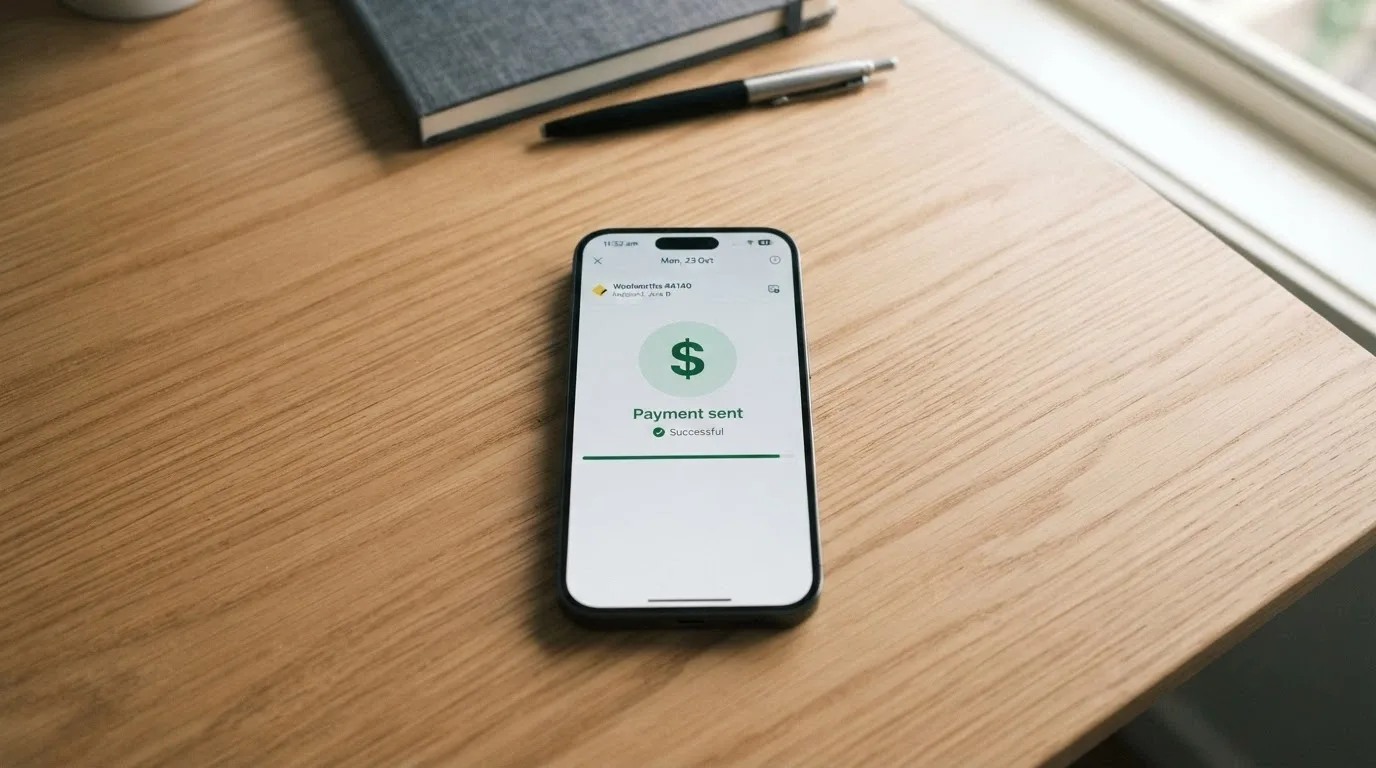
That invisibility is also why the ACMA’s framing is sharp: an Australian who is asked for a credit card or a crypto deposit by a gambling site is being served by someone outside the Australian rules. The site’s decision to ask for crypto is, by itself, the clearest evidence it is not licensed in Australia.
From 1 January 2027 that dynamic changes at the bank end. Banks and payment providers gain express statutory authority to block transactions to illegal gambling operators, which means the AUD-to-crypto leg on an Australian exchange could become the chokepoint rather than the wallet-to-casino leg. Until then, a wallet-to-wallet transfer settles in seconds and the bank never sees it.
No KYC — the anonymity promise and its real trade-off
Solana casinos market themselves on the absence of identity checks. A player can sign up by connecting a wallet, deposit SOL and start playing without ever uploading a passport or a proof of address. That is genuinely possible, because the casino does not need to satisfy an Australian KYC obligation — there is no Australian licence to satisfy, and the casino is bound by whatever its own jurisdiction requires.
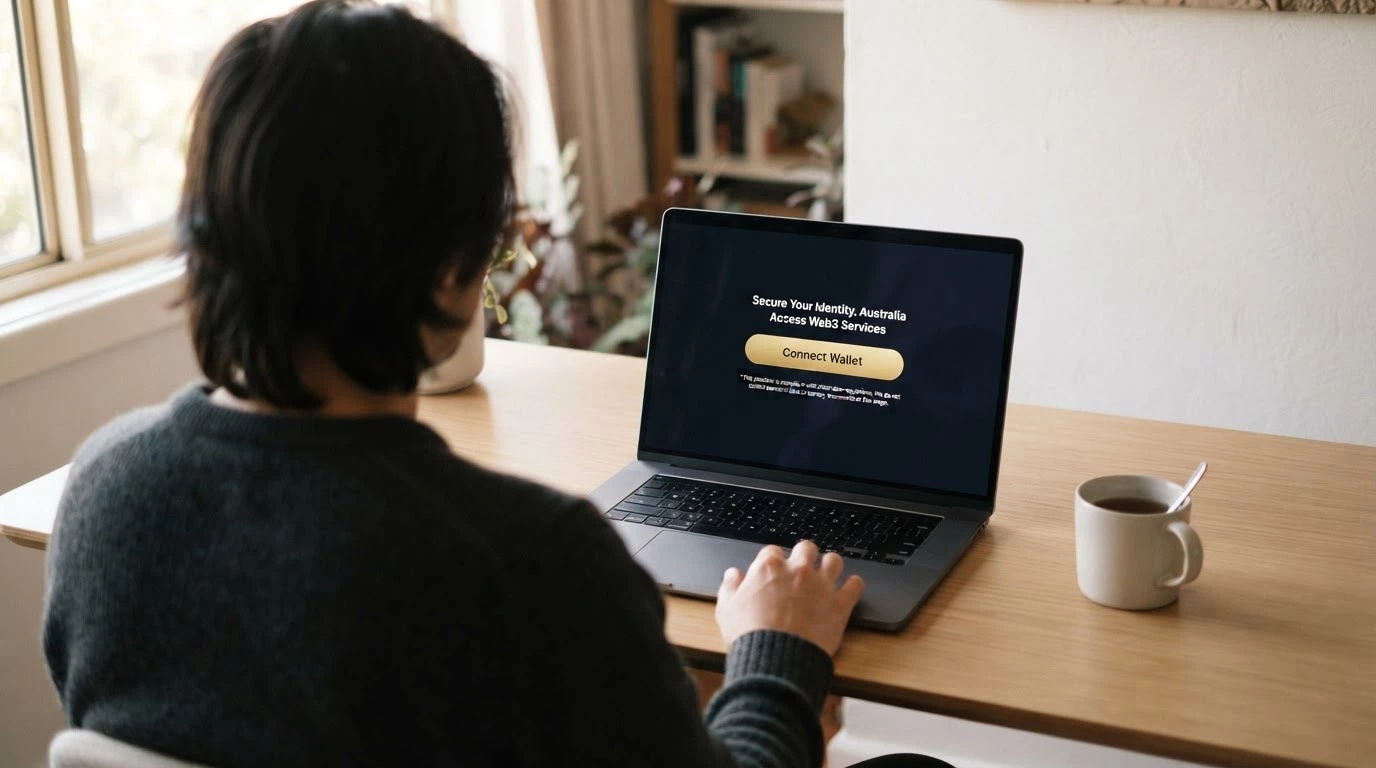
The trade-off is the one nobody mentions on the landing page. KYC is what gives a player a path when something goes wrong: a regulator to complain to, a chargeback route through a bank, an arbitration process the casino is contractually bound to honour. A no-KYC casino is also a no-dispute-resolution casino. If a withdrawal is delayed, a bonus is voided, an account is closed or the site disappears, the player has no identity-backed paper trail and no Australian body to escalate to. The anonymity is real. The recourse is not.
Solana tokens, NFTs and casino collectibles
Beyond SOL itself, the Solana ecosystem lets a casino issue its own SPL tokens, drop NFTs as loyalty rewards and run collectible mechanics that have no real analogue in fiat online gambling. A player who deposits SOL might receive a casino-branded NFT that unlocks a rakeback tier, a token balance that can be staked for a share of house revenue, or a collectible series whose rarity reflects wagering volume. Some of these tokens trade on decentralised exchanges outside the casino entirely, which means a casino reward can carry a market value the casino never set.
This is the part of the Solana casino pitch with the strongest marketing gloss and the weakest consumer-protection framework. A token that trades freely can also collapse freely, and a casino with no licence is under no obligation to back the token’s value or honour a redemption that was promised in marketing copy. A player who is choosing between two casinos should weight the loyalty program about as heavily as they would weight a land-based casino’s comp points — pleasant when it works, irrelevant when it doesn’t.
The Solana Casinos Accepting Australian Players in 2026
Every casino on the list below is an offshore operator reaching the Australian market. The IGA 2001 prohibits providing online casino games to persons physically in Australia, and no state or territory has issued a licence for the product. The ACMA has had 1,564 illegal gambling and affiliate websites blocked since November 2019, and more than 225 services have withdrawn from the Australian market since 2017. None of the brands below appear on a register of locally licensed wagering providers, because none of them could.
The list is built from casinos that accept Australian registrations and accept SOL or other Solana tokens. Where research could not confirm a per-operator figure — a wagering multiple, a payout time, a game count — the cell stays empty rather than carrying a guess. The verdict on each is written in qualitative terms, because the only thing confirmed about every brand on the list is the thing none of them have: an Australian licence.
What we looked for — trust signals in an unregulated market
With no Australian licence available, the criteria a player can actually verify collapse to four: how long the brand has operated, what jurisdiction it does claim to be licensed in, whether its provably fair claims are independently checkable, and what player reports say about deposits and withdrawals. None of those are substitutes for an Australian licence. Each can be falsified, and an Australian player has no local body to escalate to if any of them turns out to be unreliable.
Reputation longevity matters because crypto casino brands surface and disappear faster than licensed operators. A brand that has operated for several years across multiple market cycles is a different risk profile from one that launched this quarter. Licence jurisdiction matters because Curaçao, Anjouan and the Isle of Man are not equivalent tiers of oversight, and an operator that hides its licence behind a corporate chain has the same problem as one that has no licence. Provably fair verification matters because it is the one technical claim that can be tested without trusting the operator. Withdrawal reports matter because every other promise on a landing page can be true and the withdrawal still stall.
Crypto-native features that set these casinos apart
Three features separate a Solana casino from a fiat online casino in a way the player can actually feel. First, settlement speed: a Solana transaction finalises in under a second, and a deposit or withdrawal is on-chain within a few seconds rather than the three-to-five-day window a bank transfer sits in at a licensed AU bookmaker. Second, on-chain transparency: every bet, win and loss is a public ledger entry the player can verify, at least in principle, against the game’s stated algorithm. Third, wallet-native play: the player holds their own balance and can move it between venues without asking the casino’s permission.
The marketing tends to dress these features as if they are substitutes for a licence. They are not. Settlement speed is a feature of the rail, not of the operator; the operator can still delay a withdrawal for compliance theatre. On-chain transparency is a feature of the ledger, not of the game logic; the operator can still run a rigged random-number generator that the ledger faithfully records. Wallet-native play is a feature of the wallet, not of the casino; the casino can still close an account and freeze the balance at its discretion.
| Casino | Status | Domain |
|---|---|---|
| Rocket Play | Offshore-licensed (not Australian-licensed) | Rocket Play |
| Skycrown | Offshore-licensed (not Australian-licensed) | Skycrown |
| Royal Reels | Offshore-licensed (not Australian-licensed) | Royal Reels |
| WinSpirit | Offshore-licensed (not Australian-licensed) | WinSpirit |
| Stake | Offshore-licensed (not Australian-licensed) | Stake |
| Rainbet | Offshore-licensed (not Australian-licensed) | Rainbet |
| Scream Casino | Offshore-licensed (not Australian-licensed) | Scream Casino |
| FairGO | Offshore-licensed (not Australian-licensed) | FairGO |
| Bizzo Casino | Offshore-licensed (not Australian-licensed) | Bizzo Casino |
| Rocket Casino | Offshore-licensed (not Australian-licensed) | Rocket Casino |
Rocket Play
Rocket Play is one of the better-known offshore crypto casino brands reaching the Australian market. Its product mix sits in the broad mainstream of offshore online casinos — a large slots catalogue, a live dealer lobby, a sportsbook attached, and a deposit flow that takes Bitcoin, Ethereum and a handful of altcoins including SOL. Its marketing positions it as a high-volume operation with a frequent reload calendar.
The thing the marketing does not say is the same thing the marketing for every brand on this page does not say: Rocket Play does not hold an Australian licence, because no Australian licence is available for online casino. An Australian player depositing SOL into Rocket Play is doing so with no local regulator behind them. Bonus terms, game-count specifics and provider lists were not confirmed for this review and should be checked directly against the operator’s own terms before any deposit. For a player who is comfortable with the offshore-only model and is shopping on game catalogue and reload cadence, Rocket Play is a plausible candidate; for a player who wants a complaint path that ends in an Australian body, Rocket Play does not provide one.
Skycrown
Skycrown positions itself at the upper end of the offshore market on game volume, with a catalogue that runs into the low thousands when slots and live dealer titles are combined. It takes a wide crypto deposit set and runs a VIP tier structure aimed at higher-volume players.
Like every other brand on this list, Skycrown is not Australian-licensed and is not licensed in a jurisdiction that gives an Australian player any local recourse. The VIP tier structure is the kind of feature that rewards wagering volume directly, which is the kind of feature that the 2027 inducement restrictions will clamp down on at licensed Australian operators — and which carries on unchecked at an offshore casino. The right reader for Skycrown is a high-volume crypto player who has already accepted the offshore model and is shopping on catalogue depth. Anyone weighing the brand against a licensed Australian bookmaker is not comparing like with like.
Royal Reels
Royal Reels is one of the smaller brands on the list by market footprint, and the brand itself is pitched at a particular niche — a casino layout that leans into a high-roller aesthetic rather than a sportsbook-anchored mainstream product. Deposit methods include a handful of major cryptocurrencies.
The market-positioning argument works in its favour: a smaller brand with a clearer positioning is easier to evaluate than a sprawling casino with a long tail of bonuses and providers. The argument cuts the other way too: a smaller brand has a thinner player base generating the kind of withdrawal-complaint reports that surface problems early. An Australian player who values brand longevity over brand polish might place Royal Reels lower on a shortlist. The standard offshore caveat applies in full: no Australian licence, no local regulator, no identity-backed dispute path.
WinSpirit
WinSpirit operates as a multi-vertical offshore casino with a sportsbook attached, taking a standard set of cryptocurrencies for deposit. Its brand presence in the Australian market runs through affiliate channels rather than direct Australian-facing marketing.
The relevant comparison here is not WinSpirit versus another offshore brand. It is WinSpirit versus the licensed Australian wagering market, which has consumer protections WinSpirit does not. Where a player has previously used a licensed Australian bookmaker, the most jarring change is the absence of activity statements, deposit-limit enforcement and BetStop integration. An offshore brand is not connected to BetStop and will keep taking a self-excluded person’s money. That is the single largest consumer-protection gap a player steps into. WinSpirit suits a player who has accepted that gap and is shopping on product, not on protection.
Stake
Stake is the highest-profile crypto gambling brand in the world, and its visibility cuts both ways. Its scale means its terms, game catalogue and withdrawal handling are documented across player communities to a degree no other brand on this list matches. Its scale also means its decisions on what to do about Australian traffic carry weight — when Stake restricts or accepts a market, the rest of the offshore market watches.
The standard offshore caveats apply. Stake is not Australian-licensed and is not licensed in a jurisdiction that gives an Australian player any local recourse. An Australian player who values the brand’s community footprint and provably fair heritage will find Stake a plausible candidate; an Australian player who values Australian regulatory protection has already eliminated it.
Rainbet
Rainbet sits in the smaller-and-quicker end of the offshore casino market, with a product mix that leans into crypto-native formats — dice, crash, plinko and similar — rather than the traditional slots-and-live-dealer mainstream. Its deposit flow is built around crypto from the ground up.
The trade-off is the one that defines every niche offshore brand: a player gets a product the mainstream brands do not prioritise, in exchange for a smaller operator with a thinner safety margin. Rainbet suits a player who specifically wants the crypto-native game formats and is comfortable with the operator’s smaller scale. The same offshore-only caveats apply.
Scream Casino
Scream Casino carries a brand identity pitched at the louder end of the offshore market — heavy marketing, prominent bonus calendar, a casino layout designed around slot volume. Its deposit set is standard offshore crypto.
Bonus-led offshore brands carry a particular risk profile: the welcome package is the front door, and the wagering terms behind it are the room a player actually enters. An Australian player evaluating Scream Casino should weight the bonus calendar less heavily than the underlying operator profile, because the bonus is the marketing and the wagering terms are the product. Same offshore caveat: no Australian licence, no local recourse.
FairGO
FairGO’s branding is the only thing on this list that pitches itself directly at the Australian market — the name, the visual identity and the site language are all AU-facing. That pitch is the warning, not the reassurance. A brand with an Australian-sounding name is not, by virtue of the name, any closer to an Australian licence.
In fact the opposite is true: a brand that targets Australia visually while operating offshore is choosing to maximise its reach to a market it is not licensed in. The brand identity tells an Australian player the operator wants their deposit. The regulatory reality tells them the operator is not licensed to take it. An Australian player who notices that mismatch and accepts it can evaluate FairGO on the same terms as any other offshore brand on the list.
Bizzo Casino
Bizzo Casino operates as a mainstream offshore casino with a broad game catalogue and a standard crypto deposit set. Its brand profile is unremarkable within the offshore market — broad product, mainstream positioning, no specific niche.
For an Australian player choosing between the mainstream offshore brands, Bizzo sits in the middle of the pack on every verifiable criterion and is hard to differentiate from several of its peers on the list. The differentiation question becomes whether the player wants a higher-volume brand with stronger community documentation, or a smaller brand with a more contained catalogue. Same caveat: no Australian licence.
Rocket Casino
Rocket Casino shares a name with Rocket Play but is a separate operation, and the distinction matters at the brand-evaluation level. Two brands with similar names operating in the same market is the kind of confusion an offshore market is structurally prone to — there is no central register to cross-check, and player communities sometimes conflate them.
The right reader for Rocket Casino is a player who has specifically evaluated the Rocket Casino operation rather than defaulting to it because they have heard of Rocket Play. For anyone choosing a brand based on name recognition alone, the confusion between similar titles is an unnecessary complication.
The Games You Can Actually Play on Solana Casinos
Slots on the Solana blockchain
Slots are the largest category on every Solana casino by game count. The slot experience itself is the same as on a fiat online casino: the player picks a stake, presses spin, and either wins or loses against a stated return-to-player percentage. The on-chain element is the bet settlement — the wager, the result and the payout, where supported, are written to the Solana ledger as transactions.
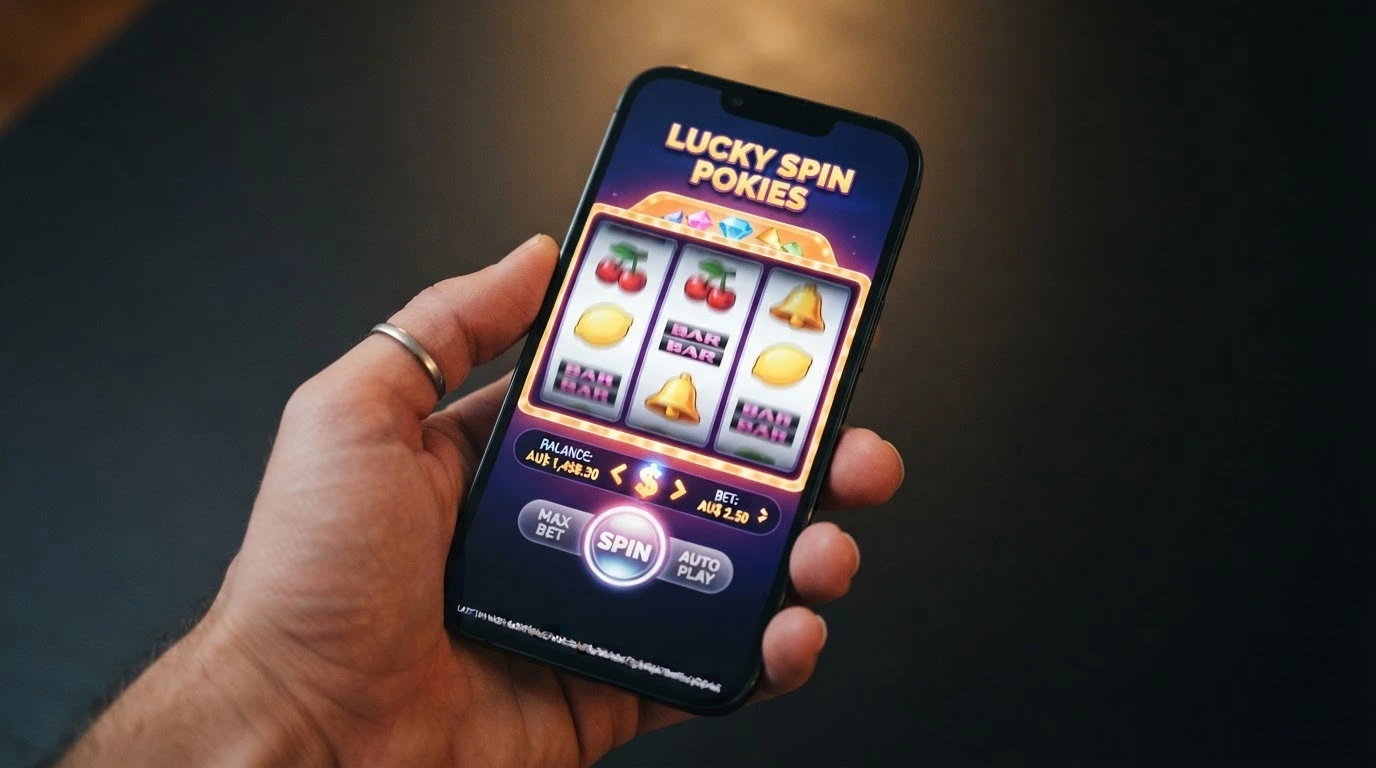
The provably fair claim on a Solana slot, where the operator supports it, is a separate technical feature: the player can verify that the spin result was generated from a seed the player contributed to and that the operator could not have altered after the fact. The verification does not tell the player the slot’s RTP is fair; it tells the player the spin was not manipulated at the moment of the spin. Those are different things. Where research did not surface per-title RTP figures for the casinos on this list, the slot RTP is an open question on the operator’s own terms page — not something a player should assume.
Dice games — provably fair on Solana
Dice is the classic provably fair format and the format the Solana casino market built itself around. The mechanic is simple: the player picks a number, the operator picks a number, the result is the sum, and the player wins or loses based on whether their guess clears a threshold. The provably fair element is the seed combination: both sides contribute randomness, the seed is hashed before the bet, and the player can verify after the bet that the seed was not changed.
On Solana the dice round settles in the same second the bet is confirmed. The speed advantage is real: a fiat online casino’s dice game sits behind a server round-trip and a database write, and a player feels the latency. On Solana the latency is the blockchain’s, which is negligible. The verification step is the same in principle on every provably fair platform; Solana’s contribution is the speed, not the trust model.
Flip and specialty games
Beyond dice, the Solana casino market carries a family of specialty formats that have no real equivalent in fiat online gambling. Coin-flip is the simplest: the player bets on heads or tails against the house, and a hash-based random number picks the side. Crash games plot a multiplier rising on a curve that can crash at any moment; the player cashes out before the crash or loses the bet. Plinko drops a ball through a peg field into a multiplier bin. These formats are the product the offshore crypto casino market has built itself around, and they are the formats that licensed Australian wagering providers do not offer, because the licensed product set is restricted to racing, pre-event sport, lotteries and keno.
The specialty formats suit the Solana transaction model because each round is a single signed transaction the player can verify. That is also where the consumer-protection gap is sharpest: the house edge on a coin-flip is structural, the curve on a crash game is set by the operator, and the verification tells the player the round was honest, not that the game is fair in the long run.
The overall Solana game lineup — what is missing
A Solana casino game library is, in shape, narrower than a large fiat online casino or a major licensed AU wagering app’s adjacent product. Slots dominate by count. Dice, crash, plinko and coin-flip make up the crypto-native differentiator. Live dealer exists at most brands but at a smaller scale than the major fiat online casinos, and the live-dealer studios are typically the same providers — Evolution, Pragmatic Play Live — that supply the fiat market, accessed via the same offshore route.
What a Solana casino generally does not offer is a deep sportsbook, a racing product, or the kind of regulatory-integrated experience a licensed AU bookmaker offers around a major racing carnival. The trade-off the player is making when they choose a Solana casino is, in plain terms: a different product mix, a different regulatory framework, and a different settlement rail. The right reader for a Solana casino is a player who wants the specialty formats and the on-chain settlement. A player who wants the licensed product set should look at the licensed product set.
Why No Solana Casino Holds an Australian Licence
The Interactive Gambling Act — online casino is prohibited
The Interactive Gambling Act 2001 makes it an offence to provide an online casino game, an online pokie or in-play sports betting to a person physically in Australia. The Act targets the provider, not the player — an individual who signs up and deposits is not prosecuted under the IGA, but the operator offering the service is. The minimum age for any commercial gambling in Australia is 18.
The three prohibited product categories are the centre of the Act. Online casino covers table games and live dealer games run over the internet. Online pokies covers slot machines run over the internet, even when branded as a different product. In-play sports betting covers any wager placed on a sporting event after it has started. A licensed Australian bookmaker can offer pre-event sport and racing; it cannot legally offer the same operator the chance to place a bet during a match.
Licensed wagering vs offshore casinos — two different worlds
What Australia does license is racing and sports wagering placed before the event starts, lotteries and keno, and land-based casinos. Licensing is state and territory business, and the Northern Territory Racing and Wagering Commission, administered through Licensing NT, is the de facto national licensor for online wagering — large Australian-facing bookmakers hold NT licences that run for terms of up to 20 years. State governments levy point-of-consumption tax on net wagering revenue, typically in the 10 to 15 per cent range, and the Northern Territory levies a 5 per cent wagering tax on wagers minus payouts plus a 0.05 per cent racing levy.
A licensed AU wagering operator must offer deposit limits, loss limits, activity statements and BetStop integration. An offshore Solana casino is not connected to any of these. The product set is different, the consumer protection framework is different, and the regulator the player can complain to does not exist on the offshore side.
| Product | Legal under the IGA? | Can be licensed in Australia? | Regulator |
|---|---|---|---|
| Online casino games | No | No | — |
| Online pokies / slots | No | No | — |
| In-play sports betting | No | No | — |
| Pre-event sports betting | Yes | Yes | State / territory (NTRWC de facto national) |
| Racing wagering | Yes | Yes | State / territory (NTRWC de facto national) |
| Lotteries | Yes | Yes | State / territory |
| Keno | Yes | Yes | State / territory |
| Land-based casinos | Yes | Yes | State / territory |
The crypto payment ban and what it means for SOL deposits
Since 11 June 2024, credit cards, credit-related products and digital currency — which is to say crypto — have been banned as payment for online wagering in Australia. An operator that fails to enforce the ban faces penalties of up to $247,500. The ban is enforced at the licensed-operator end: a licensed Australian bookmaker cannot process a credit card or a crypto deposit for a wagering transaction.
A Solana casino sits on the other side of that ban by virtue of being offshore. The casino does not have a credit-card or PayID rail to block, because it does not have an Australian licence to lose. The deposit path runs from a wallet to a wallet, not from a card to a merchant. The ban, in practical terms, is what makes the offshore route structurally attractive to a casino that wants to accept Australian money without touching the Australian banking system.
The 2026 reforms — advertising limits and bank blocking from 2027
The Interactive Gambling Amendment (Gambling Reform) Bill 2026 passed Parliament on 19 August 2026. Its measures commence on 1 January 2027. Three of them reshape the operating environment for offshore casinos in a way an Australian player will feel directly.
First, banks and payment providers gain express statutory authority to block transactions to illegal gambling operators. The block can sit at the AUD-to-crypto leg on an Australian exchange, or at any other banking touchpoint. Until that date, a wallet-to-wallet transfer settles without the bank ever seeing it. From that date, the bank may not see the casino leg but it can see the exchange leg and is empowered to refuse the transaction.
Second, wagering advertising is capped at three ads per hour between 6:00 am and 8:30 pm, and wagering advertising is banned from 15 minutes before a live sporting event until 5 minutes after it ends. This is a licensed-market reform; an offshore casino is not subject to it. The asymmetry is the point: the reforms tighten the licensed market further, which pushes more marketing weight onto the offshore channels the reforms do not reach.
Third, direct marketing of inducements is prohibited for 14 days after a customer signs up, for three months after a person deregisters from BetStop, and indefinitely for customers identified as at risk of gambling-related harm. Again, an offshore casino is not bound by these inducement restrictions. The licensed market gets quieter; the offshore market does not.
Staying in Control — Responsible Gaming When the Operator Is Offshore
BetStop — the National Self-Exclusion Register
BetStop is the National Self-Exclusion Register, run by the ACMA. A single registration blocks a person from every licensed Australian wagering provider at once. As at 31 July 2026, BetStop had received 67,480 registrations, of which 41,290 exclusions were still active. Seventy-eight per cent of registrants were under 40, and 38 per cent chose a lifetime exclusion. The demographic skew is sharp and the usage is real: people who want to stop gambling in Australia are using the system at scale.

An offshore Solana casino is not connected to BetStop. A person who has registered with BetStop can still sign up to an offshore casino, deposit SOL and gamble. The offshore casino has no obligation to check the register and no obligation to honour the exclusion. This is the single largest consumer-protection gap a player steps into when they move from the licensed market to an offshore casino, and it is the one the marketing never mentions.
Deposit and loss limits — tools Australian-licensed providers must offer
A licensed Australian wagering provider is required to offer deposit limits, loss limits, activity statements and take-a-break functionality. The requirements are enforced at the licence level: an operator that does not offer them is not licensed. The deposit limit in particular is a tool that exists specifically because it sits at the boundary of what a person is willing to lose, and the regulator has decided the boundary is worth defending.
At an offshore Solana casino, none of these tools are mandatory. The operator may offer them; many do, as a matter of brand presentation. None of them are enforceable at the Australian end. A player who sets a deposit limit on an offshore casino has set a limit the casino is not contractually bound to honour in the way a licensed Australian bookmaker is.
Help when you need it — helplines and counselling
- National Gambling Helpline: 1800 858 858 — free, confidential, staffed 24 hours a day, 7 days a week.
- Gambling Help Online: gamblinghelponline.org.au — online chat and counselling, accessible regardless of where a person gambled.
The helpline and the online counselling service are free, confidential and available to any Australian regardless of where they gamble. About 2.1 per cent of Australian adults — roughly 430,000 people — experience problem gambling, and a further 1.8 per cent fall into the high-risk category, according to the Australian Institute of Health and Welfare’s 2022 data. The prevalence figure is the scale of the population the helpline is built to serve.
How We Selected and Reviewed These Solana Casinos
The operator set is ten offshore brands that actively reach the Australian market and accept Solana or a Solana-compatible token for deposit. The regulatory benchmark is the Interactive Gambling Act 2001, as enforced by the ACMA: a casino that does not hold an Australian licence is, by definition, operating outside the consumer-protection framework an Australian player would otherwise have.
The criteria we used are the criteria a player can actually verify in an unregulated market. Brand longevity, since crypto casino brands surface and disappear faster than licensed operators. Licence jurisdiction, where discernible, since Curaçao and the Isle of Man are not equivalent tiers. Provably fair claims, since these are technically testable. Withdrawal reports, since these surface in player communities over time.
The limit on this review is also the limit on every comparison of offshore casinos: per-operator specifics on bonus terms, wagering multipliers, game counts and provider lists were not confirmed for this run and are not pre-filled on this page. Where a cell in the operator comparison could have carried a number and could not be verified, the cell is empty rather than carrying a guess. A player evaluating any of the brands on this list should check the operator’s own terms page before any deposit.
What an Australian Player Should Actually Do About Solana Casinos
The legal reality is the only place to start. Online casino is prohibited in Australia and no Solana casino is licensed here. An Australian who is asked for a credit card or a crypto deposit by a gambling site is being served by someone outside the Australian rules. That is the ACMA’s own framing, and the framing has not changed since 2024.
The practical reality is the second layer. The player is not prosecuted. The Act targets the provider, not the player. The player does, however, lose every consumer protection the licensed market provides: no BetStop connection, no enforced deposit limit, no activity-statement requirement, no Australian regulator to escalate to. The marketing for an offshore casino never says this. The marketing never says it because the marketing is paid to say the opposite.
The payment reality is the third layer. Crypto deposits bypass the Australian banking system today, which is exactly why the crypto payment ban does not stop them. From 1 January 2027 the bank may block the AUD-to-crypto leg at the exchange end, but the wallet-to-casino leg will remain outside the bank’s reach. The path gets narrower without becoming impassable.
The decision a reader should weigh is whether the crypto-native features of a Solana casino — the speed, the wallet model, the specialty formats — are worth the trade-off in consumer protection. For a player who values the licensed product set, the answer is that the licensed market is not missing a product an offshore casino provides. It is crucial to remember that any reader choosing to engage with an offshore brand does so outside the protection of the Australian regulatory framework.
Frequently Asked Questions
Do I have to pay tax on crypto casino winnings in Australia?
Gambling winnings are not assessable income under section 6-5 of the ITAA 1997, and gambling losses are not deductible under section 8-1 — unless the person is carrying on a business of betting or gambling. The tax treatment is the same regardless of whether the casino takes fiat, Bitcoin or SOL, and the ATO has not carved out a special category for offshore crypto winnings. Casual players keep their winnings tax-free; the obligation sits on the business operator, not the punter.
What happens to my money if an offshore Solana casino shuts down?
The player has no Australian regulator to escalate to, no chargeback route through an Australian bank, and no identity-backed dispute path because no identity check was performed at signup. The casino’s own jurisdiction determines what happens to the player balance, and the outcome depends entirely on whether the operator winds down voluntarily or simply disappears. This is the structural cost of choosing an unlicensed product: the consumer protection that follows a licensed operator into insolvency does not exist on the offshore side.
How do Solana casinos differ from regular Bitcoin casinos?
The casino product mix is broadly similar — slots, dice, live dealer — but the settlement rail is different. Solana transactions finalise in under a second and carry negligible fees, which makes the deposit and withdrawal flow feel closer to a wallet-to-wallet transfer than to a bank-to-merchant transaction. Bitcoin casino deposits clear more slowly and the fees are higher per transaction. The on-chain verification works the same way in principle on both; the user-visible difference is speed.
Can Australian banks stop me from depositing into a Solana casino?
Today, the bank does not see the wallet-to-casino leg because the transaction never touches the banking system. From 1 January 2027, banks and payment providers gain express authority to block transactions to illegal gambling operators, and the AUD-to-crypto leg on an Australian exchange becomes the realistic chokepoint. A wallet sitting outside the Australian banking system would still be able to send SOL, but buying SOL with AUD through an Australian exchange may become harder to do.
Is it safe to connect my Phantom or Solflare wallet to a casino?
Connecting a wallet to any site requires the site to request a signature, and the player should read what the signature authorises before approving it. A wallet signature that grants unlimited token approval can be exploited by a malicious site; a signature that limits the approval to a specific amount cannot. The wallet itself is a tool; the question is what the player lets it do. There is no consumer protection framework that wraps a wallet signature the way a chargeback wraps a card payment.
What should I check before signing up to any Solana casino?
Three things. First, the licence — which jurisdiction, what tier of oversight, and whether the corporate chain runs back to a verifiable entity. Second, the withdrawal terms — what the stated processing time is, what documentation the casino asks for before paying out, and whether there is a maximum withdrawal that would trap a big win. Third, the provably fair claim — whether the games offered actually support on-chain verification, and whether the verification is independently checkable rather than a marketing checkbox. Every one of these is a thing the player has to check themselves, because no Australian regulator will check it for them.