
No Minimum Deposit Casinos Australia: What the Real Floor Looks Like (And Why It Lives Offshore)
A search for “no minimum deposit casino Australia” returns banner after banner promising zero-entry gambling. The landing pages read like a gift: deposit nothing, spin real money, walk away with cash. The reality is harder, more interesting, and worth understanding before a cent moves. The phrase is largely marketing. True no-minimum casinos are virtually nonexistent; what actually exists is a cluster of low-deposit offshore sites sitting at A$1, A$5, A$10 or A$15, plus a layer of no-deposit bonuses that look like the same thing but work differently. Every one of those sites is unlicensed in Australia, because no Australian licence for online casino exists. The Interactive Gambling Act 2001 makes the product itself illegal to provide. A player who signs up commits no offence. A player who signs up also has no Australian consumer protection behind them, no BetStop coverage, and no ACMA complaints body to recover money if the operator goes quiet.
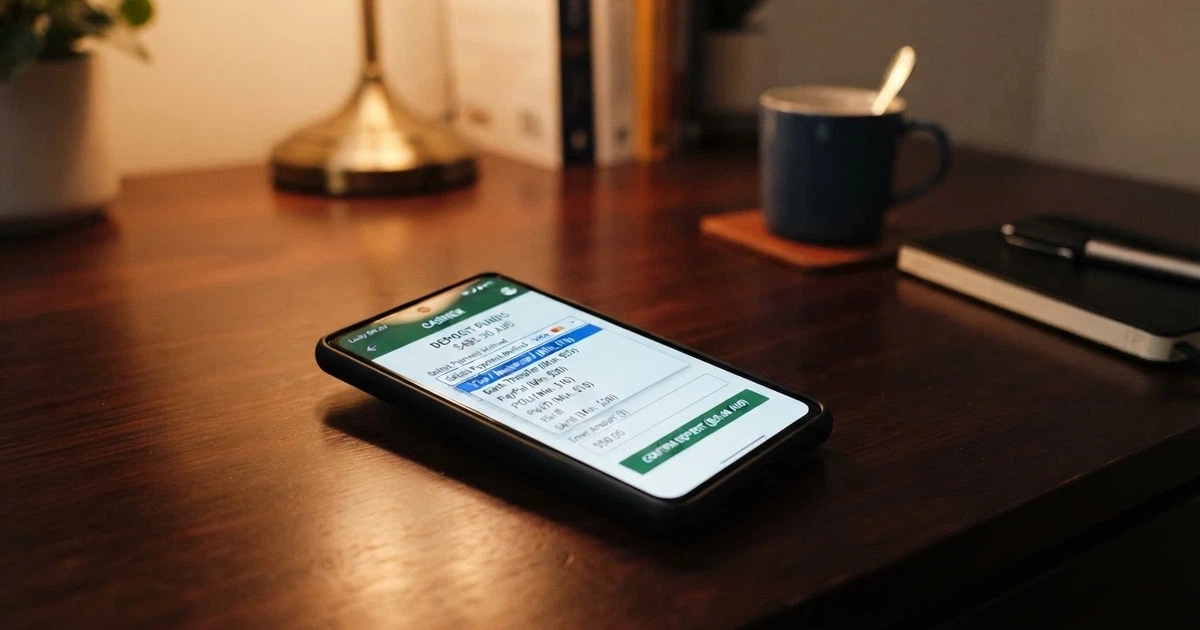
The rest of this page works through what that means in practice — the payment rails that actually set the deposit floor (because they override whatever the homepage claims), the offshore brands that make up the Australian-facing market, the real cost of a low-stakes pokie session, the legal landscape including the 2026 reforms taking effect from 1 January 2027, and the help resources that reach a player regardless of which casino they chose.
Data current as of 22 November 2026; licence claims and operator details cross-checked against the ACMA’s published register of blocked services and operator T&Cs where available.
Table of Contents
- Why “No Minimum Deposit” Casinos Are Harder to Find Than the Ads Claim
- The Lowest-Deposit Offshore Casinos Australians Can Join in 2026
- Your Deposit Method Decides Your Minimum — Not the Casino’s Homepage
- Real-Money Pokies You Can Spin From $0.01 a Round
- Crypto Deposits — The Only Route to a True $1 Buy-In
- The Law Is Clear — Online Casino Is Illegal in Australia
- BetStop, the Helpline and Why Offshore Casinos Leave You Without a Safety Net
- Frequently Asked Questions
- Low Deposits, Real Risks — What Every Australian Punter Should Know Before Signing Up
Why “No Minimum Deposit” Casinos Are Harder to Find Than the Ads Claim
The search for “no minimum deposit” promises something that almost no casino delivers. Confirmed no minimum deposit casinos are rare and difficult to verify. Most online casinos still apply minimum deposit thresholds, and the ones that advertise zero are usually low-deposit sites that have rounded their A$1–A$20 floor down to a friendly-sounding headline. Australian-facing low-deposit casinos cluster around four price points: A$1, A$5, A$10 and A$15. Anything genuinely below A$1 either runs on a payment rail that imposes its own floor (credit cards, PayID) or skips the rail altogether (crypto).
What “No Minimum Deposit” Actually Means — and What It Doesn’t
Two different minimums sit behind every “no minimum” claim. The first is what the casino sets in its own cashier configuration. The second is what the payment rail enforces regardless. A casino can advertise a $1 deposit; Visa or Mastercard may refuse to process anything under A$10 or A$20 because of card-scheme rules. PayID, the Australian instant-transfer rail, sits in the middle: no card-network floor, but most casinos still set the cashier at A$10–A$30. Crypto rails skip both. Bitcoin and USDT transfers have no scheme-level minimum, and the casino alone decides the floor. That is why crypto delivers the genuine A$1 entry and PayID typically does not.
A separate confusion dogs the term. A “no minimum deposit” casino still wants your money. A “no deposit bonus” gives you something — usually free spins — without asking for it. The two ideas sound alike, work differently, and have different rules attached. The marketing tends to blend them because the bonus feels like the casino, but a bonus that asks nothing of you also pays out under tighter conditions: a verification deposit before withdrawal, a maximum cashout cap around A$50–A$100, wagering multipliers that reach 50x–70x on whatever you win.
Real-Money Play With a Near-Zero Deposit — What You Can and Cannot Do
A A$1–A$5 deposit opens an account and buys a defined pokie session at minimum stakes. It does not unlock a full welcome package, and most platforms reserve the headline match bonus for deposits above A$10 or A$20. The verification hurdle arrives later. Most platforms require a verification deposit before they will release no-deposit bonus winnings, because the casino needs a real payment instrument on file before it can pay out to your bank account. A A$1 deposit that opens the account can sometimes be that deposit. A no-deposit bonus on its own cannot.
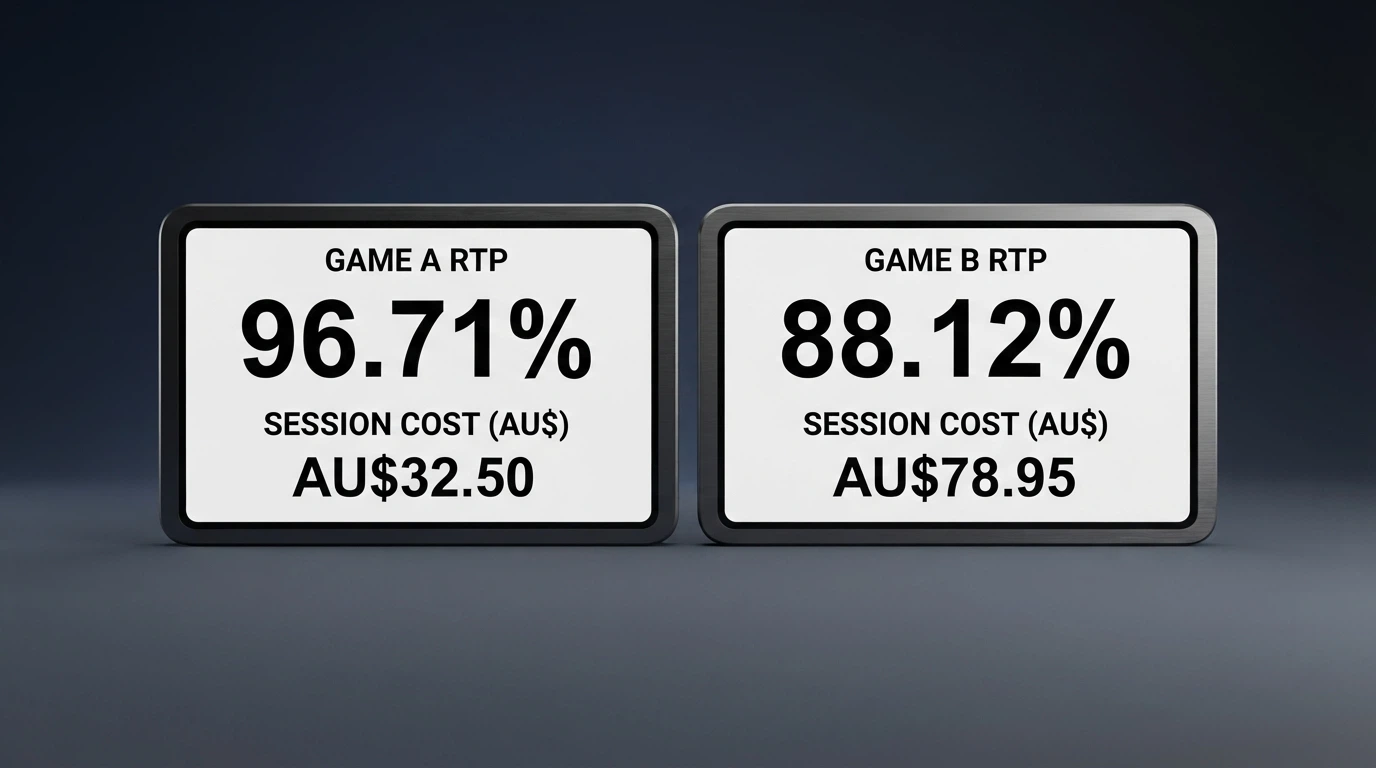
At minimum stakes, the session economics depend almost entirely on the pokie’s return-to-player rate, not the deposit size. The same 200 spins cost roughly A$8 of expected loss on a 96% RTP title and roughly A$24 on Mega Moolah’s base game (88.12% RTP). The deposit floor matters because it sets the ceiling on how much you can lose in one session. The RTP gap matters because it sets the rate at which you lose it.
Mobile Casinos, Instant Play and the Australian Player’s Setup
Australian players reach offshore casinos almost entirely through mobile browsers. The Apple App Store and Google Play do not host these products, and Australian storefronts have no AU-facing casino apps to install. What works is the web lobby, which renders cleanly on a phone, takes a PayID transfer in 10–30 seconds without a card number or CVV, and runs the same pokie catalogue as the desktop version. The PayID transfer is the Australian market’s quiet advantage: instant credit, no foreign-exchange surcharge on the deposit side, and a familiar bank-app flow that doesn’t ask anyone to type a credit-card number into an offshore site. Withdrawals are a different story. Very few of these casinos support PayID as a payout rail; most route withdrawals back to a bank transfer, a crypto wallet, or an e-wallet, and each of those routes has its own minimum and its own waiting period.
The Lowest-Deposit Offshore Casinos Australians Can Join in 2026
Before the table: every operator below is an offshore brand. None holds an Australian casino licence because none can. The Interactive Gambling Act 2001 prohibits the provision of online casino games to people in Australia; no federal or state licence exists for the product. The most common licensing jurisdiction for the Australian-facing market is Curaçao, with Curaçao eGaming and the Curaçao Gaming Control Board the regulators named in operator footers. That licence is not an Australian licence. It does not give an Australian player recourse to an Australian complaints body, and it does not connect the operator to BetStop.
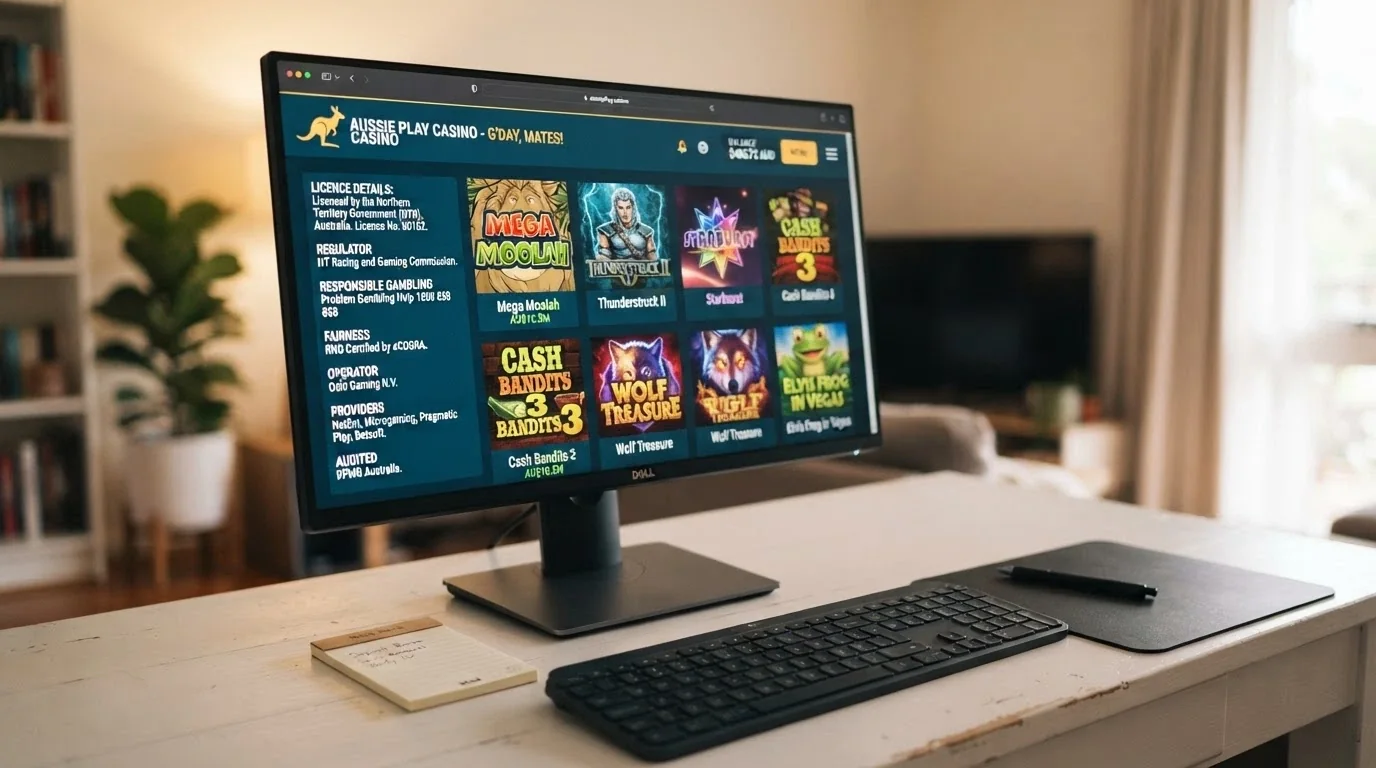
The table below ranks ten operators by deposit accessibility and the no-deposit offer quality of their confirmed terms. Where a row carries “not confirmed” or “not refreshed”, that is the verified state of the data — terms for those operators were not refreshed this run and should be checked at the cashier before relying on them.
| Brand | Licence | Game Providers |
|---|---|---|
| Skycrown | Curaçao eGaming | 6,000+ pokies (Pragmatic Play, others) |
| Rocket Play | Curaçao (not confirmed this run) | Pokies, table games, live dealer |
| Bizzo Casino | Curaçao | 5,000+ pokies, sportsbook, eSports |
| Fair Go | Curaçao | RTG pokies |
| Bitstarz | Curaçao | 6,100+ pokies, 47+ providers |
| Royal Reels | Curaçao (not confirmed this run) | Pokies, live casino |
| WinSpirit | Curaçao (not confirmed this run) | Pokies, table games |
| Stake | Curaçao | Pokies, live casino, originals |
| Rainbet | Curaçao (not confirmed this run) | Pokies, live casino |
| Scream Casino | Curaçao (not confirmed this run) | Pokies, table games |
Skycrown
Skycrown sets the low-water mark on deposit accessibility. A A$1 crypto deposit clears, and PayID starts at A$10. The no-deposit offer is the standout in the featured set: 100 free spins on mobile phone number verification. That volume of free spins without a deposit is unusually generous; the conditions attached are the usual ones. Wagering on bonus funds is 40x, and the max-cashout figure was not confirmed this run, which means it should be checked in the bonus terms before any spin lands. The lobby runs 6,000+ pokies from Pragmatic Play and other major studios.
For an Australian player testing the offshore market with a A$1 entry and wanting a no-deposit bonus large enough to sample the lobby, Skycrown is the cleanest fit in the set. The verification deposit will likely still be required before any no-deposit winnings can be withdrawn — that is the rule, not the exception.
Bitstarz
Bitstarz carries the most transparent no-deposit terms in the featured set. The sign-up bonus is 20–30 free spins with a published A$100 maximum cashout, 40x wagering and a 7-day expiry. The A$100 max-cashout figure is the only one confirmed in the entire set — every other operator left that line blank in this run’s data. The minimum deposit is A$20, which sits at the upper end of low-deposit territory, and the library runs to 6,100+ pokies across 47+ providers.
A player who values knowing the ceiling on a no-deposit bonus before claiming it gets a clearer answer from Bitstarz than from anyone else on this page. The trade-off is the A$20 floor: a few dollars higher than Skycrown’s PayID minimum, and well above the crypto entry.
Bizzo Casino
Bizzo Casino is a sportsbook-and-casino hybrid with 15 no-deposit free spins on the named title Wild West Trueways. The wagering multiplier is 35x — the lowest confirmed in the featured set — with a 7-day bonus validity. The PayID minimum is A$25, which sits at the higher end of the PayID range; the lobby runs 5,000+ pokies, plus a sportsbook and an eSports vertical that the others don’t carry.
A player who wants the lightest playthrough on a no-deposit bonus gets the best deal here, at the cost of a higher PayID floor and a smaller spin allocation. The wildcard is the sportsbook — if a punter wants race and sport alongside pokies in one wallet, Bizzo offers that combination and few of its peers do.
Fair Go
Fair Go has a long history in the Australian-facing market and runs an RTG-exclusive pokies lobby. That is a deliberate choice rather than a limitation: Real Time Gaming titles are the studio’s specialty, and Fair Go’s players are RTG players by preference. The minimum deposit range sits at A$10–A$20, in line with the PayID cluster. Specific no-deposit and wagering terms were not refreshed this run and should be verified in the casino’s bonus terms before claiming.
A punter loyal to RTG, or curious about an RTG-only catalogue, gets a focused rather than sprawling library. The data gap is real and worth treating as such.
Stake
Stake is the crypto-native operator of the set, with proprietary in-house “originals” alongside a full pokies and live-casino lobby. Deposit, bonus and wagering terms were not refreshed this run, so the writeup stays qualitative. What is known: the platform runs on Curaçao licensing, accepts crypto across the major coins, and offers a different product mix from the pokies-heavy brands — the originals (Dice, Crash, Plinko, Keno variants) are the same games a player sees advertised under the Stake name worldwide.
For a player already in the crypto ecosystem, Stake is the most natural fit. For a player new to crypto wallets and on-ramps, the friction is the deposit process itself.
Rocket Play
Rocket Play is a Curaçao-registered brand carrying pokies, table games and live dealer under a single roof. The licence was not reconfirmed this run and bonus/deposit terms were not refreshed. What is established is the brand’s presence in the Australian-facing market and a lobby that covers the three main verticals a casual player expects.
A punter wanting the standard three-product casino under one account has Rocket Play as one of several options in this set; the data gap on terms means the cashier check before depositing matters more here than on the rows where the bonus terms are confirmed.
Royal Reels
Royal Reels is a pokies-and-live-casino brand with a reported Curaçao registration that is unconfirmed. We could not verify current bonus or deposit terms. The brand’s profile in the Australian-facing market sits in the standard two-vertical cluster: pokies dominant, live casino layered on top.
Without confirmed terms, this writeup does what a responsible writeup does — names the brand, marks the data gap, and leaves the reader to verify at the cashier.
WinSpirit
WinSpirit is a pokies-and-table-games operator indicating a Curaçao registration, though data on current bonus and deposit terms remains unverified. The brand sits in the lighter end of the lobby spectrum, with table games as a structural complement to the pokies rather than a full live-casino vertical.
A punter wanting pokies and table games without the live-dealer layer has WinSpirit as one option; the verification gap is real.
Rainbet
Rainbet is a pokies-and-live-casino operator with a stated Curaçao licence, but we have not been able to verify current bonus or deposit terms. The brand sits in the standard two-vertical cluster.
The honest read is the same as the others in this data-gap group: the brand exists in the Australian-facing market, the licence line in the footer was not reverified, and the bonus terms need a cashier check before any deposit clears.
Scream Casino
Scream Casino is a pokies-and-table-games brand with a reported Curaçao registration that remains unconfirmed. Current bonus and deposit terms are not available. The brand sits in the lighter-vertical cluster alongside WinSpirit.
The writeup covers what can be covered without inventing data; the rest is a cashier check.
Your Deposit Method Decides Your Minimum — Not the Casino’s Homepage
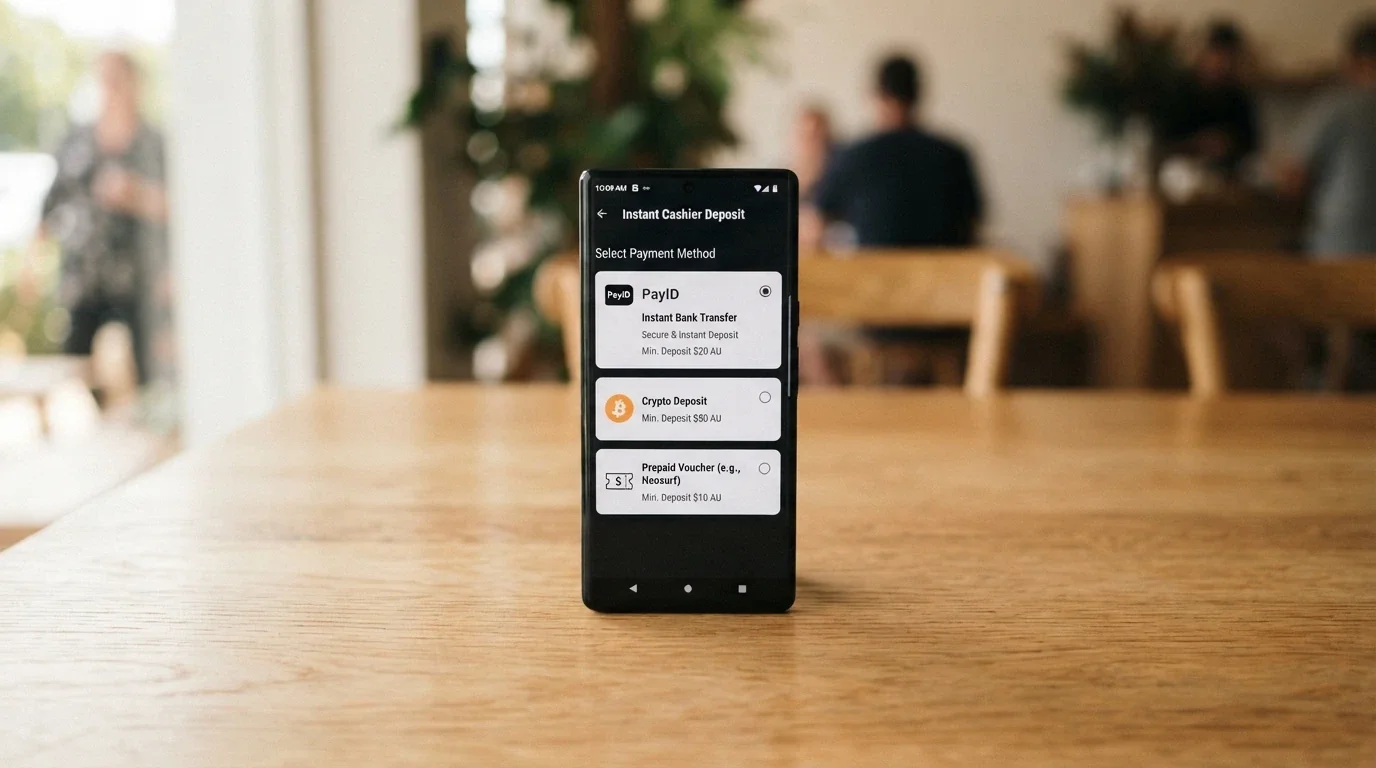
The casino’s homepage is the wrong place to read the deposit floor. The payment method is the right one. A site can advertise a A$1 minimum and the cashier will reject anything under A$10 if the chosen method is PayID, A$20 if it is a credit card, and accept the A$1 if it is crypto. The rail, not the banner, decides.
| Payment Method | Minimum Deposit (AUD) | Processing Time | Withdrawals Supported |
|---|---|---|---|
| PayID | A$10–A$30 | 10–30 seconds | Rarely |
| Neosurf | A$1–A$15 | Instant | No |
| Crypto (BTC/USDT) | A$1 equivalent | 1–10 min (BTC); near-instant (USDT) | Yes (back to wallet) |
| Credit/Debit Card | A$10–A$20 | Instant | Sometimes; 2.5%–4% FX surcharge on deposit |
PayID and Osko — Fast, Australian and the Closest Thing to a Low-Deposit Standard
PayID is the Australian player’s natural deposit rail. The transfer credits in 10–30 seconds, no card number or CVV is needed, and the funds arrive from a familiar bank app rather than an offshore site. The PayID deposit range across Australian-facing casinos sits at A$10–A$30. Goldenbet’s A$10 is the surveyed floor; Bizzo’s A$25 and Ricky’s A$30 sit at the upper end. The technical capability of PayID goes lower than any of these numbers — the floor is the casino’s choice, not the rail’s.
The asymmetry that hurts is on the way out. Very few casinos support PayID as a withdrawal rail. Players depositing by PayID typically receive winnings through a bank transfer (slower, with its own minimum), an e-wallet, or a crypto wallet (which requires a PayID-funded crypto purchase first). The instant deposit side of PayID is genuinely instant. The withdrawal side is rarely PayID at all.
Neosurf, Crypto and the True Dollar-Deposit Routes
For the lowest possible deposit, two rails deliver A$1 entries. Neosurf vouchers start at A$1 and run to A$15, with instant processing at the cashier. Bitcoin and USDT deposits clear at A$1 equivalent, with Bitcoin confirming in 1–10 minutes and USDT near-instant. Both are deposit-only doors on the way in: Neosurf does not support withdrawals at all, and most crypto rails at these casinos pay back to a crypto wallet rather than an Australian bank account.
The trade-off is structural. A player who deposits A$1 via Neosurf and wins cannot withdraw that win to Neosurf. The path back is a different method, with its own verification, its own minimum, and its own waiting period. Crypto gets closer — the win can return to the same wallet — but the Australian player’s on-ramp from fiat to crypto (and off-ramp back) sits outside the casino, on an exchange that may or may not serve Australian customers directly.
No Minimum Withdrawal — The Catch Behind “Cash Out Anything”
The phrase “no minimum withdrawal” is real at some of these casinos and thinner than it sounds at others. The conditions are stacked. A verification deposit is almost always required before any withdrawal processes, because the casino needs to authenticate the destination bank account through a real payment instrument. No-deposit bonus winnings sit behind a separate wall: max cashout caps typically run A$50–A$100, and the playthrough required to convert bonus funds to withdrawable cash frequently reaches 50x–70x. Neosurf deposits cannot be withdrawn back through Neosurf. PayID deposits can rarely be withdrawn back through PayID.
The result is a casino that advertises zero minimums at every doorway, then attaches a verification step, a wagering hurdle, a cashout cap, or a method mismatch to whichever door a player actually wants to use. The headline survives. The reader is meant to walk past the fine print.
Real-Money Pokies You Can Spin From $0.01 a Round
A low deposit unlocks Australia’s favourite game type at stakes as low as one cent per spin. The minimum bet across Australian-facing pokies starts from $0.01. A A$10 deposit buys a thousand minimum-stake spins, more than enough to lose the deposit in full on a low-RTP title or to grind it out on a high-RTP one. The stake size matters less than the RTP, because the RTP sets the rate at which the balance drains.

The five titles below are the verified anchors of the Australian-facing lobby — each carries a confirmed return-to-player percentage and a volatility class from the studio’s published spec. Operators can deploy reduced-RTP variants of popular slots; checking the in-game help screen for the RTP build before playing is the cheapest habit a low-deposit player can build.
The RTP Reality — What a Low-Stakes Session Actually Costs
Two hundred spins at $1 each costs about A$8 in expected loss on a 96% RTP pokie and roughly A$24 on Mega Moolah’s base game. The gap is wider than the headline percentages suggest, and it compounds across a session: the Mega Moolah player loses three times as much for the same number of spins at the same stake. The session-loss formula is straightforward: expected loss = spins × stake × (1 − RTP). At 200 spins × $1 on a 96% RTP title, that is 200 × 1 × 0.04 = A$8. On Mega Moolah’s 88.12% base, the figure rises to 200 × 1 × 0.1188 = A$23.76, which the industry rounds to “about $24”. The arithmetic is an estimate over many spins, not a guarantee for any one session.
| Slot Title | Provider | RTP | Volatility |
|---|---|---|---|
| Starburst | NetEnt | 96.09% | Low |
| Big Bass Bonanza | Pragmatic Play | 96.71% | Medium |
| Gates of Olympus | Pragmatic Play | 96.50% | High |
| Mega Moolah | Games Global | 88.12% (base) | Medium (base) |
| Sweet Bonanza | Pragmatic Play | 96.51% | — |
The volatility column is the variable that decides session shape. A low-volatility title like Starburst pays out often and small — the balance drifts downward in a flat line. A high-volatility title like Gates of Olympus pays out rarely and large — the balance swings, and the session can end well above or well below the expected-loss arithmetic depending on whether a big hit lands inside the spin window. The expected loss is the same on average, but the distribution of outcomes around that average is very different.
Australian Pokies Online — What the Term Actually Covers
The word “pokies” travels. In an Australian-facing online casino, it means international video slots dressed in local language — the same RNG-driven titles the world plays, rebranded and bundled for an AUD audience. There is no separate “Australian pokie” product. The titles are Pragmatic Play, NetEnt, Games Global (formerly Microgaming), and other international studios; the lobby is the international lobby, localised. Demo mode is widely available, which gives a player a way to test the volatility and bonus frequency of a title without risking the deposit.
What changes between markets is presentation, not mechanics. The paytables are the same. The RNG certification is the studio’s, not the casino’s. A player who has played a Pragmatic Play title on any licensed market has played the same game the offshore casino serves.
Studios That Dominate the Australian-Facing Lobby
Three studios supply the bulk of the titles Australian players see. Pragmatic Play carries the modern high-volatility end of the market: Big Bass Bonanza at 96.71%, Gates of Olympus at 96.50%, Sweet Bonanza at 96.51%. NetEnt anchors the low-volatility entry point with Starburst at 96.09%, a title so widely played that it functions as a casino-lobby baseline. Games Global — the studio that absorbed Microgaming’s catalogue — carries Mega Moolah, the progressive-jackpot slot whose base game runs at 88.12% RTP and whose pooled jackpots seed at A$1M+.
A casino’s provider mix is a useful signal. A 6,000+ pokie lobby from Pragmatic Play, NetEnt, Games Global, and a roster of 47+ studios indicates breadth. An RTG-only lobby indicates a focused product from a single studio. Both are legitimate; they signal different things about the variety of volatility and mechanics a player will encounter.
Crypto Deposits — The Only Route to a True $1 Buy-In
Bitcoin and USDT clear at A$1 equivalent with no card-network floor. The promise of a dollar deposit is real on a blockchain rail and only on a blockchain rail. The Australian legal position sits the other way: credit cards, credit-related products and digital currency are banned as payment for online wagering since 11 June 2024. That ban applies to licensed wagering. The casinos offering crypto deposits are all offshore, all unlicensed in Australia, all operating outside the regime the ban was written for. Australian law forbids the licensed product from taking crypto. Australian law has no jurisdiction over the unlicensed product’s payment rails.
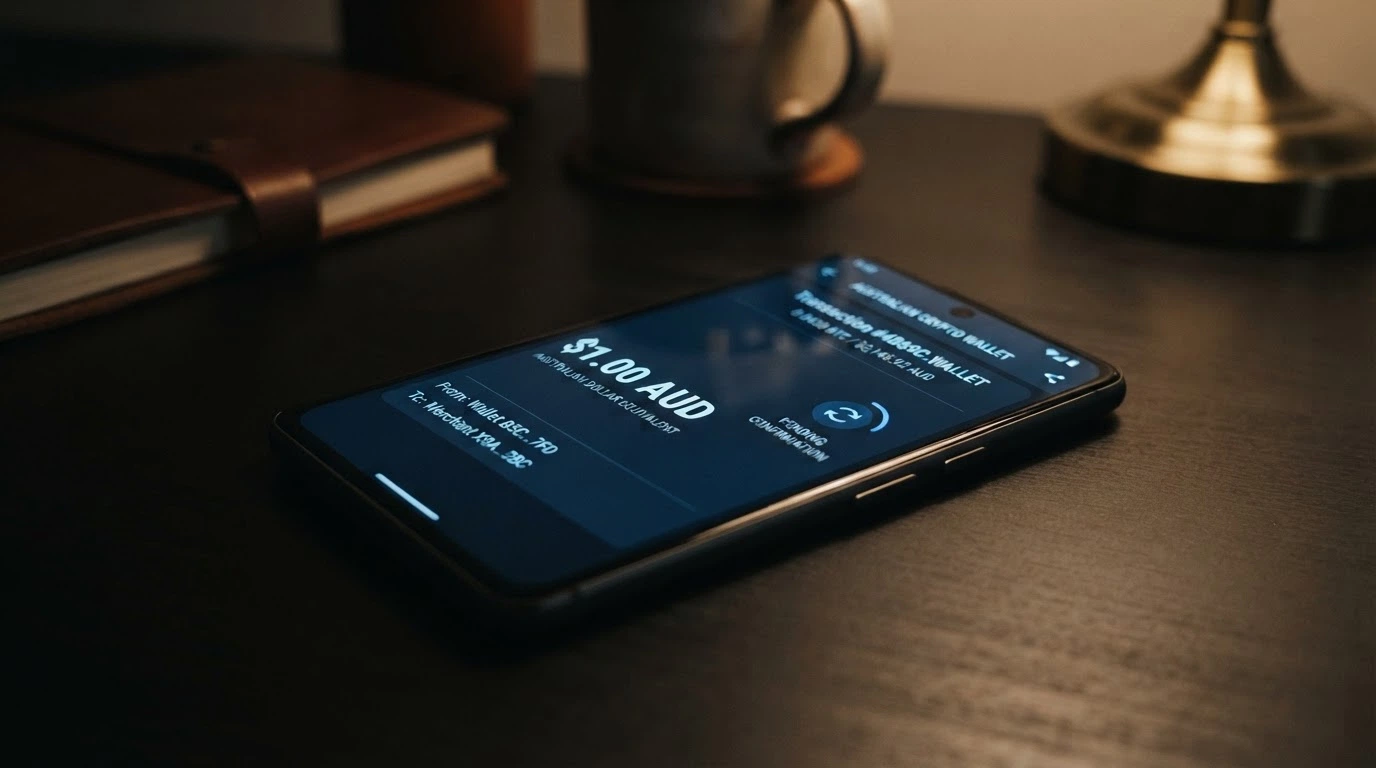
The processing speeds are the practical advantage. Bitcoin confirms in 1–10 minutes; USDT is near-instant. The casino-side minimum is set by the operator and runs lower than any card-scheme minimum because the rail imposes none. The player-side disadvantage is the off-ramp: converting AUD to crypto to deposit, and crypto back to AUD to spend, runs through an exchange outside the casino’s control.
Why Crypto Casinos Skip the Card-Network Minimum
Card-scheme rules enforce A$10–A$20 minimums on Visa and Mastercard transactions regardless of what the merchant’s policy says. Blockchain rails carry no equivalent. A casino that wants a A$1 deposit can offer it on crypto because nothing between the wallet and the casino’s deposit address imposes a floor. The trade-off runs in the other direction: lower deposits but no chargeback protection, no Australian consumer protection regime, no ACMA complaints path, no BetStop coverage. A player who disputes a crypto transaction has no card issuer to escalate to. A player who disputes a crypto casino’s decision has no Australian regulator to complain to.
The Law Is Clear — Online Casino Is Illegal in Australia
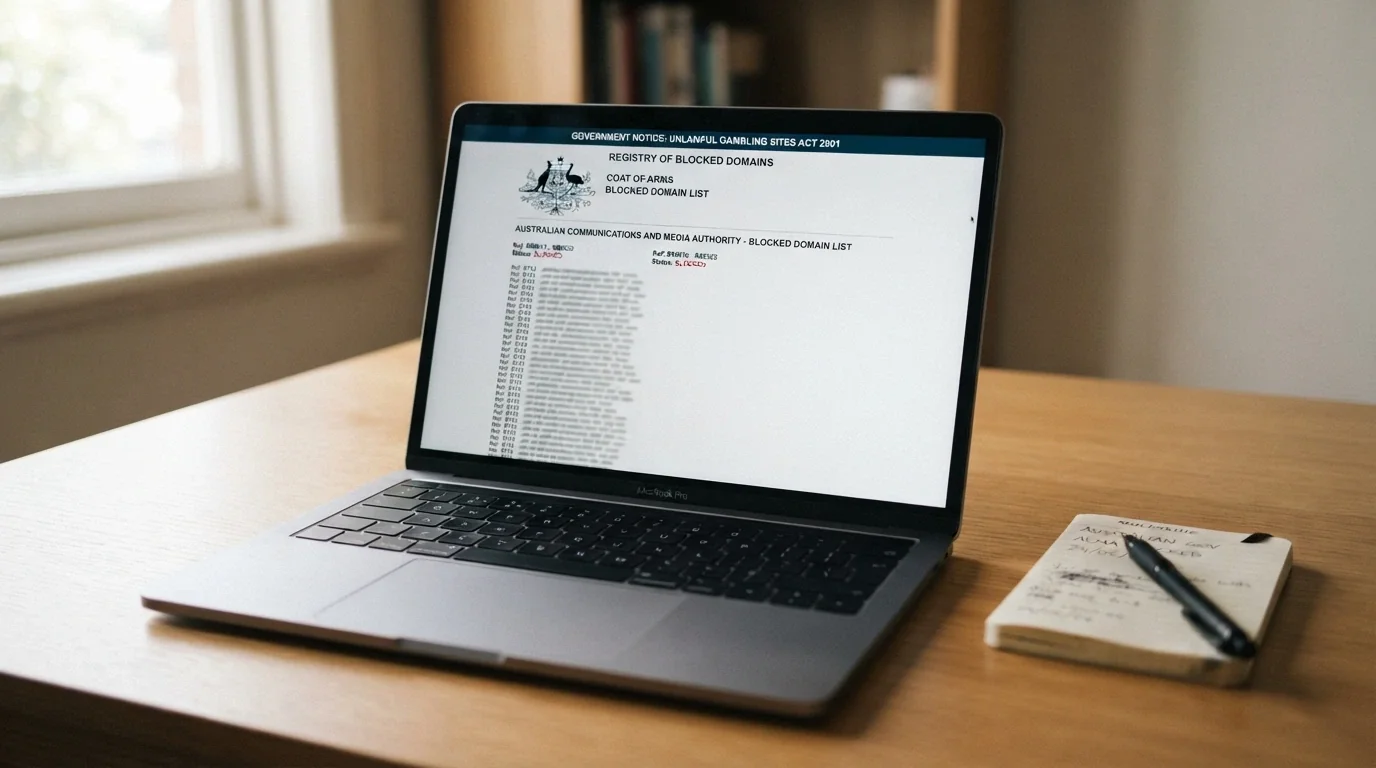
The Interactive Gambling Act 2001 makes it an offence to provide online casino games, online pokies, or in-play sports betting to a person in Australia. The Act was strengthened by amendments in 2017, and the prohibition has been enforced continuously since. There is no Australian licence for online casino — not federally, not in any state or territory. The Northern Territory Racing and Wagering Commission licenses online wagering on races and sport (pre-event only), and state and territory regulators license lotteries and keno; none of those licences covers casino games. The product people look for when searching for “no minimum deposit casinos” is the product the IGA bans.
The IGA and the ACMA — What the Ban Actually Covers
The IGA’s prohibition covers online casino games, online pokies and in-play sports betting. The products that remain licensed and legal are wagering on races and sport placed before the event begins, lotteries, and keno (with online keno banned from 1 January 2027 under the 2026 reform). The Australian Communications and Media Authority enforces the prohibition. Since its first blocking request in November 2019, the ACMA has had 1,564 illegal gambling and affiliate websites blocked by Australian ISPs, and more than 225 illegal services have withdrawn from the Australian market since enforcement strengthened in 2017. The list of blocked services grows every month.
The offshore licences behind the Australian-facing casino market are dominated by Curaçao. Curaçao eGaming and the Curaçao Gaming Control Board are the regulators named in operator footers; neither is an Australian regulator. A Curaçao licence is a licence to operate from Curaçao. It is not a licence to offer online casino to Australians. None of these brands holds an Australian casino licence because none can.
Offshore Casinos vs Australian Law — Where the Player Stands
The individual player commits no offence by signing up, depositing and playing at an offshore casino. The Interactive Gambling Act targets the provider, not the customer. That is the legal half of the picture. The practical half is the consumer-protection vacuum on the other side.
No ACMA complaints body can recover funds for an Australian player at an offshore casino. No Australian court has straightforward jurisdiction over a Curaçao-licensed operator holding funds in a Curaçao bank account. BetStop does not reach offshore casinos — the National Self-Exclusion Register binds Australian-licensed wagering services only, and an offshore casino is not connected to it. A player who self-excludes through BetStop and then signs up at an offshore site has self-excluded from nothing that matters at that site. A player whose offshore casino refuses a withdrawal, voids a winning spin, or simply stops responding has no escalation path within Australia. The site can also be blocked at any time with a balance still on the account, leaving the player with no Australian operator to complain to and no Australian ISP able to recover the funds.
The 2026 Gambling Reform — What Changes From 1 January 2027
The Interactive Gambling Amendment (Gambling Reform) Bill 2026 passed Parliament on 19 August 2026 and commences on 1 January 2027. It is the biggest gambling-law overhaul in a generation. The headline provisions: banks and payment providers gain express authority to block transactions to illegal gambling operators, wagering advertising is capped at three ads per hour between 5:00 am and 8:30 pm with a live-sport blackout window from 15 minutes before until 5 minutes after, athletes, celebrities and influencers are barred from promoting wagering products, and a Wagering Advertising Opt-out Register (AdStop) administered by the ACMA gives individuals a single mechanism to opt out of wagering advertising. Inducements are prohibited for 14 days after sign-up and three months after a BetStop deregistration. Online keno and foreign-matched lotteries are banned outright from the same date.
The reform does not create an Australian online casino licence. The prohibition on online casino stands. What it does is change the enforcement architecture around the prohibition — banks gain the power to decline or delay transactions to offshore operators, and the ACMA gains a new register to manage. The advertising reform provisions are expected to take effect from 1 July 2027, although the AdStop opt-out register itself may not be ready by that date.
BetStop, the Helpline and Why Offshore Casinos Leave You Without a Safety Net
Australian-licensed wagering operators carry a built-in player-protection stack. BetStop — the National Self-Exclusion Register, live since August 2023 — excludes a registered player from every Australian-licensed online and phone wagering service in a single step. As at 31 July 2026, BetStop had 67,480 registrations, of which 41,290 exclusions were still active; 78% of registrants were under 40, and 38% chose lifetime exclusion. Licensed operators also offer customer-set deposit limits and activity statements under their state and territory conditions. None of these tools reach an offshore casino.

About 2.1% of Australian adults — roughly 430,000 people — experience problem gambling. The Australian Institute of Health and Welfare put high-risk gambling at 1.8% in 2022. The infrastructure that exists for those people runs through the National Gambling Helpline at 1800 858 858 (free, confidential, 24/7), Gambling Help Online at gamblinghelponline.org.au, and BetStop for the players who want a hard break from Australian-licensed services. The helpline and Gambling Help Online are universal — they reach any Australian, on any platform, licensed or not.
BetStop, the Helpline and Where to Get Help
A single BetStop registration excludes a person from every Australian-licensed wagering service. The mechanic is one-and-done: one form, every AU-licensed bookmaker, every AU-licensed online casino, every AU-licensed phone betting operation. The offshore gap is the structural limit. A Curaçao-licensed casino is not bound by BetStop, not connected to the register, and not required to honour an Australian self-exclusion. A player who registers with BetStop and then signs up at an offshore casino has not self-excluded from anything at that casino.
The universal fallback is the National Gambling Helpline (1800 858 858) and Gambling Help Online. Both are free, confidential, available 24/7, and staffed by counsellors who understand the offshore landscape. The prevalence data — 2.1% of adults, around 430,000 Australians — is the reason these services exist and the reason this page repeats the number rather than the casino name.
Deposit Discipline When the Minimum Is Zero
When the deposit floor disappears, the only guardrail is the one the player sets. Australian-licensed operators offer customer-set deposit limits, take-a-break features and activity statements as standard. Offshore casinos are not bound by any of these conditions and may or may not offer equivalents of their own. A player who wants a structural limit has to build one.
The most practical tactic is to use the low-deposit reality as the limit. A A$10 PayID deposit is a defined session. A A$1 crypto deposit is an even tighter one. The session cost at minimum stakes on a 96% RTP title runs around A$8 per 200 spins at $1, or A$0.40 per 200 spins at $0.05 — a session that lasts long enough to test a lobby without compounding into a meaningful loss. The discipline is to set the deposit before the first spin, not after. Once the balance is at the casino, the temptation to top up is structural and the top-up is one tap away.
Frequently Asked Questions
Are there any real no minimum deposit casinos in Australia, or is it just marketing?
True “no minimum deposit” casinos are virtually nonexistent in Australia. Most sites that advertise this are actually low-deposit casinos with A$1–A$20 floors. The term is primarily marketing used to attract players to these low-deposit platforms. Always check the cashier to see the actual deposit minimum for your chosen method.
What is the lowest amount I can deposit at an Australian online casino?
The lowest deposits typically start at A$1, but this depends entirely on the payment rail. Crypto (Bitcoin/USDT) often allows A$1 deposits, while PayID and credit cards usually carry higher floors, often between A$10 and A$20. The casino’s homepage often advertises the absolute minimum, but your chosen method dictates the reality.
What is the difference between a no minimum deposit casino and a no deposit bonus?
A “no minimum deposit” casino is a low-deposit gambling platform where you must deposit money to play. A “no deposit bonus” is a promotional offer, like free spins, given to you upon registration without requiring a deposit. They serve different purposes, have different rules, and are often conflated in casino marketing.
Can I get a no deposit bonus and win real money without making a deposit?
It is possible to win, but extremely difficult to withdraw. Most offshore casinos require a verification deposit before releasing winnings from no-deposit bonuses. These bonuses also typically carry strict maximum cashout caps of A$50–A$100 and high wagering requirements, making it very hard to turn a no-deposit bonus into a real-money withdrawal.
What are the wagering requirements on no deposit bonuses at Australian casinos?
Wagering requirements for no-deposit bonuses at these casinos are typically high, often ranging from 35x to 70x the bonus value or free spin winnings. These requirements must be cleared before the bonus funds are converted into withdrawable cash, and the terms often include time limits and maximum cashout caps of A$100 or less.
Can I play real money pokies with a $1 deposit in Australia?
Yes, you can play real money pokies with a A$1 deposit, provided you use a payment method like crypto that supports such a low entry. However, a A$1 deposit rarely unlocks welcome bonuses and usually only opens an account for low-stakes play. It is a functional way to test the lobby, not to claim a full welcome package.
The operator universe was drawn from Australian-facing offshore casinos with published deposit minimums, drawn from competitor audits at Pokiesaustralia.com, Estelleaustralia.com.au, Aucasinoreviews.com and similar AU-facing comparison pages. Ten operators made the featured set. The evaluation criteria were deposit accessibility (the lower the floor, the higher the rank), no-deposit offer quality and transparency (whether the bonus terms — wagering, max cashout, expiry — are stated up front), provider breadth (the size and diversity of the pokie lobby), and licence traceability (whether the operator’s stated licence could be verified against a regulator register).

The verification gap is real. Terms for six of the ten featured operators — Rocket Play, Royal Reels, WinSpirit, Stake, Rainbet and Scream Casino — remain unverified. Fair Go’s no-deposit and wagering terms were also not confirmed. Skycrown, Bitstarz and Bizzo Casino carried confirmed terms from the general-round search. The ACMA’s published register of blocked services was the regulatory benchmark for the legality section; the Australian Institute of Health and Welfare supplied the prevalence figures; the Interactive Gambling Act 2001 and the Interactive Gambling Amendment (Gambling Reform) Bill 2026 were the primary legal sources. No invented weightings were applied to the ranking — the partner-first order is editorial, not algorithmic, and reflects the fit between each operator’s profile and the page’s subject matter.
Low Deposits, Real Risks — What Every Australian Punter Should Know Before Signing Up
The central finding is uncomfortable. Low-deposit casinos exist. True no-minimum casinos are marketing. The real floor sits at A$1 (crypto) and A$10 (PayID), with most of the featured set clustering between A$10 and A$25. The trade-off for that low floor is structural: every brand on this page is offshore, unlicensed in Australia, operating outside Australian consumer protection law, and bound by no Australian self-exclusion register. A A$1 deposit is real. A A$1 deposit at an unlicensed offshore casino with no ACMA complaints path and no BetStop coverage is a different proposition from a A$1 deposit at a regulated venue — and there is no regulated venue to compare it to, because the product is banned.
The session-cost reality holds regardless of where the deposit sits. A 96% RTP pokie costs about A$8 per 200 spins at $1. An 88% RTP pokie costs about A$24 over the same session. The house always has an edge, and the edge compounds across every spin. A low deposit limits the session’s total cost; it does not change the rate at which the balance drains.
The practical takeaway is three checks before any money moves. Check the cashier, not the homepage — the deposit minimum sits in the payment-method dropdown, not the marketing banner. Check the RTP build in the game’s help screen — operators can deploy reduced-RTP variants of popular slots, and the in-game figure is the one that matters. Know the helpline (1800 858 858) before the deposit — the number works from any Australian phone, at any hour, for any player, on any platform, and the offshore casino’s marketing will never include it.
The headline promises a free entry. The market delivers a low entry with a real cost and a thin safety net. A player who reads the cashier, verifies the RTP and keeps the helpline in their phone has the information they need to make the call themselves.